Jane Mitchells leads a conversation about team dynamics, identifying individual strengths and balancing when to give managers space versus when to step in, using examples from coaching, studios and marathon experiences.
Jane Mitchells, coming in to you today from Minneapolis, Minnesota. Whether you're listening on replay or you're dialing in live, it's great to have you here. As you dial in live or on replay, I'll invite you to take a deep breath.
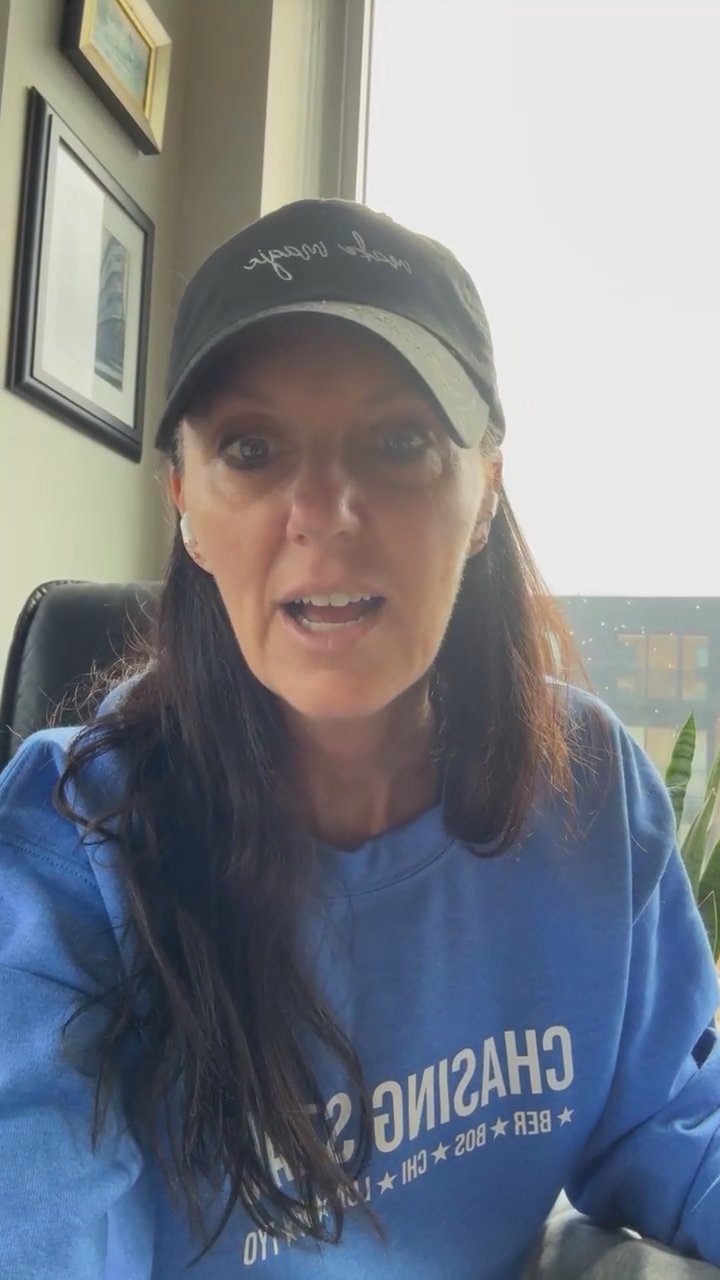
Today is marathon Monday. If you have a schedule that is different than the Monday through Friday, maybe today's your day off. I wore my special sweatshirt in honor of all the people that you might know running the Boston Marathon. And if you listen on replay and you ran it today, congratulations.
When we say team, we often think of maybe sports or athletics. But even if you're a musician, you still have a team. Knowing our roles is really important. Most of the time when we're hiring into a team or bringing in a new volunteer, we're filling a void.
Betsy: I started to see a wave of new strengths from every person on my team start to come out a little bit more. This allowed my new general manager to not have to do everything theirselves. Her strength started to evolve. Next thing you know, everything in her studio is clean.
Do you give managers the space to figure it out or just do it? It depends. There are some managers you can give space to. There's some times that you might just need to lean in.
For the first time in eight years, having this indoor cycling studio, I went to Tokyo, Japan, to run a marathon. I tried to shape the story about how to help lead and how to identify the strengths in individuals and allow those strengths to flourish in a team. If you have more questions, type them in the chat.
Happy Monday, Cadre family. My name is Jane Mitchells, coming in to you today from Minneapolis, Minnesota. Just holding some space. Whether you're listening on replay or you're dialing in live, it's great to have you here. Thanks for joining. So I'm going to give everybody a little time to come on in. Good morning. Good morning. How are you today? As you dial in live or on replay, I'll invite you to take a deep breath. Good morning, Jules. I'll invite you to type in the chat how you feel right now, this moment, not two hours ago, if you woke up or not, how you felt yesterday, but how you feel right now in this moment, allowing yourself the space to simply breathe and check in as we get started.
Now, if you're new to me, haven't been with me yet, I do have a supervisor and today he's sleeping on the job. But he wanted to say hello. Good morning. So if you have any fur babies also feel free to plop their name in the chat. We can invite them into the conversation energetically. So it's Monday. We're here. We've started a new week. If you have a schedule that is different than the Monday through Friday, maybe today's your day off. So thank you for popping in and being here with us. And again, if you're listening on a replay or if you're just dialing in for the first time, I would invite you to take a deep breath and type in the chat if you where you're at, how you feel today.
So I feel excited and here's why. I wore my special sweatshirt today. A girlfriend of mine gave this to me. I think it's mirrored, so maybe you can't see it correctly, but it says Chasing Stars has Berlin, Boston, Chicago, London, New York City and Tokyo out here. So today is marathon Monday. People are probably have already started running the Boston Marathon. It's a historic marathon in the United States. It is one of the marathons on my list. I will be leaving on Wednesday to go to London to run the London Marathon that's over here this weekend.
And I've completed five of these Chasing Stars moments. So I wore this sweatshirt in honor of all the people that you might know running the Boston Marathon today. And if you listen on replay and you ran it today, congratulations. You did it. You did it. However it went, you did it. So Jules has a couple of fur babies, Bella and Kenna, Cute. And you're feeling content. Great word. So today I wanted to talk about in our conversation team, but I want to talk about it in a way that recognizes that each of us play a valuable role in whatever that team is.
Now, whether you're retired or you're still working or maybe you're in job transition, the conversation still applies. When I say team, we often think of maybe sports or athletics. So I was volleyball coach, I was volleyball player. I still play, I play tennis. You know, we do a lot of things in our lives. It can be related to a sport. But even if you're a musician, you still have a team. You know, you might name it slightly different, but for simplicity's sake, we're going to call it a team today.
And if you are working full time or part time, you have a team there. If you are volunteer, you likely have a team of volunteers. So team can be in basically any space in our lives. You can change the word a little bit, but here's what I wanted to discuss. Our role on a team. Good morning, Speak Wonder. Sometimes our role on a team is that we're leading. Sometimes our role on a team is that we're following, maybe we're contributing. But I want to share, like, kind of an example and really dive into how each of us contributes to whatever team it is that we're on.
And it could be part of a community, we could be part of a work group. We can call it whatever we want. I'm literally just using the word team for simplicity's sake because everyone has a pretty common understanding that a team is a group of people. Hi, Speak Wonder. Just popping in. Tell us how you're feeling today. And if you have fur babies, pop their name in there too. Major already did his debut. Maybe he'll do another one at the end. But when I think about team, everybody has a different role, right?
If you think of a basketball team, there's a point guard, there's defenders. If you think about a soccer team, there's a goalie for baby Gracie, there's a goalie. You know, we have different roles on different teams. Now, if I decided that I was going to join soccer and play the goalie, our team might not win. I'm not, one, good at soccer, and two, if I was playing soccer, I'd probably be a better defender. I can run really fast, but I don't know the rules. So to start, I might be better off defending things.
Knowing our roles is really important. So we have a clear, clear understanding of what our expectations are. Now, when I think about teams, and I'm going to use our spin studio as an example, now we have different roles on A team. I have instructors. I have what's called an ambassador, which help us do a lot of transition work. We have managers, which help us do a little bit more sales. I have a general manager. I have a sales manager, right? We all have these different roles that they play, but when I bring somebody new onto the team, I might have an idea of where they're going to be strong and what I need them for on the team to fill a void, right?
Most of the time when we're hiring into a team or we're bringing in a new volunteer to our group, we're filling a void, right? We know we have more work that needs to get done. We have capacity for another person to come in. We're going to bring in who we think the best person is, and we're going to try to fill a void, fill a gap now with my team at our indoor cycling studio. Now, it's not rocket science, right? We're not saving lives. Like, we're not doctors or hospitals. We might be helping people emotionally, mentally, and physically, but that's just a different conversation, right?
But here's what I discovered, that if I try to fit everybody I hire into my team into a little bitty square, a little bitty box, gonna get it wrong 95% of the time. And I'm pretty good at what I do. We all are, right? And my job is as a coach. So I have a little more experience in starting to understand people, personality styles, and observing how people interact. So just based on my trade, I have a little more experience there. Maybe not than everybody, but more than more than some. And so with that, a good example is we hired a general manager.
Now, I know a general manager has certain set of skills that we need them to do. We need them to build community. We need them to work in the studio, to do sales, to do actually quite a few things. You think about the top job of most companies, like, the list of what they're supposed to do is probably pretty long. However, every single one of us is a human. And all of us have strengths. We all have weaknesses. We have activities that will really, truly excite us. We have skills that we've learned, acquired.
We've had education certifications, lessons that we've learned, life lessons that we've learned, all of the things. So I've learned that when I bring somebody new onto the team, I need to give them space and time. Now, we do need people, right, when they come into their jobs to be curious, to be excited, to lean in. So assuming all of those Things are true. The next things I look for are what are they naturally gravitating to getting done part one, part two, are they trying to do too much right away?
So if I think about my general manager that I have today, when they first came on board, they thought they were responsible for everything. Now, I am a strengths coach. I give everybody this inventory called the strengths finder. So it's a tool that I use with my clients, it's a tool that I use in my team. So I already have some indicators of what I might see as patterns and how I might be able to help buffer that. And she did. She's high responsibility. So she came in and took on that she needed to do everything.
And I let her. I let her hold space for that because I knew that she was going to figure out that she couldn't do it all by herself. And within about two months, nothing fell through the cracks. Studio kept going. We sold more memberships, we gathered more people. But what I started to notice is that the team started to come together a little bit more because they really, really like this general manager. And they could see the same things that I was seeing, that they were trying to do too much, but they also had a lot of really good ideas.
So the team kind of started to wrap around this one individual and said, wow, we really support you, but you're doing too much. Let me take this off of you. Or they would start to do things that naturally they were passionate about. So I have one person on my team. He loves to fix everything. Everything. So he's changing light bulbs, he's fixing pedals on bikes. It's not his job, but it's one of the things that he loved to do. So his strengths are problem solving, but through a tactile movement, he loves to do the thing.
Hi, Betsy. Nice to see you. Oh, we should have a conversation or go to coffee sometime and talk about strengthsfinder. Would love to hear your thoughts. But I learned that about my. I watched this one manager, and that's where he leaned in. I watched another manager lean in more to the sales and got really excited because they could do more text messaging and crafting of it. And. And our new general manager was really smart at. At how we do things, and he was really great at executing the things.
And so naturally, I started to see a wave of new strengths from every person on my team start to come out a little bit more, which allowed my new general manager to not have to do everything theirselves. She was able to take it back. A ticket and she was able to say, okay, here's what I really want to do. And I would ask her every week, where do you need help? What can I take off your plate? And I'm going to give you some recommendations. Take them or leave them. And I didn't micromanage her because I really trust this person.
I also knew them before they took on this role. And her strength started to evolve. Next thing you know, everything in her studio is clean. Everything in the studio is organized. So for her to be her best self, for her to be able to really do all the things that she's doing today, now she needed to do a few things. One, learn the job, learn everything in and out, to decide where she was going to play the most and to see what needed to be course corrected. Her way, not my way. I could have gone in and I could have micromanaged the whole thing, but I would have lost a really great person on my team because it would have been too much for this person.
They reorganized everything in the studio, a back room. They sold a bunch of stuff on Facebook that we didn't need. Facebook market is amazing tool, I've now learned. And they organized everything. And then. Then what they did is they went through the entire experience that our writers go through, and they. They started to elevate our experience and said, I want to do this, I want to do this. So next thing you know, I'm giving her a budget, and she's doing the little bitty tiny details to make tiny shifts to make the experience even better, and the feedback that we get is significant.
And then next thing you know, she's leaning into doing all of these marketing ad campaigns things I don't even know about, because that is what her background is. She has a background in journalism and background in marketing. We have the most new leads than any studio across the country in our franchise. Because she now feels comfortable knows what the product is we're delivering because she's helped to redesign and recraft it with our team. She knows that everybody's dialed in and on board. She knows the studio is clean.
I've repainted every single wall. And then she's now leaned into marketing campaigns and really getting us out into the community even more. And we know and trust that the experience that's happening in the studio is a really great experience. Now, Betsy asked a really great question in here, and I know I'm bumping up close on time. Do I tell them that you're giving them the space to figure it out or just do it. And I would say it's both. So at the beginning, I didn't tell her that's what I was doing.
I just allowed them to come in and see where they were going to gravitate towards. And then I set bumpers for them because I've done every single job in the studio, so I know all of the ins and outs. So as I would see her, I would offer her recommendations and suggestions, partially because I know this is also how she works best. Now, I've done this differently with other managers, so with this particular individual, I got to know her strengths really well. I had really good conversations with her before she came into this role.
I already knew that she knew our community because she was a writer and had become an instructor. So there were certain foundational elements I already had a lot of trust in. It was this role that was brand new to her. She's never led a team of people before, so that was brand new. And she's never been responsible for a P and L and a budget, so all of those things were new. So what I did is I set bumpers for her and I said, here's what we're going to do, and I'm going to. We're going to check in every week.
And so I would have a call with her every week, and I would say, what are you working on this week? What's draining you this week? And where do you need my help? And if she didn't need my help, I would say, okay, and I would just check in to the studio. I check in with the team, but I would just show up and teach my classes and see what the evolution was. So I have a lot of trust with her. I also have a lot of trust with the team that we have because we've been curating them for a while. So, to your point, Betsy, and I think where you're going, it depends.
There are some managers you can give space to. Figure it out. There's some times that you might just need to lean in. Now, my urge for me, my role as that leader and the owner, co owner. There were days where I wanted to come in and just do the thing, and it was really hard for me to not do that. But I also needed to make sure she felt trusted and had space. There's nothing that happened in the studio that, like, if it got broken, it can get fixed. So realistically, it was a pretty safe space for her to play.
And watching her figure out what she needed to do to have the studio a really good experience, and she would say it. I would be like, what's your focus? And she's like, my focus right now is to make sure the studio is clean, the studio is organized, and the studio is refreshed. So here are my ideas. And she collected ideas from the entire team. She's high input. She came to me with a plan and an ask, and I allocated some budget dollars to do the things, and some of the things required me to literally get on a ladder, buy a bunch of paint, and paint walls on, like, three separate weekends.
So. But she had a vision, and that was the most important piece that maybe I haven't shared yet. When she came into this role, I asked her why she wanted this role, and I asked her what her vision was, and she said, let me get back to you. And then she came back to me and she said, I want to make our studio, this studio, the best experience and the best community in the Twin Cities. And I said, oh, that's a big vision. She's like, yeah, we have a lot of work to do. I said, okay, great. What do you think the work is?
And then she outlined what she thought needed to happen. Now, did I agree with her on everything? No. Was I prickly about some of it because it felt personal? Yeah, because it's probably some things I should have done a while ago, but I didn't. But then I was like, okay, in order for this to work, you have to get the team on board. And here's my recommendations. So each time I would talk to her, I would give her my perspective and my recommendations, and I would say, emma's recommendations versus this is what I need you to do.
There are times I tell her, this is what I need you to do. But she knows that when I say it that way, that it's really, really important, and there's a good reason. And if she needs to know the reason, I will always tell her. But I gave her invitations or recommendations because I knew that she had her own ideas, and I didn't want to script it for her because I found after coaching people many years and after leading for a long time, that the more I script something based on my perspective, the more resistance I have and the more often I'm not right.
And what I mean by not right, it's my path. Isn't always the right path, but if I set really clear goals on here's what my expectations are as an outcome, and I give them the space and set the bumpers for them to play inside that space, we'll get to the same outcome. It just might take a little bit different amount of time depending on the sense of urgency. And how it gets done is almost always different than how I would do it. So I learn along the way. I get to use my bumpers as my guidepost to say on track, off track, too far, not far enough.
And really engage in just a different way to the point today where I will share this. For the first time in eight years, having this indoor cycling studio, I went to Tokyo, Japan, to run a marathon. Was gone for almost two weeks. It was the first time in two weeks I didn't dial in while I was gone to see how the studio was going. Actually, I take that back. I had to one time because there was a snowstorm and I didn't know if the team knew they had permission to cancel classes because of weather.
So I called in, typed in on slack. That's what we use for communication. Had the conversation, gave them the permission, said, I trust you're going to do whatever is going to be safe for our community and safe for our team. And they did the things. They canceled a couple of classes. They kept the one that they thought would be a good class to keep because it was safe for everybody. Can't ask for anything better than that. So if you have more questions, type them in the chat. I kind of dove in. We went in a big path and I tried to shape the story about how to help lead and how to identify the strengths in individuals and allow those strengths to flourish in a team.
Now, the question I'll leave you with, the invitation I'll leave you with is, what are your strengths as an individual? And has somebody given you permission to go big with your strengths? Or have you had a lot of leaders that try to squash them and put them into a box? That would be the first question. The second question, if you're a leader today, how uncomfortable were you listening to the space and freedom I was giving to this person? And if you were uncomfortable, why is it about you? Is it about them being pretty new and green?
There's no wrong answer. But there's always an opportunity for us to check in as a leader to see where we're at and to understand and ask a lot of questions to understand where our teams are at so that we can draw out the best in them. Because when we draw out the best in them, we as one team become the best team. Now, fun fact. In the last year, and this is the last thing I'll say, in the last year, since this person has been our general manager and has Done a really great job focusing on our community for the first time in the history of our studio in the last eight, almost nine years.
And our brand, our franchise, it's called Psychobar, we got voted the number one studio on ClassPass across the country. Now, I don't know how this works. I think it's a. It's a game where people go in and they vote on links. But for our team to have worked this hard over the last year, to put in a foundation to create a new experience, to keep things clean, to redecorate, remodel, and really focus on our community, to have that happen, I couldn't be more proud of my team. And it wasn't because I did all the things.
It was because I had a really good opportunity to trust strong people and help them bring out their strengths so that I could see where they could create together. And then I got to be a part of that, with them as one team and all of us wearing different hats, all of us having different roles. Now I have a gap on my team that we need to fill, but I also know that I need to fill it with the right person, the person that's going to support that team to continue to evolve, to be their best and fit in and not try to stand out.
That doesn't mean I don't want them to celebrate their unique individual strengths and stand out in their role. But sometimes we can bring in people that might try to trump everybody else. That squashes all the greatness that you just created. That takes time. It takes curiosity, and it takes that vision. So, again, if you have more questions, let me know. Betsy, I'm going to connect with you. I'm going to talk to Luke. We're going to figure it out. Let's go talk about our strengths. We'll meet up at Fragment or somewhere else in the cities.
I hope you all have the very best day. Jules, I love that you're a great cheerleader in helping to support people. And my trusted advisor, he says that today's conversation was great. He didn't even have to change a thing. So I hope you have the best day. Everybody chat soon.
Reactions and comments are for members. Joining is free and takes a minute.