Hint. It's not easy. Watch the live to learn more.
Good morning, everybody at Cadre. Hope everybody's off to a great start this Monday morning. It's a beautiful day here in our neck of the woods in Minnesota. Just want to make sure that we jump off here.
Luke Wendt is the founder of Cadre, LLC. He says three principles are ultimately to starting your own organization or business. Wendt: First wave of being on a stranded island is first wave of entrepreneurial ship.
When you start a business, your job is to ultimately not only survive, but have your vision in line. You need to know when to pivot, and it's got to be definable. Have it be easily explained, easily relatable, and all the team members understand.
When you're hiring fast, you're firing faster, and you're promoting the fastest. Start being able to find your levels of leadership in individuals. That can take the vision to the next level, which is execution.
Having everybody understand the magnitude of your vision and your strategy are very, very important. Number two, when you're starting your enterprise, it is a mentality of this, never quit. You need that passionate, obsessive group with you that are going to feel empowered to take chances and ultimately create value.
It's bigger than culture. It's the vision and the strategy. Number two is that mindset never quit mentality. And number three, it comes down to culture ultimately, but it's building a team. Again, hire fast, fire fastest, and promote the fastest.
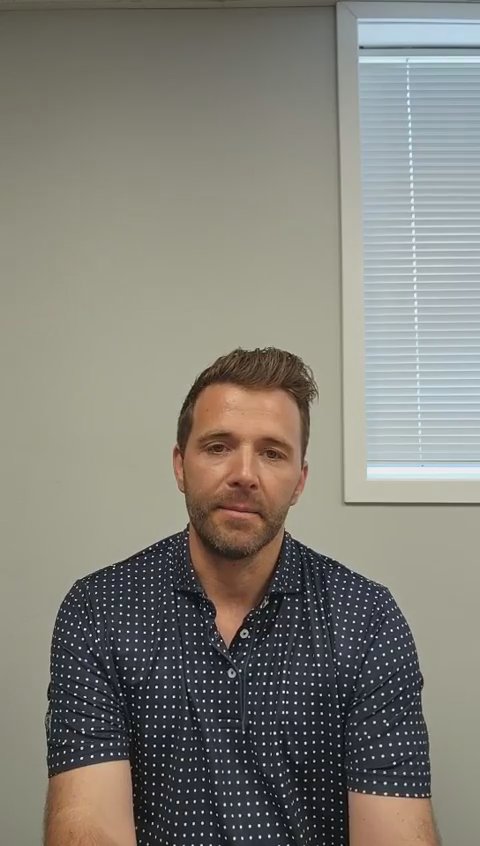
Good morning, everybody at Cadre. Let's give it a couple hot seconds here just to make sure that everybody that's going to be joining live can hop right in. Hope everybody's off to a great start this Monday morning. It's a beautiful day here in our neck of the woods in Minnesota. Just want to make sure that we jump off here. And there it is. Just making sure that click goes so I can see that we're going live. My name is Luke Wendt. I'm the founder of Cadre, LLC. I am so excited to talk about this topic today, which is ultimately what I would view as three principles, ultimately to starting your own organization or starting your own business.
I'm going to take you on a journey today that's really going to be exciting for those individuals that have started this before, whether it's solopreneurs, entrepreneurs, or individuals that have started their own enterprise, I think you'll know exactly what I'm talking about. For those that aspire to do, I'm going to give you some, let's call it tools of the trade, tricks of the trade, etcetera. So I'm excited about that. But first, I'm going to get you to a place, right? So let's say, for instance, you're flying, you just got to lax.
You're flying to LAX and you're on your way to Hawaii, right? You're on your way to Hawaii. Plane is going, and there's a crash, right? And you're by yourself. You survived the crash. You're by yourself. You're on a stranded island, right? You're on the stranded island. It's just you, right? You immediately go to survival mode, right? You're in survival mode. And you're thinking about how water, food, get a shelter over you. Is there a possibility for fires at night, safety animals, all those other things, right?
You know, that first wave of being on that island, I view it honestly as the first wave of entrepreneurial ship. And this is going to get into the vision. The vision of your organization is when you're alone and when you're by yourself, you're basically in survival mode with your vision of survival, right? That's your job on the island, is just to survive. When you start a business, your job then is to ultimately not only survive, but have your vision in line, right? Through being your vision alignment.
When you, let's say there's a couple more individuals that come to your island right now. You have rationing the bananas. You have to figure out how much water, figure out your daily schedule. Maybe it's breakfast in the morning, fishing in the afternoon, dinner at night. Before you know it, now you start figuring out your norms, right? Like what it's going to look like for your morning, what's going to look like for evening, what's it going to look like? You know, going to bed, waking up in the morning, rationalizing everything, ration things together, because, again, your goal is survival.
And in business, it's basically taking that same vision and making sure that the next individual on that island understands what it is. Right. You can't, as the leader of the enterprise or the leader of the, of the vision, the idea, it needs to be quickly explained. There needs to be follow through. You need to know when to pivot, and it's got to be definable. So before you know it, if we've been on this journey for one year and there's somebody new that comes on the island, it's going to look very, very, very different than day one, right?
And so it's the same thing with a business. When you start your business on your own and you have this idea, you have this vision, you're trying to explain it to the best of your ability to others. You're going to get better and better and better at it, especially if you have one, two or three more individuals come with you on this ride that understand, like, yeah, we wake up in the morning, we got breakfast, we got this, we got this. It's the same thing with business. Here's our idea, here's our concept, here's our vision, here's how we're going to try to roll this out.
And ultimately, I always call it, you have to have your tagline for the year. So that first year of landing on the island might be survival, right? Or it could be year of investment, year, the pilot year of growth. And then there's always, like, maybe one, two or three things with it. So as you're moving forward, maybe potentially with your new business or new endeavor and it's getting closer to 2023, I'd really focus and push yourself to try to analyze what it is that you're going to try to get to for your vision and your strategy going into 2023.
Have it be easily explained, easily relatable, and all the team members should be able to then understand what it is you're trying to accomplish within that vision and strategy. Right. So again, let's take a step back next year, you might be a fast growing organization, or you're starting your own company and you want to be a fast growing organization. One of those things that might be able to be said in your strategy is growth. It's not just about revenue. It's about what is our growth strategy?
What's it look like? Right. So those are some things that, you know, principle number one is it's all about the vision. Right back to what I was talking about. Like vision. Maybe it's survival. Maybe it's getting through that first year. Maybe it's getting through that first investment. So again, your vision is so crisp, it's critical, it's so very important to you. That's number one. Lesson number one. If you're on an island and you're all alone, you know, there's an adage. You want to go somewhere fast, you can go alone, you want to go somewhere far, you go together.
Right? Before you know it, you might have more and more individuals on that island and be able to figure out cultural norms, what it's going to look like to get through there in your vision. In that particular case, it's all about survival. And quite frankly, a lot of business is about that, too, is especially in that year one. Right. It's all about survival. Number two. And please, nobody think for 1 second. I'm actually comparing war and business together. But there is this adage that 100 men and women go to war.
Ten shouldn't even be there. 80 are targets. Nine are the fighters. And there's one warrior. I believe that true in business as well. So let's say that there's 100 landscaping companies. Ten probably don't even know what they're doing. 80 are just targets. Nine are probably. Probably good at what they do. And then there's one exceptional enterprise and one group that, you know, I would call it the fighter. It's the. The neverquip mentality. It's, you know, when your back is up against the wall, what do you do?
What does that look like? You know, I sincerely mean that there's a lot of great businesses out there that didn't, that ultimately have, like, just died. And what I mean by died is these ideas that didn't necessarily even make it, you know, maybe made it off the island, but then the idea just didn't even get come to fruition. Because the mentality of the leader, the group, etcetera, wasn't that fighter mentality, or we're never going to quit. We're never going to give up. And so, again, I would encourage you to really lead as you're starting your own enterprise or starting your own business with the very first principle is, again, understanding my vision.
Number two is having that never give up mentality. And, you know, really being a warrior in this landscape of whatever your business might be, that that warrior mentality I really believe in my heart is. Is one of the most critical pieces of the puzzle. Some people, some people might call it, you know, obsessiveness, some people might call it, you know, passion, endurance, never quitting. But whatever that means to you, you know, again, I would just encourage you to lead with the mindset that you're always going to be there tomorrow.
You're always going to fight. You're going to fight for your next day. You're going to fight as a business. And it's not fighting internally, it's fighting again for your survival as you start that enterprise. There's another quote that. So number one, again is vision. Number two is that never quit mentality. And number three is hire fast, fire faster, and promote the fastest. Again. Hire fast, promote. Excuse me. Fire faster, and promote the fastest. Especially early on in an enterprise. Let's say that your organization now gets to the point where you've maybe been around for the first 6912 months, and it used to just be you, and now there's 7810 of you.
When you're an organization that size and there's toxicity, maybe by one of the individuals, one of the leaders, whatever that looks like. It is really, really hard with three, five, seven individuals to overcome that. Move on quick. Move on quick. Sometimes these are. It's the best for the other individual. Sometimes it's the best for you. And if your time is being fought, being fought in strategy, being fought in vision, being fought to try to have other individuals understand what it is that you're trying to do or how you're trying to do it, I'm telling you, I think you might just come up against the same wall over and over again.
So those things are very, very important. Again, as you're hiring fast, you're firing faster, and you're promoting the fastest. When you find individuals that are in the exact same boat as you. And what I mean by that is have an obsessed mindset, are really passionate about the space, desiring more, wanting to be empowered, fulfilled personal satisfaction, goals, dreams, et cetera, and they're all in alignment. And their actions quickly have shown through their first maybe 1234 months on the role.
You do not have to wait a calendar year to promote somebody. You do not. You can promote somebody in two months if it feels right in your gut. They're showing on various levels of progress, et cetera. That they can do what you're asking them to do, as well as not even sometimes telling them or explaining what it is that you need, but rather they're self starters. To be able to do that, by all means promote those individuals. Start being able to find your levels of leadership in individuals. That can take, again, the most important critical piece of the puzzle, the vision to the next level, which is execution.
There's a lot of ideas that are living in the graveyard because ultimately, execution is not a strength of an organization. So again, I want to go through these three principles that when you're starting a business early on that I think are vital, is having everybody really understand the magnitude of your vision and your strategy. Right. Your vision, your strategy are very, very important. And test your organization by asking them, what's your vision like, what is our vision? And just see. Ask everybody, send a Google form, ask everybody to articulate the vision to you, your strategy for the year, and see if those individuals that resonate or that are part of your organization, if the vision resonates with them.
Right. Number two, when you're starting your enterprise, when you start your business, it is a mentality of this, never quit. And I use the term warrior again, when those hundred businesses come into the landscape, is men or women that are starting these enterprises, really, 95% of them won't be here in five years. But what makes you that part of that 5%? I would say the number one thing that you need to get to is this, never quit, never stop. It's not success at all costs. Meaning like, you're going to risk your morals, your ethics, your integrity, or any of those things.
That's not what I'm saying. But that ultimately comes down to you have the right mindset to move forward every single day. And in the next one. I know there's a lot of people in HR that are going to cringe when you say something like this, but it's a higher fast, fire fast and promote the fastest. And especially when you're starting your enterprise in your three months, six months, nine months, twelve months, if not 18 months in. You want to find individuals that quote, unquote, ride or die with the vision, ride or die with the culture that live the mentality of what the business needs, because you need that passionate, obsessive group with you that are going to feel empowered to take chances and ultimately create value and value creation.
You know, I think, again, goes back to that hundred that are, you know, men or women that are going to war. I would argue it's the same thing with creating value in a business. There's 100 individuals that work in an enterprise. There's a lot of roles that can be hired, easily hired, and there's, you know, one, two or three of those that are tough to find that are, I would call value creation roles. And when you find those value creation roles and or those individuals, never let them go. Do whatever it takes to support them, empower them.
I always call it give the keys to the car, make sure that they know that that's theirs and they're going to own it, and that's their baby at your company. So again, I want to go through these real quick. Number one, your vision, it needs to be clear, it needs to be concise, and it needs to be able to easily be transferable from individual to individual to individual. At your organization. People need to know what you're trying to do. It's bigger than culture. It's the vision and the strategy. Number two is that mindset never quit mentality.
And number three, it comes down to culture ultimately, but it's building a team that you're ultimately trying to solve for your answers on one and two. Right? And so again, hire fast, fire fastest, and promote the fastest. So thank you all, have a wonderful day, and I hope that this helped and take some of those principles. If you're ever thinking about starting an enterprise,
Reactions and comments are for members. Joining is free and takes a minute.