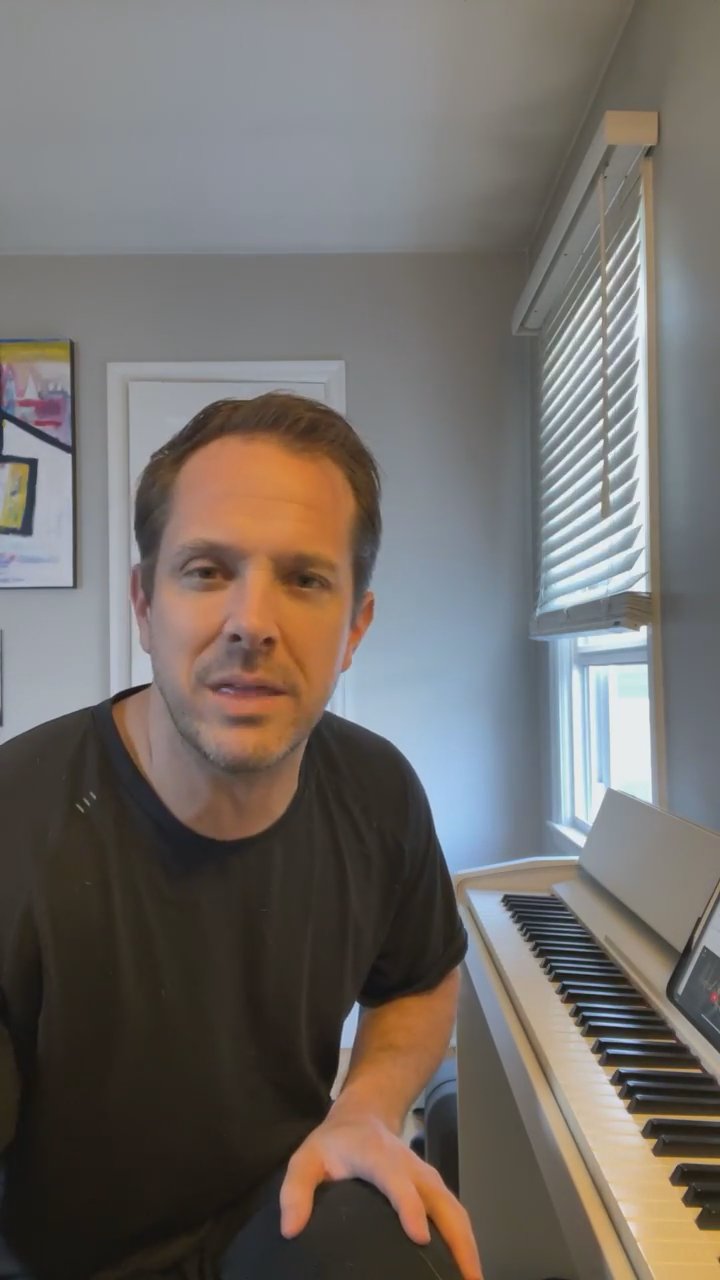
A conversational reflection on personal growth and creativity that explores how shifting perspective—sitting in a different corner of the sandbox—can make small changes feel meaningful; includes examples from music and everyday practice.
Jules: On Saturdays, we talk a lot about this idea of personal growth, personal development. He says music often teaches us that originality isn't always the thing we have to aspire to. Jules: What if you took what you are and shifted it?
Carrie: What are the little things that you can do? Little not meaning easy, little meaning small. We all need these messages every single day because it shifts our perspective that little bit. Have a great weekend. I'll be back tomorrow morning at 8am.
Well, hey, good morning, Cadre. How are we doing today? How are we doing? I hope you're doing great. And if you're not doing great, that is. That's okay too. It really, really is. I have been not doing great for a good couple of weeks. It's been a lot of just like, oops and. And punches coming from nowhere. And guess what? Even though I'm not doing great, that's okay. Last night, I got to along with all the different production people. Hey, Carrie. Hey, Jules. Nice to see you guys. Okay. But I have to ask Carrie or Kari.
And I asked because I know names are so, so important, and Carrie, kari. I'm sure five times out of 10 people say it, but they don't ask. So let me know if it's Carrie or Kari. But on Saturdays, we talk a lot about this idea of personal growth, personal development. Robert, nice to see you. My friend Arie. I was right the first time. Boom. Got it. We talk a lot about personal development. Right. So not working on what you do. I'd call that professional development, but on who you are and how you exist and how you put yourself into the world.
And one of my favorite. Well, they're musicians. I like their music, but more so I like the way they make their music. The band, ok, go. They came out with some new music recently, and they're more known for their music videos than they are for their music. Their band, especially the lead singer who did all the talking. I did a TED talk on. On original thought, on, like, where do you come up with original ideas? Or how do you come up with original ideas? And. Because their music videos are. Are like things you would never think of, and they go, huh, what if we did X and they figured out how to do X and they put their music to.
To the. The experiment or the exercise that. That, that they, that they do in the video. And everyone goes, wow, you guys are so creative. How do you be creative all the time? And their answer is the most original. Like, the most, like, impactful original ideas aren't very original. They use the idea of the sandbox and they say it's about sitting in a different corner of the sandbox and looking at the same space from a different view. Because they make the point that things that are overly original, meaning so different from where people are and what people think and what people want and what people feel doesn't bring them along.
People are where they are, and the journey is exactly that. It's like, wow, I'm here, but if I would be here, that would change everything as opposed to I'm here and now we're going to go here and people go, why? So it's funny, I was thinking this morning, I was thinking this morning about how music often teaches us that originality isn't, Isn't always the thing we have to aspire to do. Meaning like we have to go somewhere. So far so, so, so different. Because throughout all of time, music, it's the same 12 notes.
It's the same 12 notes that, that. That we all use now again, there's, there's space in between notes and different genres and, and you know, different movements of music may use different pathways or different intervals as, as what's normal at the end of the day, those same 12 notes stay the same. And even more so, so much of the popular music that we love uses the same function, the same chords. Like I could go, hey, where did we go? Days when the rains came. And I could also go another, another turning point, a fork stuck in the road, right?
Good Riddance is the same as Brown Eyed Girl. We could look at songs like, you know, wild, same three chords, wild thing. Hey, where did we go? Days when the rains came. People often make the joke, right? That popular music is, is. Is pretty simple. It's pretty non complex by definition. That's what makes it popular. Popular meaning to. To. To. To meet many people or to include many people. You may be in a space where you go, gosh, I'm not creative enough or I'm not experienced enough, I'm not talented enough.
I don't have enough perspective, I don't have enough whatever. If we look what OK Go invites us to. To do, they say, hey, what if you took where you are and what you have and shifted it one degree? What would that do? I guarantee you it would change the way that your brain would work for a moment. And it'll show you things that maybe you weren't seeing before. And if you're a person who feels called to share things with the world, you may go, yeah, but that's a thing like, like that may. It may nourish me, it may make me think, but that's not enough for, for the world.
In reality, it's the opposite. The things that we give the world are always a shift on perspective, a shift on language, a shift on application, a shift on timing, a shift on urgency to give yourself permission and give yourself permission to go, huh? I don't need to jump over the moon in order to. To see the stars. I don't need to go ahead and, and, you know, build, build, build this giant sculpture in order for people to, to, to, to see my art. It may be as simple as looking at something. I will actually, funny enough, in this, in this article that typed in, hey, what are like, what are three chord songs?
And there's this article. It's like 10 songs. It'll use three chords. This is a song that my mom, back when she took, you know, six guitar lessons for, for $20 back in the, you know, in the 60s. Like, one of the three songs they taught her was House of the Rising Sun. The House of the Rising Sun. Right. You can hear those three chords. She learned three guitar songs 60 years ago. Guess what? She could still pick up a guitar and play that song. Whenever the family gets together. This is one of the songs that we go, oh, we can do the thing, because it was impactful.
So I'll leave you there today. I'll leave you there to consider what are the little things that you can do? Little not meaning easy, little meaning small. You know, incremental that may change your perspective on you and what you're putting into the world and may incredibly change the people in your world who need you to give it to them. Carrie. We all need these messages every single day because it shifts our perspective that little bit. Y'all go ahead and check out live streams. The rest today.
I'll be back tomorrow morning, 8am sitting in my Mazda, as I always am on a Sunday morning as I head to work for a little bit of thin space. So if you need a little. If you need a little time being where you are with what you got and what you have, I'll be holding that for you tomorrow morning. Otherwise, have a great weekend. And if you don't have a great weekend, know that that's okay too. We'll talk to you later. Bye. The house on the Rising Sun.
Reactions and comments are for members. Joining is free and takes a minute.