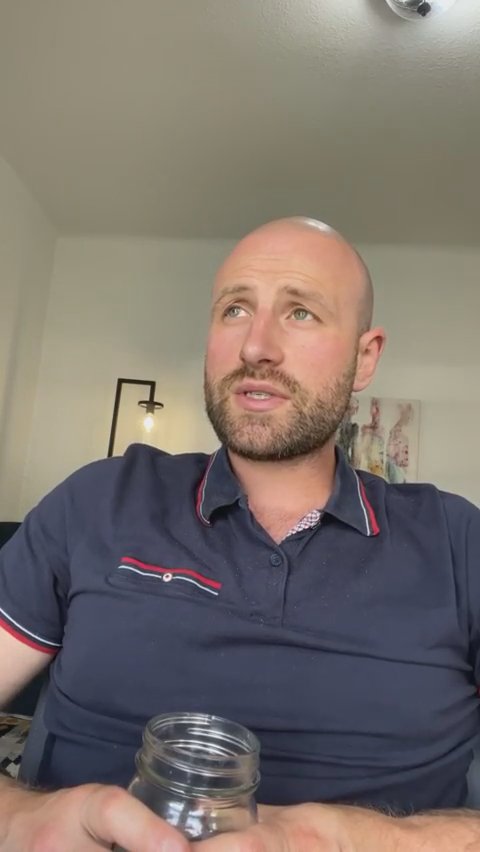
In my career in mental health and in social media I have come across the term "trauma dumping" Essentially letting it all spill out at once and putting that "burden" onto others, mainly your therapist. But is that really a big deal? Does it really happen all the time? My thoughts and more later today. -Evan
Evan is Cadre's resident mental health and addiction therapist. He talks about a topic that's come up a couple times from his work and social media content creation. "Every single day when I work with clients, there's always something new and inspiring"
People refer to it as trauma dumping. Basically just letting out all of your trauma and sharing that kind of. Most always in a general, just broad stroke, letting it out all at once. For some people, it's probably like traditionally very difficult to talk about.
CNN's Jarrett Bellini has been working with a young man struggling with trauma. Instead of doing traditional trauma therapy, Bellini is using journaling to organize his thoughts. Bellini says the boy is making progress, but is still at a place where they need to work on this.
We have distorted beliefs when it comes to things that are about us. We skew negatively towards ourself. Challenge those narratives. Rewrite new narratives. Try to be mindful of your interactions and reactions to certain things.
So. I hope that helps you all. I think it's an awesome topic. And again, folks, until next time, we'll see you later. Bye.
What up, Cadre fam? Evan here, your resident mental health and addiction therapist. I wanted to hop on to talk about a topic that's been on my mind based on, again, some of the sessions that I've been having with folks and that real life interaction, mental health and addiction, doing therapy. And it's great because I never run out of things to talk about. I never run out of things to learn. Every single day when I work with clients, there's always something new and inspiring. But anyhow, I wanted to bring up a topic that's come up a couple times, not just from the work that I do, but also in the social media content creation, because there I also get to learn about people who have engaged in the mental health community, who watch mental health related content, who've had mental health services, and who are just generally interested in it.
And those folks also ask a lot of questions and a lot of topics come up, or from some of my other content creator friends. Anyways, bringing us into the topic, which there's a term that's come up quite a bit that I've seen, and, I mean, I'd heard of it before, this whole social media business, but people refer to it as trauma dumping. And essentially what that means is going to your therapist doesn't necessarily have to just be your therapist, but basically just letting out all of your trauma and sharing that kind of, most always in a general, just broad stroke, letting it out all at once.
Maybe not all of it, but a lot of it, right? And they call that trauma dumping. So going to your therapist and be like, well, this happened, this happened, this happened, this happened, this happened, blah, blah, blah. You know, just getting into nitty gritty details as well. And it's funny, as a therapist, people are like, how do you deal with that? Especially someone who specializes in trauma. How do you deal with that? How do you listen to people's stories every single day, these horrible, traumatic stories?
And it's funny because I'll tell them, well, I feel the same way about people who are in the military, first responders. I always use the example of hospice workers. How the h*** do they do it? I don't know, but I guess I get an idea of how they do it because people ask me the same thing. And maybe someone like that, even though I would deem it more intense, maybe they would ask me the same thing, how do you do it? But I think there's a couple ways that us therapists are able to handle those things.
One, this is something we're interested in. This is something we signed up for. This is something that we want to do, that we want to help people with. Also, you do get desensitized right now. If someone were to come in, let's say, trauma dump on you, who potentially does not work in mental health, maybe you're an accountant or something, and someone comes up and says, oh, yeah, I was sexually abused, and this, that and the other, and they go into detail, you'd be like, oh, wow, okay, right. And for some people, that may affect you to the point where you're like, it may like mess with your head for a little bit, right, to hear stuff like that.
So I think there is a belief or whatever that when clients do that, that this is like having some kind of like negative impact on us. And I cannot speak for all therapists. I'm only going to speak for myself. Right. So you hear a lot about trauma dumping and blah, blah, blah. And I've never really experienced that. I've never had someone just comment. I've had some experiences where people are trying to test me and they say some pretty out there stuff or some pretty intense stuff to try to see how I'm going to react.
A lot of people have trauma. There's an element of safety. And a lot of times folks with trauma, they do test people, right? I gotta make sure you're safe. I gotta make sure you could handle this. I gotta make sure that you understand before I really start opening up, or I'm just gonna open it up all at once and see if you could take it and see if you're someone that I'm willing to be around, work with, whatever. But I've never really had it where they just like, straight up do this trauma dump as everyone talks about.
Right, but how do we use this in a practical way, right? How do we take this topic and apply it to something that maybe you're going through now, the thing is, people have different relationships to trauma. And for some people, and most people, it's probably like traditionally very difficult to talk about. And doing trauma therapy in and of itself is a form of exposure, right? By talking about it, thinking about it, you are actually essentially triggering yourself in a way. And that's what makes it so difficult.
One of the key features of PTSD, one of the different categories of symptoms, symptom clusters, is different types of avoidance. And that comes in many forms. I don't want to think about it. I don't want to be reminded of it. I don't want to be around people, places or things that make me think about it even like substance use to drown out the thoughts, nightmares, whatever, right? So avoidance is a big piece of it. So that's really difficult to talk about. Now, sometimes I think for people who, you know, let all their trauma out at once, it's like, for them, maybe it's like ripping a band aid off instead of just slowly doing it.
But the problem with that is that you become disconnected from it. I'm just saying it, right. I'm just throwing it all out there, but I'm, in a way, still detached from it by just. Right. And so that is what I do with clients. Right. At some point it is about talking about it, thinking about it, re experiencing it, but in a way to do it in a safe place and do it so that eventually, over time, just like the therapist, in a way, you get desensitized to it because the more you avoid it, the more it just keeps coming back and the more power it has over you.
So that's kind of the underlying principles around doing trauma therapy. And in a way, every type of therapy is trauma therapy, right? Because we're talking about things, these difficult things that we've experienced that change the course of our life and affect the way we think, feel and behave now. So any negative experience that affects the way you think, feel or behave is essentially in that category of trauma. Now, you may not want to use that word. You don't want to feel like victimized or trying however you want to do it, but it's still in.
It's still that same process, right? I would still consider it that. But I know that where trauma has a heavy meaning, right? Just like physical trauma. Now, I could have bumped and scraped my knee, and that is a physical trauma, but maybe eventually it healed up and it doesn't affect me now. But the, what we refer to as trauma is these negative life experiences, things that have happened to you or that have come about that affect the way you think, feel and behave. And usually those ways you think you behave are negative.
And by negative, I mean they're consequential and they may be natural. So maybe it's better to not even label them as negative. Sometimes language matters, but they're consequential, right. When I avoid certain things, I can't do those things. Maybe I want to go hang out with this person, maybe I want to go do this activity, but I can't. It's like an injury. I want to go running, but I can't because I hurt my leg. And I would enjoy this, but it's easier to avoid the pain. So that is a consequence of having that experience.
There's a million examples of that. So I had a client who had just very, very significant trauma history, like, just from day one, being invalidated by their family, being bullied for their sexuality even before they knew what their sexuality was right for, being more effeminate, just being raised in a culture that was completely unaccepting, invalidating. Never had a close relationship with their parents or anything. Siblings, really difficult in relationships. Just a ton of trauma that has had a serious, serious impact on the way they think, feel and behave.
To the point where when they came to me, they were just not living life. They were just 24/7 in a state of misery, fight or flight, whatever you want to call it, just not in a good place, in a real bad place, but, you know, over time in talking about these things and working on burning the candle at both ends, so working on changing the way you think and behave to feel better and also processing the things of the past and making sense of them and putting them in their proper place in your mind, also helping how you feel.
So over time, this slowly happened, and they were able to stop drinking. That was a really big piece because one of the biggest ways of avoidance was their drinking, and it was really making their life dysfunctional. So they were able to stop pretty much on their own, I mean, with my help, I guess. But they didn't have to go to treatment or anything and got some significant time sober, started to be able to reengage in life, starting to find new purpose, new passions, going back to school. Right.
Pretty incredible. But, you know, still, you know, they struggle with some of these really deep core beliefs. And I talked about that in my last live, right. These deeply held beliefs that, again, affect the way you think, think about yourself, think about the world, and therefore feel, and then you behave based on that. So, you know, we've tried doing different types of trauma therapy going into the past. There's been some success there, but there was, like, definitely a block doing it the traditional way.
And we got to a point where he's like, look, I'm actually doing pretty good, which for this situation is a d*** miracle due to the level that they're struggling. And to be honest, I didn't even know if there could be much progress. And it was just like, hey, we're going to do therapy. I'm going to try to improve the quality of your life and establish a good connection and just kind of get you through. But I was even skeptical of their ability and not necessarily just their ability, but the reality of the situation that they would be able to move forward and, but, you know, again, I'm proven wrong and I was wanting to be proven wrong and I still did everything I can to help, but, you know, they did the work and got the benefits.
So it's like pretty amazing. Now, however, they're still at a place where they're like, you know, we need to work on this still. And kind of the methods we've been doing hasn't really been doing it. We've been inconsistent. Like, I want to find a way to move past this. And I thought about it and I'm like, okay, look, instead of doing, like, Emdr, brain spotting, some of these other fancy trauma therapies, we're going to do things a little bit differently because you have this long story and because of this long story of trauma, trauma, trauma, trauma, trauma, right.
It's been really hard to make sense of it when we just kind of go and pick at certain areas. Like, let's just go. We're going to do a deep cleaning. So I want you to start from day one and write your story right. Because you have a story already in your mind. And again, that story is about your past, how you related with others, the world and yourself. So let's write that story down. Let's identify it and see where that goes. Now, the point of doing that is I said we're going to start a little bit at a time, a little at a time, you know, maybe a couple years, but we're not going to again, like, the dump would be just getting it all out there, but there really is no benefit because you're just glancing over it and you're not emotionally connected.
The key here is to go into detail, and that's going to be difficult. But think about it. You're in a place where you're much more able to do it. So let's do this to go right at it. So I had him write down, all right, do like a couple pages of journaling, but go into detail, right? And he did talked about his childhood and some of the feelings and stuff that we talked about before, but really getting it organized because that's really a lot about what trauma therapy is, is organizing your thoughts.
You're taking these thoughts, memories and putting them in their place because trauma essentially, you know, it's like, you know, being in a, you know, in this space station and you set up a bomb and then all of a sudden, you know, the toothpaste is hitting you in the head and, you know, like, everything's all over the place and it's affecting you because it's hitting you. So, like, trauma therapy is, like, kind of, let's put everything back in its place after that rupture. So let's make sense of this.
Let's get it on paper. And sometimes when you just get it on paper, you're able to see it, and that could be really beneficial. Right? It's not just these random thoughts that we're going to take those, put them on paper and see where they fit. See where they fit into the puzzle. That is your experience right now. And so, you know, we're kind of early into this, and they did their first entry, and we talked, and they're like, I'm afraid to talk to you about this. Okay, that's interesting. Tell me more.
I'm embarrassed. Like, this is so embarrassing. Wrote this, and it's just cringey, you know? And I'm like, okay. He's like, I know that you're safe. I know that you're not judgmental, but I just can't help but to feel like you're going to judge me and it's nothing to do with you. And I'm like, okay, I get that. Right. Because that is his past, that past of judgment, right? In his body, his mind is saying, like, don't do this. It's not safe. Right. But he knows logically. Yeah. I mean, I've been working with this guy for a couple years.
We have a great, great relationship. So he said, okay, I'm gonna do this. Right? So he did. He read through it wasn't easy. And read through this journal that he did. And then afterwards, I was like, well, how do you feel? And he's like, you know what? Pretty good. All right, right. Because when you go from this pattern of avoidance to addressing it, acknowledging it, and getting past that fear of letting it out, so a lot of times it's taking that toxicity and letting it out. I always, like, use the metaphor.
It's like vomiting, right? Like no one wants to. Some people are like, yeah, no, I love it. It feels better. But I think most people, especially me, I hate it. I don't like throwing up, even if I, like, need to. I hate it because it's just like, it's just too intense. And afterward, I'm like, ugh. And pale, and I'm just like. I just don't like the feeling, so I avoid it even when I'm. There's been times where I'm like, I really should. And then I just don't. I hold it in. Right. And so that applies in the same way of, like, feeling uncomfortable letting these things out.
But just like with throwing up, you tend to feel lighter, you tend to feel better after. And then over time, the more of these things you could let out, the less they are in you, the less they have that negative impact, the less of a burden you're carrying. So after they did it, they felt a lot better. And like, okay, I think this makes sense. And what the person doesn't necessarily know, we haven't really talked about, but is like, okay, after you do this and we have your story on paper and you have a better understanding, the next step is we're going to change the story.
No, actually, I said we're not going to change the story. We're going to take that story and we're going to write a new story. Right? One of healing, one of moving forward, one of taking those judgments upon your story. Right. Those negative core beliefs about yourself and the world. I'm weak. I'll never get over that, whatever those things may be. And all the stories you tell around that trauma. Well, let's write a new story, one that tells it really like it is, right? Because we have distorted beliefs, right.
When it comes to things that are about us, right? It's like we skew to the negative, like, which, for example, trauma, we blame ourselves for it. So we go through life, we carry this burden of blaming ourselves when it makes absolutely no logical sense. So when I say we rewrite the story or rewrite a new story, it's a story of kindness to yourself. It's a story of healing. It's a story of moving forward. It's a story of putting the blame where it needs to go, which is maybe on the person who victimized you, or maybe it's just the world itself, right?
And you didn't have control over this. And you know, or like, yeah, this belief, like something's your fault when you're a kid of someone abusing you and that very same person, if somebody came to them and said, yeah, I was abused when I was five, and I hold it, you'd be like, why? But still, it's really hard to apply those same principles to yourself and forgive yourself and not see it that way about yourself. You could be kind and forgiving to everybody else and non judgmental, but yet when it comes to yourself, it's the opposite.
And I've literally had clients who held on to this, and I'll throw that at them be like, okay, well, would you treat your someone else like this? Who are in this? Oh, no, I wouldn't. So why are you treating yourself? Well, it's me. I'm different. And they know they're being illogical, but they're like, literally, like, I'm different. Why? I just am. It's just right. We skew negatively towards ourself. So, you know, I just wanted to tell that story or talk about this topic and maybe in some way that could help you, whether you're in therapy or thinking about going to therapy or maybe just taking some of the principles of that and applying it to yourself, being a little bit more open, being a little more forgiving of yourself.
Maybe working on challenging some of those old narratives based in those negative experiences that you have that have a consequence on your thoughts, feelings, and behaviors and work to start changing those as you can. Challenge those narratives. Rewrite new narratives. Try to be mindful of your interactions and reactions to certain things and see if you can try to look at them in a different way or make a different decision than you normally would based on a more positive narrative. So. All right.
I hope that helps you all. I'm glad I got to share that with you. I think it's an awesome topic. And again, folks, until next time, we'll see you later. Bye.
Reactions and comments are for members. Joining is free and takes a minute.