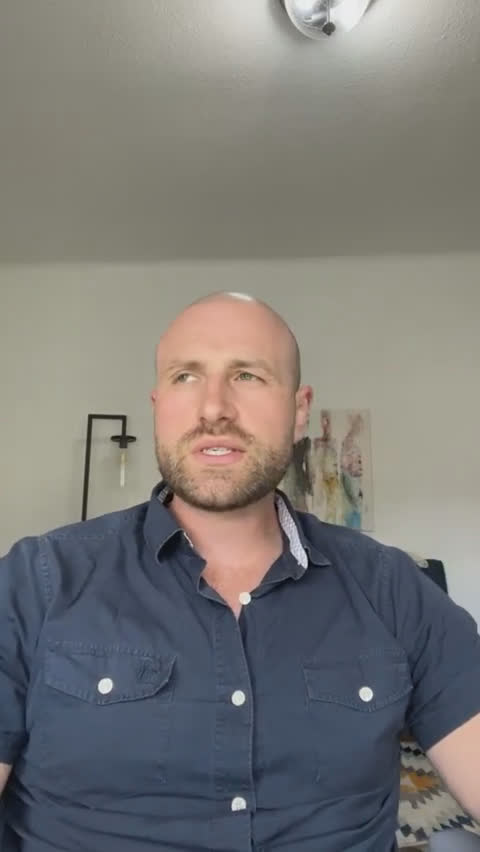
One of the most common mental health disorders is anxiety-related. In this video, I will talk about how anxiety impacts our thought process and how perceived fears become blown out of proportion. Often to the point where we believe them. I will discuss how this process works and how I work with clients to close the gap between the fear of bad things happening and the reality of the situation.
Anxiety is like having this fear. And it's a fear that is disproportionate to the actual potential for harm. How do we do that in therapy? There are a couple of ways.
A lot of what we do in therapy with anxiety is that element of exposure. We challenge clients to lean into their anxiety, go into the edge of your comfort zone. With repetition, the more you do this, the easier it becomes.
So what is the thing you fear most? What about it is scary? Is it likely to happen? If it did, is there anything you could do about it? I find if you really try this and go through these questions, you'll find that it takes away some of the power of the anxiety.
What up, Cadre fam? Evan here, your resident mental health and addiction therapist. I wanted to hop in live because I wanted to talk about something that came up over the past couple weeks and, you know, in the work I do with clients, but also in my personal life and how it relates to mental health and some of the lessons that could be gleaned from these experiences. And I was over at a friend's house, right? He's a therapist as well, and I was there with him and a few friends. And we just got to talking about some of the things that he'd been through in the past, right?
And we were joking a little bit, because when he gets anxious, his mind sometimes goes to this, like, paranoid place. So we're talking about that with his girlfriend and how she is starting to notice that a little bit. And so we started, like, dig a little bit deeper into it and why that is sometimes. And, like, the paranoia for him is like, you know, kind of this fear that may of others intentions that other people are kind of plotting against them in a way. Right? And usually, like, in these situations, for him, the fear is, like, unfounded.
Right? We were talking about how that's what anxiety is, right. Anxiety is like having this fear. And you could check this out in one of my videos I have on anxiety, or a two part series on this. But to me, anxiety is having this fear, right? Anxiety is fear. And it's a fear that is disproportionate to the actual potential for harm. So everyone has anxiety. We have fears. And it's important to have fear. It's how we've survived this long. If we went around afraid of nothing, that could possibly not end well.
And I give the example in my video of, I believe a tiger, right? If we're not afraid of the tiger in the jungle, that may not be the best plan for survival, right? So, you know, we have this fear, but in mental health, we talk about anxiety, generalized anxiety, social anxiety, right? And so when we talk about it, in a clinical sense, that's essentially what we mean is this ongoing and persistent anxiety that actually gets in the way of your ability to function, right. And it becomes this cycle where the anxiety cripples you, and it has these negative consequences on your life.
But the fear within the anxiety that you have is also afraid of something that is going to cause harm. Yet your anxiety is probably what ends up causing you the most harm. So you're afraid of this bad thing that's going to happen because it's going to create this consequence, yet it's really the fear itself. It's the continuous anxiety about something bad that could happen, yet something bad essentially is happening to you. You are experiencing consequences of this, right. And essentially going back, what that is, is having this fear that is disproportionate to the actual potential for harm.
So be like getting in an airplane, right, if the chances are 100 million or something that you're going to get in a plane crash every time you hop on a plane. So very infinitesimal. Probably a better chance of winning the lottery half the time, right? Yet, you know, a lot of people who are afraid to fly. Like, it's this anticipatory anxiety, you know, leading up to the flight, going to the airport, getting on the plane, not to mention the takeoff. What if you hit some turbulence in the landing, right?
So there's this whole cycle of fear thing, right? Yet the potential for anything actually going wrong is one in a hundred million, let's say. So, you know? But when that becomes generalized, generalizing exactly where you have multiple fears that are constantly affecting you, not just before and during and after a flight, you know, that could be really crippling, because, again, these things that you fear are often very unlikely to happen. Even if they did happen, you know, the consequences are often not as bad as what you thought they would be.
Right? So that's the delta I was talking about in the description of this is closing the delta, right? This, you know, the. The fear and then potential for fear. So how do we close that? How do we do that in therapy? Right? And there's a couple different ways that I approach that. And one of the classic ways and one of the most common ways that we do this is kind of taking a two pronged approach. And the first one is an element of exposure. And you see this a lot, and it's really important. People who have OCD, obsessive compulsive disorder.
And I call OCD the tip of the spear of anxiety, because it is like. It is so crippling for people, right? So folks who have to constantly check that the door is locked, that their alarm is set, washing their hands, having these rituals, right? It's like this fear that if I don't do this, if I don't. Or like. And it could be something like, if I don't pray a certain amount of times, if I don't hit every line on the sidewalk, something really bad's gonna happen. Yet it's all consuming, right? And a lot of times, people with OCD could know that this is just totally irrational.
That this is completely superstitious. Yet this fear response consistently prompts them to do these behaviors. Right. The obsession, the thought, the intrusive thoughts, and the compulsion is the actually completing of this ritualized behavior. So that's just, like, a very severe form of anxiety. And one of the most common treatments for that is doing some exposure therapy. Now, I was working with a client recently who we kind of, after working together for a while, and he has a history of this, of, like, OCD, like, a lot of anxiety.
It's very generalized, but then certain times, it hits that tip of the spear. And so we kind of been working on this one issue, and he'd been having a really hard time just being really crippled and debilitated at work, not even able to work full time because of this fear of this perfectionism around, like, sending certain emails or doing certain of these work activities where there's this potential that they could get judged harshly. So it really cripples them. And let's say they write an email, they got to check it multiple times, and it's just so hard for them to do what they need to do because a lot of their job is these types of communications.
And so we kind of realize, like, hey, maybe this is kind of more of that obsessive compulsive anxiety coming up. So really, for just for the purposes of this, it's extreme, this extreme anxiety. And one of the common treatments, as I was alluding to, for this, is exposure. And what would that look like? So, in this case, and I don't do, like, a ton of this. Like, I think with OCD, it's really important, especially severe OCD, to really do, like, a program or see a specialist because it is really, really intense.
I call it a really sticky disorder. Right. It's really difficult to, you know, reverse course on it. However, with these treatments, it's certainly possible. Just takes a little more. But, like, what they would do in that situation. I had another client who did treatment like this, and he had the same thing with emails where he had to check it a million times to make sure it was perfect. So what they would have him do is write out an email with one mistake in it, right. And. Oh, my God. So they would be there with them and they would track, okay, what's your anxiety level doing this?
And then they would have that person essentially send the email, track their anxiety, and have them continually do that. Right. Because when you do that, you force yourself to do it. That fear rarely ever comes true. Right. So they send the email and then okay, now, what if I do two mistakes, three mistakes, five mistakes, the whole thing is messed up, right. And they have you in a safe, controlled way. Right. They don't want to bring you too high over your threshold to just totally dysregulate you, but really gradually stay at the edge of your comfort zone.
At the beginning, that comfort zone may be this big and just doing one little mistake, but eventually, as you do that, it's like a balloon. The more you blow it up, the more it expands. And the more it's able to expand as it stretches out. Now, if you go too fast, too quick, boom, it pops. So a lot of what we do in therapy with anxiety is that element of exposure, maybe not as extreme as that, but really challenging clients to lean in. You hear about that, lean into your anxiety, go into the edge of your comfort zone.
And the same thing goes with trauma therapy, because there's a lot of anxiety, fear as a trauma response. So even by talking about something traumatic, or let alone doing very direct trauma therapy, you're automatically pushing someone into that discomfort level. And so, like in trauma therapy, we're very careful. We're supposed to be very careful to not kind of burst that balloon and send someone past what they're able to handle. But again, with repetition, the more you do this, the easier it becomes.
Just like if I was afraid to learn how to ride a bike or something like that. The more I do it, the better I get at it. As I slowly learn, the less fear I have, because I'm already doing it right, and these terrible things are not necessarily happening. So, yeah, so that's one leg of it is exposure. Another thing that I often do with clients in these situations is looking at the thought patterns around it. What is our mind telling us? Or essentially, what is our body telling us? It's this fear response that gets translated through our mind that says, don't do this.
This is dangerous. This is embarrassing. I was working with a client earlier, too, who was really afraid to share some of their journaling we were doing for trauma therapy. So afraid I was going to judge them. But literally, logically, knowing we've been working together for years, that I'm not going to judge. I probably heard a lot of this stuff already, but it was really anxiety provoking for them to do it, and I kind of pushed him a little bit. So just do this. So he does it, reads the journal, and afterward looks at my reaction.
I'm pretty stone faced. I'm not. Oh, my God. A lot of that is that projection that fear that judgment you have upon yourself and assuming that others are going to have that same reaction that you're having to yourself. Right? So, but as this client did this, it wasn't so bad. In fact, they felt better afterward. And that's what usually happens, you know, when you do this and you do it in a controlled way and that negative response doesn't happen. It helps. I always joke, like, because I can never say for sure something's not going to happen.
And it always makes me think of that Alanis Morissette song. Ironic, right? Like Mister play it safe is afraid to fly. But as the plane crashed down, he says to himself, well, isn't that nice? Right? Don't be afraid, right? Yet the plane. So there's always that risk. Right. Now, that's an extreme example. But then the question you're asked is, okay, so let's say this thing did happen, and that's where the changing of the thoughts comes. There's an exercise I do called anxiety questioning, and I could just, I'll work on pulling this up cause I have it here.
I didn't think to do this, but it's essentially going through and questioning your anxiety, right. It's called like, socratic questioning, right? Socrates, he was known as one of the better debaters, right? He was, you know, someone who had a very logical mind and was all about, you know, getting to the truth and cutting through. And the way that he did that in these lectures and these debates was through questioning. He would never say, well, that's wrong, because da da da. That doesn't make sense.
What he would essentially do is just keep asking questions, right. And he would essentially almost force the other person and would drive some people nuts, but it would essentially force the other person to get caught up in their own logical fallacies just by asking questions. And it actually was like, in a more gentle way than being like, you're wrong. You know, it's like drawing out of people. And so essentially, this is similar or based around that. So I'm going to go ahead and pull it up. And these are some questions that came up for people to do around their anxiety.
And people have found it to be quite helpful. So let's say there's something I really fear. Like an example, I may have talked about this at one point about a client who was extremely afraid of getting fired from his job. Yet when we broke it down, there was absolutely no logical reason to think that. It was just this fear that had started to come up for a variety of reasons. You know, we did this anxiety questioning, and it really helped. It just, you know, sometimes when you're able to draw these insights, when you're able to write these, and when you're able to see it on paper and not just these random thoughts bouncing around your head, it's like these thoughts are behind our eyes, right?
So we're like, wait, what's going on behind us? We're getting these messages coming in, and it's really hard to sort them out and tease out what is true from what's not. And it's hard to grab onto them because they come, they go, right. So in this way, you're kind of taking these thoughts, you're isolating them. You're like, stop moving. You put them on paper, you look at them, and you're able to more look at it from a more logical standpoint. And oftentimes that helps. It helps calm the body when you're able to do that.
So without further ado, here are the questions. So what is the thing you fear most? What about it is scary? What about it is the most scary? Is it likely to happen? If it did, is there anything you could do about it? Do you have control of the situation, or is it 100% out of your hands? Who do you worry this will affect? Would they eventually be okay if it happened? Would this be the worst thing that could possibly happen to you? If not, what are three things that could be worse? What are three things you could do to make the situation more tolerable?
If it did happen, could you still find happiness and contentment in your life if it happened? Is the situation dire that it's worth worrying about and sacrificing your serenity? Would others still be there and support you if it did happen? Right. And most of the time, if people are being honest with themselves and they read through this, it's like, the answer to those questions, what's most scary? Okay, let's isolate the thing that is the most. You have the most fear about it. How likely is it to happen?
And it kind of makes you stop and think about it. What could you do about it? Right? So it's highlighting, like, really playing the tape through of. You know, it's highlighting. It's playing the tape through of, okay, even if this did happen, because usually your brain doesn't go past that point. You know, you think of, okay, this does happen. Here are all the bad things. But, like, okay, let's say it did happen, what would you do? What could you do? You know, fast forward another five years. Would that still be on top of mine, would that still, could you get yourself out of the situation, you know, and then what are the things you could do to prevent it?
Right. Then also things like gratitude and perspective, even if they did happen. Right. So it's really hard. I find if you really try this and go through these questions, you'll find that it takes away some of the power of the anxiety. Right. So changing your thoughts, your reactions, your views, your insight about anxiety, but then also, what do they call that in vivo, in real time, in real life, doing, challenging your anxiety by actually doing the things that you're afraid of in a controlled and slowed manner over time.
That delta we talked about, the beginning, begins to close, right? Well, actually here the potential for harm doesn't close. That stays the same, but the delta closes as your fear and anxiety reduces and it no longer has that same power over you. Anyways, I hope you found that helpful. A little trick for anxiety, and I do challenge you to try that out. And if possible, I can post.
Reactions and comments are for members. Joining is free and takes a minute.