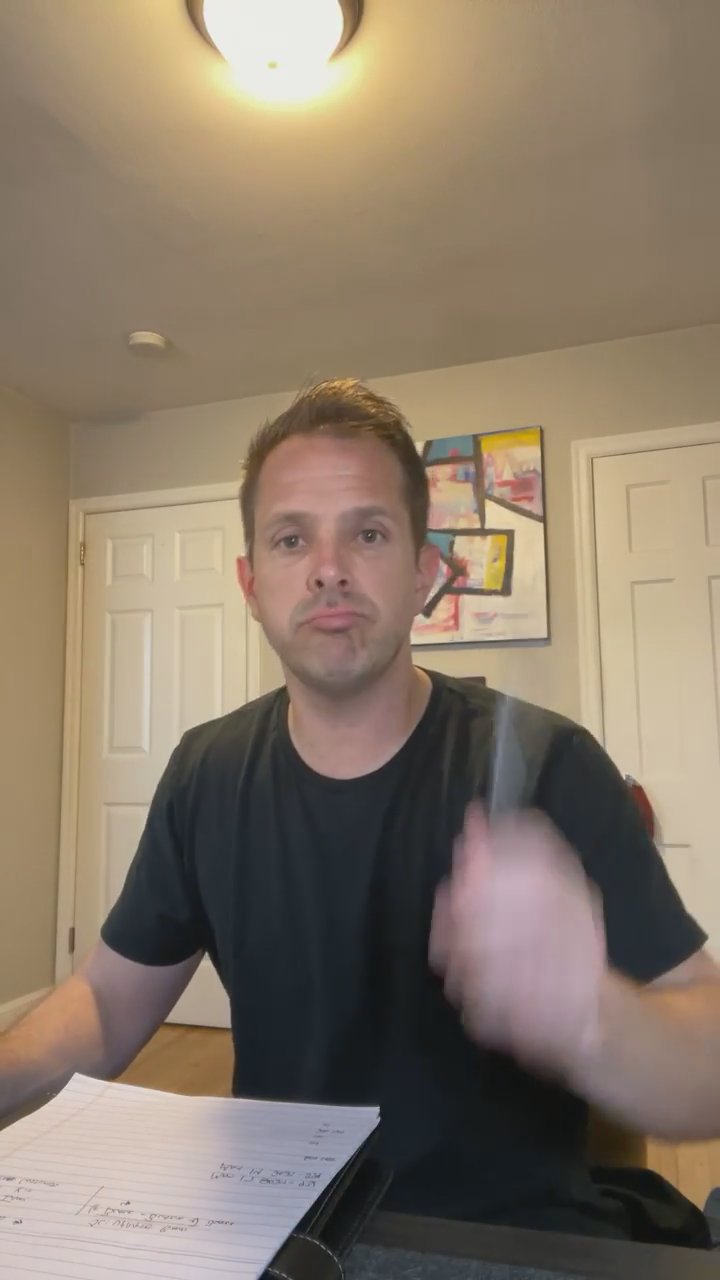
Host reflects on grief, loss, and presence in mental health, using music and personal stories about friends' recent losses to explore how greetings, connection, and breathing practices help hold difficult moments.
Sarah T. North lost longtime friend yesterday from a brain tumor at age 65. As we take a different look at this whole world of mental health and how we exist in it, even that greeting changes. We often talk about the ideas of grieving stuff and losing stuff and the big changes that don't unchange.
Hey. Hey. Good morning, Cadre. Just a little bit longer. Please, please, please, please, please tell me that you're gonna. Hey, Jules. Daddy don't mind and your mama don't mind. Stay just a little bit longer with me this morning. Cadre. How are we doing, Carrie? It's always karaoke hour at Cadre. Today there's something about Meg Ryan says, and you've got mail when she's talking to Tom Hanks through instant messenger, that she likes to imagine that she's already in the middle of the conversation, that the conversation doesn't have to have a specific start.
It doesn't have to go through the rigmarole or the pomp and circumstance, but it can simply be in the middle. So part of my intention with having some music playing most Cadre todays good cafe. Marisa, nice to see you. Sarah T. North, is that music is a good way to act like we're already in the middle of the flow? You got a little Frankie Valli in the Four Seasons this morning. Yeah. Frankie Valli has been a pop star for seven decades now. I saw him in concert. Maybe it's two years ago now, but rearranging music a little bit, but still rocking with those four seasons, which now there's been, like 79 seasons, I think, you know, members of the four seasons, there's been about 80 of them.
But how are we doing today, Cadre? Nice to see y' all in the Cadre sphere on Fridays. We often talk about the ideas of. Of grieving stuff and losing stuff and the big changes that don't unchange. And I'm glad I'm here. And I'm glad you're here. And I know what I know, and I care about you. Right. You know, there may be the day when I'm not here or you're not here or. Or the things that we think we know end up changing in a moment. So as you hear those 17 words as the greeting to Cadre today, I'm glad I'm here.
I'm glad you're here. I know what I know, and I care about you. Even on a Friday, right? As we take a different look at this whole world of mental health and how we exist in it, even that greeting changes. Changes meaning. Well, hey, two weeks ago. Oh. T. North lost longtime friend yesterday from a brain tumor at age 65. T. North, I am thinking about you and reading those words and having that, ah, sh. Response right now. I was just about to say a longtime friend of mine two Tuesdays ago, her dad died right about now, 8 o' clock in the morning, went to the dump to drop off some stuff as he's redesigning her.
Her. Her bathroom, and got back in his truck and had a heart attack. She messaged me late last night that she doesn't know how to pack to go to her dad's celebration down in Florida. And then this morning, she sent a message using a couple of words. The words were just. She said, just breathe a couple of times. She said, let. Like, let, let the thing happen and keep, keep going. And my recommendation to her, because I always show that I'm invested by, by reflecting back. I always say feel. Feedback is how I say thank you.
I see you, I know you, I'm engaging with you. And I offered a rephrase of what she sent me by removing those three words, Keep, let, and. And what was the third one? I just said it. Keep, let and just. And just. Because I was like, anytime you use the word just or let, there's an insinuation that the thing that you just are doing or that you're letting happen is easy. And I don't think those things are easy. So rather than saying, you know, just breathe, I said, what if you just said breathe? And if your body said no, well, at least you weren't pandering.
Be like, oh, you just need to breathe and your body's going. It's really hard to just breathe. And then in terms of the. The keeping, you know, sometimes the, the keeping won't happen, sometimes the dragging the horse forward, the horse says, no, I'm not going to go anymore. And she appreciated that. Reframe. But I invite you to give yourself as much support as you can muster. And one of the ways that you can do that is by the words that you use to talk about how you're moving through the hard stuff.
It's amazing how a little word like just or let or keep can add stress and weight in a time that you don't need any more stress and weight. As my friend Kelly says, grief is the indicator of love. Right? Grief is the proof that there's a lot of love that's still happening. And even though grief is part of the process, love is the whole process. It's just after. It's just after. It's after the person or the thing or the moment or the experience ends. That rather than it being love, it's love and grief.
So no matter where you are, no matter what's going on today, be where you are with what you have. Cause you don't really got a choice. Y' all have a good one. I'll be back tomorrow morning with a little enoughness talk. But it's Friday, so Friday's a happy day for you Let it be happy Friday's a hard day for you Let it be hard when you got some time Put on some music in our goodbyin There ain't no good, nah Goodbyin True love takes a lot of trying oh, I'm crying It's nice when the music lines up to the message right?
Goodbye Y' all got a lot of love between us Hang on, hang on, hang on to what we got.
Reactions and comments are for members. Joining is free and takes a minute.