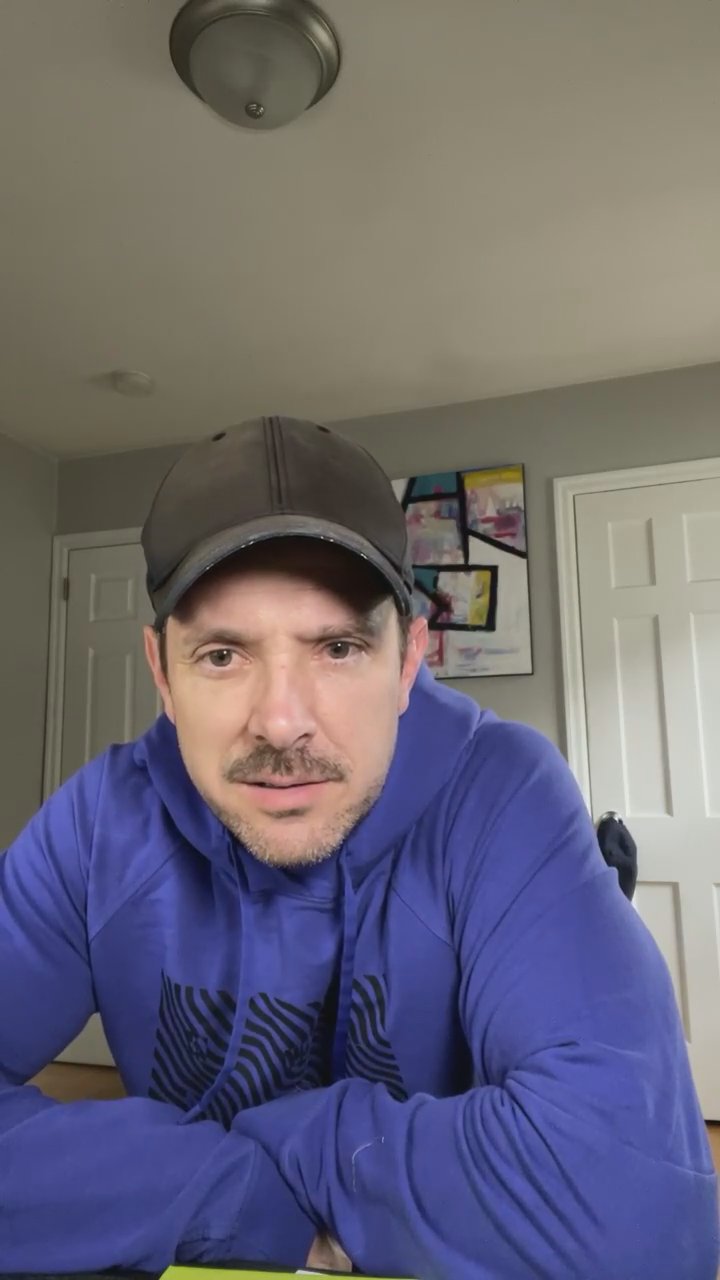
T North reflects on balance and introduces followership as intentionally amplifying and furthering others’ actions, using examples from Minneapolis, a young entrepreneur, and everyday choices about when and where to act.
T North was up in the cities of Minneapolis and St. Paul to hang out with some Cadre peeps. All month long in June, we're also talking about balance. Here's T North's thought for you today.
What is followership? It's the act of seeing and believing in amplifying and furthering other people's actions, missions. Consider how Important the little things that you're doing are. And take them as if they are the biggest thing in terms of how you plan and prep for it.
I met a young entrepreneur this weekend. He started the William Cookie Company. His win was to make people happy through the act of selling cookies. Why, when and where does that cookie make the most sense?
Hey, good morning, Cadre. How are we doing today? It's Monday again. Yeah. That's crazy. It's amazing how quick we can let time pass. What do they say the years go? Years go fast, but the days go slow. Feels like that sometime. T North. Amar. Amanda, how are we doing? Hey, Emily. Nice to see you crew. It is always the best way to start a day to jump into the Cadre sphere. And may I just say, I'm glad that you are here. I'm glad that I'm here. I know what I know beezle bits. And I care about you.
Put those things together and you're ready to have a good moment. Yeah. Emily, good to see you as well. Hey, let me know how your weekend was. And you can answer that any way. You can answer it in terms of, like, energy. Like, it was tiring, it was energizing. You can answer it like it was busy or it was not busy. You can share something you did share something you thought about. I always like thinking whenever someone asks a question rather than what they're asking, I like to think about the. The why and the where you're going.
Like, what does that mean? Well, first of all, let me say this. On Mondays, a lot of times, we speak about what we do with our lives. Let's call it, you know, our work, our. Our hobbies, our responsibilities, and how we can maybe do those things better. Right? So kind of the professional development box. But all month long in June, we're also talking about balance. Amara says it wasn't a busy weekend. Sleepy, chilling, slowing down. I love that. I love that. I love that. I love that we've been talking about balance, Right?
So, perfect example. Amar says, not busy, and Emily says, full throttle. There's the spectrum, right? Which one is right? Both of them in the right mix. Tinor says, incredible 15 hour day. From when I left to when I got home. T North was up in the cities yesterday of Minneapolis and St. Paul to go ahead and hang out with some Cadre peeps. Uh, T. North, thank you for coming up and spreading your love up in Minnesota here. So here's my thought for you today. And it kind of ties back to why I explained and gave some context to my.
Hey, how was your weekend? Question. Um, so often we ask what we're supposed to do. I invite you to think about the when and the where today. So I often talk about followership. You may be like, what's followership? It sounds like a kind of a made up word. Well, every word's made up. But if you think about leadership, it's the. It's the craft of guiding others through change. What is followership? It's the act of seeing and believing in amplifying and furthering other people's actions, missions.
And you'd be like, ah, no, I'm a leader, I'm not a follower. I would beg you to think a little bit more about how you move through the world. We spend most of our time following. There's ideas that we like, there's things that are moved by, there's. There's actions we complete as part of a larger system. And if we don't take those moments boldly, if we take them passively, like, oh, this is the thing I have to do. Why do you have to do it? I don't know. When does it have to be done? I'm just doing the thing, right?
If we don't actually put ourselves into the system of understanding, we end up missing opportunities and not accomplishing what we want to accomplish as a part of what everybody else is accomplishing. Let me put it this way. Let's say you're attempting to accomplish a craft, your thing, your craft as a part of a larger entity. I'll use an analogy. Let's say that you are in a choir or on a football team, and the coach or the director says, okay, I need you to do this thing. And you go, okay, I need to do this thing.
Hopefully the coach, the director goes, and here's why this thing is important. And here is the world in which it's happening, the where, and most importantly, here's when it needs to happen in relationship to everything else going on. Imagine if the football player didn't block before the running back had to move through the space. What if the member of the choir didn't move to the part of the stage in time, so the people had to move behind them at a specific beat, weren't able to do so. So often when we're following, we think about what we're asked to do and we stop, we may not consider how important that act is.
So we don't think about all of the other calibrating elements of it. Why are we doing it? What's the part of the story that we're telling? Where is it happening, in what world? What's the feel? And when does it have to happen in connection to what everybody else is doing? I raise this up because sometimes we feel not important or we feel alone in the work that we're doing, and part of that we have some responsibility over. Consider how Important the little things that you're doing are. And take them as if they are the biggest thing in terms of how you plan and prep for it.
I met a young entrepreneur this weekend. His name's William. He started the William Cookie Company. He was at. Him and his dad were at farmers market that I was at. And I walked up to him, I was like, william, why'd you start your company? He's like nine. And he said, because I want to make people happy. I go, okay, there's a Cadre today. He wasn't selling cookies. His vision, his mission, his, his, his why and his where. And his win was to make people happy through the act of selling cookies. So the what was like, oh, I sell cookies.
My mom and dad said I should start a business. I like watching baking, television, what, whatever. He's like, no, like, why am I doing this? He's like, cuz I really want to make people feel different. Where am I doing this? While in a moment, when they're walking around the farmer's market or maybe they have kids or dogs or stress going on. And all of a sudden that moment, it's like, that's a space where they may need some happiness. And when on the other side of conversations, he sat in his chair, his dad was watching his son run his business.
And people would walk up and he would say, hey, how are you doing? He wouldn't say, do you want cookies? He'd say, how are you doing? And then they'd start in a conversation and after the conversation would happen normally, they would ask about his business and he'd share why he does his business. And that's when the cookie made sense. What's your cookie? Sure. But more so, why, when and where does that cookie make the most sense? So that's the thought for the day. Amar, you have a question. What is it?
Go and throw it out here, everybody. You get to see all of us whenever you want to, right here in the cadres, here, either live or in replay. But check out a lot of the prerecorded content this month because you're going to see that there are tons and tons of opportunities to dive into this world of balance. I will be back tomorrow morning, 7:30am Just like all the time. And I can't wait until then. Amar, once your question pops on in, I'll come back in and answer it later. Have a good one, everybody.
Reactions and comments are for members. Joining is free and takes a minute.