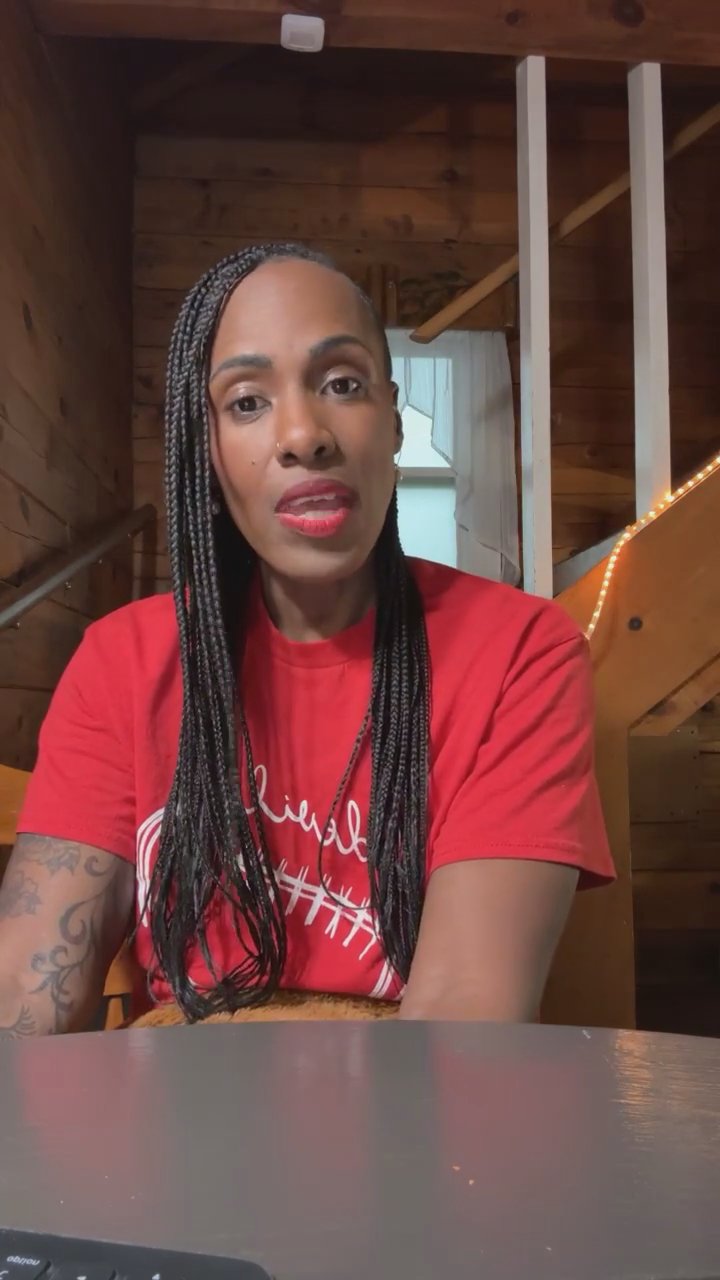
Dr. Charisse Johnson explores how food and the things on one’s plate reflect emotional memories, trauma and self‑perception, guiding three reflective plate conversations—protective, silent and pleasing—with a writing prompt.
Dr. Charisse Johnson is a licensed clinical mental health therapist, mindfulness practitioner and author. We talk about all things life and health and well being. The premise is that we're not looking for balance. We're looking for harmony.
Dr. Teresa: Where are you in the world and rate your week. Focus of today Anchoring quote Healing is not found in what you restrict, but what you reclaim. How does food become the language of trauma, of self perception and healing?
The brain encodes emotional memories with strong sensory cues, especially taste and smell. Sometimes we have to pay attention and recognize that what's on our plate isn't just fuel. Is it a placeholder for unmet needs? Or protection from shame, from judgment, from fear. Food is not connected to your self worth.
Dr. Teresa: Let's break this down into three reflective plate conversations. First, the protective plate. This is for your awareness and for you to notice. Second, the silent plate. You don't deserve to be nourished. Third, the pleasing plate. For those of you who like to write, write a letter from your plate.
Cardio sphere. It is Sunday, so please, by all means get comfortable. Grab a blanket, a beverage of choice, whatever it is that will make you feel comfortable. And let's get into a little if your plate could talk, what would it tell you if this is your first time in this space? I'm Dr. Charisse Johnson, a licensed clinical mental health therapist, mindfulness practitioner and author. I come into this space twice a week, most weeks unless I'm traveling. And we talk about all things life and health and well being with the foundational premise being completely around the fact that we're not looking for balance.
That's not real. We're looking for harmony. That means how is everything working and fitting together? Thank you so much for the hearts. I love them. Come in and as we typically do, where are you in the world and rate your week? I am in the mountains having some phenomenal R and R that has been so great. It's been rainy today, but still a little warm and quiet. And then rate your week. Where are you right now at this point in the week? One, it's been a very, very difficult week for you. 10 meaning given the context of your life, it's been phenomenal.
Good evening, Dr. Teresa. Hello, South Carolina. Hello, New York. Good to see you all. Hello Erie, Pa. Focus of today Anchoring quote Healing is not found in what you restrict, but in what you reclaim. Your worth, your voice and your story. I want you to think about that out of those hello Statesboro, Georgia. Are there any elements of that hello New Jersey that you feel like it's so important hello Mount Pleasant that you want to reclaim? All right, so other things that I want you to consider when we talk about your relationship with your plate, everything that's on your plate, metaphorically, we're not only talking about your plate, but we are often talking about your past.
We're talking about the space between your choices and your self concept. And then how does food become the language of trauma, of self perception and healing? And what might your plate be saying about that story? That's where we started off in this Sunday evening time and I kind of venture and pivot and you're all wonderful to allow me to do so, but I want to bring it back cinder. So let's talk about this understanding the emotional language of the plate. Again, if you're with me, make your two circles.
Thank you. For those that are rating one plate is what's on your plate, like everything that you're carrying, all the things that you're worried about. And then what are you noticing about the things that you're consuming and how you're nourishing yourself. So neuroscience shows us this. The brain encodes emotional memories with strong sensory cues, especially taste and smell. So there's a lot of food, right? That when you smell those foods, when you taste those foods, there is so much nostalgia.
What's a food for you that you know automatically, hands down, when you have that, when you crave that, there's also some nostalgia there, hands down. I can tell you two of them for my, for me, one is popcorn. Such nostalgia, such memories of my mother. Also very much something that I consume when there's a lot of stress going on. And then the other would be brownies. I am not ever going to turn away a warm brownie with ice cream. But sometimes we have to pay attention and recognize that what's on our plate isn't just fuel.
It's comfort, it's punishment. And I'll come back to that one. It's a placeholder for our unmet needs. Or it's protection from shame, from judgment, from fear. Mac and cheese equals nostalgia. Love me some good Mac and cheese. So I want you to think about that when you look at what you're eating and what's been on your plate. And also I always interchange what you're eating with what you're drinking. We're going to always interchange those. What are you noticing? Are you eating for comfort? Are you eating out of punishment?
And punishment is often the I've already messed up anyway, so I'm just going to go all out or I feel bad so I'm going to eat certain things in order to feel good. Is it a placeholder for unmet needs? Life is already hard enough. So I'm going to continue to give myself what I want. That's a big one that can show up. But when we experience those kind of things with chronic shame comes a lot of body based criticism. And then that builds this really false association between food and safety and food and self worth.
Here is the truth, today's hard truth. Food doesn't truly make us safe. It does create dopamine. It brings our body back into a balance of homeostasis. Or certain drinks do the same thing. But that's not a true nervous system state. And food is not connected to your self worth. Do you really believe that? Do you really know that your days are good when you eat well and you are still good when you don't eat well? And that's something to really keep in mind because a lot of times when we're going through really hard things mentally.
It shows up with overeating or under eating and a little bit of all in between. So I want to give you a framework of kind of how to start framing your plate. Let's break this down into three reflective plate conversations. First, the protective plate. This is just for your awareness and for you to notice. This is, I'm here to soothe you when the world feels too harsh. Are you having a lot of protective plates throughout the week? And that's typically going to be linked to stress eating, especially from burnout or criticism.
Two, the silent plate. You don't deserve to be nourished. So that's often linked to restrictive eating or perfectionism or guilt. So you want to be able to really look at what are my patterns, what am I seeing about what am I eating, and what's the underlying reflection that my plate is sharing with me? What is it letting me know about where I am? And then the third one is the pleasing plate. You have to eat this way to be accepted or liked. So we see a lot of perfectionism here. This is linked to social pressure, diet culture or internalized stigma.
I'm going to ask you to do something pretty bold right now. Which plate have you noticed in your life at least once or twice over the past month, the protective plate. Eating to soothe the world is too harsh. Stress, burnout, criticism. The silent plate. I don't deserve to be nourished. So you're under eating, restricting, eating less out of guilt or the pleasing plate. Thank you for that. I love that you put the protective plate and you were able to connect it to, hey, I felt like an imposter today.
And because you had a moment, which we have, where we feel like an imposter, then we do see that protection and it shows up in very small ways. And we don't do this because we're trying to judge our plate. It's really about curiosity, man. What is this? What is this trying to tell me? And compassion. Some of you who stay connected with me will remember that I talked to you about going on this Jolly Rancher kick. It just all of a sudden, I could not get enough. And then all, I won't say all of a sudden, then it got to a point where things settled and then I was like, okay, I'm ready to let that go.
But I really did spend some time to get curious and go, what is going on with you? What are you carrying? What are you noticing that has you on this? I need something sweet. So, yeah, protective plate seems to be a Big theme that we're seeing. And keep these, you know, reflections and ways of kind of being curious about your plate handy, because they're going to be very helpful. But I want to leave you with, of course, a few tangible tools to help heal that inner dialogue that comes when we look at our plate and we go, there's too much here.
Whether that's physically or metaphorically, one, name the narrative. Ask yourself whose voice is speaking. When I'm making choices about my food or my body, awareness is always going to be the first step to make sure we're reclaiming the Autonomy. Thank you, Dr. Teresa. I'm not alone. Not alone. That was you and gummy bears. Yeah, it was wild. Crazy. Hello, Maria. And then second skill is practice, what we call interoceptive awareness. So slow down before you eat. We don't do this well. We're normally going a million miles an hour.
Ask yourself, what does my body need right now? Does it need nourishment? Does it need comfort? Does it need distraction? And then connect your body's real time cues by building trust that, okay, I need comfort, and I can find comfort in other ways. That comfort doesn't have to come from what's on my plate. And this one, not everybody will want to do, but it's great. For those of you who like to write, write a letter from your plate. Right? Dear Blank, that's your name. Here's what I've been trying to say.
Like, if your plate can actually talk to you, what would it say? And remember that your relationship with your plate is not about willpower. It's really about wounds. It's about your wiring. It's about your worth, and something that we will continue to kind of talk about in the weeks ahead. So as you move forward today, I want you to carry this reminder. The most powerful form of nourishment is not what we eat, but what we believe we deserve. And so, as you move forward from this moment and you think about nourishing yourself tangibly, eat in a way that honors your values.
And then as you take a look at your plate, write down all the things that you're carrying, the responsibilities, the stressors, the dynamics that are there, remind yourself that you do get to decide what you put on your plate, what you carry, and what you can put on pause so that your plate can be a little lighter. As always, I'm so glad you came. Hopefully you got a little nugget of something that will keep you going throughout the week. And I look forward to seeing all of you on Wednesday. Have a fabulous start or end depending upon what you think about Sundays to your week.
Have a good one.
Reactions and comments are for members. Joining is free and takes a minute.