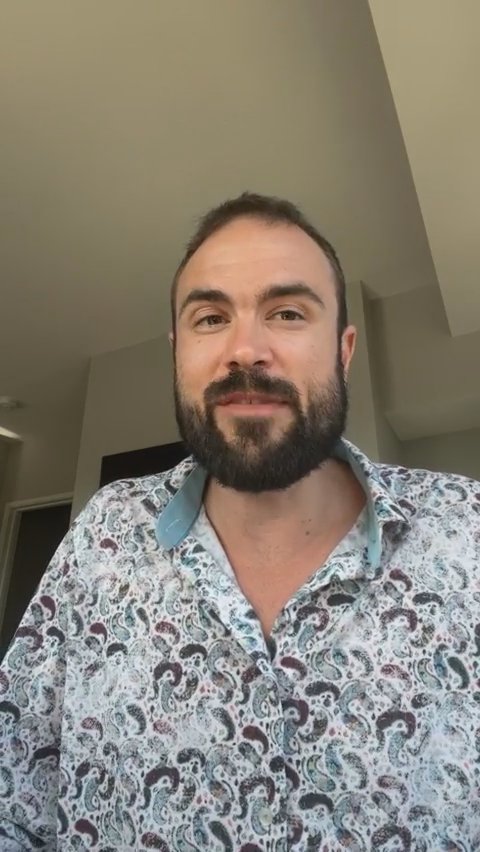
We’ve all heard of the “power of positive thinking”, but how do we practice it? Nick The Poet explains how positive thinking has changed his life and how it can change yours too!
Hi, folks, this is Nick the poet, and I am going live. Hope you're having an awesome day. Monday, first day of the week. Let's get started.
Nick the poet shares four ways that positive thinking can transform your life. toxic positivity is the belief that no matter how dire or difficult a situation is, people should maintain a positive mindset. Instead of dwelling in the problem, we search for a solution.
Scientist Kevin Kelly says civilization depends on an implicit degree of general optimism. The single easiest step to positive thinking is gratitude. My call to action is to start a gratitude journal.
Hi, folks, this is Nick the poet, and I am going live. I'm just going to give it about 5 seconds here and let people trickle in after getting the notifications. Hope you're having an awesome day. Monday, first day of the week. Let's get it started. Okay, so what comes to mind when you hear positive thinking? The power of positive thinking. Do you like this term? Do you dislike it? Have you tried it before? My name is Nick the poet, and I'm a creative coach here at Cadre, and I want to share with you four ways that positive thinking can transform your life.
But first, I want to give a disclaimer on toxic positivity. So, toxic positivity is the belief that no matter how dire or difficult a situation is, people should maintain a positive mindset. It's a good vibes only approach to life. And while there are benefits of being an optimist and engaging in positive thinking, toxic positivity instead rejects these difficult emotions in favor of a sure sob. And so toxic positivity is definitely a thing. It's a factor. And I wanted to address it and know that if, you know, there are seriously difficult griefs and traumas that can't be ignored or fixed simply with positive thinking, they may and probably do require professional help.
And so this video is geared towards the benefits of being an optimist and engaging in positive thinking. You know, we all have to deal with what Carl Jung calls our shadow self, and we have to overcome difficulties and not ignore them. But there is a ton of scientific research and anecdotes to support that. Thinking positively certainly can lead to good results, and that's what I want to focus on in this video, specifically, four ways and benefits of positive thinking. So positive thinking can definitely help with stress relief, right?
Instead of dwelling in the problem, we search for a solution. We ask for help, we get creative. I had a recent live stream on the art of asking. And so if you have a problem that arises, if we keep focusing on that problem, we're going to keep on getting more of that very problem. But if we begin to get into solution mode as quickly as possible, you know, we can really come up with some awesome answers. We can go to work on it. We can ask our friends and family and resources and coworkers for help.
You know, we can learn more and really take that action that can help change our thinking. And that's going to reduce our stress, because if we just sit in the problem, we're going to get super stressed and oh, my God, what do I do? What do I do. But let's get into that solution as quickly as possible. And for the second benefit, I wanted to share this quote from scientist, writer, and inventor Kevin Kelly. He says, civilization depends on an implicit degree of general optimism. It is a collaborative exercise.
Civilization amplifies and accumulates cooperation between strangers. If you expect that you can trust a stranger, that is optimism. If you expect to be cheated or hurt, that is pessimism. Societies that bring the most good to the most people require that people be trusted more than they are distrusted, that they expect more good than harm. They require that people in general have more hope than fear. Societies that have more pessimism than optimism tend not to prosper. It's really biologically ingrained in us to maintain a degree of practical optimism.
Now, this doesn't mean that we want to necessarily go around leaving our doors unlocked or, you know, anything like that. But if we have this, this trusting attitude towards the universe and to others, we get really great results. We're able to be helpful, we're able to take risks, right? Because there's no such thing as no risk. We're going to have risk. But if we have this level of optimism, it can make us a great collaborator. I mean, let's be honest. Do you want to work with a co worker who is really positive or really negative?
Probably really positive. It makes it more fun for everyone and ultimately more productive and probably more successful. Number three, the single easiest step, I believe, to positive thinking is gratitude. As GK Chesterton said, it is the mother of all virtues. Robert Emmons, the world's leading scientific expert on gratitude, says this about it. I want to focus on the psychological benefits that he talks about. Higher levels of positive emotions, more alert, alive and awake, more joy and pleasure, more optimism and happiness.
And so it seems like gratitude is this key that unlocks this great positive emotion in us. And an affirmation could just be. Thank you. Thank you. You know, when, even when difficulties arise, thank you. This gives me the opportunity to practice what I'm preaching, you know, and oftentimes for me, I love these different concepts. I love talking about them. But when situations actually arise, guys, it is stinking difficult to get out of that stinking thinking and into positive action. But that is what we're really called to do.
And it can help us overcome envy and resentment, and it can even reduce depression. These things are really real. So let's practice gratitude. And number four, it's just more fun to err on the side of positivity, to view the world as a glass that is half full, finding a reason to smile and bring joy to others. It's just a good time, you know? And I think there's something to be said for that, right? Like, we've all got to chop our wood and carry our water and do our daily work, but why can't we do it with a smile, you know?
Once again, we don't want to encourage toxic positivity. And there's, like I said at the beginning, there's many situations that need to be addressed, you know, professionally and with a degree of. Of seriousness. But all things being equal, you know, errin, on the side of positivity, I found in my life to be very practical and a lot of fun. And so my call to action, to you is to start a gratitude journal. When you wake up tomorrow morning, I want you to write down three things that you are grateful for and then share them through a text message or in person with somebody, and then let me know how it feels.
My email address is nhansonadre IO. That's nhanse at Cadre IO. Please email me. Tell me about it. I would love to hear about how your gratitude journal gets started. And if you email me, I'll share my three things that I'm grateful for with you. I hope you have an awesome rest of the week, and let's be positive and peaceful. Okay, bye.
Reactions and comments are for members. Joining is free and takes a minute.