Sometimes we want to hide what we are going through or what we have been through, but is there power in exposing ourselves? And when is it oversharing?
Hi. Let's just do it. We'll do it live. Sorry, that's a radio joke. Okay, I think it's working. I think we're up and running.
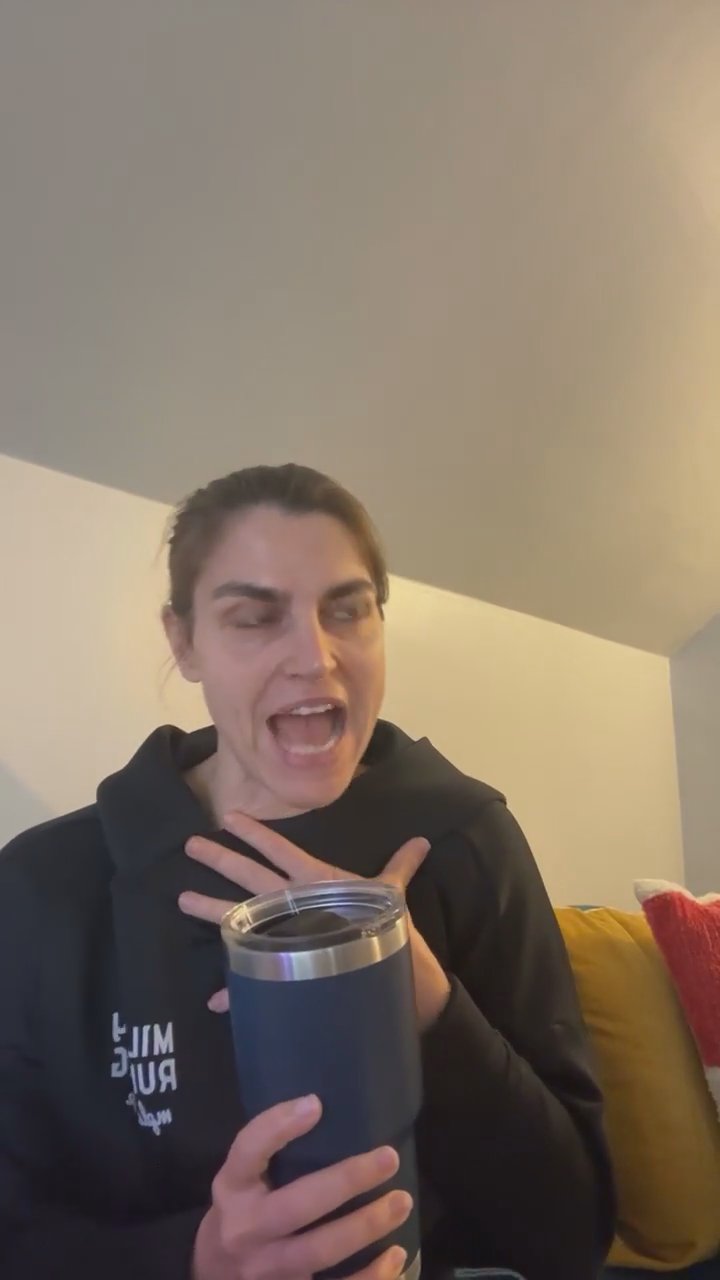
Brittany Hagan has a radio show in the Twin Cities. She shares reasons why she knows things work for her. She says there's some magic on verbalizing the telling on ourselves.
Luke: Looks like Luke and his wife recently were talking about telling on ourselves and, like, the difference. This month's theme is Balance. Love it. Oh, my God. I forgot to put in my AirPods. We'll see if this helps.
Telling on yourself is something that is a huge part of mental health and sobriety. It's not like a tattletale way, it's more of calling yourself out before things get worse.
Britney: Let's talk about some verbiage around telling on yourself. The theme of this month is balance, something I struggle with. There is a real power in verbalizing too.
What is vulnerability? What's telling on yourself, and what is over sharing. There is a privilege you give to giving somebody information. Are you talking to somebody you feel safe around because you know them well? These are the people that we need to start focusing on.
The next time that somebody asks you, how are you doing? Give them an insight, give them a little. You'll find your relationships benefiting from that. Brittany Hagan wants to talk about balance in our lives.
Hi. O. Okay. I think it's going. I don't know. I'm struggling with. Okay, I think it's working. I think we're up and running. Hi. Let's just do it. Let's just. We'll do it live. Sorry, that's a radio joke. All right. Hello, my name is Brittany Hagan. I have to laugh because I was talking to somebody today about how we start these or how I start these. I shouldn't say we, because some of you are actual professionals and probably don't start this way, but I always like to give you my credentials first.
And, like, not like my. A bunch of those letters that come after your name, because I don't really have a lot of those. But what I do have is, like, a list of reasons why I know things work for me. And so I like to start off with saying, hi, I'm Brittany. I am. I'll have 15 years sober in July. I'm a divorcee. I am a veteran. I am a single mom, and I have a radio show here in the Twin Cities. So it's funny because, like, the same things that you go, this is why I'm a hot mess. Are, like, the same reasons I like to say, this is why you can listen to me.
Because I've done a lot, and I've been through a lot, and, like, I think everybody has. Right. But I feel like there's some magic on verbalizing the telling on ourselves. All right. And that's what we're talking about today. Thank you, Luke, so much. Looks like Luke and his wife recently were talking about telling on ourselves and, like, the difference, because, like, I know this month's theme is Balance. Love. Balance. Love it. Oh, my God. I forgot to put in my AirPods. Is this sounding okay? Because I can put them in.
I think they're in my pocket. We'll go airpod mode. We'll see if this helps. Love it. Okay. They're connected. All right, let's talk about telling on ourselves. It's something that is very huge for mental health and sobriety. Telling on yourself is something that is a huge part. It. It's not like a tattletale way. You know, it's more of, like, calling yourself out before things get worse. Like I said, I'm from the Midwest. People ask how you are. The answer is, say it with me. I'm good. I'm good.
How are you doing? I'm good. I'm good. I'm really good. And they often. That's not the actual answer. A lot of Times what we deal with in this realm is, is the idea of like we like to tell people whatever and also who even cares whatever. You're not here for the audio quality working radio and sometimes I get in trouble because whatever. Also I'm giving real military hair. My bad. So let's talk about telling on ourselves. A lot of times in this world we like to reflect back. Okay, so like I wouldn't tell you about like my rehab or my sobriety or all that stuff until the aftermath.
Well, as much as like a great story that is especially if you're a Cadre contributor. I don't. Is that the term? It's not super helpful for the person who's struggling in that moment. So let's talk about some verbiage around telling on yourself. Like what are some things we can say that feels right? Again, it's anti intuitive as an addict, as an alcoholic, as a military person and as again social etiquette here in the Midwest as an Irish Catholic girly, like telling your stuff is not the vibe, it just isn't.
It's just not even. Like people don't even. You think people don't like it but like we'll get to that as well. So the idea is let's think about some verbiage we want to say around that to like give our friends, family, the people we love, a little bit of a red flag, right? Is the moment somebody asks you, you know, how are you doing? Now this is like again we're going to talk about who we're talking to. Let's talk about somebody who's close to you. I like to say when things are not going well is I'm struggling because it's not a lie.
And then you can leave it up to that person if they want to engage more in that. How are you doing today, Britney? You know, I'm struggling. The power of silence is another thing. I want to do a conversation around as well. Take a beat. If they engage more, let's say you're dealing with your sobriety. You know, lately I've had a huge urge to drink or lately I've been thinking about using or maybe you want to do something a little more vague. You know, I've been isolating lately and I'm a little worried that that is a little bit of like where I'm at.
There is a real power in verbalizing too. Like right now my brain wants to hide this from you. Right now my brain wants to go to a place of. I would like to do this in private it takes a lot of guts. You know, what do you think it's really easy just saying it alone. I'm struggling. A hard word to say. And especially if you're, like, used to really being the person who does it all by themselves, I think saying I'm struggling is, like, the hardest thing in the world. And that's, like, where the idea that there is a lot of strength in vulnerability, and that's where that power that we're finding in telling on yourself is.
Like I said when I first got sober, vulnerability felt like a weakness, felt like something that people would use against me, or more importantly, that I couldn't handle things when the funny thing is, the reality of it is I couldn't. Like, I could. Like, we. Things that were going. The things I made decisions around and, like, I had choice in driving this freaking bus. Let me tell you, we were close to that cliff often. And the reality of it is there's conversations around like, yes, we can deal with the aftermath, right?
But what's easier dealing with, like, a crack in the dam or dealing with it when I'm like, my whole village is overflowing with water, and I'm like, yeah, I think I'm ready to ask for help. I think I'm ready to tell myself where I'm at. Now. The theme of this month is balance, something I struggle with. And next week, too, I'm going to do a whole thing around, like, let's talk about balance and life Dolls. What is vulnerability? What's telling on yourself, and what is over sharing. I suffer from oversharing.
If you can't tell. Like I mentioned before, I have a radio show. I know it's insane. I have a radio show, and I like to show everything. But that's not cool, doll. Like, it's the combination of, like, it's not. There is a privilege you give to giving somebody information. There is a vulnerability. I know a lot of people, especially out in the world of dating, you kind of want to lay it all out there really quickly, especially if you're having a hard time. Right. Unfortunately, I think we all have been burned by an overshare moment, and it doesn't feel great.
It actually kind of finds yourself kind of coming more inward around the idea of, you know, that the. That you should be telling yourself and vulnerable. You get a little burned. Right. I talked to my therapist friend. She's very talented, very smart, sort of sound like Trump. Very talented, very smart. And she was talking about that. A lot of times, you. Especially when it comes to first Dates that there's a privilege to giving somebody this information, that knowing you that well is a privilege and that, you know, there's a lot of conversations around that feeling of oversharing on a first date and why it doesn't feel right is because they haven't earned that privilege yet.
Now a lot of the things I'm talking about again is like the telling on yourself with, with your tribe, with your, you know, maybe the, maybe it's Cadre, maybe it's a therapist, maybe it's your, your loved ones, your sister, your best friend. These are the people that we need to start focusing on because there is the over sharing aspect, which I do feel like when you first get sober, you find yourself talking a lot about two people that honestly just had are not there emotionally with you. I think it's really important in the realm of your workplace.
I know we are feel physically near these people that we work with a lot. But as much as like, you know, bread coming crumbing to give them a little information here and there, a lot of these people, they are not in a mental space or capacity or even want to be in a place where they really are taking on each other's like, big things. So read the room. Are you talking to somebody you feel safe around because you know them well or just because you're around them? You know, like. And I think that's a great conversation to have with yourself, with who to tell on.
I can't, I can't stress enough. Like, there is so much power in telling on yourself. The combination of like, you never know where that conversation's gonna go, which is super powerful because they're gonna be asking you questions. Especially, I mean, if you flip it in reverse because of course we have that feeling of like, they don't wanna know this when they ask how I'm doing. They don't really wanna know. Well, again, this is my favorite thought exercise ever. I do it constantly is flip it around.
Let's say you're talking to your best friend and you ask how they are doing and they bring up, I'm struggling, or I've been thinking about drinking. Would your reaction, your thought process be, I don't want to take this on? No, of course not. And like, that's a very powerful thought exercise because we think about that a lot. Especially again, that Midwest pride that keep to yourself. We don't want our loved ones to be struggling and not talk to us about it. I think it's so beautiful when you think about how much you would do for someone you love, someone you're close to, and how you appreciate when they tell themselves.
Because let's be honest, it's a lot easier for me to be talking to my sister and telling her I'm struggling with drinking than calling her at 2am from the police department with a DUI. Wish I was not pulling from real life. And that's just a fact. Like, they want to help you before things get crazy out of hand. And unfortunately, because a lot of you are very strong, self sufficient people, your natural instincts are led it to go down that road of like, let's wait till it's really bad. But you're doing them a huge favor if you like clue them in on where you're at.
And like I said, band aids for slivers are way easier than freaking tourniquets for bullet holes. So. And before you start thinking about like, I want to keep this in. I can take this on. I do have to ask. The main question is why? Why do you want to keep it a secret? Is it your pride? Cool. Like because what you be embarrassed? Cool. Like again, another nice thought process is the why of it. Do I want to keep it a secret because I'm in my sickness or whatever you like to call your mental health, your addiction, your depression, your bloody bl.
All the things. Give them all the things. You're in it and you want to stay in it and you don't. You kind of want to hide from everybody. But the why? Why are we keeping this to ourselves? Why? Why are we feeling like we don't want to tell on ourselves? Because again, if the tables were turned, you would want your loved one to tell on themselves so you can react, so you can act accordingly, so you can help. There's a lot of power in telling on yourself. I know we grew up where it was like, don't tell on your sister.
Don't tattletale. F that noise. We are going to be in a place of. And this is like a nice little. I have a call to action this time. Yeah, I'm getting behind this. Let's think about telling on ourselves. And like it doesn't have to be a big old thing. You're probably great in your sobriety. Of course you are. You got Cadre. But let's talk about something simple. The next time that somebody asks you, how are you doing? Give them an insight, give them a little. And I don't mean it doesn't even have to be negative.
Ugh, I'm struggling. I had traffic today and I started kind of like, got so, you know, I felt so anxious. Don't use the word. I'm good. I'm fine. Just say something from your life. Just give them a little. And it's the idea of like, it's a muscle, right? Verbalizing what's actually going on and breaking those natural kind of what feel comfortable conversations. This is a way where you feel like you can start playing with the idea of being honest now. Again, this doesn't have to be good. Big stuff.
Somebody at work is, hey, how's your day going? I'm straggling. I slept awful last night, but I'm feeling better now that you asked. Like, something simple. Like, that is simple. And then on top of it. With somebody you love, trust, but, like, feel close with, give them a little insight too. I think that would be a great way to be honest and more authentic. And honestly, at the end of the day, you. You'll find your relationships benefiting from that. Because it's not that dance that we all know of.
I'm good. How about you? I'm good. It's actually giving you, that person, an authentic look into what's going on with your life. Because that's what friends and families want, that closeness. So I'm Brittany Hagan. I hope this helped out anybody. Either way, it felt great to talk about it. Cause I gotta tell on myself a little bit too this week and next week. I really want to talk about balance in our lives. So I hope you have an amazing day. Thanks for hanging out with me. Bye.
Reactions and comments are for members. Joining is free and takes a minute.