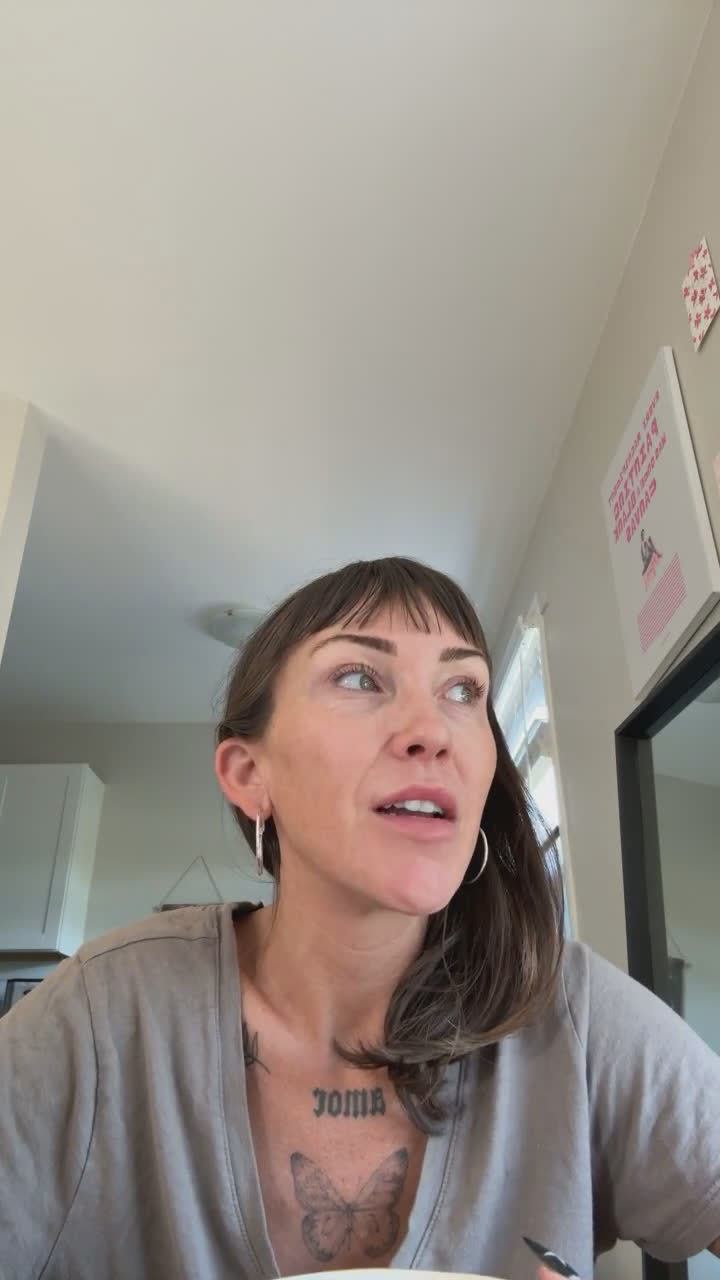
Host discusses ending a therapy relationship and how to assess whether to pause, switch, or find a different type of care. She shares personal experiences and practical questions to help evaluate therapist fit.
There's definitely something going around. I've been sick at the restaurant, so I'm anxious that I picked something up from there. Lots of rest for me and lots of water.
Break up with your therapist is an important topic. If that person is not supporting us in the ways that we need, it's okay for us to end that relationship and find a new one. A lot of people struggle with how to assess if it's time to break up.
Okay, my loves, I can feel my voice fading into the abyss. So I'm gonna go make some hot tea. I hope you are all enjoying your Wednesday, and I will see you next week. Hopefully no longer sick.
Happy Wednesday. Cadre crew. Hello. I'm a little under the weather today, so my voice sounds a little crispy. I don't know if it's allergies or if I'm actually getting sick, but there's definitely something going around. And I work at a restaurant here and there, and there's been people that are. I've been sick at the restaurant, so I'm anxious that I picked something up from there. But so lots of rest for me and lots of water. Been drinking, hydrating. Good. Hi, Nikki. What I wanted to talk about today is breaking up with your therapist.
I just broke up with my therapist. And I think that's something that a lot of people have anxiety about or don't know how to do or want to do, but don't feel like they're allowed to. And I think it's a. An important topic because our relationship with our therapist is a relationship. Even though it is a professional relationship, it feels much more intimate than like seeing a doctor or a dentist or another professional. It's still someone that we have a relationship with. And it's a really important relationship because it's someone who is helping us with our mental and emotional well being.
And if that person is not supporting us in the ways that we need, it's okay for us to end that relationship and find a new one. And I think a lot of people oftentimes struggle with how to go about doing that, how to assess if it's time to break up with your therapist. And again, we don't, we don't have to call it breaking up your therapist. I just, like, it's an easier terminology, I find. But, you know, how do I know when, when my therapist is not a good fit for me anymore and it's time to move on?
Or how do I know that, like, it's okay for me to take a break from therapy and. Or how do I know that, you know, maybe I have, I have transitioned into needing a different kind of therapist and making that change. So these are a lot of, like, good questions to be able to ask ourselves so that we can make sure that we're getting the kind of support that we need and the kind of support that we deserve. So I have had like probably over 20 therapists in the last. Oh my God, when did I start going to therapy in the last, like, maybe not 20.
I've had a lot of therapists in the last 20 years. And part of that is just simply moving cities. Part of that is changing insurance. Part of that is transitioning from One kind of care to another. And part of it is me knowing intuitively, okay, this. This person's not a good fit for me anymore or period. And so I think it's good for us to. To be able to check in with ourselves and say, like, is this person supporting me the way that I need? So I'm just going to share my personal experience this time, which is like, I've been working with this therapist for probably five months or so, and initially I went to go see her because I wanted support with working through some sexual trauma and intimacy issues and.
And to kind of be. To explore that element of my mental health. And it very quickly turned out that I actually really just needed more support with depression, which I've been struggling with, and I needed. And I. And I need somebody who is more versed in eating disorder care and eating disorder care. And. And that's not her. Her expertise. So was soon apparent to me that I would go to my sessions and feel like she didn't necessarily understand the experience that I was having. Sorry, I think I mentioned this at the beginning, but if you're just running, I'm a little bit sick, so.
But there were times when I felt like I would have to, like, explain my eating disorder to her or I would feel defensive because she would offer support in ways that didn't feel to me, like, supportive because they weren't coming from someone who specialized in what I needed. So it's kind of like when you, like. It's kind of like, I'm gonna go see a dentist for my skin problem. Like, just because they're both medical professionals doesn't mean that one of them is trained in the thing that you need support with.
So I quickly kind of realized, like, oh, I actually need somebody that's more trained in eating disorders and has that background, because it's something that I have struggled with, and it comes up a lot. So last week I sent her a message, and there's also. Excuse me. I think it's also perfectly fine with your therapist to send them a text or an email instead of doing this in a session, because you're getting charged for a whole session, and there's no reason for you to have to pay for a session to, like, tell your therapist that you're not gonna see them again.
Or if you, you know, if you're. If you're using insurance, like, that takes one of your number sessions that are covered out of your insurance. So, you know, I think it's okay to send a text or an email and you Know, I just. I sent her a message and said, like, you know, it's been. I really appreciated all you've done. For me. This is like. I like to use, like, the Oreo. The Oreo theory method, if you guys have heard of that, where it's like, you do something sweet and then maybe like, the harder thing to say and then something sweet again, even though the cream in the middle is still pretty sweet.
But. But. So I just let her know, like, look, I. You know, I really appreciated everything you've done for me and. And, you know, all the support you've given. You know, I've just been thinking about that, you know, our work together over the last week or so and talk. I've been speaking with a lot of people in my life, and, you know, it's coming. Becoming apparent to me that, like, I really need someone that specializes in eating disorder recovery. And so I think I'm gonna have to end our work together and try to find somebody that more specifically in that field.
But thank you again for all that you've done. And she was. She was very supportive and offered to help me find somebody in that arena. But I think that. I think it's really important that we listen to ourselves, and if someone is not necessarily the right fit for us, it's okay for us to make a change. I also recognize that sometimes it's really hard to do that because maybe it's taken months to actually find a therapist, or we've been on wait lists, or our insurance only covers, like, five different people in our city, and there's not a lot of options.
So I understand that sometimes we don't have the ability to be that choiceful with who we work with, and sometimes, you know, we work with people that aren't necessarily the best fit. And then it's a matter of asking ourselves, like, is it better for me to just have somebody, even if they're not, you know, the most the best fit for me right now versus having nobody? So. Okay, my loves, I can feel my voice fading into the abyss. So I'm gonna go make some hot tea, but I hope you are all enjoying your Wednesday, and I will see you next week.
Hopefully no longer sick. Okay, love you. Bye. Also, I just learned how to do the. No, that. Yeah.
Reactions and comments are for members. Joining is free and takes a minute.