What exactly does it mean to be in a relationship? Where do I fit in? Where do YOU fit in? Where do WE fit in? What is the balance between taking care of ourselves and being of service to someone else? And being of service to the relationship? If you know the answers to these questions, you’re doing a lot better than most of us. :)
This is June in the Cadre sphere. The word is balance. What is balance when it comes to being in a relationship? After 21 years of marriage, I'm happy to say I have no idea. But there are times where the balance needs to be imbalanced.
But then there's this whole. other entity called us, right? Terence Real just wrote a book called Us. If you're not intentional about cultivating and maintaining and growing the us, it quickly, quickly can go away. The self care has to be critical.
All right, hopefully this is on. I just got some weird error message, so I guess we'll see. Hey, everybody. Once again, continued Happy pride month. This is June in the Cadre sphere. The word is balance. In my world, it is week three, which means talking about conscious coupling, which is, you know, hey, how's it going? So what is balance when it comes to being in a relationship? Well, after 21 years of marriage, I'm happy to say I have no idea. And it's a Led Zeppelin day. Every day is a Led Zeppelin day.
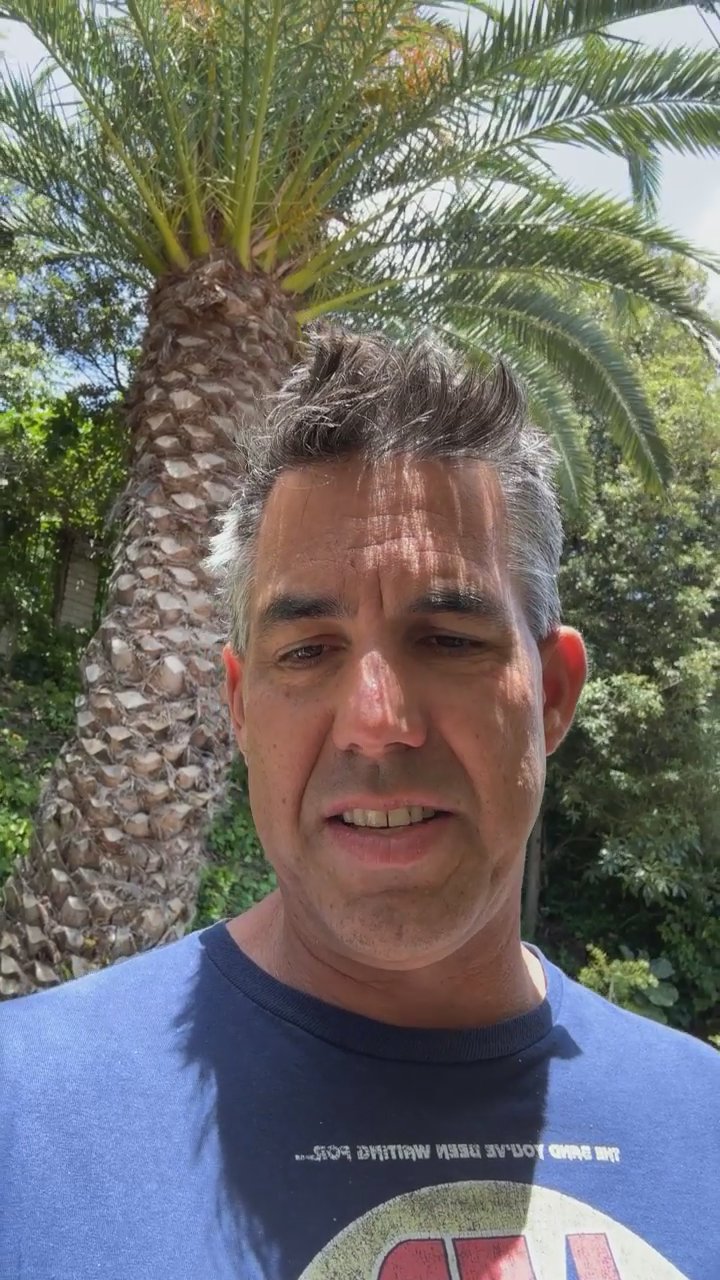
You know, normally I'm a little nicer dressed, but I just kind of felt like today was Led Zeppelin day. So that's what I'm going with. So in the description, in talking about balance for this month and then thinking about couples, you know, I am married 21 years, but it's not just marriages, right? I mean, it's friendships, it's parenting. You know, I. I literally just had some tough conflict with my, my daughter, and I'm gonna have to talk it through a little bit more or check in with her a little bit more after this.
You know, I'm honoring my time commitment here, but I also want to kind of just check in with her because it's like, you know, what was that really about? Like, was it really about what happened? Or maybe something else is going on? So the description today, right, is balance. Balance in a relationship. How much of me, how much of you, and how much of we, right? Because I learned a long time ago that in relationships the math is one plus one equals three, right? Me, you, and us. And, you know, I think.
I think that's the interesting thing, you know, I. What, what's the. What's. What's this? What's the space there? You know, I mean, I think it's really easy to be selfish in a relationship and just kind of focused on me. It's really easy to be hyper focused or just overly focused on the other person and then not take care of yourself. And then what's really easy, you know, especially when life gets busy, is to lose sense of the we, like what's really going on with the relationship. And I, and I would say that that's in 21 years.
That's. That's like, there's got to be intention, right? But so it's. It's all about the balance. The other thing that I've learned over time is that there are times where the balance needs to be imbalanced, right? It needs to skew sometimes it needs to skew towards, towards me. Right. And ideally, I'm checking that out with somebody to make sure that my instincts are correct and checking in with my partner to make sure my instincts are correct. That, like, hey, this feels like I really kind of need this time for me.
But then other times it's like, hey, we really need this time for you, or, I really need to be there for you. And then there's the times, which I've only had a little bit of, but we're like, you have a partner who's ill, or you have a partner who's, like, unable to take care of themselves in certain ways. And it's like, that's. That's the. That's. That's a healthy imbalance. Right? So the idea that we always have to be in balance, I think is a misnomer. And I think it would cause a lot of crazy making, frankly, to try to constantly be, you know, forcing balance, while at the same time, I will say, you know, my tendency, I don't think it's because I'm a guy, but it's partially, I'm sure, due to some gender conditioning.
But my. My tendency, I mean, I think a lot about myself, and I think probably more about my needs than I need to. And so it's like, for me, I may think things are imbalanced because I'm being of service, because I'm focusing on somebody else, because I'm doing all that stuff. But the truth is, it might not even still be, like, 50, 50, and I'm like, you know, that's how it used to be. I know I'd like to think it's not that much like that anymore, but it's like, you know, stretching myself, challenging myself to be of service, stretching myself to go out of my way to do things, to do things without asking, to do things without requiring a ticker tape parade, you know, because I did some things around the house, or I did something else, or I did this or I did that, and just participating, Right?
You know, that's. That's part of the balance. But then there's this whole. There's this whole other entity called us, right? Terence Real just wrote a book called Us. And if you're not familiar with Terence Real Boy, I highly recommend him. He is amazing, and he's very honest. You know, he'll be the first to tell you, like, he did some really great work 20 years ago, while at the same time being an a****** at home and getting into horrible fights with his wife. And so, like, he was still trying to navigate how to have the understanding without being able to put it into his life, which I certainly can identify with, hopefully less so than ever before.
But then there's like this, this idea of like us, what's the balance for us? We start having kids and us can leave very quickly because it's like, like I've just known so many people where like, if you're not intentional about dates, if you're not intentional about time with your partner, if you're not intentional about checking in with your partner, if you're not intentional about cultivating and maintaining and growing the us, it quickly, quickly can go away, it quickly can get lost and then they interact with each other, right?
Because if you're not really taking care of yourself, then you're not really focused on the us because you're letting resentment build or you're letting other things build. And so then it's pulling away from the us. So it's like you have these mechanisms, right, that are getting in the way of your ability to fully, fully engage in the us. So the self care has to be critical. The ability, you know, I mean, like we were talking about this in another kind of context, I guess you could say, or situation.
And, and it's like so many people, you know, even like the younger people who really kind of pride themselves on being emotionally conscious and all this sort of stuff. I mean like when they get into relationships, a lot of that stuff falls apart, man. A lot of that stuff is just like. And then the resentment grows and the conflict grows and the, and the silence grows and the checking out grows and the, you know, staying at work longer or I'm watching TV longer or I'm just avoiding conversation or I'm doing this or I'm doing that, or when we talk, we fight.
And, and so what's out of balance is the us, right? But what's also out of balance clearly is the me and the me self care, right? And then there's also ways of pulling away from the you as far as the us goes, who wants to feed or grow the us in a relationship and find some balance with it, when their partner is only focused on themselves, when their partner is only taking care of themselves, when their partner is not being of service or going out of their way for that individual. And so again, it's like all three of these things kind of try to find balance at different times and in different ways.
And that's my experience, you know, so you can do many inventories, you know, on a scale of 1 to 10, ask your partner, how am I doing with me? How am I doing with you? And how am I doing with us? And then you can ask them to rate themselves the same, right? So you rate yourself and they rate you. They rate themselves and you rate them. You just kind of check in and say, hey, you know, how are we doing? I love that kind of stuff. Those short little inventories, those short little kind of 1 through 10 kind of likert scale stuff.
And it's kind of like in my mind, you know, when it comes to how I'm helping, how I'm supporting you and connected to you, I think, I think I'm an eight. You think I'm a four. Well, that's helpful information. When it comes to us, you know, you think you are an eight or a nine. I think you're a five. Well, that's helpful information. And so that's the kind of stuff it doesn't even have to need to be written because it's just so. It's so easy, right? It's just three things, you know, Although I guess technically six, right?
Because I'm reading myself and then I'm rating you and you're rating yourself and you're rating you. But boom, boom, boom, me, you, us, me, you, us. And so I encourage you to try that and just, you know, do that with a partner and just see or some other relationship that you really value and just kind of see like where we at. So those are my thoughts for this beautiful Saturday. I hope it's beautiful where you are. Even if it's not beautiful, it can still be a beautiful day. Beautiful weather, it can still be a beautiful day.
Cuz I think that's ultimately just a decision. But I really appreciate everybody and I'm going to be on the road for the next three weeks. So who knows where I'm going to be doing this from, but I'm going to try to make sure that I do it at the same time every place I am so wishing you all the best. Happy June, happy balance and happy conscious coupling. Peace. Take care. Have a great Saturday.
Reactions and comments are for members. Joining is free and takes a minute.