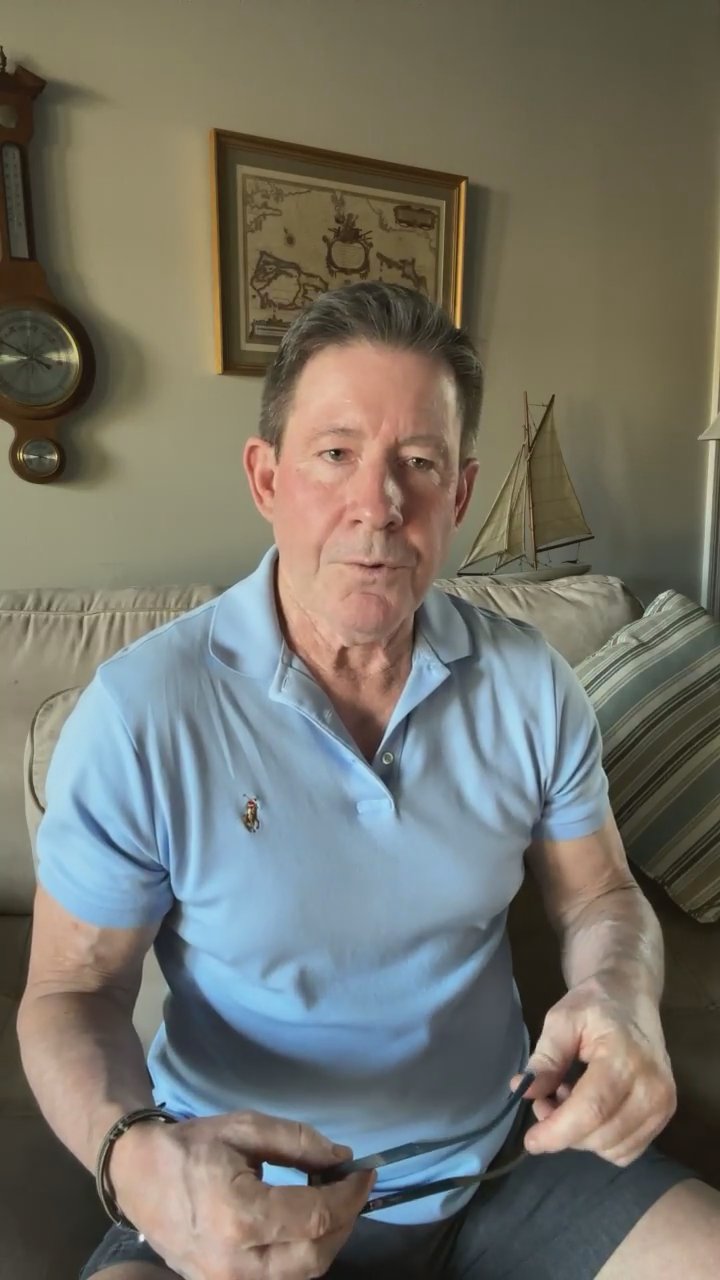
Rick Cram guides listeners through two ways to use his three-step resilience process—tune in, plan, be your best—offering stories, practices and prompts to help find balance and strengthen thriving while living with persistent pain.
Rick Cram hosts your Resilience Coaching Studio. Two different ways to use the three steps of resilience that are one of the key, most foundational tools within the plan to be your best as you navigate pain.
Rick Cram: This is your Resilience coaching studio where we're going to be focusing on not just resilience but also thriving. The topic for tonight is how to find balance when pain disrupts everything. It's been decades of living with pain, which includes an awful lot of lessons.
Omar: How would you rate as of right now in this moment, your balance on a scale of 1 to 10? 10 would be I'm feeling really whole and very balanced. The thing about pain of any kind, it can disrupt any aspect of our lives. Even a 10% improvement in our focus on resilience can mean better sleep.
The three steps for resilience. The first step is to tune in. Think about what is the primary source of pain or stress and what is or what are the secondary sources of stress. As you think about what those are, gain a sense of understanding in terms of what you need.
The first step is to plan. When you plan, it's the art of your soul at work. What one thought, what one emotion might you choose? What action might you take that could transform this moment? There are over 25 different things on my go to list as we go through the three steps of resilience.
I've got to share something with you. And being emotional, especially in reaction to the primary source of pain. I have learned to care less about the little things. I'm not as hard on myself. Whatever pain you, whatever pain points you have, you're going to come out the other side.
The practice part of it was key. It took some time, but he started to see things improving. Started sleeping better, was a better member of the team at work. Be your best. It's all about taking action.
Amar Marianne: Whatever we plant in our subconscious mind and nourish with Repetition. Emotion will one day become reality. When in constant pain, go with the flow, stay in that tune in phase where I'm caring for myself.
The longer the higher levels of cortisol, the more that becomes a pattern that is very challenging to break out of. Let me share a brief story with you to illustrate how some forms of pain can disrupt us. We go through three steps of resilience in a different way.
We're about to use the three steps of resilience for a future moment. Think about what down the road might be something that you're concerned about. The third step about being your best is what's going to happen in the future. What you might want to do over and over again is something that will give you more confidence.
rickcram: Elevate your sense of value. There is so much value in you. Part of being resilient is repeating that over and over again. Flex the thigh and lift the leg until it kicks in. And it will.
Starting July 9th is the summer of Resilience. Practice using three steps of resilience. All the videos and posts through to August 15th using that code Rick Cram all uppercase. Remember your best is greater than the pain.
Hi, I'm Rick Cram and welcome. This is your Resilience Coaching Studio. Thank you for being here or if you're watching this recording, thank you so much for the time that you'll spend here. We're about to do some good work. Some good. Sometimes it might even seem as if it is and it's fair to say good, hard work. Sometimes that's the best work, especially when it's on ourselves, on our relationships, on our thoughts, on our feelings and on our actions. What we're going to do is listen as much as actually we.
It's just me here in a way, but I want you to know that I am here, Cadre. All of us are here to listen to you and we're here to hear from you. Sometimes it might just be one word that can make a difference. And why don't we just take a moment to start there? What is one word that's top of mind for you right now? And then we'll get into I've got a story with you for you. And two different ways to use the three steps of resilience that are one of the key, most foundational tools within the plan to be your best as you navigate pain approach and hello there.
A high welcome. Amar, great to see you. And Miriam, thank you so much for being here. Hi, I'm Rick Cram and again for those of you who are just joining, this is your Resilience coaching studio where we're going to be focusing on not just resilience but also thriving. Hopefully what you'll experience here, and I'll love to hear back from you, is how are you discovering and strengthening your own unique resilience and your own unique way of thriving. So again, as we get started here, what one word comes to mind?
And since we're talking about balance and the topic for tonight is how to find balance when pain disrupts everything. And whatever the pain might be, it might be physical pain, such as I experience every day, especially since the seventh surgery on my left knee in 2019. It's been decades of living with pain, which includes an awful lot of lessons and I'll share some of them with you today. So thank you very much for coming in. Hi. Glad you're here. Also adding one word, but how would you rate as of right now in this moment, your balance on a scale of 1 to 10?
10 would be I'm feeling really whole and very balanced. 5 is middle of the road, maybe on the borderline, could go either way or a low sense of feeling balanced. What number comes to mind and we'll revisit that question. So actually, Omar, that is so good because in terms of the stress for the future, because the other way that will apply the three steps of resilience is such a powerful tool for that. One of the things through life that I've experienced are this very same things. And we all do. What.
What does the future hold? So much seems out of control right now. What is. Pardon me, that's. That's what my pain experience is. And this gives me a chance to say, just as pain happens in the moment, so does resilience. One of the things that I really savor and I celebrate is not letting that stop me from focusing on you. You're my focus and I rejoice. I actually think I counted as joy that I'm able to just stay focused on you because I'm here for you. And actually I. I'll even share this with you.
Part of my pain management includes caring for you, caring for others. The more I do for you and know that it's lifting you up, even if it's just a word of encouragement that does add to your moment, add to your day. That gives me joy and helps me to thrive even with the pain. So four or five. Okay, I hear you. I hear you. And especially between what your own unique challenges may be, the things that are top of mind for you. We're living in a day and age with a lot of uncertainty, and that can throw us off balance.
All the things that we see in the news in our own backyard, sometimes on the local news, around the country, and certainly around the world, but we're in this together. And I think what you'll find as we continue through this is that when we think about how pain does disrupt anything and everything in life throws off balance, there's a plan for that, and the plan is going to come from you. Let's dive into this particular story. A client of mine, very stressed. I'll call him Brian. And Brian was anxious.
His pain points I won't get into, but it shows in the very same way it can for any of us. It was disrupting so many aspects of his life. He had trouble sleeping. He had trouble getting along with others. He had trouble being good on the team that he was with. Good. And by good, I mean even a good listener. You could hear the stress in almost everything that he said. There was a certain strain that you could detect. He was not physically healthy. He wasn't caring for himself as much as he wished he had.
As much as any of us should. The thing about pain of any kind, it can disrupt any aspect of our lives. I generally take a look at the eight primary dimensions of life. The social part of our life, the mental, the emotional side, the spiritual side, the environment that we're in, work or financial related. There are eight dimensions to our lives and the more stress, the more each of those areas can start to show strain. The good news is, and hopefully you'll see this is that when we work on our resilience, we actually can experience not.
Not just to experience for the moment, a lightening of ourselves, a calming of ourselves, feeling more balanced, feeling that cortisol stress hormone lower, but a meaningful change, a transformation from what is disrupting us to being able to. For example, even a 10% improvement in our focus on our resilience can mean better sleep, can mean being healthier, can mean better relationships and communicating. Communicating with ourselves and with others. The three steps for resilience. Let's get into that because it helped Brian and hopefully it'll help you in this moment.
The first step is to tune in and by tuning in I mean to go ahead and acknowledge whether it's one word for yourself. If you'd like to share, by all means, please do. And if you have the worksheet from the website, the free download, that's wonderful. But if you want to just follow along for the conversation. But I found writing things down, even one word on a piece of paper, interestingly enough, in blue ink. Studies show that we actually are more calm when we write in blue and we remember what we write if it's in blue ink.
But follow along, hone in as you tune in, maybe taking a deep breath or two and thinking about what is the primary source of pain or stress and what is or what are the secondary sources of stress. Go ahead and acknowledge that and I'll just keep. I need to use my glasses to check. Speak Wonder. Hello Glass. So glad you're here. As you think about what those are, gain a sense of understanding in terms of what you need. And where we're going with this is to think it through so that we can transform this moment.
The second way we'll go through the three steps of resilience is different and something that will speak to what you're talking about. Amar. So as Brian went through that first step, you could actually see him calming, more centering himself and his incentering a sense of feeling more balanced. And he started to identify and open up and express, even if it was for himself, the things that he needed to Pay more attention to he tuned into both those primary and secondary sources of pain. Once having that, let's go ahead and move into the second step is to plan.
And to plan is actually. Let me share this with you. When you plan, it's the art of your soul at work. Give that some thought. When we plan, we are thinking about and it's using this artistry that we've got this amazing mind and brain that we've got to be able to think what might I do based on what I just understood here in terms of what my needs are, what my pains are, and identify what do I need? What might work in this moment? It might be choosing. And this is where I often go. And if you're watching this again, watch it as many times as you need to to follow these prompts.
What one thought, what one emotion might you choose, or what action might you choose that could transform this moment and move that needle up for your balanced rating, even if it's to take it from a 4 to 5 or a 5 to 6? The beauty about your answering the questions what might I do now? Is because the best answers come from you. I will share with you some of the things that are in my resilience toolkit that really work out when I'm feeling out of balance, including I will say, for example, just as you saw with that blast of pain, I will keep on staying focused on you.
If I'm in a meeting with a client, for example, and I have one of these, I would just keep going with the conversation. Sometimes I will do some deep breathing exercises. You'll often hear me say that I will choose a thought about something that I'm hopeful for or I have a sense of gratitude for. I'm grateful for you. I'm grateful for Cadre. The interesting thing about doing this, thinking about different thoughts, for example, is that what we focus on, we experience when it comes to choosing a different emotion, there's two aspects of this.
On one hand, we have emotional reactions. And as you may know, there's an organization called six seconds, and they specialize in emotional intelligence. And the reason why they gave themselves the name 6 seconds is that the peak, the most intense part of any new emotion that we feel generally is at its peak for only about six seconds. Then it starts to reduce, starts to wane. And it's in that moment when it starts to decrease that we can flex our muscle of intentionality to identify and choose and pursue, even chase, another emotion.
One of the things that I really like to do, especially even if it's just for 60 seconds and this comes into an action. What action might you take? I love to pick up some weights and lift them for 60 or 90 seconds. I will sometimes pick up a phone and sometimes it might be to care for somebody else or I might even say I've got a few close friends that I'll say do you mind if we just talk for a few minutes? Talking it out. Sharing with you what I'm experiencing will help me express it, help me then release it.
And I know I can always count on them to actually be really good listeners. Apply some active listening, a dose of encouragement and that can help turn it around. There are over 25 different things on my go to list as we go through the three steps of resilience. A second time in just a minute and in a different way. I'll share a few more with you. So let me just check the notes, put my glasses on and see if there are any comments overthinking that is so common. I've got to share something with you.
And being emotional, especially in reaction to the primary source of pain. I'm going to see if I can say this without getting emotional myself. If you might have noticed, I posted earlier on yesterday and comments and my video from yesterday and said I was going to be on at 8 Eastern 7 Central and if it was maybe six or seven or more years ago and I did that I'd be kicking myself. So I'm black and blue. But I'll tell you this and I wish this is a lesson I could just instill in you from my heart and I wish I could give it to I've given it to my younger self before is imagine going through something that is so profoundly difficult in life that one of the best things, a piece of grace that comes from it is that you don't care as much about the little things.
You don't beat yourself up as much. This pain experience, I generally have about one to two dozen shots of pain, acute pain every day. Just this is a baseline. If I do nothing, if I leave here, it immediately multiplies this pain journey which for which there's no solution. And I'm talking to doctors about things I never thought I would have a conversation about. And I'll get into that down the road. The I have learned to care less about the little things and that's been a, it's been a an honest to goodness blessing in my life.
I'm not as hard on myself and so I wish and I'd say this, whatever you're going through whatever the stress may be, the anxiety about the present moment or about the future, Whatever pain you, whatever pain points you have, you're going to come out the other side. You're going to go through this. And to some measure, you're going to be able to look back and say, I've gained something from this. I've learned something, maybe something I can even share with, with others to make this a better world.
Maybe even to the point where you'll say, I'm not going to be so hard on myself anymore. Let me just check my notes as we go through this. There's a number of thoughts I wanted to share with you, including, just as I shared with you Brian's story, he got to that point where he identified a variety of things. He started to create his resilience toolkit. And then he practiced something. And that's the third step. Be your best. It's all about taking action. And he started to see. It took some time, but he started to see things improving.
And over time, they improved dramatically, even to the point where he said, I've learned how to drive positive change in my life. Started sleeping better, was a better member of the team at work. So many, even with the people that he loved, they could see a change in him. The practice part of it was key. Personal story coming out of surgery number six. And I might have shared this before last week, but I believe it's worth sharing again, even if at least one new person hears it. I had gone into this surgery as a total knee replacement at the age of 40, and my thigh was completely atrophied.
It had been well over a year and a half or more that I could even hold my leg out in front of me, even an inch or two up off the ground. And surgeries four and five didn't help at all. And with all that weakness with the thigh, the quad atrophied. One of the key things that the physical therapist worked on afterwards was. Was. And every time she came over and worked with me, she said, flex the thigh and lift the leg. That's the first thing every day. And I worked on it myself. After several days, nothing.
After a week, nothing. Finally repeating it two weeks later, I experienced the first time where I could feel the quad fire. And I was able to lift my leg up a little bit. It's the practice that makes a difference. I've got this quote for you. I want to share this with you because it helps make the point. Whatever we plant in our subconscious mind and nourish with Repetition. There it is. End. Emotion will one day become reality. That's from Earl Nightingale, an author who took a look at what it means to live a meaningful life.
Wrote several books, but I thought that helped to do that. So when it comes to being emotional, knowing that that's completely human, we all first react emotionally, let it acknowledge that, validate that. But know that you've got such a powerful mind and the ability to take these steps, tune in, plan, do your best and follow through on something over and over again. It's the repetition of it. Think in terms of what actors and actresses do. They rehearse their lines to the point where it becomes second nature.
They go in front of the camera or out on stage and they've rehearsed it over and over so much they deliver it and it seems like they're not even acting. So when it comes to that emotional response, maybe you could even say, thank God, I'm emotional. It means I'm alive, I'm human. But your mind and your choices have the power to both care for those emotions and seek to transform a moment. Same thing. Amar Marianne Regarding overthinking, I have experienced a lot of that. I do that very naturally.
And so I'm curious to know at some point, if you want to share with me, that's fine, but even if it's one word, but just for yourself, think through. What do you. What did you experience when you even just started to tune in automatically? That is a step of intentionality where it's immediately starting to exercise more control of your thought, more focus of more choice of what you're focusing on. But the key is to move from that to the plan and then from plan to be your best. And even if it means doing it over and over and over again.
And there's a couple of ways in which I'd like to encourage that you give yourself a lot of grace. Sometimes you might need to stay in that tune in phase for a while. Care for yourself. Care for yourself like no one else can. And then even stay in that planned phase for as long as you can or repeat it over and over again. For people that I care for that are people in my care who are in constant pain. Sometimes it's a gentle recycling of that over and over again. Sometimes it needs to people in constant pain.
And this is what I experience as well. When I'm in constant pain. I try to not fight it, but go with the flow, staying in that tune in phase where I'm caring for myself. The key is for. For me, when I'm in constant pain is to try to take the urgency out of it. That's one of the things that Brian kept talking about was. And you could hear it in his voice, the way he described it was urgent. There's this pining, there's this urgency to get relief, to change things. And in a way that's healthy as long as it doesn't in and of itself take its toll.
Do you have any questions? Let me just read the notes. So in terms of what Marianne said, in terms of the stress and anxiety, and here's the thing to understand, let's. The longer the higher levels of cortisol, the more that becomes a pattern that is very challenging to break out of. Cortisol is actually something that we are, for lack of a better term, allergic to. And ongoing stress starts to look like having trouble sleeping, having digestive problems. So one of the things to do is to try to disrupt that.
And so to put your focus and energy. Absolutely feels like days will work out, even with business isn't registered yet. I see what you're. You're dealing with. It's not easy and there's a lot of variables and things don't always. They don't usually go as exactly as planned. So let me actually have us go through three steps of resilience in a different way. Let me share a brief story with you to illustrate how some forms of pain can disrupt us. There is true story. A woman in Texas on a hot day like we have here in the East.
I'm in Massachusetts and This woman, about 90 years old, comes out of the supermarket and she's walking over towards her car. And this is down in Texas. Keep that in mind. All of a sudden she sees four young men in her car. The windows are slightly open and there's smoke coming out from the windows. The engine is running, the stereo is blasting, and she's starting to think, what are these guys doing in my car? She picks up her pace, drops her groceries, picks a pistol out of her pocketbook and points it at the gun, points the gun at the boys in the car and says, get out of my car and run for your lives.
They bolt the windows, one of the doors fly open. All of a sudden these four boys are sprinting, thinking that they've got to run for their lives, and they head on down the road. As she gets closer to her car, trying to calm herself down, she is all. Her heart's beating, breathing heavily, gets into the car, smoke clears, she turns off the radio and she slowly drives out of the parking lot and down the road. All of a sudden she's going along, looking around, thinking, oh my, it's not my car. So she heads into town, being honest, goes to the police station, goes up to the front counter to admit to the deputy what just happened.
And he starts laughing. And as the more she tells the story, the more she starts to laugh. And then she says, why are you laughing? And he points down the hall where he's pointing out, those four young men just came in to say that they were carjacked by a little old lady. She jumped to conclusions. Whatever her stress was, it was this automatic reaction. And that's what we do, don't we? We often will have triggers that have us think things and maybe even do things that we shouldn't do or is not in our best interest and perhaps not in the best interest of others.
But as we go through the three steps of resilience in a new way, this is something that she could have gone home and done on herself, with herself for a future moment. We're about to use the three steps of resilience for a future moment. We just did it for this moment now. But now tune in again to something that might be on top of mind for you. A source of pain, a source of worry, a source of stress, of something that happens perhaps repeatedly or in a way so that you know that you're going to be experiencing it down the road.
And take another deep breath and think about what is that, that you might be worried about repeating down the road. That could be stressful. And this is actually a different mindset, it's a different way of looking at. And if we were to work together in person, it would be a very calm moment and we would take a lot of time in doing this. So let me suggest this, especially if you're watching the recording of this, hit the pause button, tune in and think about what down the road might be something that you're concerned about, something that you don't want to repeat.
Maybe there's a pattern of reaction. Maybe there is. For example, with me, and I share this liberally. I have a very difficult time and have since the last surgery and with my pain experiences, having the pain in front of others, meetings with clients or with friends, out to dinner. And I have a lot of practice at thinking through. And I take time to be intentional about thinking through before, for example, going out with out to lunch with a buddy, which I did just yesterday. And I thought, if I have a blast of pain, here's how I'm going to react.
So we'll go through the tune in step but then spend some quiet time in the plan step and think through what are the different ways that I might handle a certain situation Again, what are the thoughts that I might choose to pivot on? What are the emotions I might choose in that future moment? What are the actions I might choose in that future moment? And take some time to just sit there with those thoughts. And then the thing to do, if you spend enough time doing this, what you might look for is how you're experiencing in a way being in the moment right now, but also being in a future moment.
And in a way you are. What's the word I want to use? You're almost in two moments at a time and there is a certain peace in that because you can be at peace in now and you can be confident in the ability to make choices now for what you'll use in the future. The third step about being your best is what's going to happen in the future. The thing to do is like that actor or actress who's going to be practicing thinking through. This is how I'm going to react. This is what the thought I'm going to have.
This is the emotion I'm going to choose. This is the action I'm going to take in the future when I need to. Part of the challenge about how pain is disruptive, it, it shakes our confidence. And part of this exercise again, what you might want to do over and over again is something that will give you more confidence for the future, for those future moments. There's a certain word I'm trying to think of in terms of there's a bridging time, this now moment in a future moment. So fear, being scared is real and it's important to recognize that and I think to acknowledge it.
One thing I'd like to share with you and I know I'm going, I get on a roll with this because I'm so interested, so eager to share so much with you, something to work on and that is finding ways and thoughts and feelings, maybe finding someone to talk to, good friend or if you want to talk to me, just give me a call. I'm here for you. You can. com and here's the thing to focus on. Elevate your sense of value. There is so much value in you. When we go through stress, when we have fears, we can often have a shaken sense of confidence, a shaken sense of self value when in fact there is nothing more valuable than you and I have found.
And this has been integral for really has helped me. I recently had a breakthrough and I healed the trauma that I experienced through surgeries 1, 2 and 3 back in my late teens. And part of it, part of what I've done over the past year and a half to do this has been seven different things and I'll get through them over the course of a number of future live sessions together. But one was to identify, express and validate all that I'm feeling and experiencing, telling my story and elevating my sense of value.
In effect, what we're doing here is writing our stories when you just thought through what in that plan step and being your best. You're writing your own story on one hand in the tune in step, you're acknowledging the story with where you are right now. But then you've got an amazing mind, an amazing heart to be able to say here are the thoughts that I'm going to choose. Here are the feelings that I'm going to choose. Here are the actions I'm going to take. And part of being resilient is repeating that over and over again.
Flex the thigh and lift the leg until it kicks in. And it will. It will. So a couple of thoughts as we wrap up here. Thank you so much for bearing with me the I see the word funeral and I I'm sorry for your loss. If there's a funeral in your life, loss of a loved one or someone that means a lot to you in any shape or form. Loss is hard. Grieving is good. Grieving is. And I'll share with you. Because of the pain that I experience, especially for the past couple of years, I do a little bit of grieving, good grief, pretty much just about every day.
And it's not the grieving that hurts. Even though there's pain. It's the grieving that's processing and caring for the pain and the loss. I'm a holder of hope for each of you. So let me just share this with you that the couple of things I'm here for you starting July 9th is the summer of Resilience. com it's a small group program where for just 10 weeks we'll go through the entire plan to be your best method. Practice using three steps of resilience and seeing how those change transform moments.
But how when it's integrated across eight domains of thriving, how it actually can set you on a path to change your life and give you lasting resilience and new ways of thriving even with the pain. Thank you so much for bearing with me as I have shared as much as I can trying to be trying to provide you with as much value as possible. Any last questions? If you're here and want to add any further notes we all share this human experience and we all share the challenges in life, but we all share the opportunity to show up for one another.
That's why I'm here. That's why Cadre is here. Replay this as you need to share it with you. Share it with others as you as you'd like to remember. You can use all uppercase Rick Cram sharing it with your family, friends and colleagues and they can use Cadre have the full benefit of the community. All the videos and posts through to August 15th using that code Rick Cram all uppercase R I C K C R A m if anyone wants to message me. Thank you Amar. So glad you're here and I'm a holder of hope for you that there's that.
Hopefully you saw my message. The strength of your character is a positive example for all of us. And you've used a word in one of your comments, things that you're trying to find. That means you're looking, that means you'll find. I wish you all well. Remember your best is greater than the pain. And if any of you want to message me for me to come back on at 8 when I had mentioned in my graphics or comments, I'll be glad to jump on and we'll have more of a conversation. Thank you so much. My best to you.
It.
Reactions and comments are for members. Joining is free and takes a minute.