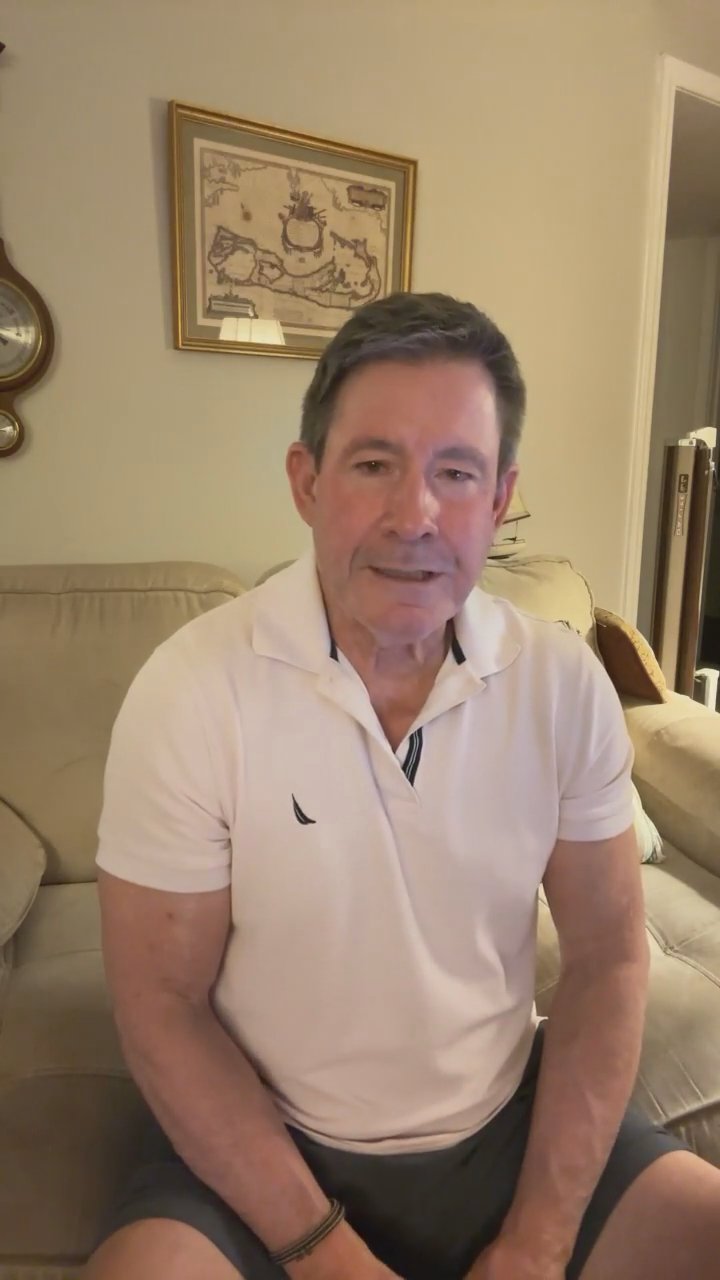
Rick Cram leads a resilience coaching session focused on pursuing and sharing encouragement through two reflective questions, the three steps of resilience worksheet, and conversations about shedding doubt, balance, and freedom.
Welcome to July, July 1, 2025. I'm Rick Cram, resilience coach with a rather tight throat this evening. What we're going to do this evening is spend some time pursuing encouragement. And I want you to know that I believe in you and I'm glad you're here.
How much encouragement do you give to others on a scale of 1 to 10? Share a number. There's no right answer to this. How much are you an encouraging person compared to the average?
8. How encouraging are you on a scale of 1 to 10? And now how much encouragement do you get from others? What number comes to mind? We're going to chase encouragement and experience it through the use of two particular questions.
Nikki: Contribute towards feeding both our balance, sense of balance and sense of freedom, chasing encouragement. 50 years, almost 50 years now of living with pain since a football injury surgery, number seven on my left knee in 2019. And encouragement is vitally important.
The first number is how much of an encouraging person are you? The second number is on a scale of 1 to 10, how much encouragement do you get from the people in your life? I hope you'll consider me someone who is a grand encourager of you.
Three steps of resilience worksheet. Questions can be remarkably powerful. What do you need to shed? If You've got the plan to be your best. The third domain is accept. This is when we're actually planning.
Both self doubt and limiting beliefs can be long held patterns. What makes a powerful and encouraging difference is how you respond to it. Shedding the doubt and or eliminating it from the moment. That's called resilience.
57% of US adults in the US are carrying so much stress that there's this paralysis. How do we free ourselves from that paralysis? It's the response that matters. That's the resilience and that's what brings us back to a point of balance.
This is one of the things I'm going to try to do through the course of July with the theme of freedom. The past several especially painful years I've been trying to get break free from a variety of thoughts. What am I seeking to be free for? We'll talk about that in the coming weeks.
Whatever we might need to shed is often very heavy stuff. Is planting a seed for moving forward into the third step of resilience, to be your best and do it. What questions do you find encouraging?
Nikkiler: Are there certain questions that you ask yourself that bring things up to the surface? Part of the mix includes elevating your sense of value, which is beyond measure. The community is so key. One of these next Tuesdays, I'm going to sit out on the tennis court and do the live from there.
When will you realize just how strong you are? Hope happens in the moment. When it's constant pain, I anchor in that hope and that it ends. I'll leave you with one last thought on this.
Nikkiler: What questions might you have for each other or for myself? So speak wonder. Waiting is. a source of trauma for me. When we're having a positive pain discussion, sometimes it can raise up feelings. There's life in encouragement and the positivity that there might be.
Rick Steves: A lot of people have a hard time dealing with someone in pain. He talks about grace to give yourself in this kind of a situation and yes grace to others. He says we need to care for ourselves like no one else can. Steves hopes to launch a new podcast this summer.
One of the reasons why Cadre is here is because of exactly what you're sharing. We're doing some good thinking here, aren't we? And some good feelings. Will you put out your podcast info in the contrast here? I most certainly will.
The approach here is to have a conversation with so much respect. When you're not charged emotionally, but where you tune in to address it with respect in three ways. My words of encouragement is model respect to see if the other person will match you.
The three steps of resilience are meant to be repeated over and over again. The structure provides the framework for having a positive, difficult conversation in as mature of a way as possible. If you use the worksheet, which is a free download, I'll be posting more worksheets.
There's always more to learn about resilience. I'm working on the book Plan to Be youe Best as Navigate Pain and I want to finish it this summer. This has been a remarkable your Resilience coaching studio. I look forward to connecting with you.
I'm going to sign off now unless there's any one last thought. This is an ongoing conversation and the reason why conversations are so important, just like community. Have yourselves a wonderful night, great rest of the week and I'll see you next Tuesday.
Welcome to July, July 1, 2025. It's kind of hard to imagine. Hi, welcome to July. And welcome to what will be. I hope you'll find a positive and encouraging conversation. And I'm Rick Cram, resilience coach with a rather tight throat this evening. I just drank some lemon juice and that tends to tighten it up. I think it might be a little bit of an allergic reaction, but if you saw one of my previous videos. What we're going to do this evening is spend some time pursuing encouragement, so much so that we're going to share encouragement and we will experience encouragement.
I want to welcome you here. Thank you so much for joining me. Update I love that. Update And Jules, Speak Wonder. I meant to say this the other time. Speak Winter. I love that. I love you guys. I really do. And I want you to know that I believe in you and I'm glad you're here. Question for you. On a scale of 1 to 10, this is spontaneous. What would you rate? How much encouragement do you give to others on a scale of 1 to 10? Share a number. There's no right answer to this, but how much of you, how much are you an encouraging person, would you say, compared to, let's say the average.
Let's say the average is, is 5. What number. Go ahead and add that. 9. That's X and I am not surprised. Excellent, Jules. 8. How encouraging are you on a scale of 1 to 10? And now how much encouragement do you get from others? What number comes to mind? This is something that I do from time to time when I've got a group of people. There's one time when I, the first time I ever did this for about 50 executives of a healthcare company. And almost everyone raised their hand when they said that they were very encouraging.
And when I asked how much encouragement do they get exactly? SpeakWinder an update four or two. It was maybe 10% of the people raised their hand. And yet isn't encouragement something we so need? So we're going to chase encouragement and experience it through the use of two particular questions. One of the reasons why I wanted to dive into this is to create a conversation where we're having a bridge, if you will, between the theme of balance from June and the theme of freedom for the month of July and encouragement and the encouraging questions.
Two questions we're going to entertain in just a minute. Contribute towards feeding both our balance, sense of balance and sense of freedom, chasing encouragement. And it is something that we need to chase. There is that wonderful speech by Matthew McConaughey do you know the one I'm talking about? He's winning an award and he was talking about three things, including someone he chases and he chases his future self. I thought that was worth remembering. But even just the idea that we do pursue, we chase things, especially the good things.
Things that are good for us, things that are good for others and things that are fulfilling. I found that in the course of working with people in pain or stress, whatever it might be, that they're overwhelmed with that there's a sense of paralysis that comes along with it. I'm very familiar with it. I'll just say this to make the point. I see you and I understand if you are feeling overwhelmed or if you're in pain. 50 years, almost 50 years now of living with pain since a football injury surgery, number seven on my left knee in 2019, has left it in a state of trauma and daily pain.
I get it. I get how hard it is. And encouragement is vitally important. And from the video from the other day, I make the point that there's energy that comes from the encouragement I give myself. There's energy that comes from the encouragement I get from others. There's also positive energy that I get from when I encourage others. That's neuroplasticity at work. Nikki, so glad you're here. Hello and thank you for that. That number. Yes. We've shared two numbers. Six is, is that the number of how much encouragement you give or how much you get?
1. The first number is how much of an encouraging person are you? How much would you say on a scale of 1 to 10, do you give encouragement? And then the second number is on a scale of 1 to 10, how much encouragement do you get from the people in your life? I hope you'll consider me someone who is a grand encourager of you. I'm a holder of hope for each of you. And this is why I want to introduce this first question. And it's one that I found. I think it's get getting turns. Good, good, good. Questions can be remarkably powerful and there's a part of the plan to be our best method where we're starting to go through the eight domains of thriving.
The third domain is accept. And when it's not just accepting the pain, but there are a variety of things to accept, including this. The answer to this question. It's very simple and you might not have an answer right away or it might. The answer might shout at you from within yourself. What do you need to shed? What do you need to shed? If You've got the plan to be your best Three steps of resilience worksheet. Put that in the second step. This is when we're actually planning. Sometimes we'll jump right into this.
If we're using the three steps of resilience, what we would first do is tune into what we might find overwhelming. What's the source of stress? What are the sources of pain? And then we move into this plan step. And sometimes this is where we really want to spend some time, not rush it at all. When I'm putting on a small group program or even with 500 people, when we get to this, we spend a fair amount of time talking about and thinking about. What do you need to shed? Let me add some context to it.
In the course of thinking about planning, thinking about things that we might think, what we might feel, what we might do to navigate whatever it is we're navigating, there are several different questions in business, sometimes we call it a situation analysis. And we ask four questions. What do you want to achieve? What do you want to preserve? What do you want to avoid? And then what do you want to eliminate? What do you want to shed? And this is one of those answers, those questions for which I found everyone has a number of answers.
It might be a certain thought, a pattern of thought that they know is not worth. It's not serving them well that there's an emotion that they want to shed. It keeps popping up and I want to come back to that. Or it might be a certain activity, the way time is being spent, something going on and something that's taking your time and energy. So the idea. And actually thank you for this, you want to shed doubt. That's actually profound and that resonates with me and speakwon or reading here, need to shed expectations here, limiting expectations of yourself.
Thank you so much for that honesty and that honesty and that validating is so important in this second of the three steps of resilience to plan. Because when we identify it and validate it, then we can do something about it. So regarding the possibility of certain thoughts or feelings that come up like doubt, like a limiting belief, those can often be long held patterns. I can relate to them. I have them myself, both self doubt as well as limiting beliefs. And I've found through the course of working through with the plan to be your best method, working with my own pain management counselor, that it's often in the fabric of the conversation and this point always keeps coming up, that those thoughts and those feelings may never actually stop.
But what Makes a difference. What makes a powerful and encouraging difference is how you respond to it. Where it might come up but then you can squelch it. The more and more practice we have in doing that, it's establishing a new pattern. And we come go from the off balance of when we have that doubt or those limiting beliefs then we choose and we embrace confidence in ourselves. Shedding the doubt and or eliminating it from the moment. That's called resilience and that is something that is encouraging and what energy comes from.
So I. Oh, I'm glad. Thank you so much. About my calming voice. It's actually kind of strained actually having an allergic reaction to the lemon juice. I found that lemon juice has actually transformed my life in the past several years. It's so healthy but it always tightens up my throat. But thank you very much. And actually I came on here wanting to have a calm presence because of the amount of stress that is so common today. We talked about and I think I might have mentioned this Nikki, you led a fantastic small group coaching session last night and it came up about and everyone was relating to some shape or form stressors in their lives and how studies show from the American Society of Stress.
Isn't it remarkable that there is such an organization or as the American association of stress that 57% of US adults in the US are carrying so much stress that there's this paralysis. So how do we free ourselves from that paralysis? How do we get back to responding to that doubt, responding to the limiting beliefs that I have or that you might have. It's the response that matters. That's the resilience and that's what brings us back to a point of balance. That's what brings us back to a sense of freedom.
And this is what I want to share a particular thought with you. This is one of the things I'm going to try to do through the course of July with the theme of freedom which I absolutely love is because the. The past several especially painful years I've been trying to get break free from a variety of thoughts and some of the experience in the daily trauma that I'm experiencing with this. With this pain. There's other experiences I've had in life where I want to get free from a sense of even shame.
And I found the journey is. Is has led me to asking not just what am I seeking to be free from but what am I seeking to be free for. If we're seeking to be free from something, what is it that having garnered that having embraced that having owned that now what can I be free for? So one of the things I want to do is just plant the seed that we'll talk about that in the coming weeks. So there's another question I've got for you and then I'm curious to know what your questions are. What questions do you find encouraging?
And actually as we do this, is there anything else that has come to mind since you share in your notes something else that you want to shed? Jules, thank you for very much for that. Wanting to shed frustration. It's funny you mentioned that just a little while ago I was thinking about the time when I was more than frustrated from the pain, especially when I was going through surgeries 4, 5 and 6 or a few years there. That was devastating and I wasn't expressing it enough. Everything that I was going through and the compiling of the day to day pain and then needing to go through another surgery and another surgery, I was more than frustrated, I was mad.
And I found that one of the things that it took a lot of work and I know what it's like to be very frustrated with work. It's how do you find ways and I'm curious to know what might work for you to trade the frustration for flow, try to move it forward with you. And I believe part of that is a matter of caring for that frustration. Not ignoring it, but caring for it, caring for it in a way that maybe you can get to a point where sometimes you can say, and this exercise has helped me many times, where I'll, I'll say frustration.
I talk to myself, I really do. I talk to sometimes my younger self. I talk to the emotions that I'm feeling. And I'll say, I'm going to put you on a shelf for now because I need to focus on something right now. I need to be my best right now. I'm going to take you down off the wall, bring you back and I'm going to care for you. But right now I'm going to put you up on a shelf. So part of what we're doing with this question, what do you need to shed? Is planting a seed for moving forward into the third step of resilience, to be your best and do it.
This is something that's a matter of practicing. Is it possible to shed something you've identified once and for all? Yes, but most likely it's often something that needs to be cared for, tried over and over and over again. Thank you for sharing that. Speak wonder, guilt is heavy. All of what we're talking about here Whatever we might need to shed is often very heavy stuff, especially if it's something that's been going on for a long time. If we're carrying it for a long time and then there's. And when it's imagined, then that does.
Does it make sense to say that all the more there's the call or the need for a response or the goodness to be experienced for caring for not beating yourself up over. Over, but caring for something there. That. Because guilt is a very real emotion and our emotions, I think it's fair to say for the most time there's something real there. Have you ever felt an emotion and wondered, I'm not sure why I'm feeling this, am I imagining it? I'm just exploring this in the moment to see where we might go with this conversation.
How do you care for that guilt? If I felt a guilt that I can't necessarily pin down the reason for it. And there are both patterns of thoughts, emotions that I've had through life that I've needed to do some good, hard work to identify, understand why am I feeling this way? I think another thing that came out from Nikki's wonderful group last night was the idea that there's this organization called Six Seconds, and they're an emotional intelligence organization with that name. Because six seconds, it's usually actually more like six to 10 seconds.
When we feel the strength of the new emotion, especially if it's a profound one, it's usually at its peak for six to 10 seconds. And then it's after that, after it goes through that peak, over that peak, we're now in a better position to work on that emotion and choose another emotion to redirect it, care for it and redirect it. And so that's one of the reasons why some people, some experts we know of, will talk about take a deep breath for 6 to 10 seconds or even 20 seconds to let that peak of that emotion run its course.
Update. Regret. I'm sorry. My heart goes out to all of you and I'm a holder of hope for you, if I may say so. We have all kinds of experiences in life, don't we, that are not easy and they challenge us. They bring on all kinds of emotional responses. You've heard me talk about this even last night. There's the primary source of pain and then there's this secondary array of pain. There's something painful. It might be something that's happened at work. I know what that's like. Divorce, the loss of my firstborn son, the seven knee Surgeries and the daily pain.
Seeing friends pass away far too young. And we live these lives that are. It's not easy, but we're here together, aren't we? And we are for each other. I am for you. I believe in you. If I may say so, there's another question I want to get to. And. And before I do, it's almost one that I was going to say, let me end with it and just have it sit with you. But I'll do two things. One, are there certain questions that you've got that you ask yourself in an encouraging way that brings things up to the surface?
And then when you work through the question, you realize, I can do something here. I can be my best. I can be resilient. It's a question that helps me move forward. It's a question that might help me identify something like what do you need to shed? And then there's the question of how do you do that? And one, and there's not necessarily any easy answer. I believe in fully caring for and working with others. I'll tap into something. There's a trauma experience that I had through the first three surgeries and over the past five years since the last surgery, and all the pain, it's brought back that trauma experience.
I had no choice but to really look at it. I decided about a year and a half to start to do some hard work. And I didn't know if I was going to really where it was going to lead. But this spring I had this breakthrough and I realized I healed that trauma and there was this incredible energy that came from it. And there I immediately wrote down more than seven different things that I did, one of which. And let me invite you to do this in your own way, because it's in your own way. And maybe there are other sources that can help you do this, but elevate.
Elevate your sense of value. When there's guilt, when there's any kind of shame, or there's the expectations, limiting expectations, all the things that we've been mentioning. Part of the mix includes elevating your sense of value, which is beyond measure. Is beyond measure. Think about. Take stock in the things that you've done. Take stock in the strength it takes to show up for a conversation like this and have a positive pain discussion. What are the questions? Do you ask yourself or have you encouraged others to ask to.
To find that source of encouragement and a new source of strength? The community is so key. I'm glad we're in this community. Well, hopefully one of these next Tuesdays, I'm going to sit out on the tennis court in this condo community where I'm at and do the live from there. Because there's a story that happened that ties in with the game of tennis, something that happened at the New England Baptist Hospital about a month before I had my total knee replacement. Let me just read your notes. And I really so value what you're sharing.
Your value. Yes. Speak Wonder. And I think for you to say that and have that name, Speak Wonder of value beyond measure. There's this wonderful symmetry. Speak Weiner there. It makes so much sense. And thank you for, you know, what you're doing now. Even by virtue of saying thank you, you're experiencing and sharing encouragement. You're being. When you're receiving a message from others, you're being encouraged. Understand? Go ahead and give yourself permission to feel the energy from that. When you're encouraging someone else, feel the energy that's flowing back to you.
And if I may read this. Sometimes I dream that I change things, but I wake up and nothing is different. I know what you mean. One of the things that's really challenging sometimes I am having the pain in my sleep, and it's in my dream and it's overwhelming the dream and it's shaping what happens in my dream. And then it's usually not too long of a dream, but it wakes me up and I'm in pain. And it's usually somewhere in that 6 to 9 range, the kind of pain that you need morphine for. And it breaks my spirit in the moment.
It's hard to start a day like that. So what I'm trying to do is, if I may. Nikki, we're late. I know when there's that something, a sense of this, as if something's changed, but it hasn't. Maybe it just hasn't yet. Maybe it just hasn't yet. And we're all a work in progress. And I'd like to encourage you with this thought that there is no perfection in this. There's no perfection in life. There's no perfection in resilience. But I do know that when you keep trying and applying yourself using the three steps of resilience, that your best gets greater.
And that's why I say your best is greater than the pain. I'll stay with you for a few more minutes after I leave you with this second question. And it's not a question. I'm not. I'm not asking you this question. I want you to allow yourself to ask this question. So you know what? Hopeful resilience happens in the moment, happens in the now. Everything. Doesn't everything happen in the moment? Hope happens in the moment. Energy happens in the moment. Encouragement happens in the moment. And there's a moment when I found myself both glad and surprised when I asked myself the following question.
And I so hope you'll allow yourself to ask it of yourself and answer it with now, just like Nikki is pointing out now. And the question is, when will you realize just how strong you are? Ask yourself that. Let that question come from you. When will you realize just how strong you are? Sometimes you're exhausted, and I know what that's like. But you still have strengths, and I have strengths. The word hope is so powerful, so true, Jones. Hope is a concept. Hope is an emotion. Hope is a strength and character.
It's who you are. I'll leave you with one last thought on this. You want to keep the conversation going. I'm here for you. I'm showing up for you. One of the first videos that I did was, I believe I did for Cadre, this breathing exercise. I put my hands here, and I was relaxing my breath, and I said, I am peace. It's a meditative relaxing technique. I am peace. I am peace. Do it with me once or twice. Then we're going to add to it, and I'll explain why this is important. I am peace. I am hope. If we're going to give someone a piece of ourselves, a hopeful word of encouragement, not only do we need to have hope in us, but that if we have hope in us, then I am hope.
You have hope in you that you are hope. This came to me when I was. About 10 years or so ago. I was in a place where I wasn't feeling loved. And as I'm driving, I'm thinking, wait a minute, I can give love. And if I can give love, that means I have love. And if I have love, I am love. And what struck me was that in that moment, I felt love. So I started practicing saying I am love. And just based on the idea that what we focus on is what we experience, we can create that hope, sense of hope. We can experience that hope.
We can share it and Absolutely. Oh, hope on pain ends. Yes. Hold on. Pain ends. Yeah, I like that. So you know what? One of the reasons why I like that is because most of the. Maybe the first two years or so after the surgery, I was really struggling with accepting this situation, which is I'll never lose hope. But so far, I'm talking to doctors about Everything from. And they're saying a knee fusion won't work, which is where they remove the knee and then they use bolts and rods to create a frozen straight leg connecting the femur to the tibia.
I have seen, and I'll go back to see a doctor regarding an amputation. And these are very difficult things to think through, but I'll never give up hope. I know what I need to do mentally and emotionally to live with this for the rest of my life. So I don't know, and I'm not worried about the future. But to your point, to bring this back, when I was really having a tough time with the pain and accepting this new reality, I kept working on basically that very concept, thinking of how, all right, the blast of pain ends, I'll get another one.
But I can have confidence in the ending. When it's constant pain, I anchor in that hope and that it ends, it will come to an end. So that's been part of how I've elevated my sense of confidence and my own sense of value, and that has led to helping to heal the trauma. And now I wonder, can I heal a different kind of trauma? The trauma of waiting when I was going through surgeries 4, 5, and 6, and how I might be able to apply it to the trauma now, the stress of never knowing when the next blast of pain comes.
So you have encouraged me so wonderfully, and I hope you are feeling that energy and sense of encouragement that you're sharing with each other and that positivity. I hope you're. You're sharing it, you're giving it, and I hope you're receiving it. What questions might you have for each other or for myself? So speak wonder. Waiting is. I'll share this with you. I. I realized how poignant that was a source of trauma for me when I went to see the doctor for scheduling my. To make the decision for the seventh surgery.
He said, go ahead. This is going to be partial revision of the total knee replacement from 20 years before. Go ahead and see Amy behind the counter, and she'll set you up on the schedule. And this was in August of 2019. She opens up the book as I'm standing there at the counter, and she's turning the page. Turning the page, she picks out a date in late January. I freaked out. I had this emotional reaction. I was on the verge of out of control, and I never had a response like that. It was sort of like an anxiety attack, but different.
I got together with a group of friends that night, and when they asked Me. So I had to go to the doctors. I started talking about it. I again freaked out. I was profoundly emotional, could barely talk. And it was different than anything I've ever experienced before. It was a traumatic reaction. And so I realized I've got work to do on that. Waiting is hard. Waiting is hard. It really is. So. So in a way, this is such a great conversation. I'm just going to stay here with you all. I'll follow your lead in terms of when you've had enough.
One of the things I want to be more and more respectful of, it's always on my mind is especially when we're having a positive pain discussion, sometimes it can raise up feelings. That means there's exhaustion in the midst of. Ms. Even with the focus on encouragement and the positivity that there might be. But when we're identifying certain things like this, it can be. It can bring up those feelings and narrow our bandwidth. So I will follow your lead. And that's. There's. There's a lot expressed in that, Nikki, isn't there?
I hate to wait. I realized that when I had surgery for. The doctor said, wait a year. Give it a chance. Sometimes it takes a year for that particular surgery to. It was. I don't usually do this when someone asks me to describe the kind of pain I'll feel. What's it like? I will say things like I've experienced over the past five years, over 20 different acute pain sensation. Sometimes it's as if I'm feeling every sensation from the cutting open of the 13th incision to an ice pick in the side. I don't label the pain, but I'll.
I will say this, that there are. I prefer when I'm at my best to say I have no words for the pain, but I've got words for my resilience. I'll tell you all about my resilience so that I can live and experience and focus on my resilience. But that year, like what I'm experiencing now, it was a nightmare. It was nothing less than a real nightmare. Tremendous amount of pain, often collapsing or I'm on the floor writhing in pain and worse. So I. I get it. Speak one. All right. That. That is. Thank you.
That is so good to know. This has been the best part of my. My day. So you're life giving. It is that, isn't it? There's life in encouragement. There's life in hope. There's life in the generosity of being someone who shares encouragement. There is life, life energy. Thank you so much. For that. Those are beautiful words. I love that and I feel it. Maybe you can sense that. I I and it lifts me up. It fills me up. This one of the reasons why I'm doing this is to be able to connect with people, wonderful people like you.
Because the more I encourage others and equip others to plan to be their best as they navigate pain. That's my mission, that it's part of my it's more than just pain management. It's part of feeding my own resilience. It's hard to imagine you in pain, Rick. It's hot. So good to know that it passes. It does pass. It always passes. And one of the things thank you for this because I was thinking about it earlier today that I wish I could enjoy more the hour. For example. I do have an hour or two chunks of time like that a day when I don't have a blast of pain and I wish I could enjoy that more, save more.
That's one of the things I'm working on. So if I were to say what do I need to shed is any lack of confidence that I can do that to have that be more in the the mix of of my my day. It's hard for me to be in pain in front of someone else when I leave here. For example, when I go out to have lunch with a friend and I I'll usually have a few there's one on Friday, a buddy of mine who was up from Florida and I had probably four or five intense blasts of pain. I'm writhing in pain on the restaurant table and it's hard for me to be that in front of other people.
I I've always liked the idea of my bringing to any conversation, any relationship, any relating conversation like this is positivity and goodness. I don't like to be someone who is bringing pain into the situation. A lot of people have a hard time dealing with someone in pain. So update. As a fellow someone who understands and knows chronic pain. I'm sorry, sorry awaiting also the misunderstanding, the disheartening. Thank you for letting me share. There's a friend of mine who used to be a he's retired commander from the Navy.
Knee problems, hip problems, incredible pain. Someone recently told him, well you know, it's your own fault. You did too much running in high school and in your 20s. And there are things that people will say that have no idea, no idea either what the pain is like nor what a comment like that can be. This will be in one of my podcasts sometime. I hope to launch it this summer. I've already recorded a number of conversations. A man that I was talking to in the hospital, seven year old daughters passed away and someone says to him, a nurse says to him I know how you feel.
I just lost my dog. There is in our society, in these imperfections in humanity that when we're someone who knows chronic pain we're often experiencing or if they're grieving and we all know what grieving is like. Grieving is wholeheartedly integrated fabric in a chronic pain experience. And so good. Good question. Oh this is actually. This is so good. This is a powerful question. People who doubt you. We're going to have a whole conversation on this because it's worth talking about. And I give you a couple of thoughts.
Everything from the kind of grace to give yourself in this kind of situation and yes grace to others. Where I'll go with this is to a point where we're reflecting on something that's really wise. That Eleanor Roosevelt once said something like what other people think of me is none of my business. I know it's not that easy in this kind of a situation especially if the person who doubts you is close to you. There are other people who have been loved ones who have just gotten up and left. When I'm expressing what it's like to be in pain, what I'm dealing with.
People say terrible things. People don't even know me. But in this kind of a situation, the reason why I talk about grace for ourselves is because I know what that heavy that pain. There's another source of pain in that secondary array of pain from the primary source of pain when someone doubts us. We need to care for ourselves like no one else can. And if I may encourage you regarding this, we can't change somebody's mind. We might be able to inspire someone to think differently. We can't motivate them to if they're holding on to a certain thought or perspective that is their issue.
And one of the things that we need to and it's good work to think in terms of how do we need to care for ourselves in a way so we don't take that on. That's their issue. That's not mine. Lord knows. And actually someone that this was with work recently. One of you. We're talking about the frustration at work and someone was had some rent in my head without paying for it for too long reason and so I needed to work on some of the ways I'd process it so that I can close that door and not let that person take out that rent without paying for it is to both care for myself, express it, work through it, let it go, put it up on that shelf if I need to, to set it aside to take down later.
These are processes. These are not one and done things that we're talking about dealing with here. So let me just catch up on your one. I if I may. I just One of the reasons why Cadre is here is because of exactly what you're sharing. This is community at work and I I probably won't get caught up on your all your comments here. Okay. Yes I can so the very thoughtful. We're doing some good thinking here, aren't we? And some good feelings and you know the the word empathy I see there. So will you put out your podcast info in the contrast here?
I I most certainly will. There. There is something I'm going to share with Clinic in more detail. I'll do it very briefly now because this is something worth trying. Trying. There are certain aspects of the plan to be our best method that gives us the ability to have some tough conversations, including with and addressing in a very healthy way, talking with someone who might have doubt or someone who is at work and has done something. And there's a triggering that's sparking frustration. Some of it is in the use of the three steps of resilience where you tune in and have a kind of conversation when you're only ready for it.
When you're not charged emotionally, but where you tune in to address it with respect in three ways. Respect that you yourself you've respect that you've got a reason for a need for and you're duly honored to have this conversation. Respect for what you need to say. And then the third respect is just as important. Respect for the other person and how they'll respond to it in any shape or form that they either need to or are triggered to the hope. The approach here is to have a conversation with so much respect, with so much self control going into it only when you're ready.
Where you go through those three steps of resilience and this way you tune in, you do some planning together and let me focus on what that sounds like and then you be your best. This is actually borrowed from this book I read called Speak the Truth with Love. I believe it is where you say here's what I'm experiencing and this is when you use I statements and we statements. You don't use you because you can come across as very aggressive. You said this or you did this. Now here's what I'm seeing.
Here's what I'm experiencing. Here's what, what we. What would I like to work through that we talk about? Then you describe what it is. We're still in that. Tune in. Here's what, what I'm seeing. Here's how I feel about it. Here's what I think about it. Now we go into planning and we describe what it is that we're seeking, what is the resolution, what is the change that we're seeking? And the most important part of this is to describe two things in particular in the context of the change that you want to see.
Let's say it's a change in behavior. Someone is behaving a certain way in meetings, for example, or someone isn't doing their work either on time or in the way that's expected of. You describe the positive consequences of if they make the change or if the change happens, even if it's a matter of a number of people. You describe the positive consequences of the goodness that will come. You also describe the negative consequences if changes aren't made. These are not done as threats. These are not done as promises.
These are done to have an adult conversation, a mature, an emotionally mature conversation that works through the issues, that you have enough respect for yourself to talk about it. You have respect enough for the issues to talk about them, and you respect the other person. Part of being your best is following through on that to the point of, again, letting that other person react in any shape or form that they may. They may shut down, they may walk away, they may completely. They may get angry.
But you've got so much control over your emotions in the moment. You're at that point where you're doing a balance of attached detachment. Right. Nikki and Nikki and I were talking about the terminology of that emotional maturity psychologists call attachment detachment. We like the. The phrase attached detachment. So respect begets respect. Can you elaborate on that? Would you elaborate on that, please? One of the hopes is that in model. My words of encouragement is model respect to see if the other person will match you.
I'm curious to know, how might you speak, wonder and elaborate on that. And then the respect part of the respect to let the other person react in any certain way means I'm not going to control. Speaking of the theme freedom, I'm not going to. I'm free in this role that I'm playing. I'm free to go through this conversation in this way because of the respect for myself and for the message and for the other person. I'M free from being affected by your reaction to what we're talking doing because you might need to have the conversation multiple times.
Respect echoes back when we give it Beautiful. I love the way as wonderfully described, there are some people who will ever have a conversation where someone's upset, but you're staying in control. You're not being flustered, you're exercising that emotional maturity and it ticks them off even more. That can't happen. We've had them and we may have those kinds of experiences again. But I love that because you put a wonderful set of words together to describe that. What you do, you're modeling leadership, you're leading yourself and you're leading someone else through that.
That's really wonderfully done. Conversations cannot and should not be choreographed. So I hear you. And the idea of this is, as hopefully you've seen, it's not scripted, it's structured. The structure provides the framework for having a positive, difficult conversation in as mature of a way as possible. And so true. The. There have been many times I've gone into conversations wherever. All right, this is exactly what I want to say. This is exactly what I want to say. I will do that with my doctor's visits so that I am able to maintain my composure, talking about where I'm at mentally and emotionally dealing with the pain, because I want to be so focused on working with the doctor and inviting him to work with.
With me without the distractions of my emotions. Since being new, this is actually now a month that I'm with Cadre, and I'm celebrating this after going live the first time, about half an hour, I said I'm gonna need to narrow it down to like 10 or 15 minutes or so, but here we are going close to an hour. And this has been one of the best conversations of my day and the best conversation that we've had on Cadre. And I can handle that because of you. Thank you. So where do you want to go with this?
You're amazing. Yeah, all of you are terrific. And I hope those of you who watch the recording of this, stay with it, come have come through the end of this, or watch it in nuggets if you can. The example of what all of you, each of you are doing with encouraging each other, supporting each other. You are a community, a living community in this time together, in these moments. It's a beautiful thing. And I. I am no short of truly blessed by it. Thank you so much. I can tell I'm going to start getting more of these blasts of pain.
And so I think what I'll do is stay on for just a minute if you have any more questions or should we wrap it up? The the beauty of the yes, the replay. Just like the beauty of the three steps of resilience, it's all meant to keep coming back to it, especially when I work with someone and when we have conversations. com Cadre I'll be posting more worksheets as we get further into the different ways of using the three steps of resilience as well as the eight domains of thriving free download. You can use them over and over again.
They are fillable PDFs. You can print multiple copies in hard copies and on your devices and do it. But the repetition is what's key. The idea of doing it over and over again, and especially celebrating even the slightest victories creates those new patterns of neurons that fire together and wire together. New patterns that. Ow, excuse me. That replace patterns that are waiting to be replaced and speak wonder. The first thing I said to each of my three kids when they were born was wait until you try chocolate.
And I loved dark chocolate, please. But yes, exactly. There's more goodness that comes from it. When you write down in those three different prompts what you write down and tuning in in the first step, what you write down in the second step, what you write down and what you experienced when you plan to be or when you did follow through and be your best in that third step. Coming back to those what you write down can be really powerful. Everything from I wrote that I remember it differently to I'd rather change what I wrote now, which is entirely different, doable, and for good reason.
Because what you and I are doing is. And this has been an exercise. This hour has been an exercise. Every minute that we are being resilient is an exercise in writing our own stories or rewriting. Maybe there's been written a certain way so far, but the next moment hasn't happened yet. We're writing now in this moment. The story for moving forward tomorrow hasn't happened yet, but today we have the opportunity to write tomorrow's story, how we expect to be resilient. So I'll be very curious to come back to as we're getting more and more into July and the theme of freedom.
There's freedom from expectations of others, freedom from the doubts of others, freedom from anything that's hurtful, whether it's from within ourselves or external. But then there's the freedom for when we embrace that freedom, when we, even if it's for a few moments, have that freedom. What can we do it for? What can we do with it? Freedom for writing our stories. Freedom for realizing, celebrating ourselves, that my best is greater than the pain. Your best is greater than the pain. Freedom for asking, letting that question come from within yourself.
When will you realize just how strong you are and saying with a resounding yes, now. Now. Thank you so much. So I like that Speak Wonder Resilience being a theme for an upcoming theme in Cadre. In a way, it's very much a fabric of Cadre. But I believe since resilience is something that we can learn, there's always more to learn about resilience. I'm working on the book Plan to Be youe Best as Navigate Pain and I want to finish it this summer. I'll never stop writing it because it's part of what I'm experiencing, how sometimes I will write something like I wrote something and if the connection was lost for a moment, I'll keep on going and then we'll wrap up.
But not without my saying thank you so much for the encouragement that you've given me. Thank you for giving me the permission to try to encourage you. And thank you for those of you who watch this, especially those of you who watch it all the way through. I look forward to connecting with you, knowing what you experience, knowing how you can take the freedom of encouragement that you received and share it with others so that you have more encouragement flowing right back to you. This has been a remarkable your Resilience coaching studio.
Thank you so much. I'm going to sign off now unless there's any one last thought. Thank you so much. Appreciate it. Let's connect. This is an ongoing conversation and the reason why conversations are so important, just like community. And here's my last thought on why Cadre is here is because resilience grows through conversation. Have yourselves a wonderful night, great rest of the week and I'll look forward to seeing you next Tuesday. Bye for now.
Reactions and comments are for members. Joining is free and takes a minute.