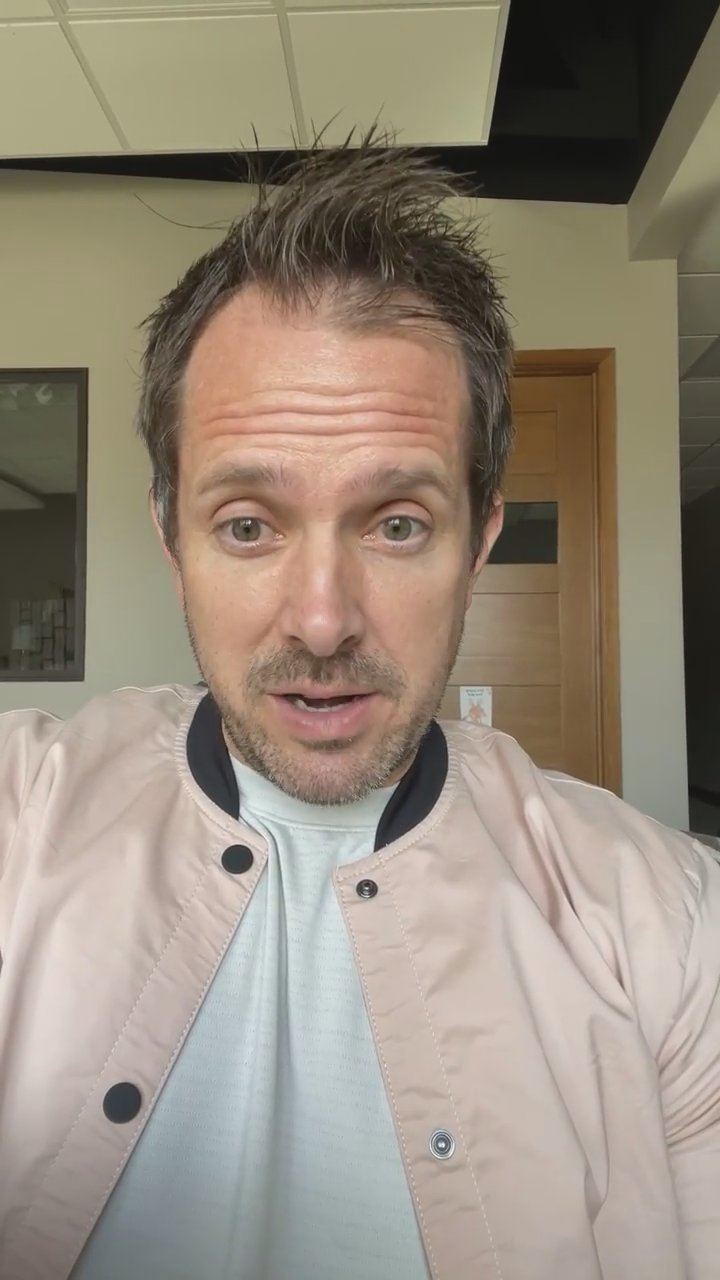
Amar Maffey reflects on care and balance, reframing self-care as moment-to-moment choices rather than rare indulgences. He prompts listeners to notice how daily goals and self-talk can serve or undermine a sustainable, present-focused life.
Amar Maffey: No matter how you're doing, you're in a good place. We can care about a lot of things in big ways and small ways. Care is one of those elements that increases the solubility of the things we hear and find in the Cadre sphere.
This whole month of June, we're talking about the. idea of balance. The idea of caring for oneself is often seen as a non balancing act. In reality, self care exists. Opportunities for self care exist in every second, in every moment.
Cadre: Why do we spend so little time focusing on the only moment we have any control? When you're worried about the future, when you're stuck in the past, ruminating. Do things that bring it into the now.
Hey, good morning, Cadre. How are we doing today? I hope you're doing awesome. I really do. But no matter how you're doing, you're in a good place. You're in a place where you can be, you can think, you can do, you can express with honesty and specificity in the right way, the wrong way. Amar Maffey. Nice to see you too. I'm glad I'm here. I'm glad you're here. I know what I know, and guess what? I care about you. Sometimes we think care is something that requires a certain proximity or a certain amount of time.
Hey, Jen. Nice to see you, my friend. But no, we can care about a lot of things in big ways and small ways. We can care about people we know, people we don't know. And here in the Cadre sphere, I think care is one of those elements, one of those ingredients that increases the solubility for the things we can hear and find in the Cadre sphere. So I have made it to. I have to open up work early today. Normally, I'm not the one who opens things up. So when I got here, I know the front door code got in the building, but I don't know the alarm code.
So all of a sudden, the alarm started going off, and for about four minutes, the alarm's going off, and I stood in the midst of the loudness, and all of a sudden I got a text for what the code was, and I was like, okay. And all of a sudden it's, I love how loud silence is. You can literally hear it on your eardrums. On Sundays, we often speak about, you know, self care topics, and self care in a highly polarized world is seen as one side of a spectrum, right? It's like, oh, I got a gift certificate to get a massage.
Going to go get a massage. Because the only time we ever get a massage is when we get a gift certificate versus. All right, I have to get back to the grind. It was a long weekend, but now I need to kick myself and get stuff done. Self care is on one side and doing the responsible things on the other. All month long. Emily, nice to see you, my friend. This whole month of June, we're talking about the. The idea of balance. And I think Sunday's the best day to do that on. Because the idea of caring for oneself is often seen as a non balancing act or a rebalancing act, an act of jubilee.
We kick and we grind and we empty and we dilute for a long time. Then we do this other thing over Here, because that's what balance is. In reality, self care exists. Opportunities for self care exist in every second, in every moment, in the way we speak to ourselves, the way we set up parameters for what enoughness looks like, for what success looks like. Anytime you spend moments being critical of oneself or setting goals for oneself, I want you to ask yourself, and hopefully you want to ask yourself too, is this goal or pathway that you're setting for yourself, is it in service of your self care?
Is it something that in the long run is going to create a sustainable, joyful, progressive life for you? And if not, stop. You know, I hear, I mean most of wellness culture is grind, show up, do it, don't eat bad food, eat good food, sleep this long or you're bad, drink enough water or you're bad. Like that's not self care. That's, that's militant macho ego marketing fluff. It sounds good. But the beautiful thing about self care is it invites you to ask the question, is this good for me? Is it good for you in the now, in the long, in a sustainable way?
Does it need to be louder? Does it need to be quieter? You need more steps in the process. These are really good ways to calibrate, to create balance within how you're doing the things that are innately for you. What do you do when you're worried about the future? Well, here's the good thing, Amar. I'm always worried about the future. I live with non situational panic. I've been worried about the future for 45, three years. There's an exercise along this idea of thin space where for two minutes you write down everything that you can think of from the past.
And then the next two minutes you write down everything you can think of from the future. And then for the fifth minute you write down everything that you can think of right now. And normally people struggle with the third part of that exercise the most. They're really good at writing down things from the past. Normally they're pretty critical lens. They're normally pretty good at writing down things from the future. They're pretty aspirational or Amari, your point? Pretty dark and doom and gloomy if that's where your mind's at.
And then they get to the third part and they really struggle writing anything down and in the present moment. And then I bring up some JC math and I say this. Culturally we're supposed to spend 48% of our time unpacking the past, 48% of our time planning for the future, and about 4% of our time actually being in the only moment where we have actually any control whatsoever. Sounds like a really bad idea. Why do we spend so little time focusing on the only moment we have any control? Mafi, you said it right?
When you're worried about the future, when you're stuck in the past, ruminating. Yeah. Do things that bring it into the now. Amara, right now, you're on Cadre. We all are. We're sitting here connecting with other people, considering, dreaming, reminiscing, sure. But we are being where we are with what we have and making the most out of it. I literally sit in rooms every single day of my life facilitating groups, and I bring up that math, and no one disagrees with me. No one says, I don't spend time in the past and the future.
I spend all of my time in the present. I go, no, you don't. But, I mean, no one's ever said that. But also, I'd be like, you live in a world that doesn't allow you to do that. And guess what? We need to unpack the past. We learn from that. We need to plan for the future. That's where our excitement is, and our dreams and our plans and our strategies. But at the end of the day, we have no influence over the future. We may be able to influence the future. At the end of the day, all of our plans may not lead to where we think they're going to go to.
That doesn't mean that we don't spend time there. But what can you do right now? It's what you should do every day, y' all. I'm always grateful for these conversations, whether the alarm's going off or whether I get the code and I can create a little bit of silence. What's your code today? To create a little bit of silence amidst the alarm going off. I'll talk to you later.
Reactions and comments are for members. Joining is free and takes a minute.