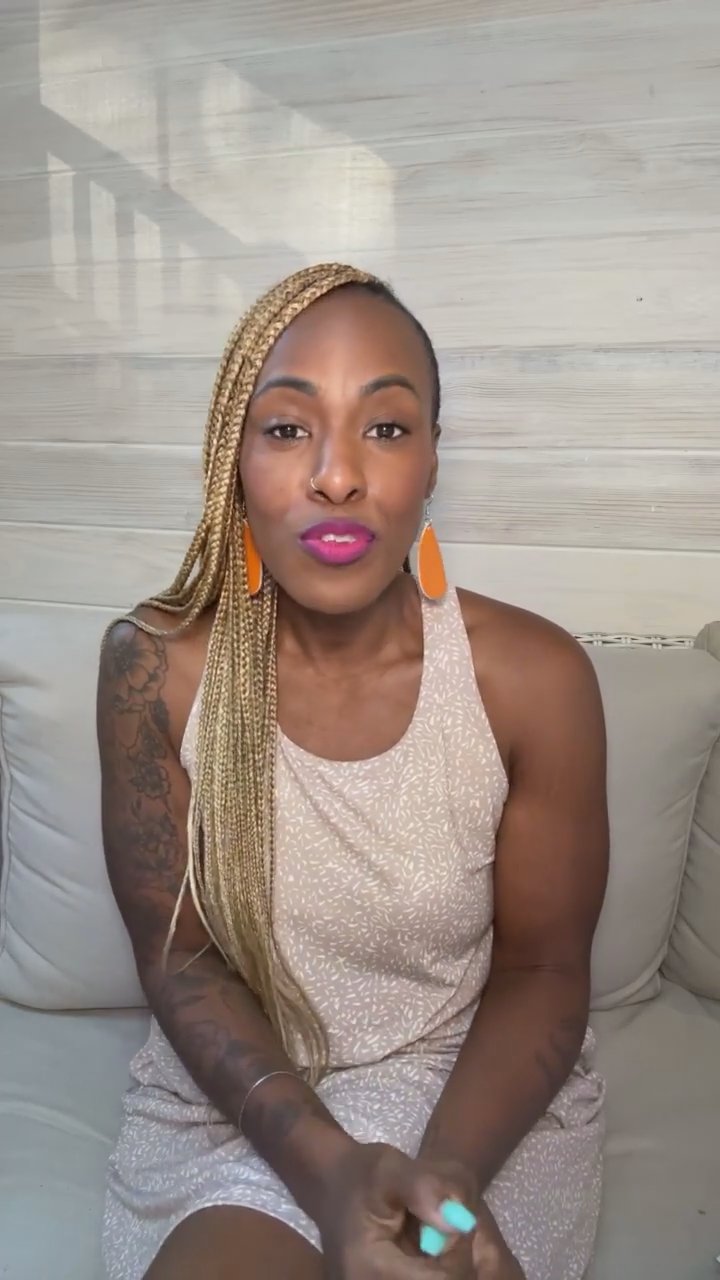
Dr. Charisse Johnson explains three neuroscience-informed techniques to disrupt limiting beliefs, including interrupting mental loops, emotional rehearsal, and daily actions that disprove old narratives, with examples and practical prompts to practice.
Dr. Charisse Johnson is a licensed clinical mental health therapist, a mindfulness practitioner and author. What does it mean to integrate and embody health and healing and wholeness through the lens of neuroscience? We talk twice a week at minimum.
First, pop in and let me know where you are in the world and rate your week. It not only sends a little love to me, but to others who are watching. It gives us an opportunity to decide, well, where do I want to land?
Our belief system is one of the most important places for us to focus our attention. Here are three techniques to disrupt limiting beliefs. Change doesn't begin with a new belief. It begins when you trust that that new belief is possible.
That's an old file. Writing a new one. Your brain works in loops. When you interrupt that loop, you trigger what's called a neural pause. Technique two is an emotional rehearsal. You have to see yourself doing things before you step into them.
In her middle age, a client is trying to give herself permission to belong and to find connection. She put herself in a new social situation that she never would have allowed herself to participate in before. Hope comes when we believe that something is possible.
Each day you write down one action that goes against your old belief. When you show it proof, the old belief begins to lose credibility. This is specifically helpful when you are working to establish a new health habit. Limiting beliefs are not a sign of weakness. They're invitations to choose again.
I want you to pop in the chat one aha moment or one takeaway that you're leaving here with after listening. Limiting beliefs are an invitation to try again. Logging that evidence against your false beliefs. Have a great rest of the week.
Hello, dear souls. Welcome to another episode of live with Dr. Shareese. I am so glad that you decided to come and spend a little time with me. Whether you are here in the moment or you're catching this for the second or third or fourth time on replay, I hope you get a little something that can take you through your week and remind you of who you are. This is your first time here. I'm Dr. Charisse Johnson, a licensed clinical mental health therapist, a mindfulness practitioner and author. And I come into the space twice a week at minimum to talk all about life.
What does it mean to integrate and embody health and healing and wholeness. Wholeness through the lens of neuroscience, we typically start our time a few ways. First, pop in and let me know where you are in the world and rate your week. When we rate your week, we do one, meaning your week is overtaking you totally and completely. It's fine. No judgment but awareness. And 10, given the context of your life, you feel like you are knocking it out the park and it's just a really great way for us to check in, for us to self regulate.
Thank you for all of those that are sending hearts. Love it. It not only sends a little love to me, but to others who are watching and it gives you a chance to decide for yourself, well, if I'm in a five or six right now, hello, still in the Carolinas, Joyce Lane, then hello Statesboro, Then it gives us an opportunity to decide, well, where do I want to land? Because that's a big important part for me is that you always know, hello Dallas, that where you are right now is not where you have to stay.
We are only stuck if we choose to stay there. And speaking of that, we've been talking a lot this month about the dynamic of freedom. And it's kind of interesting. I don't know why, but particularly this morning. Hello, Jersey. Hello, Lake Erie, Pennsylvania. Hello, Minnesota. Hello, western New York. Oh, we got everybody representing this morning. I'm in Charlotte for now, but I never mind being here. Something about what I'm going to discuss today gets me a little emotional. Emotional in a good way.
I think. I just really have so much understanding and empathy for how frequently we feel trapped or stuck or complacent or unable to truly feel free and express ourselves depending on the dynamic and the circumstances. How much of that is embedded in us because of how we were taught where we live, what other people expect of us, our vocational roles? Right. There can be so many different nuances in your life. Hello, northern Minnesota. That create this dynamic where you feel like you have to stay, stay in a container.
But one of the most primary places that we are, I don't want to say trapped, but paralyzed or sometimes partially frozen is here. Our belief system is one of the most important places for us to focus our attention. So I want to kind of piggyback off of our discussion last week, last Wednesday in particular, and talk about three techniques to. To disrupt limiting beliefs. Anchoring, quote, change doesn't begin with a new belief. It begins when you trust that that new belief is possible. Right. It's not just about, hello, Marilyn.
Oh, this is what I want to think. And I've been telling myself this, and here's this new affirmation. That's great. But if you don't really believe that change is possible in your mindset, in your actions, in your habits, in your thoughts, then you're gonna feel like you're kind of spinning in circles. So I'm going to ask you this question. You don't necessarily have to answer this one in the chat, but I do want you to think about this. Where are you holding yourself back? If you want to answer it, I'm all for it.
I really want you to think about that. Where are you holding yourself back? You don't need to answer why, but I do want you to kind of reflect. Is there anywhere in your life that you can acknowledge you get this far and then something happens or you'll start the process, Then you get in your head, where are you holding yourself back? Because I want more for you and I want to encourage you no matter how many times that you feel like you've had to restart and keep trying, try again. Okay. So limiting beliefs are those old internal narratives that whisper, you're not ready.
You don't have what it takes. This is just who you are. Right? Let me say that a little louder. Case you couldn't hear the whisper. They're old internal narratives that say things to you like, you're not ready. You don't have what it takes. This is just who you are. But here's the truth. Beliefs are not facts. Several, several months ago. You can go and scroll back if this interests you. I did a two part series that really focused on everything that you believe not true if you know that's the truth.
Give me hearts or an emoji or reaction. I want you to think about that. Beliefs are not truth. And we know that because our beliefs can be influenced by a number of different factors. How much we ate, how much we slept, how much we didn't eat, how much sleep we didn't get, what someone else said to us. Hormonal fluctuations, stress, pressure, temptations, overwhelm. There are a million things literally that can impact the quality of our beliefs. So yes, speak wonder. Internal narratives can be a bummer.
So we have to recognize, wait a minute, wait a minute. Let me, let me talk to myself. Is this truth? Did I believe this about myself last week? Did I believe this about myself yesterday? Or sometimes I will ask people to tell me about a time where you didn't believe this about yourself. When is a time that you believe differently about yourself? And people go, oh, okay, man, I used to believe this about myself and now I believe this. So then we get to explore and determine what change. But here's the thing to keep in mind as well.
Beliefs say more about your patterns, and patterns can be disrupted. So let's anchor this in a little bit of neuroscience. Your brain is neuroplastic, meaning it has the capacity to change. Raise your white hand and say with me, I have the capacity to change, to grow, to evolve. Because the reality of it is people don't make us feel that way. People often hold us to a former version of who we are or think they know everything about who we are and who we're becoming. But as long as you have a well functioning brain that is neuroplastic, you have the ability to change.
You have the capacity to change, to rewire, to reorganize, and to unlearn any part of who you are, right? And so when you have a limiting belief, what happens that gets stuck in your limbic system? Your limbic system is with holds on to emotional memory. So negative core beliefs, limiting beliefs are typically attached to a negative core memory. But your brain has the ability to break that attachment, rewire, reorganize, and create something new if you intervene consistently with intention and emotion.
Key word, if you intervene, please underline the word consistently. Sometimes we think we need other people to give us permission to be different, or we want other people to give us the confidence that we don't have ourselves. People can pour into your confidence bucket, but you are ideally responsible for pouring into yourself and being that constant and consistent intervention in your life. And so here are three simple techniques that you can use when you find yourself in a place that you need to disrupt a limiting belief.
Technique one is pattern interruption. So the moment that you hear a familiar internal criticism, interrupt it moment. Don't give it fuel, don't stay with it, don't sit with it for hours or days. And then try to challenge it because it's grown a lot of muscle. The moment you recognize it, say out loud or in your mind, that's an old file. I'm writing a new one. And say it with, you know, a little bit of passion. That's an old file. Writing a new one. Here's why this works. Your brain works in loops.
So when you interrupt that loop, you trigger what's called a neural pause, which gives your prefrontal cortex a chance to step in and choose a different response. Right. Some of you who followed me, whether it's here in different places, I've talked a lot about the brain loop and how you have this neural pathway that when you have that thought, it automatically leads to certain behaviors, emotions, so you interrupt it quickly. You say something to interrupt the thought pattern, like, that's an old file.
I'm rewriting a new one. And that neural pause allows the prefrontal cortex go, oh, we need a new pathway. We need to do something different. This creates what's called a prediction error. So your brain expects one outcome and then gets another. So it begins to question the old pattern, which is exactly what we want. So that's like, wait a minute. Do we still do that? I don't think we want to do that anymore. No, we don't. We want to do something new. It is the most incredible thing. I actually was a part of some research a few years ago where we put some brain imaging on someone's brain and kind of took them through this process with some mindful thought where they visualized and saw themselves interrupting a pattern.
And, oh, if I could share the graphics and the video of watching their brain start one way and going another way. It was the most incredible thing ever. And, yeah, Cari, it absolutely does feel like magic. Continue to do is so powerful and so encouraging. Right? So I want you to try this. I want you to write down your most common limiting belief, and then I want you to write a new statement that contradicts it, and then keep it accessible, keep it with you, and use it when that old file plays. You can do that here, or you can do that on your own time.
Technique two, an emotional rehearsal. I do this a lot. It is one of my absolute, consistent go to's. So this is where we connect visualization, which is so underutilized with emotion. I want you to close your eyes for a moment, and I want you to picture yourself doing the thing your belief says you can't or even you shouldn't. And I want you to picture yourself not just doing it, but owning it. And then I want you to feel in your body the confidence, the joy and the boldness, all of those rich sensory details that come when you own and see yourself doing the thing that you want to do and making it happen.
It's an embodied sense. You have to see yourself doing things before you step into them. I had, I have to share this with you. Okay. This story my client said I could share. So I had a client. And we've been working on her willingness to increase her social connection. When she was younger, she was bullied. She was often told she didn't belong for multiple reasons. And she, in her middle age, because I want to acknowledge it's never too late, is trying to give herself permission to belong and to find connection because that's so important to life.
And she's recognizing, hey, I actually don't love being alone. It was self protective, it was defensive. I don't like it. All that being said, for the last few weeks she's just been visualizing and mentally giving herself permission to see herself having true relationships, being able to talk to people, being able to be herself, feeling accepted and seen. And then this past weekend, she put herself in a new social situation that she never would have allowed herself to participate in before. Yes, she was still anxious, yes, she was still nervous, but she had done so much emotional rehearsal that she could handle what was coming up for her in terms of anxiety.
And she had other thoughts that she was saying to herself about her ability and her right to be in that situation. And she had the most incredible time. She left that moment more proud of herself, she said, than she's ever felt. She got home and she was like, I know I'm not supposed to be reaching out to you right now, but I've just got to tell you something. You don't have to respond. And that might sound small, but if you're a person who's ever dealt with, with self limiting beliefs that specifically come up when you're around other people and you think that other people see you the way you see yourself because other people have made you feel bad, that can feel like something you can never get through.
And then when you see yourself doing it, when you see yourself walking into a space and go, wait a minute, I belong because I say I belong and there are people here who accept me and I can share with them, oh, it's the most beautiful thing. And so I hope that that little story honestly encourages you not to get in your head, not to get caught in your limiting beliefs and to remind yourself that when you see yourself doing the thing that you've told yourself you can't, that's the beginning of the change that you desire.
And when we do that emotional rehearsal, it creates new synaptic pathways, literally rewiring the brain to expect a different outcome. So she went into that social situation for one of the first times ever and she didn't expect that people would look at her weird. She didn't expect that people would ignore her or not want to listen. She expected possibility. We don't have to know how everything is going to work out. Hope comes when we believe that something is possible. Thank you, Cari. I will absolutely tell her that you're cheering her on because we need to cheer each other on.
Let me give you this last technique, evidence building. So this is a daily proof practice. Each day you write down one action, no matter how small, that goes against your old belief. If your belief says, I'm not disciplined and you prep one healthy meal, log it. If your belief says something like, I can't speak up, and you set one boundary, log it. And over time, you'll gather evidence that outweighs the lie. I have my clients do this a lot too. When I go, all right, tell me the evidence that you've collected this week, which is actually a skill we call discovering the evidence in dbt.
When you do this, your brain is kind of like a courtroom. Evidence shapes the verdict. So when you show it proof, the old belief begins to lose credibility. This is specifically helpful when you are working to establish a new health habit. Part of what self sabotages us when we start a new health habit is you have all of this evidence that you're going to fail or you're going to give up. So you believe the verdict of the old evidence. But when you log every new opportunity, every new choice, every time you walked, every time you got up to stretch, every healthy choice you made with how you nourish yourself, then the evidence starts to turn and then you're like, wait a minute, I'm doing it.
I'm showing up in my life and I'm showing up the way that I want to show up. And I feel it and I feel great. And I know some of you that I know personally who are on this Cadre. You've done it, you've experienced it. Don't stop. Alright, so let's bring this full circle. Limiting beliefs are not a sign of weakness. They're invitations to choose again. When you rewrite the story in your mind, you change the outcome in your life. So your call to action. Pick one technique to focus on for the next seven days and journal the process to whatever degree you want to.
You can do a little audio journal. You can write things down. You can use the Mindset Matters journal. You can do it in the How We Feel app that we've talked about. But I want you to write down and log your work when you've interrupted a thought, when you visualize success or you've logged some evidence. What I'm doing is I'm encouraging you to build that neuroplasticity every day. You cannot wait. Well, you can, but it's less effective when you wait until crisis and overwhelm in order to try to do this work.
If you do it ahead of time, it's going to be there for you. And then the other thing that I want to encourage you to do is when you get that breakthrough like Carrie did today, and some of you share it, share your breakthrough with other people. Because we are surrounded by people who are struggling to believe that they can live beyond where they are right now. But if something shifts, post it, speak it, and celebrate it. Because healing isn't about changing your mind. It's about changing your relationship with your mind.
All right, let's do one thing that we don't normally do that I want to start doing before we leave. I want you to pop in the chat one aha moment or one takeaway that you're leaving here with after listening. And it's okay if you're like, this is my takeaway the first time I listened to this. And then if you want to come back another time, because I know a lot of times people need to watch on replay and you have another takeaway. Absolutely. It's like when you watch a movie multiple times, and the first time you felt this way about it, and then you watch it again, you're like, oh, my gosh, I didn't even notice that the next time.
So I want to stop for a moment and give you a chance to just put in the chat. One aha. One takeaway. Something that you want to leave with, think about, and work on. I love it. Logging your wins. So important because we do a really great job of logging our doubts, of logging our defeats and what we don't do well. Okay, so lots of logging wins. Yes. I love that. Speak. Wonder. Limiting beliefs are an invitation to try again. They don't mean we're stuck. They don't mean all is lost. They don't mean things are hopeless.
Yeah. And logging that evidence against your false beliefs. Yeah. Changes the verdict in the courtroom. You wake up and go, I'm changing. I'm different. I'm not who I've always been. Okay. I don't want to keep you too long. I love being here with you. Thank you for coming. Thank you for sharing your heart, your life, about your struggles and your wins. And I look forward to seeing you all very soon. Have a great rest of the week.
Reactions and comments are for members. Joining is free and takes a minute.