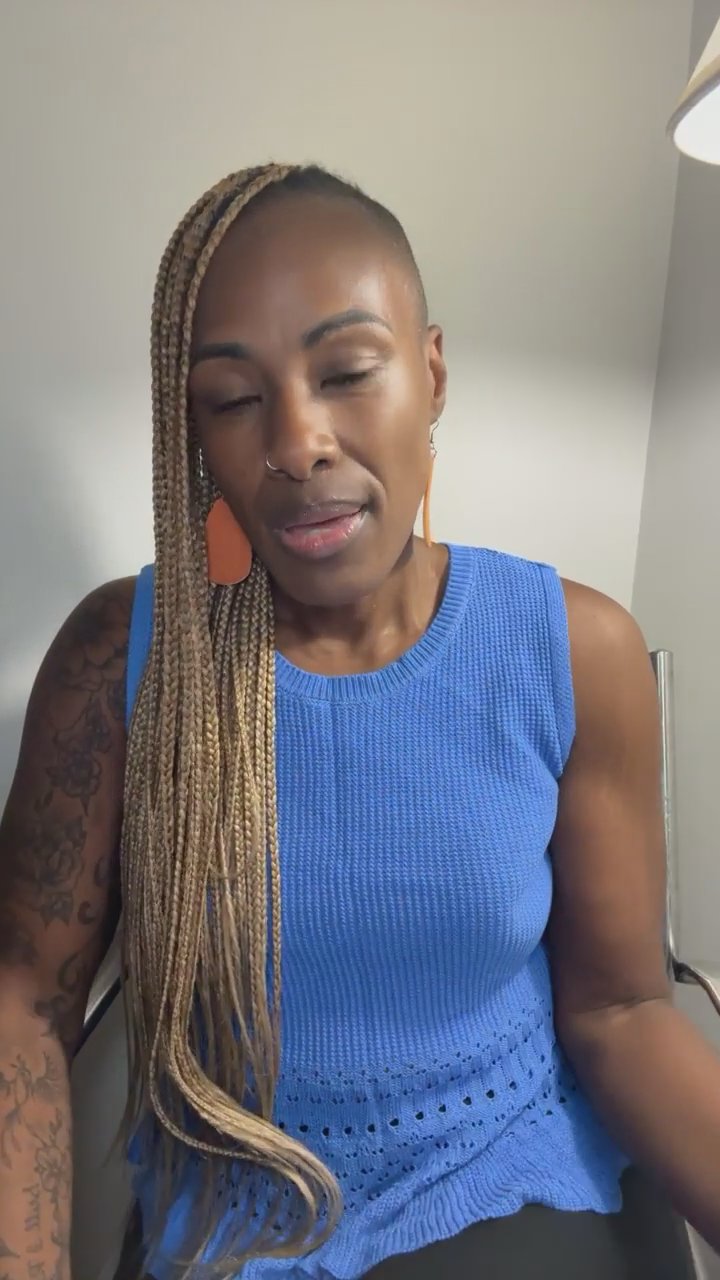
Dr. Charisse explores what it feels like to be used versus valued, distinguishing objectification from humanization across partner, family, workplace and friendship dynamics. She outlines subtle signs of being treated like a tool, invites awareness, and prompts reflection before action.
Dr. Charisse: We got some good rain yesterday, so it is not over 100 degrees. Where are you right now in the world so I can rep your city and then rate your week one to ten. Know that 10 never means a perfect week.
We are focused this month on the dynamic of freedom. Consider what it looks like to be in a relationship where we might feel free to be ourselves. Think about this not just in the context of a partner relationship. Keep in mind the difference between being objectified or humanize.
You are not a role, a title. You are full living being worthy of being seen, of being heard and held without conditions. Have you ever felt like you weren't valued the way you desired? This is a very subtle but serious aspect that can impact us.
Kari: Being treated like an object or a tool isn't always overt. It can be woven into our relationships, our workplaces, and even our self perception. When you are humanized properly, you're respected as a whole emotional being. If you have people in your life that honor your boundaries, keep them around.
Speakwinder: You feel used, invisible, or like a placeholder in your relationships. She says you're praised for your productivity, but your pain is dismissed. Another sign is you're expected to be available, agreeable or performative at all times. This can show up significantly in workplace cultures, she says.
When you're allowed to be only one part of yourself, you're being edited for someone else's comfort, not honored for your wholeness. Be aware of how it impacts you, and then really think about what you need to do for yourself.
So this week is awareness, and then next week will be action. Spend as much time as you need in this space today. Remember that there are dozens of contributors who want to pour into your life around multiple topics. I look forward to connecting with you on Sunday for if youf Plate Could Talk.
Good morning, and welcome to live with Dr. Charisse. It is 7:00am EST here in Charlotte. We got some good rain yesterday, so it is not over 100 degrees. And I am very, very thankful. It might sound a little weird. I don't know what it is this summer. Normally this would happen in the fall, but it's like something is blooming. And whatever it is, it's. It has my voice a little funky, but my heart is good. This is where I want to be. Come in and let me know a few things. One, how are you doing? Really big question to answer.
Where are you right now in the world so I can rep your city and then rate your week one to ten. This is just a simple opportunity. Good morning, Carrie. Or is it Kari? Let me know so I make sure I say your name correctly. Wonderful opportunity to decide. 1 meaning it's been a rough week. 10, meaning it's been a good week based on the context of your life. And know that 10 never means a perfect week. It's just a matter of having a week that you feel like you showed up in the ways that are important to you.
Airy, Carrie. Got it. I love that. Good morning, Ken. Good morning, Andrea. And all those who are coming in today. I want us to focus on something that is often talked about. Hello, Philly. But this might be from a little bit of a different angle. We are focused this month on the dynamic of freedom, and we don't always, hello, Statesboro. Consider what it looks like to be in a relationship where we might feel free to be ourselves. And I want you to think about this not just in the context of a partner relationship, because everybody's not married or dating.
I also want you to think about this in terms of family relationships, in terms of colleagues, in terms of friendships, and particularly or potentially, I should say, in terms of business relationships. And really keeping in mind the difference between being objectified or humanize. Right? So this is an opportunity for you to really look at the spaces that you're showing up in, the people that you're engaging with, and then how those people might be impacting your mental health based on the way they treat you.
All right, so opening quote. You are not a role, a title. You are full living being worthy of being seen, of being heard and held without conditions. Do this for me. I know this might be a little bit of a touchy topic, so I don't want to go too hard too fast. If you've ever been in a situation where you felt like you weren't valued the way you desired and that you were seen very differently than who you know you are. Just give me hearts or a different emoji, just to kind of create some normalization around this topic.
Some of you might be in a situation like that right now. Some of you might be coming out of that situation. But either way, this is a very subtle but serious aspect that can impact us. So one of the things that I want you to consider is that objectification, being treated like an object or a tool isn't always overt. It can be very subtle. It can be woven into our relationships, our workplaces, and even our self perception. I spend a lot of time talking about that particular dynamic with people who somewhere along the way, you've been given the message that your value is connected to what you do.
So you could have grown up in a home where that was how you receive love. You could have been in a working relationship or a partner relationship where you felt like, I don't know that. I always feel like I'm being seen and loved and cared for and respected just because of who I am. But sometimes it might feel like it's because of what you do, which isn't a good feeling. But it's important for us to always kind of take inventory and to recognize how these dynamics can show up in our body, how they can show up in our brain, and how they can show up in the behavior.
So I want to start with defining the difference. Objectification. I feel like I should say that 10 times equals being used. So here are three examples of what that might look like. You're valued for what you do, not who you are. You're reduced to a function, a role, or an image. So then people only see you as the provider. Or they might just see you as the cook or. Or the person who does everything around the house. And that's their focus. Yeah, Kari. And it can be weaponized and used as a reward in your whole childhood.
I hope that that's something that you are experiencing a lot less as an adult. The other thing that you may find when you're feeling like you're objectified is your complexity, your needs, your humanity. You're not always going to feel great. All of those things might feel overlooked or dismissed. But on the other side, when you are humanized properly, which equals being seen, you're respected as a whole emotional being. Your emotions are not made out to feel like they're too much. Your boundaries and individuality are honored.
This is a big one. If you have people in your life who really struggle to respect your boundaries. Then we would say, one, there's some issues, but that can often lean towards you feeling like you're not being seen if they don't honor those. But if you have people in your life that honor your boundaries, keep them, keep them around. Good morning. Speak Wonder from Erie, Pa. The other thing is, when you know that you're being seen and you're being treated well again in any personal or professional dynamic, people are going to be curious about your experiences, not just your performance.
All right, I want to give you this quick analogy and then kind of come back to my notes. I have a dear friend, and we are often in conversation about all things life, and we talk a lot about squares and circles, right? Recognizing that a circle is this continuous aspect. And if you think about you as a person, when you are considering yourself the circle and you're in the center of that, you can kind of have a full 360 perspective safely. Whereas there are people in our lives who are squares. They come from different angles.
We always get something a little bit different from them, and we don't know what to expect. Ideally, as a circle, stay with the analogy. We want to be connected to other circles so that when those integrate, there is that intersection in the middle where everything kind of works out smoothly. And feel free to tell me if you're like Dr. Shareese, you have lost. I mean, this makes no sense, but I'm almost to the end, right? So think about that. Almost like a Venn diagram. Circle, circle, have this point of overlap where there is just this harmony where we coexist without anyone feeling like they have to shift or give up too much of themselves.
Well, when we have people in our life or when we're in partnerships and professional connections that aren't in alignment, full alignment, then we're putting a square in our circle. So this is random, ish, but also thought out. My brain works in a very unique way. I want you to keep in mind that squares don't belong in your circle. So pay attention to where in your life you are feeling stretched and overly stretched. You're feeling like you need to become something different than who you actually are in order for that relationship to work.
Doesn't mean that it's not a great relationship, but it might mean you want to take a look and really ask yourself, can I stay in relationship? Can I stay in partnership? Can I stay in connection with this person, with this organization, and still feel like I'm able to show up the way I need to and the way I desired? If that made sense, just Say, made sense or nice try. I promise I won't be offended if I have like a little whiteboard that I could draw on. The visual is beautiful, let me tell you.
So I want to give you a few signs and symptoms that you might be objectified or might be you're being objectified. Okay, so some emotional and behavioral signs are you feel used. Great. All I need is one. You made sense. Thank you, Carrie. Emotional and behavioral signs. Right? This is an opportunity for you to take inventory in your own life. You feel used, invisible, or like a placeholder. So you feel like I kind of hold value for them, but only when they need something, and then when they don't, that value isn't there.
The second one is, you're praised for your productivity, but your pain is dismissed. I have to just give a little tea on that one. That's big. Your praised for your productivity, but your pain is dismissed. So as long as you're happy, as long as you're doing well and taking care of everything, it's great. But if you're hurting, if you are uncomfortable or disappointed, then that's dismissed. That is a big sign that you're being objectified. Another one is you're expected to be available, agreeable or performative at all times.
There's very little space for you to be anything other than what that person or that organization needs. And please don't sleep on looking at your working relationships and your partnerships there, because I do see this show up significantly in workplace cultures. So here's a few interpersonal clues. If you find that people only check in with you when they need something, they're objectifying you in some way, even if it's someone that you care about. If your no is met with resistance, guilt tripping or withdrawal, that's a big one.
So you've said no to something or not. Now and then you're made to feel guilty or someone's entire being changes because you weren't agreeable. That's tough. And that's even more challenging if you're a person who's already working not to please everyone. So those kind of interactions are going to make your emotional freedom and your full sense of well being pretty difficult. You're with me, Speakwinder. And then you feel more like a product than a person in your relationships. Those are some interpersonal signs.
I want to end you with this quote. There's a lot here. I'm not finished with this topic, but I am learning to kind of keep it digestible. Closing quote. When you're allowed to be only one part of yourself, you're being edited for someone else's comfort, not honored for your wholeness. Right? When you're only allowed to be one part of yourself, you're being edited for someone else's comfort, not honored for your wholeness. So here's what I want you to do. Between now and when I pick this back up next week, I want you just to take some thought around what I've shared and really work on awareness.
What are you noticing? As I've planted a few things to kind of be on the lookout for, some of you may already find, hey, I can name people or partnership or an organization right now that's in my life that already feels that way. And know that when I give you this insight, I'm not expecting you to go cut all those people off. Now, you can if you want to, but that's not the expectation. But I do want you to at least be aware of it. Be aware of how it impacts you, and then really think about what you need to do for yourself in order to make sure that that impact is not too great.
So when we reconnect next week, we'll talk about the neurobiological impact, how it shows up in the body because it's a big aspect of that neurobiology. And then, of course, I'll give you some tangible tools around what you can do. So this week is awareness, and then next week will be action. As always, I'm so glad that you popped in and decided to come and share. Spend as much time as you need in this space today. Remember that there are dozens of contributors who want to pour into your life around multiple topics, and I look forward to connecting with you on Sunday for if youf Plate Could Talk.
Have a good day.
Reactions and comments are for members. Joining is free and takes a minute.