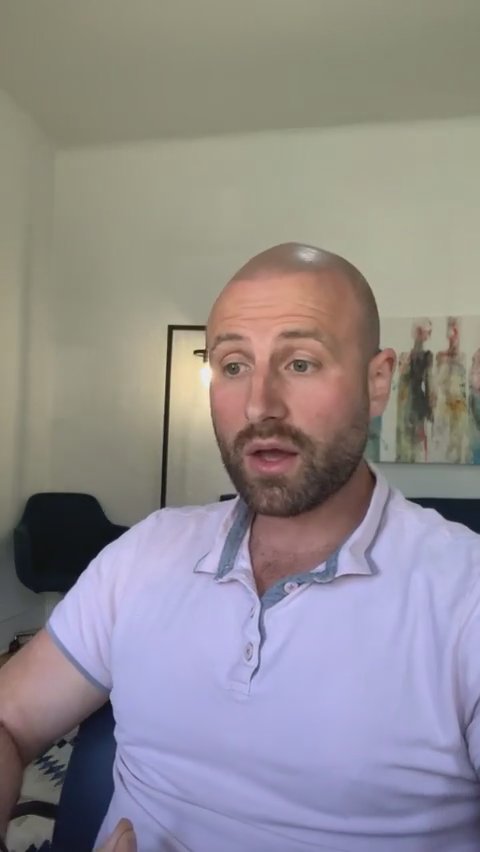
Most people have a good idea of what the term depression means in a general sense. But there is a difference between depression and clinical depression. There is a fine line between the general idea of depression and what it takes to receive a diagnosis. In this Livestream, I will clarify what is needed for a diagnosis and what is needed to receive one officially. Also, how much does it matter? Tune in to learn more?
Evan is your resident mental health and addiction therapist. Here are some of the most common questions that people ask about mental health. Let's go through some of those and perhaps this is a question that you have in your mind.
In the mental health professional world, depression or depressive disorders are a diagnosis. What is the difference between depression and clinical depression? Some of the different services you can get to treat depression other than just things that you may normally do.
There are nine symptoms of depression. At least one of the symptoms is either depressed mood or a loss of pleasure. If you have at least five of them, you have a major depressive disorder. What if you have four? Does that mean you don't have depression?
The most extreme one is recurrent thoughts of death. Recurrent suicidal ideation. These are the nine core symptoms of a depressive episode. And the reason we differentiate is because there's often different treatment plans.
One of the other most known forms of depression is called persistent depressive. It's a little more pervasive. For bipolar disorder, the main differentiator are these elevated mood episodes, mania, hypomania. Now, hopefully, what we look for as far as diagnosis.
Some of the majority interventions, treatments would be medication. But a lot of people come to therapy first because meds can be a bigger commitment for folks. Not everyone is appropriate for each one of these interventions. Talk with your doctor about weighing the pros and the cons.
What's up, Cadre fam? Evan here, your resident mental health and addiction therapist, and lessons from the office here as I'm working, as we're doing therapy and thoughts come to mind. But I wanted to continue talking with you all about some of the most common questions that people ask in general about mental health. So these are some of the most commonly searched questions. So I figure let's go through some of those and perhaps this is a question that you have in your mind as well. So today we're going to talk about what is the difference between depression and clinical depression, right?
Is this just sadness? Is this depression? Like, what is the difference? Because in the mental health professional world, right, depression or depressive disorders are a diagnosis. So we don't have anything called depression necessarily as far as a diagnosis goes, right. There are different depressive disorders, and I could break down some of these for you in the way that we do it. I always say that I'm pulling the curtain back a little bit, showing you how the sausage is made, so to speak. But let's go ahead and talk about that.
So what I find is that in the common vernacular, if you will, pretty much most people have an idea of what depression is. It's a commonly used term. So it's things like being down, sad, just not being happy for however long, usually like an extended period of time, people could use that term. I'm feeling depressed. I'm feeling down. And that's totally legitimate. We don't always need to have a clinical diagnosis or a word for that feeling. However, we do have that. Why do we need that? Why do we need a diagnosis?
What's the significance then? What is that cutoff point of what is just sadness, a period of feeling down, period of feeling low, and then being able to qualify or meet the criteria for a diagnosis from a mental health professional, whether that be a psychiatrist, nurse practitioner, someone who gives meds or someone who does therapy or otherwise. Right. Some of the different services you can get to treat depression other than just things that you may normally do. Let's talk about a couple of the different types of depressive disorders, because that's in mental health.
Like I said, depressive disorders are the category of the different types of depression. Right. Now, there's a core, the core type that you probably most associate with depression. The most common would be something called a major depressive disorder. This is the kind of centerpiece of the symptoms that make up all of the depressive disorders. And so basically, when we look at what a major depressive disorder is, I'll just kind of read what the diagnostic manual states. So five or more of the following symptoms, and we'll go over those that have been present during the same two week period, and they represent a change from previous functioning.
And at least one of the symptoms is either depressed mood or a loss of pleasure, right? So basically what that's saying is here, there's nine symptoms of depression, and if you have at least five of them, right? So as you can see in some of these diagnostic. What if you have four? Does that mean you don't have depression? Right, so there is some wiggle room here. It's not that strict, but what it really means is that you're having some of these symptoms of feeling down, depressed, sad, and it has a negative impact, just like any other diagnosis, like substance use.
This is having a consequence on my life because otherwise it's not a big deal, right. If I'm having some of these and it doesn't affect me in any way and I'm fine otherwise, right, but this is the core. Right, of a major depressive episode. So, yeah, so things like feeling depressed mood, right? So they use that word, depressed mood most of the day, nearly every day. So not just once in a while. This is like most of the time, almost every day, feeling sad, empty, hopeless. An observation meant by others, always tearful.
In children and adolescence, that could mean an irritable mood, but irritability is another one of those on here. But maybe that's more anxiety, but. Right, so that's one of the symptoms. Probably one, like I said, one of the core symptoms and that one has to be there. The other is a markedly diminished interest or pleasure in all or most all activities. Most of the day. Nearly every day. Right. So basically losing interest in the things that you normally were, hobbies, activities, things you liked about work, being a parent, you know, just maybe losing the motivation to do these things because it doesn't provide you any pleasure.
Right. It could be like, I used to really like going and eating this type of meal, but I just don't care for it anymore. Right. So that's one of the big signs. Another one is interesting, which is some of these are like a double edged sword, right? Significant weight loss or weight gain. So a lot of times when people are depressed, they lose their appetite and that will lead to weight loss. Other people maybe cope with weight gain or cope with overeating, which will cause weight gain, right, as a coping mechanism.
So they can get specific here, a change of more than 5% body weight in a month. Or decrease or increase appetite nearly every day. So that's number three. Then the other one, a double edged sword. Insomnia or hypersomnia. Right. So insomnia, most of us know, is the difficulty sleeping, whether that's difficulty falling asleep or you fall asleep, but then have a difficulty staying asleep. Right. So that's a big one that a lot of people report as well. So this one, psychomotor agitation or retardation.
Maybe that word will change soon. Nearly every day, observable by other. Okay, so basically meaning like psychomotor. Right. Movement. Right. So agitation. Right. That could be like feeling anxiety. That could be, you know, keyed up on edge. Or when they say retardation, like a fire retardant. Right. Which just that core word means a slowing of. Right. If I put water on a fire, that slows it down. So feeling slowed down, you're not moving as quickly. You feel just like. You feel like you have a weight on every muscle in your body and it's harder to do things.
So it talks about feeling this way, or maybe it's observed by other people. You don't notice it, but, you know, this markedly slowed down phenomenon. So that's number five. Number six, a fatigue or loss of energy. Pretty straightforward. Right. Feeling tired during the day. Maybe that connects with the insomnia, loss of energy. So a lot of these could connect with one another, but that's straightforward. And then this one. Right. So feeling worthless or excessive inappropriate guilt almost every day.
So just feeling low self esteem, feeling like things are your fault when they aren't. Just feeling down about yourself, not feeling a positive optimistic outlook, just consistent pessimism. So that is often associated with it as well. Diminished ability to think or concentrate. Indecisiveness nearly every day. Right. So I don't have to keep adding that. Nearly every day by subjective or observed by others. So kind of add that to all these. Pretty much, yeah. So, difficulty thinking, concentrating.
Because often. Right. With that feeling of slowed down. Right. Your mind could be slowed down as well. You can't think as quickly or, you know, it just everything becomes slow because that's what a depression is, a lowering of brain, a slowing of brain activity that could be physical and psychological. Feeling depressed now, the other's agitated, or maybe you're thinking too fast, or maybe that's more associated with anxiety, but, you know, that could. And those things do connect, but it's a slowing diminishment of brain activity.
And then the last one. Right. The most extreme one is recurrent thoughts of death. Recurrent suicidal ideation. So maybe with or without a specific plan. Right. So a lot of people have these types of thoughts of suicide, and not always does it mean that you're going to do it, that you really want to do it, but they just. They're like these intrusive thoughts that come to your mind. And sometimes it is that extreme where you start to have a plan, intent, you have the means to do it, and you're like, you know, you could take it that far as people do, you know, have that happen or they do commit suicide.
Right. So it is something that is really prominent for folks who are really deep and struggling with depression. Right. So those are the nine core symptoms of a depressive episode, and that is of major depressive disorder, the core symptom cluster, the most commonly diagnosed. Right. Where you have these depressive episodes that last at least, you know, a couple weeks long. Often they last longer than that, but usually you have a return to functionings with these episodes. So it's like, here's your mood, and then you have these, like, dips.
But then usually in an episode, you come back, and that's what a major depressive disorder looks like. These kind of downs, kind of back to normal. They're episodic. Now there's other types of presentations. And again, these are all. None of these are perfect. Everyone experiences it differently, but these are just general patterns that we look for. And this is like, let's say you come with these symptoms. This is what this looks like most. And the reason we differentiate is because there's often different treatment plans.
That's why we diagnose in the first place, is that we have to have an identity of the problem so that we could best find a solution to match that pattern. So that's major depressive disorder, which is one of the mood disorders. We could go deeper into that, but it's this broad category of mood disorders. One of those categories is depressive disorders, which we're going over, but we'll talk about the other main category, which is the bipolar disorders, which many of you may know about. But one of the other most known forms of depression is called persistent depressive.
Now, it's a little more rare. And this one is, it's interesting. It's a little more pervasive. It's usually not in these episodes per se, but the episodes you do have last much longer. And it was almost thought to be a part of one's personality. Right. Where it's like, almost like a depressive type personality. We don't really say that anymore. But it's just so commonly there. And a lot of times people don't know they have this because that's normal for them. With major depressive disorder, you're like, this is way different than I usually feel.
This is alarming. Where someone with persistent depressive. Here's the average baseline. Here is the lower form, right? So your baseline, just like you have a lower baseline, so you don't notice that maybe you're not going here. You could still have major depressive episodes with persistent depressive, but often it's just this lower line. So it's a little bit more insidious and it can be a little bit harder to treat because it is more of a baseline. But there are treatments for that as well. You know, that one's a little less common and it may be more common than we even think because it, like, it's just hard to recognize sometimes, right?
I had a client for, like, quite a while, and then it kind of hit me. I'm like, oh, you know, maybe this just is more of a baseline for this person. And often, like I said, these lower folks, they have episodes and that's what brings them into treatment, right? It's just like the other person, they're like, well, I'm having this depressive episode. But then you start to realize, well, they never seem to come back up to a more average level. I say normal, and that's usually what we mean as average, but those are the two main ones.
And then kind of the other big category of mood disorder would be bipolar. And for bipolar disorder, the main differentiator are these elevated mood episodes, mania, hypomania. So mania is just more intense. Hypomania is a little less intense version. So here's the average line, normal line. But then you have these significant upswings where your mind's going 100 miles an hour. You don't feel the need for sleep. You may be feeling euphoria, also irritability. You have all these grandiose ideas, I'm going to start all these businesses, I'm going to do this.
Or, you know, also you do like impulsive, reckless things, like spending all your money shopping, or, you know, like, your judgment is impaired. And it's often very noticeable by other people. Like, whoa. I always say it's like drinking, like ten shots of espresso, except it lasts for days, weeks or more. So it's like we've all kind of had that feeling where, like, mind's going, oh, I'm going to do this. You get all this ambition. So that's the key feature of a bipolar disorder, is you have those.
Now, most always of the time was a bipolar used to be called manic depressive. Right. You have the manic side, but then the depressive is usually when you come down, you often go into a depressive phase, or you come down and then go depressive. Right. So there's usually two types of bipolar one and two. Bipolar one is you get to these manic phases where. And a lot of times we get to the manic phase, it's just more intense. And a lot of times people wind up hospitalized because sometimes you start to have delusions, psychosis, people wind up in the hospital, it's much more debilitating, whereas sometimes they have the lesser form, the hypomania, they're more able to continue their functioning.
It just becomes impaired, or it's just really intense and it's just not really who you are and you're still able to work and doesn't totally screw up your relationships every time you're there. But the more pervasive part is often that depression. And for bipolar two, you may have the hypomania, but it says in the criterion that usually folks with bipolar two, it's not less severe in general, because you tend to have more depressive episodes with bipolar two than you maybe would with bipolar one.
So it's just a different type of presentation. Now you have a better understanding, hopefully, of what we look for as far as diagnosis. However, whatever idea of depression you have is not necessarily wrong just because you don't know the diagnostic criteria well, you kind of do. Now, you know, the key thing is if these mood episodes that you're having are a problem and they're having a negative impact on your life, it may not fit these categories perfectly. And we as clinicians have an ability for some wiggle room.
Right. There's something called, like, major depressive disorder, unspecified or not otherwise specified. Right. There's other ways we could put it. Meaning like, you don't meet all the criteria perfectly, but you meet enough. Maybe you don't meet five symptoms, but you meet four, but those four are really intense. So we have some ability to do that because not everyone presents the same way. And there are some different presentations that still merit intervention with medication or therapy or both.
We may as well talk about that, right? Because some of the majority interventions, treatments would be medication. There's some very good medications to see a psychiatrist or med provider, but then there's also these different therapeutic techniques, interventions that, like, I would do as a therapist and talk therapy, trauma work, you do some, you know, changing of the way you structure your thoughts and behaviors. Right. And those are effective, too. And usually, not surprisingly, the most effective tends to be both.
But a lot of people come to therapy first because, you know, meds can be a bigger commitment for folks. There's sometimes side effects. Doesn't mean you shouldn't do them. A lot of it, again, it could be very helpful, but sometimes it takes trying a couple different meds and, you know, so you're going down that road, and then, you know, if you do have to get off of them or want to, you know, it takes a little time to do so. So there's a level of commitment to it, but something you always want to talk with your doctor about weighing the pros and the cons.
So I'm not a med provider, but I say I know more than the average bear and I should because I work closely with med providers, and I'm one of the people that refer a lot of people to meds. And so when people come to me seeking treatment for therapy, I'll usually talk about the beginning. If they're not on meds, and I'll put that in the treatment plan, I'm okay. Let's try all these different things, and if you're not getting the results that you want, maybe let's do a med consult to talk to the doctor and see about, you know, different options there to kind of give you another tool in your toolkit to do with therapy as well.
Now, what if you're like, well, I'm not doing therapy. I don't have insurance. I don't have this, you know, like a first line. I mean, there are just some certain things you could do, some changes, some different behaviors, some different lifestyle alterations you could do that help. Like, one of the best things you could do is consistent exercise to improve your mood. It's one of the most effective antidepressants out there is doing that. Now, sometimes as a therapist, I work with people, and we have some accountability and some goal setting and some behavioral intervention to try to get you to do those things on the surface that aren't necessarily deep or emotional.
It's like, let's, you know, let's see if we could find strategies to improve your sleep, to improve the amount that you exercise, just like overall health, but also your, how do you improve the quality of your relationships, doing more of the hobbies and interests that you enjoy, some of the things that make life worth living so that you could just be, in general happier because sometimes people come in and there's some very obvious reasons, call them low hanging fruit or if like, you don't, aren't engaging with friends, you don't feel like you have a core group, you're having trouble in your relationships, you have stress, right?
A lot of times it's worse work related, right, where you're kind of stuck in a cycle where you're overworked or it's just you're not in the right position, right? So sometimes these mood episodes are directly related to some of these things. And if you can find a way to change your environment, you'll like automatically feel better. But then even if that is the primary, there's also other things, right, more emotional that you could work on that are going to help learning different coping skills, you know, to try to improve your mood and your outlook in the moment and for the long term.
So those are some of the, you know, basic general interventions that we do and some things that you could try to do on your own to improve your mood. And then maybe you don't necessarily need therapy or medication, but again, like the gold standard would be like, alright, if you're able to change some of those environmental, address some of those lifestyle issues and things you have going on in your life, but also doing the deeper emotional work and coping skills and managing emotions and medications, right?
So everyone's different in their severity, depression. Not everyone is. Not every person is appropriate for each one of these interventions. However, I'd argue, you know, like, it can't hurt to do anything healthier lifestyle changes at all. That's, there's really not many risks, but it is something, it's easier said than done, otherwise maybe you would have done it, but sometimes you just need a little bit more encouragement, accountability and some, you know, sometimes we do little tricks to be able to make making difficult behavioral changes easier and less daunting.
So I hope you got something out of that, learning about some of the differences in clinical depression and sadness and all that kind of thing. And if you have any questions, feel free to comment or reach out. Looking to doing some coaching too to could be me beneficial through us. So, yeah, as always folks, it is good connecting with you all. It's been another great live and I will see you next Thursday.
Reactions and comments are for members. Joining is free and takes a minute.