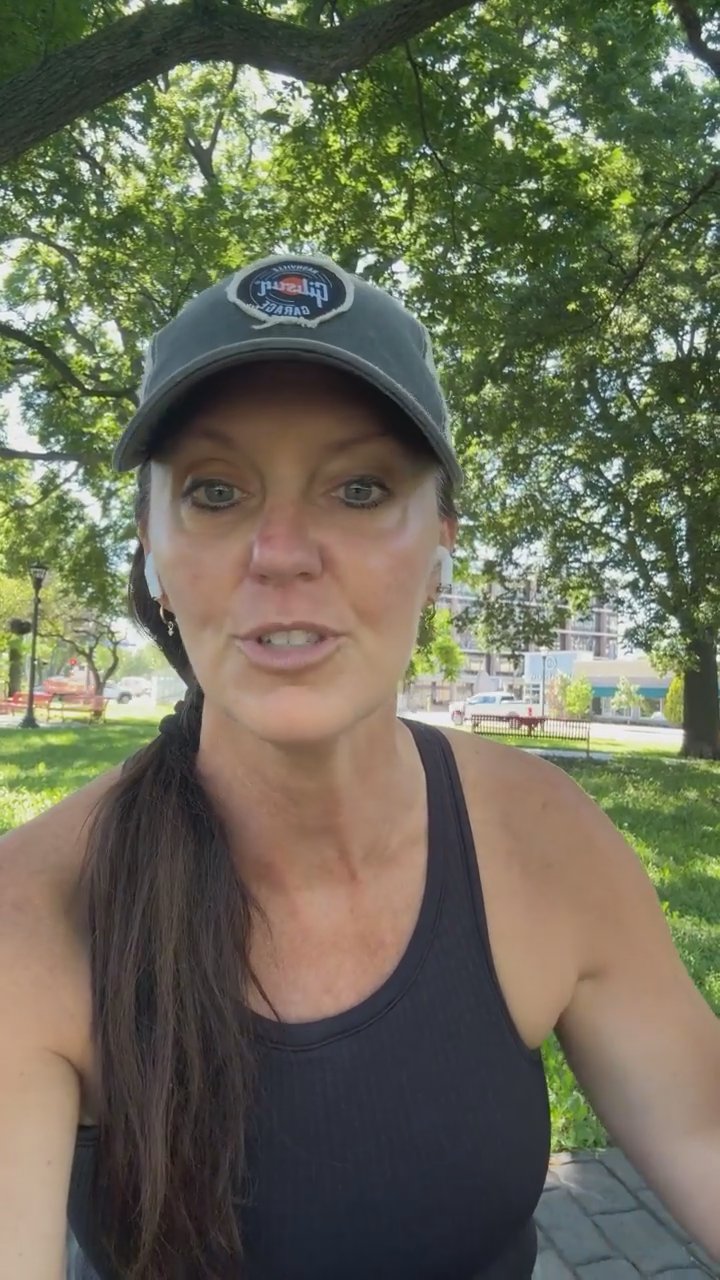
Host outlines a new coaching program and introduces a month focused on freedom, then leads a discussion on leading authentically by learning to let go—exploring the visceral feel of trust falls and leadership beyond titles.
Cadre is launching a coaching program. Tonight we'll have the first coaching call. Check it out because it's going to be really exciting. I won't be on the call tonight, but I will listen to it on replay.
This coming month, we're going to have a theme around freedom. Today our conversation is going to focus on leading authentically by letting go. When I use the phrase leading and letting go, it feels like a free fall. Sometimes we just need to check it.
When a leader uses so much language around I and holds things back in that way, that's always a yellow flag for me. I have to straddle the line between supporting this individual, supporting the organization. Just keep checking ourselves and doing that better.
Happy Monday. Cadre family G initials calling in here. Excited to be here on Monday. You know why I get excited on Mondays? I get to follow Luke. That can be intimidating because he is such a dynamic speaker, but it's exciting because he's inspiring, so he gives me energy. Good morning, Allison. Good morning, Jules. Happy Monday, y' all. Here we are. If you joined in to listen to Luke today. Hello. Speak Wonder. You may have heard there's some exciting things happening today. If you didn't listen, go back and listen on repeat.
Hello, Cadre fam. It's so great to be here. Can I get a shout out for Mondays? Last day of June. Isn't that crazy? The first half of the year is ending today. First half of the year. What have we accomplished so far? Maybe we haven't accomplished anything. Who cares? We've made it through the first half of the year. We have the second half of the year to continue to do great things. So if you didn't listen in this morning to Luke or you haven't listened to him on replay, first, I want to do a couple plugs of awesome things that are happening.
One, if you haven't heard the buzz about this coaching program coming up, we are launching a coaching program and I am so grateful to be one of these people. Tonight we'll have the first coaching call, so in the Cadre app, you can find more information about that call. It's 7pm Central Time, which means it's 8pm Eastern and it's 5pm on the west coast time. And if you're Mountain time, then you're going to be at 6pm and hopefully I did all that math real fast correctly. So check it out because it's going to be really exciting.
I won't be on the call tonight, but I will listen to it on replay for sure. Now, this coming month, it's all about freedom. Freedom of all different types of things. So last month or this past month, you notice the balance theme. This coming month, we're going to have a theme around freedom. So today our conversation is going to focus on leading authentically by letting go. I may have put the title slightly different, but that's the essence of what this is. Now think about that. Leading and letting go.
How does that make you feel when I say that language, Leading and letting go. I'll tell you what happens in my body. My heart starts to race. And here's a few reasons why. As leaders, whether we are leading a team of people, whether we lead a team of volunteers, maybe we are the leader in our families, there's so many different ways that we can define leading. And my definition of leadership doesn't equate to hierarchy. So there's a difference there. Just so we can clarify, my definition of a leader doesn't associate with a hierarchy or a title.
So just because you maybe don't have the title of executive or CFO or insert whatever title you think that should be, we all lead and we all follow. So when I use the phrase leading and letting go speak Wonder says, it feels like a free fall or maybe a trust fall. Yeah, that's a really great visceral experience. It's a really great visceral experience to consider that free fall. You can feel that, that trust fall. You can visualize what that might look like. Now, here's why this is important. When I have the opportunity and I'll just go back to a team that I lead.
So I talk a lot about our spin studio, but there's a lot of really rich examples there, which is why I bring that up so often. And I'll pull in examples from my consulting work as well. My personal example and what I observed recently, my personal example is when I think about the studio that I co own, I'm not a leader of one, I'm a leader of two. Right. So there's a partnership there. But also there is ego that's always attached to things. Now, we can try to say that we're egoless and we may mean the most positive, beautiful intent with that.
I try often as possible to lead with and inspire with as little ego as possible. However, the ego also is a representation of our passion and our purpose. So sometimes we just need to check it. We don't have to let it go. We just need to check it to make sure that it's leading with the intention that we hope for. So what I mean by that is, at our studio, as I mentioned, we have a team. We have a team of instructors, we have a general manager, we have a sales team. And there are times, there are days where some of my responsibilities that I typically do, it's time for me to hand them off.
Now, there's a fear in that if I let go, I maybe won't be as relevant at our studio. Or if I let go, what if they don't do it as well? Or what if something breaks? Well, here's the things I know to be true. Something breaks, we fix it, right? And if I let something go, I have space to take on something that maybe I haven't been able to do. Yet that is really important for our team. If I let go, I'm creating an experience for someone else to learn and to break out of their cocoon because they're gonna have to level up a little bit.
They're gonna have to learn something new, which means that by me letting go, I'm allowing someone else to learn and step into a new potential. Now, maybe, what if I delegate to them or give them a task or a project that maybe isn't their strength, and they struggle with it. Awesome. They're learning about themselves. And I, as a leader, get to coach and mentor them through that. And if it's not working, we plot twist. So there is always going to be this part of letting go. But here's the one that gets me.
What if they do it better than I did? Ouch. That one hurts. Right? Like, what if the person I let something go to does it better than what I did? Does that mean I'm not enough? Oof. Does that mean I was failing? Oh. Or does it simply mean that somebody else has a talent that I didn't have and now we get to level up together and I can learn from them perspectives. So leading with authenticity doesn't mean holding on to everything. It means finding the right things in the right time to let go so that someone else can learn.
Level up so that you can create space to maybe learn a new talent yourself. In these instances, it really requires me to lean into my coaching. It requires me to listen more so that I can hear those ideas to see where maybe, just maybe, they need me in a different way. And then it creates space for me to do something different. Right. So by letting go of a bunch of different things at our studio, I am now creating a run and walk community for our community to continue to move together in different ways.
I can invest time in trying to find volunteer activities for our team to come together and do team building in new ways and speak wonder. Exactly. It means I'm giving space for someone else to soar their gifts. Let's be real, folks. I'm not going to be around forever. But if we think about that impact we have the opportunity to make, can't that impact be farther and wider when we allow others the opportunity to soar? And maybe they don't soar, Maybe they trip and stumble and fall. And that is great too, because I tell our team so everybody on our team is part time except for one who's full time.
They all have different jobs except for one that's our general manager. And at the end of the day we all know that jobs are going to change, people are going to change jobs, people are going to move on. But if there's something that I can do to contribute to their future success and I can give them a responsibility in a safe space where there's not really anything they can mess up, because we can always plot twist, we can always fix something. Why wouldn't I? Because even though we are a spin studio and recycling studio, and there are a lot of things that I need to hold people accountable to, including myself, everything that we do, there is a life skill that they can use somewhere else.
Leading a room of people, public speaking, getting on stage, leading a class, being comfortable speaking in front of 50 people in a room, that's scary for a lot of people. So there are a lot of different skills that people are learning that are going to be transferable to future life skills. So why not? Why not now? On a flip side, in my consultant roles, I recently have worked with some different clients. And. And it's fascinating because I can see when ego is leaning in really hard. And. And what's great about that is, is because it allows me to check myself with our own team.
So it's also great to be an observer. But in this one particular instance, this person was newer to a company. They wanted to come in and make a really big impact. They're coming in with a lot of experience and expertise. But what I observed was for everything that maybe I could help them navigate if they would allow me to just do what I do really well, which was help them look great. But there was so much, what felt like fear or ego. Right. Keeping me only as a direct resource for them versus expanding into the team to learn more so that together we could create more.
Because there is so much attachment to the work. I want to be credible. I'm seen as credible. A lot of language around I in a lot of our meetings, and that unfortunately has stifled some of the work and the possibility of the work to the point where I have other people now on the team reaching out to me, asking me questions because they're not getting the responses that they were looking for or the work isn't progressing the way it needs to be. So in that instance, when a leader is filled with a lot of ego and uses so much language around I and holds things back in that way and says I need to do every single one of these things, that's always a yellow flag for me.
It becomes a red flag when. When deadlines get missed. It's a yellow flag that Helps me to say, okay, there's something else happening here. I need to ask more questions. Maybe you've been that leader. Maybe you've had someone asking you the questions. And when that happens, our ego starts to create a flutter in our heart, a tenseness in our throat, a story in our minds that tell us maybe, maybe we're not doing enough or maybe I need to do more. And then we stretch really thin, and then we get anxious, right?
So there's an action, and then there's all these different things that happen around that. Now, the unfortunate part of this situation is this person doesn't get to lean into that work anymore. That work has gotten taken away from them, and now other people are coming to me, and I have to straddle the line between supporting this individual, supporting the organization. So it's a little bit of an awkward space for me, but I will navigate it in a way, hopefully, that will lift up both sides of the equation.
Right? That's my job. That's what I am born to do, made to do. But when I look at internal and I take that example away, it reminds me that when we're working with teams, there's an eye role inside of a team. Not I role like that, but an I individual role that says there's a part of me that's attached to the work. There's a part of what I contribute that is my task to complete. And then there's the we. And so whenever I go to write an email or when I'm working with clients, I try to ask the question, is this really an I or is this truly a we?
And then how does that change how you interact? How does that change how you communicate? So, for example, recently I wrote a communication. IG wrote a communication. And the way that I wrote it was my why for writing. It was to create a sense of urgency and a direct. This is something I own to do as a task. And that relationship. But when it was read by my partner in psychobar, it ruffled feathers because in that particular instance, the language should have been a we. And they were right. I was so focused on the outcome and trying to react really quickly to a situation that was occurring that it.
That. That it just came from me, but it really should have come from we. But what was beautiful about that is we have a great relationship, that we can communicate through that and use the language that says, hey, that didn't feel good. This isn't an I, this is a we. And let's do that. Just keep checking ourselves and doing that better? So three different examples. One where I own the tasks and I'm setting other leaders up and letting go. The second is a leader that didn't let go and it didn't set anybody up for success.
They held on too tight. So tight that the work got stalled and delayed and we missed deadlines. And then the third example of where we might hold on too tight that we might miss. That it's a we and not an I and that we're in this together. So when I think about leading with authenticity and leading it from a place of letting go, how do we check ourselves? How do we let go of sometimes the attachment to I when it's really a we? How do I let go of actual work so that I'm allowing someone else to soar as speak wonder mentions?
And how do we recognize when someone's holding on too tight that we can try to hold up a mirror to them, to coach them along so that they can understand the impact of what holding on too tight can look like not only to themselves, but to the whole team. So my invitation to you is where are you holding on? Where might you have space to let go? And if you let go, what might you allow to come in? By letting go, we create space. So on this beautiful Monday, I'm going to invite you to do a couple of things.
Look back on last week and see where there was something you could have let go. A space where maybe it was a we instead of an I and how that felt to you and maybe how it felt to the others. And a space where it says, if you were to let go of that one thing, what else could you have let in? I'm gonna do that homework myself today. And as a reminder, 7pm tonight, jump in, join that call Central Standard Time. Join the first of our coaching call. This coaching program is going to be off the charts, so go check it out.
I love you all. Have a great day. Get outside. Go for that walk.
Reactions and comments are for members. Joining is free and takes a minute.