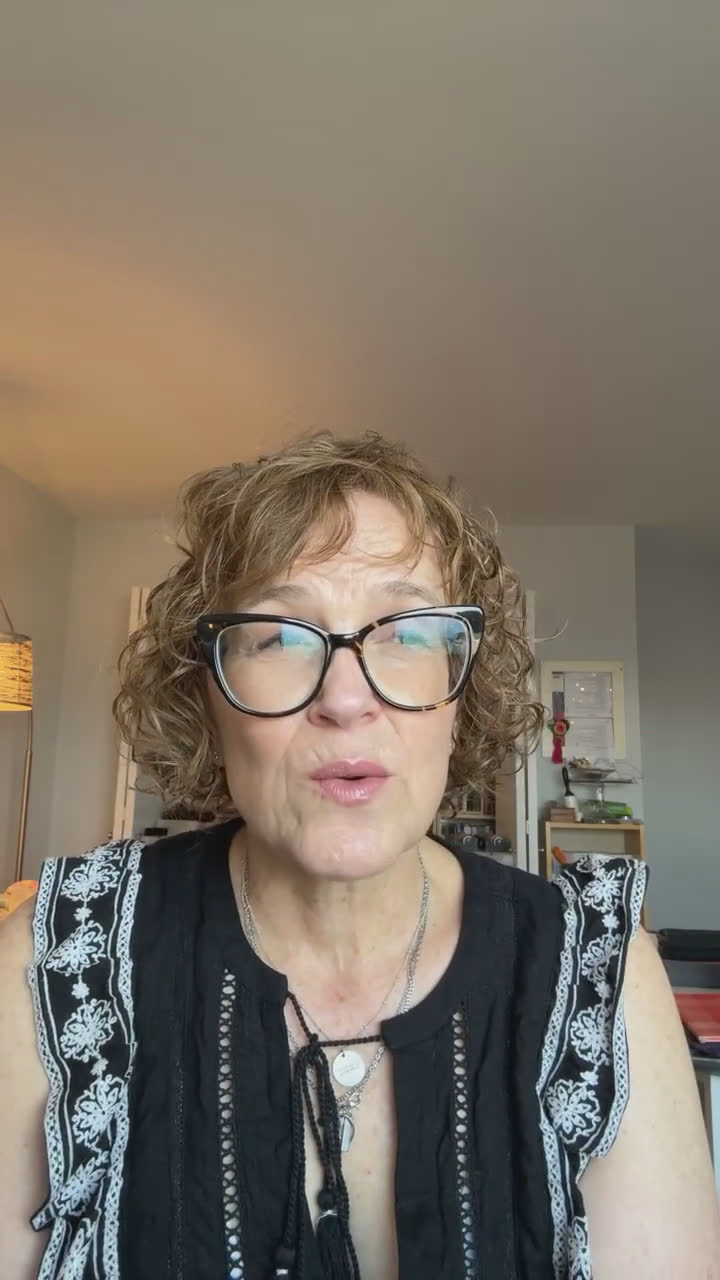
Host outlines rules of engagement and describes Cadre group coaching, reflecting on freedom from expectation using Gretchen Rubin’s upholder concept, and sharing how routines, accountability and planning tools help.
Cadre is offering group coaching which is and access to all of us contributors who are also coaches. These are my rules of engagement right here. Glad you're here.
Nikki Wells: Happy Canada Day to any Canadians. This week I am thinking about this week thinking about freedom from expectation. She says it's okay to expect a little bit more from yourself. Wells: Freedom comes from setting that up in a way that makes sense for you.
Nikki Wallis talks about freedom and expectations and the four tendencies. For people who respond well to outer expectations, having an accountability partner is important for rebels. What would freedom for a questioner look like? Wallis: Freedom is the ability to pick and choose wisely for Yourself.
LZ: My number one rule of engagement is love what you love. I'm listening to one song a day in order for 83 days. LZ: I have the capacity to just really love something and be interested in and not get sick of it. Use that freedom to decide how you respond to expectations.
Freedom to love what I love. Hurt people. Remember the goodness of someone who had done so much harm. Those three things I return to over and over. I'm happy to talk Star wars with you anytime.
Freedom doesn't mean rejecting expectations. Freedom means choosing them for yourself, free for reasons that matter. Have a great fourth of July and have a great holiday. I hope you experience some freedom from expectation.
Good morning Cadre. Good morning. Good morning. It is still morning here. It's likely morning where you are. I don't think there are a ton of people east of me, but if there are, good afternoon. We had the first Cadre group coaching last night. I was very thrilled and pleased to be part of it. Cadre is offering group coaching which is and access to all of us contributors who are also coaches. That is something you can do in Cadre which is so great. So if you don't know about it, check it out. Hello.
Let's see. M, A, F, F, E. I want to say mafa. Mafi. Maybe it stands for something. Anyway, welcome. Glad you're here. Talking, talking about coaching. These are my rules of engagement right here. By the way, you can see I have gold star stickers on them because I am a gold star girl and I love stickers. So there they are. Welcome. It is July 1st. There's a new topic at hand for across the Cadre verse of talking about freedom, which with July 4 and Independence Day coming up in America, I think that's not unusual.
Happy Canada Day to any Canadians. July 1st. Canada Day. Happy Canada Day to any Canadians. We have listening out there and I've been thinking a lot about freedom in general. My personal belief, your mileage may vary, is that American freedoms are in as great a jeopardy as they've been, certainly since the Civil war, maybe since 1776. And so I've been thinking a lot about what does that mean? What does freedom mean in this country? But for the purposes of a mental health app, I am thinking about this week thinking about freedom from expectation.
Now that is a double edged sword. I'm a big fan of Gretchen Rubin, as anybody who follows along with me probably knows. And one of her aphorisms, one of her secrets of adulthood, is to accept yourself and to expect more from yourself. Know who you are. Accept that that's how you are. Start from where you are. That's one of my aphorisms. Not from where you wish you were, but it's also okay to expect a little bit more from yourself. You don't have to expect too much for yourself in a self sabotaging kind of way.
In her framework, the four tendencies I am what's called an upholder, which means I respond well to inner expectations and outer expectations. If you want to know more, just. Just Google 4 Tendencies Quiz and it'll pop right up. And Gretchen says that our theme word, you know, a phrase that she uses for upholders is discipline. Is. Is my freedom. And that is very true for me. I need my, my, my routines, I need my plans, I need my expectations. If you look on my wall over here, this wall over here is a giant whiteboard plus some mess I'm still moving in.
It's a giant whiteboard post it makes dry erase post its wall size. I put them up on that entire wall when I moved in. It was one of the first things I did. And then I used post its on it to do planning as well as a dry erase marker to write down things in a hurry. So for me that works. If you respond to outer accountability then she calls those upholders. It's the largest group, there's four of them. Upholders respond well to outer accountability. Then freedom comes from accountability. Then your freedom might come from actually having someone expect something of you that I won't get something done if I'm an upholder, I won't get something done on my own behalf if someone else isn't expecting it of me.
But. But the freedom comes from setting that up in a way that makes sense for you. Not in a way where you just feel like you have to do what everybody wants all the time. But I'm going to oblige myself in ways that support my growth and what I want to do. I want to walk every day. I'm going to find people to do it with. I'm going to have a friend do it with me. I'm going to join walking group. I'm going to have somebody that I text before I start and when I'm done, somebody. Sometimes accountability can come in the form of a tracker of some kind that you're just accountable to.
This tracker on your phone is sufficient for some folks. Freedom can come from that. Rebels are people who respond, don't respond well to their own expectations or other people's. And so a lot of that is identity based. And so freedom comes from I am a person who walks a lot. Freedom doesn't mean not doing things that are expected of you. And this idea of freedom and expectations. Freedom doesn't mean not doing things that are expected of you. Freedom means the ability to choose what is expected of me and then respond to that expectation in a way that supports my life.
Good morning Nikki. Welcome. Talking about freedom and expectations and the four tendencies. Gretchen Rubin as an anchor point for that. I haven't even gotten to my rules of engagement yet. I'm going to get there in a second. But this idea that freedom is not lack of expectation. Freedom is the ability to pick and choose wisely for Yourself among the expectations you have for yourself and that other people have for you, and to use whatever tools you have at your disposal to make that real. And I was saying, as an upholder, routine helps me.
Putting something on my calendar, so sometimes helps me, sometimes doesn't. Outer. For people who respond well to outer expectations, having an accountability partner or having some way to track it is important for rebels. And identity is an important thing. Now, questioners is the fourth tendency that Gretchen talks about. Those are people who respond entirely to inner expectations, but they don't respond well to outer expectations. They have questions about that outer expectation until it jibes with what they want and what they think, and then they will do it.
Questioners, they ask a lot of questions. They want to know why they have to do something. You know, why do I have to follow the speed limit? Or why do I need to pick up bread after work? It's like, well, because we have guests coming over and, you know, questioners, it helps to give an explanation. What would freedom for? What would freedom for a questioner look like? I guess they might be the freest of all because they're constantly just deciding to respond to the expectations that matter to them and not to the ones that don't.
So there is that. But then it does a number on relationships at work and at home. If you want the freedom to keep working at your job, you have to figure out how to do what your boss is asking you to do, even if you don't understand why. I would imagine that would be very, very difficult. Yes. Gretchen changed my life. I read her book in 2009, the Happiness Project, and it had really helped me anchor how I do things. Nikki, thank you for sharing that. Yeah, I would say freedom and expectation is a choice because people say, well, people expect my parents expect this of me or other people expect that of me.
And I would say this. Getting critical distance to decide whether or not you want to respond to that expectation is freedom. But deciding you will not respond to that expectation because someone else has it of you is not freedom. That's just making a choice for you. They're making a choice for you in the opposite direction. That's not your critical thinking and freedom of thought. You know, as a survivor, I know this content warning. I'm about to mention the fact that I am a survivor. I just did.
But I'm going to say a little bit more about it. I'm a survivor of childhood sexual abuse. Right. And if I compulsively have sex, because that's what happened to me, As a kid, that's not a free choice. If I compulsively don't have sex because of what happened to me as a kid, that's not a free choice either. Learning, healing enough to make real choices. Not governed by my past. That, to me is freedom. Because that to me is freedom. That, to me is freedom. So sovereignty at its best. Yes, agreed.
Sovereignty. Right. So what are my rules of engagement that I think relate to freedom? First of all, my number one rule of engagement. I sometimes renumber these and change them around a little bit. Someday they'll settle in. But rule, this will never change. I don't think this will ever change. I don't think my number one and my number two will ever change. My number one is love what you love. Love what you love. I came to this when I was in high school, actually, when I realized that I was trying to love music or clothes or books or subjects or a way of life that the cool kids and the popular kids loved.
And it didn't fit me. And I was like, you know what? I just love to read. I love. You know, I loved school. And as an adult, I. I am. I don't know how else to say this. I am a fan. Like, I have the capacity to just really love something and be interested in and go all in and not get sick of it. Hi, speak wonder. I'm talking about freedom and expectations and my number one rule of engagement, which is love what you love. So if you know me for five minutes, you know my favorite movie is Die Hard. My cats are named Nakatomi and Argyll.
For folks who understand the references that I love Bruce Springsteen, that is probably something you know about me within five minutes. Side note, he just released seven albums. I took the day off work on Thursday to listen to all seven in a row, and now I'm listening to their 83 songs. I'm listening to one song a day in order for 83 days. I can listen to whatever I want of these albums or anything, but I'm just doing a deep dive on one song every day. I'm on day two. I'm on day two. So I'm listening to the second track on the first time.
So you know me. Five minutes. You know I love Springsteen. Nikki can attest to this. Nikki can attest to this. Love what you love. That is freedom, right? I have a dear friend who loves the show. Oh, my gosh. Wynonna Earp. It's a reimagining of Wyatt Earp. She's a woman. I haven't watched the show. It's a western set in the late 19th century. But it's. Or maybe it's set now. I think it's set now. But it's got all these paranormal. I don't know. But she loves it. And we had a conversation one day and she sort of longingly said, you know, they have this con.
There is gonna be an Earp or con. And I said, sister, love what you love. Go to that conference, go find your people and love it. And she did, right? I love Star Wars. If you google the Mary Sue, Betsy Hodges Star wars, you'll find an article that I wrote about it. I think I've posted it in the Cadre app before. What it means to me. I just love it. I just love it. I'm not embarrassed about it. I read children's literature until about five years ago when. Not because I just stopped loving it, but it just, it stopped speaking to me the way it had my whole life.
So now I read other stuff, but I still love reading. I read every day. I am almost embarrassed to tell you how many books I've already read this year, but I'm going to tell you because I listen to audiobooks and, and I read books on my Kindle and I read every morning as part of a spiritual practice. I've already read over 100 books this year. I've already read over a hundred. I love what you love. Love what you love. Nikki, you can try and watch with the new lens. You're not required to. The idea is love what you love.
Now for people who aren't fans, like, they don't go all in on something. They're just people for whom that is not part of their personality. Still love what you love. If you love to dress comfortably, go ahead and love it. Use your decision making power around it. But that's freedom. Whatever people expect of you, you get to decide how you want to respond to those expectations. It may be appropriate when you go to the work conference that you wear business casual, but it is also appropriate if you love soft pants, to wear soft pants at home and when you're on a zoom, whatever it is, right?
Love what you love. Really. And it's useful to know what it is that you love. I love daytime sequins. I wear a lot of daytime sequins. Nighttime, like if I go to an event, event, maybe I'll wear some sequins. But give me like a cat. It's not casual, but give me like a full on sequin skirt, I will wear that with a T shirt and sneakers to the chiropractor. I have done, done it. It's great. Thank you for the congrats, Nikki. Sometimes for another day. Freedom to love what I love. I love reading. I'm not going to worry about it too much, Nikki.
I'm happy to talk Star wars with you anytime. I can tell you what I love about it is especially the original trilogy that came out 1977. What was it, 79 and 82 or 83? That original trilogy. That's what I love the most. There's all sorts of stuff in the Star wars universe that I love, but those three things I return to over and over. Because Luke Skywalker is never ever confused that there is still good in Darth Vader. He's never confused about it and he acts on that in ways that are very bold and I never want to forget that.
Hurt people. Hurt people. It's one of my other rules of engagement and sorry I'm getting choked up just talking about it like that means the world to me. The world to me that I had that picture as a young person of remembering the goodness of someone who had done so much harm. So I have other rules of engagement that I think relate to freedom. But I guess I'll talk about them another time because I really wanted to talk about expectations being a choice or sometimes it's not a choice, right? It doesn't feel like a choice.
We have to do this, we have to do that. But fostering the capacity to understand it as a choice in as many places in your life as you can, that is freedom. Freedom doesn't mean rejecting expectations and freedom doesn't mean taking them on willy nilly. Freedom means choosing them for yourself, free for reasons that matter. Even the expectations at work that make no sense to you, choosing to take them on for reasons that matter to you. You like an income, you like your job. Overall, whatever it is, it's a way station while you're building something else for yourself.
So that's what I would like to say for today. That's what I would like to say for today. Freedom. Happy July, everybody. Happy July 1st. And listen, if you haven't listened to those Springsteen albums, there's seven of them. They're each very different than the other. And he's talked openly about why the reasons are. And you can listen to that if you're interested. But it's worth a listen. It's worth a listen. So I will see you all next week. Cadre. Delighted to be here. Delighted to be here with you.
And I look forward to forward to more soon. Have a great fourth of July and have a great holiday. I hope you experience some freedom from expectation.
Reactions and comments are for members. Joining is free and takes a minute.