Peace can feel boring. Not because it is—but because your body isn’t used to it. If your nervous system is used to chaos, calm doesn’t feel safe. Here’s a deeper explanation of why boredom might feel anxiety-provoking, and why you might self-sabotage or seek chaos when life is starting to go well.
Rachel Havocost: Just because it's boring doesn't mean it's bad. Our brains look for familiarity. When we start to experience stillness, ease, relaxation, we might start to think that something is wrong. We self sabotage and create chaos because it feels more familiar.
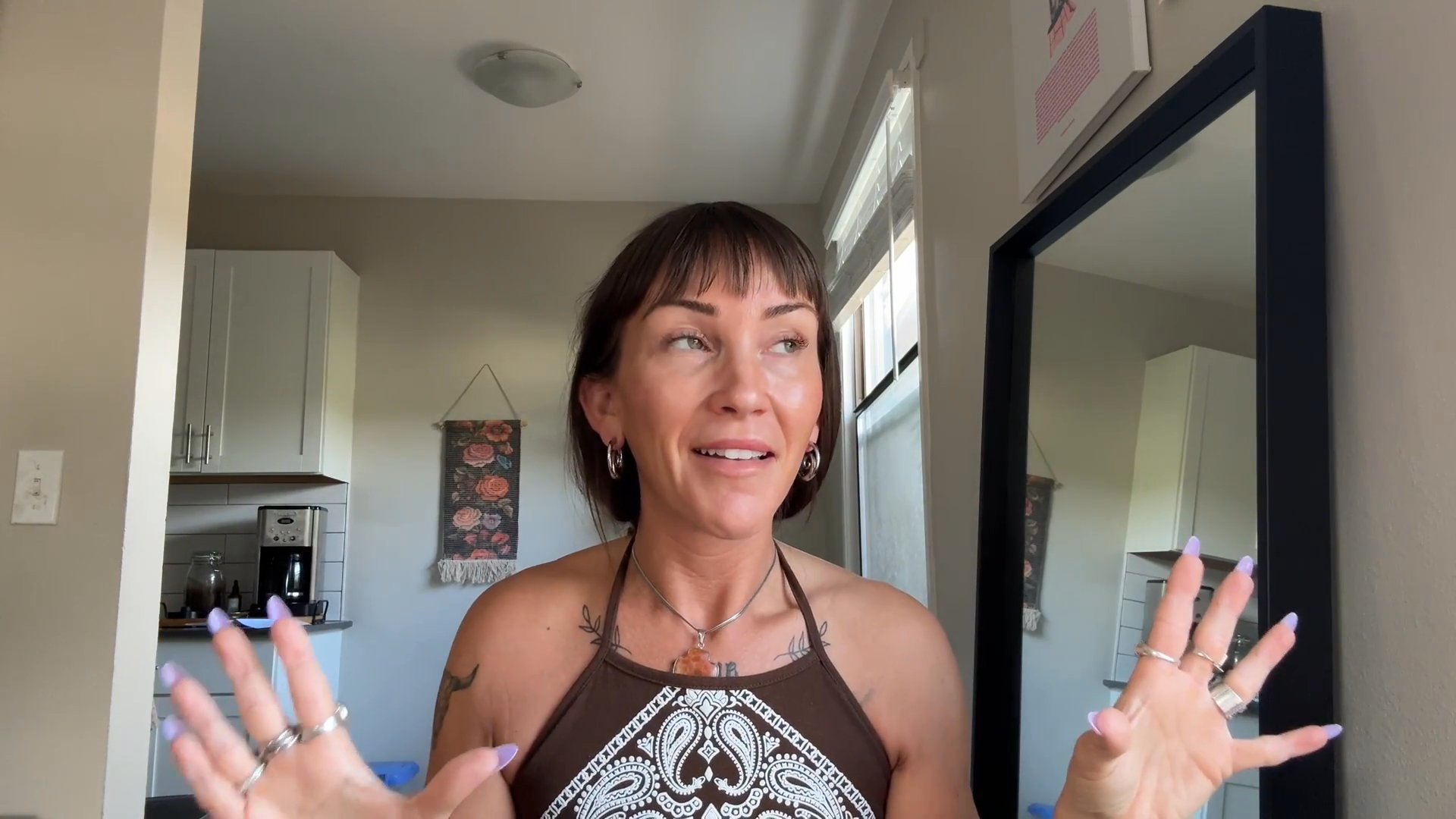
Are you bored or are you just accustomed to chaos? Hi, my name is Rachel Havocost, I'm a writer and mental health advocate and I have been in therapy for about 20 years. And something that I learned, you know, several years ago that I'm still adjusting to, is this notion that just because it's boring doesn't mean it's bad. What does that mean? So oftentimes after we do a lot of work in therapy, we get to a place where we start to experience stillness for the first time. We start to experience calm for the first time, peace, ease.
Our bodies are sort of more in a state of constant relaxation rather than constant hypervigilance. And that can feel very unfamiliar. So our brains, our brains are wired to look for what's familiar on a survival level. Our brains look for familiarity. So, so if we recognize something, if we know it, then we equate it to be safe, which makes sense, right? Like if I have always drank out of this mug and I'm like, and my brain is at that very like bottom base of like lizard brain survival mode before learning a lot of other critical thinking skills.
If I'm always drinking out of this mug every single day, maybe the first time I see it, I might be like, what is this? What colors? What's inside? I don't know, gotta check it out. Not so sure. Never seen this before. But then every day I get more accustomed to it, familiar with it, it doesn't hurt me. In fact, what's inside makes me feel nice. It's really yummy. And it becomes my reliable mug and I just trust it. I see it. Boom. My mug. If one morning I wake up and this is not my mug and it is a dark red mug and it's a different shape, I'm gonna, I'm not gonna want to drink out of that mug.
That mug is not going to be the one I know. I don't know what's inside it, who swapped it, why is it different. And the reality is there's still going to be, there's still coffee in that mug. But because it's not what I'm accustomed to, because it's not familiar, I don't think it's safe. So the same thing happens in our day to day lives with all of our experiences, with how we feel in our bodies, with the kinds of people we interact with, with the ways people talk to us, with colors we see, with sounds we hear.
So if we grew up with a lot of chaos, or we experienced very volatile relationships, or experienced some kind of trauma, in our lives that put us in a state of hypervigilance. Our nervous systems, our brains, are going to be more familiar with chaos. So when we start to experience stillness, ease, relaxation, which can feel like boredom, we might start to think that something is wrong. When the reality is boredom is actually a sign that our nervous systems are relaxed. If we can be so still and at ease that we don't have to be doing something, that we experience the feeling of boredom, that's a sign that our nervous systems are starting to get adjusted to the opposite of what we've known for so long, which is chaos.
So the real trick then is to allow ourselves to stay in that place of boredom, rather than seeing it as a sign of danger and trying to do something instead. So what oftentimes will happen when we start to heal or get better, or start to adjust to a different way of being in therapy and we start to experience stillness or ease? We self sabotage and create chaos because it feels more familiar. And then we ask ourselves, why am I self sabotaging? Why am I doing? Why am I hurting myself? And the reality is our brains is looking for something familiar.
So we also need to have a lot of grace and compassion for ourselves when we start to self sabotage as we're on the healing journey. Because it's just our brain's way of trying to say, like, ah, I'm looking for the blue cup, I'm looking for the blue cup. Why is there no blue cup? We gotta go back to that. And the thing is, is that the more we can recognize those moments when our brain goes, I think we need some chaos. And ask ourselves, is this, is this a moment where actually I am safe? And is my brain trying to seek something that is familiar?
And can I instead lean into this place of ease and allow myself to simply be present with not having chaos, with not having too much on my plate, without having my brain be overwhelmed with to do's or anxiety or fear, can I allow myself maybe for five minutes to be in the stillness?
Reactions and comments are for members. Joining is free and takes a minute.