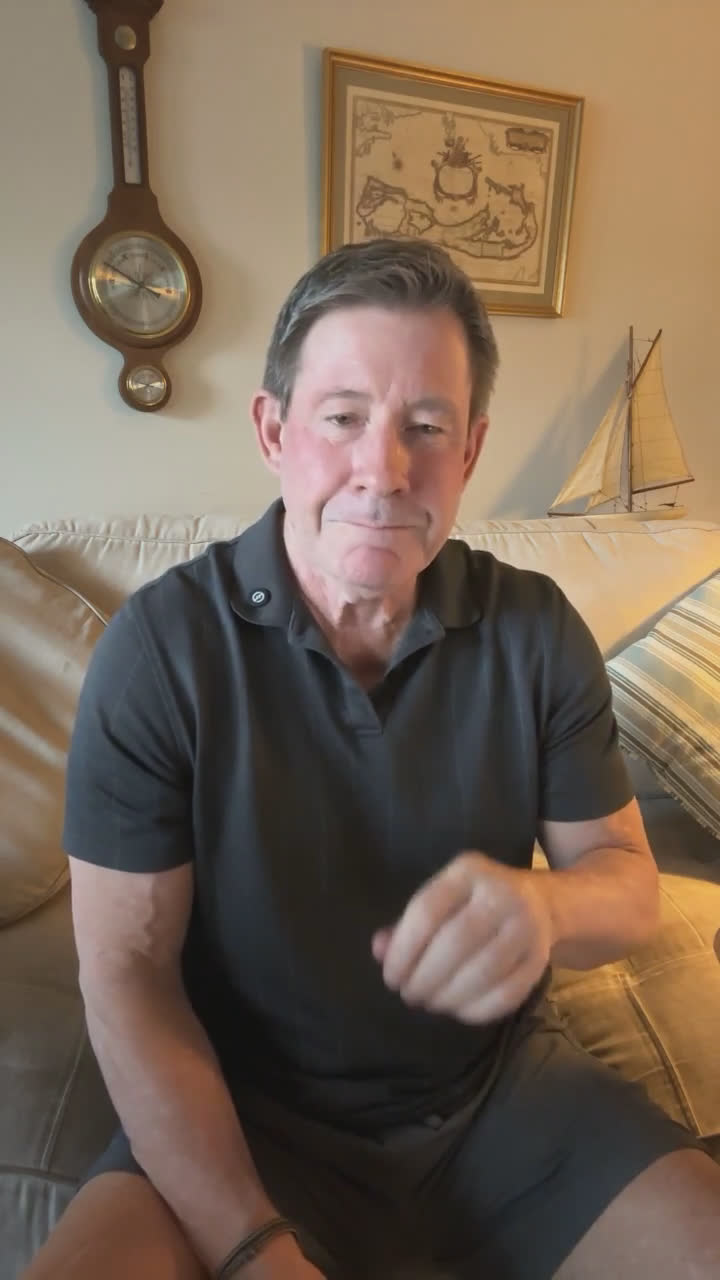
Today’s topic and conversation is about how to seek freedom from the expectations of other.
Rick Cram: Welcome to your Resilience Coaching Studio. So many different influences have put us in a position where we are not free to truly be ourselves. This is your time. I'm going to ask you some questions.
When you feel some form of pressure, some expectation to be a certain way in any aspect of your life, what is the feeling? Name those emotions, identify them, validate them. And then how to go about having a conversation with the other person or other people to address this in a way that can be very healthy.
When we are feeling pressure, there's expectations on us. If we are free from those expectations, free to be ourselves, we're going to experience a lot less worry. What have you done in the past that in a stressful situation you were able to successfully reduce the stress?
Nikkiles: If we're going to be successful at reducing stress and addressing this in a helpful way, we need to take emotion as much as possible out of the equation. She says to focus on your values and your identity. We trade emotions for an anchoring in ourselves.
Nikki Pound: What are your values? What do you expect of yourself? Pound: Think about what your vision is, what your mission is and what your sense of purpose is. Pound: When we're authentic, we are free from expectations from others.
At the root of all frustration are unmet expectations. If you think about anytime you're frustrated, you can ask yourself, what was my expectation here? Creativity is excellent. Being true to yourself, being true to myself, that's another aspect of our values.
How to approach having a conversation with someone and doing it in a way that takes emotion out of the equation. Have the conversation when you're ready. Don't force it if you're not ready for it. Another place to do it is a neutral, physically neutral.
One of the best things to do is to start the conversation with questions with respect. The idea of the way to collaborate is to seek an understanding of what's important to them. This is not something that can be or should be rushed. Having this first and ongoing conversation is going to strengthen the relationship.
At the root of all frustrations are unmet expectations. You can negotiate anything, especially if you collaborate with questions. The more you understand them or this person, the more you can address their needs. These things can take time and the best possible outcome.
Use the code all uppercase rickcram R I C K C R A M to share it with others, family, friends, colleagues. Also at my website, you'll see the free downloadable worksheet for the three steps of resilience. Whatever the pain point may be, let me encourage you, your best is greater than the pain.
Hi, I'm Rick Cram and welcome to your Resilience Coaching Studio. You know, we've got the media, we've got advertisers, we've got all kinds of so called experts all telling us how we should look, how we should live, how we should think. And then we've got people in our lives who are very close to us, who also to some extent have expectations of us and want us to be a certain way, act a certain way, talk a certain way, live a certain way. Hello, Nikki, thank you so much for joining. Great, great to see you.
Glad you're here. And I was just saying that we've got so many different forces in our lives who are saying this is the way to be, this is the way to think, this is how to look and so forth. And we've got people in our immediate lives who. Amar, hello. Great to see you and welcome. So many different influences have put us, if we let them put us in a position where we are not free to truly be ourselves. And so that's the topic for this Resilience Coaching Studio. Your Resilience coaching studio. This is your time.
I'm going to work with you, I'm going to ask you some questions, starting with this one. When you feel some form of pressure, some expectation to be a certain way in any shape or form, in any aspect of your life, what is the feeling, what is the one or two words that you might say? And go ahead and add this as a comment, what is that feeling that you have? I feel stress. Speak. Wonder. Hello, my friend. So glad you're here. I was hoping each of you were going to be here this evening. I gotta say, our time together last week, the energy from all the encouragement that we experienced together, that has stayed with me still to this day.
So what is that feeling? Diminished? Speak. Wonder. That's an excellent word for it. That's right. It's as if any expectation, any kind of pressure that's put on us, and let's go ahead and give it this word, the stress it puts on us to be other than who we truly are, who we want to be, what we want to do, has a diminishing effect on us. I feel calm, diminished. Amara, can you elaborate on that? In what way do you, are you saying that when you're diminished you feel calm, anxious? Hello, Jamie. Great, welcome.
Glad you're here and thank you for sharing that anxiousness. So let's say, yes, anything that creates stress, anything that is pressure on us, there is anxiety in that and in effect it's actually helpful to do two things. Name those emotions, identify them, validate them, because we're going to do something with them in a few minutes. Because what I'll do is describe a couple of aspects of what's happening. When someone else is expecting us, has certain expectations of us, how that affects us, and what two things that we can do to help address this.
And then how to go about having a conversation with the other person or other people to address this in a way that can be very healthy and very productive because this work leads to a greater fulfillment in life. All the different studies and I'll add some of them afterwards in the comments. Just like with the video before the preview for this, I believe the number was 57% of people. Or to have a positive conversation with family members where there is this frustration, there is this anxiety, there are these expectations and we're not free from those when there is a healthy conversation about it and it might be a conversation that takes time to play out that it actually creates.
50% say that they are experienced more satisfaction in life, resilience in life. If you look at people who are held back from doing what they want to do when they actually take charge and do the things that some of the things we'll talk about, the majority of them feel greater sense of fulfillment in life. But this is all so common, it's probably fair to say. I believe the number I saw was something like 80% or so experienced this. We. We know what this is like. So Amara, do you feel anxious for your.
Your job interview? And so. Thank you. So talk about expectations. And I hope what you'll see in the course of our conversation and our encouraging each other, our thinking through some of these things, that there will be less anxiety and more confidence for you to go in. Because there's nothing like a job interview. Anticipating that, thinking about it, worrying about it. That because we're wondering what is that person expecting of us? So I used the word worry for a very real purpose. Two dynamics.
When we are feeling pressure, there's expectations on us. Let's just say it's society in general or the group of friends that we're with, if we do say something or behave a certain way, you ever find yourself wondering, I wonder what they thought of me. Worry. All right, If I do this, if for example, I post this video, what are they going to think of me? Worry. And the last thing, whether it's any, any one of us would say to each other, we've got to worry. Lest we shouldn't worry about Those things just focus on right now in the moment.
I think virtually every religion, every scriptural book makes the statement in one form or another that we should not worry. And so what if we look at this as a benefit? When we think this through and take action on means, when we are free from those expectations, free to be ourselves, we're going to experience a lot less worry. It's one of the main benefits right there. And what if we also look at this as a situation that is stress and raises the question, how do we handle any stressful situation?
So now if you would add a comment. Name something that you did in some past experience that was stressful, describe something that didn't work and describe something that did work. Because we're talking about basically, if we're going to seek to become free from other people's expectations, we've got to be ourselves. And it means we need to work through the stress of this. What have you done in the past that in a stressful situation you were able to successfully reduce the stress? What didn't work for you?
And so I also see, you know, that word defeated rings both true. And I think that's very insightful because when we aren't able to be ourselves, our true selves, there is. We don't have the victory of being ourselves as we are completely originally made. You are who you are. No one else can be like you. And you, what's the phrase? To thine own self be true. We are to live every aspect of our lives and be in relationships with others, being true to ourselves and to do otherwise, there is this defeating.
So, Nikki, that's excellent breath work, breathing work. That works for me too. You ever realize when you're going through a stressful situation and you realize, I forget when I last was aware of my own breathing, and we've talked about breathing before, One way to look at it is that when we focus on our breathing, we can imagine that we're, and very truly we're breathing in life, taking in a deep breath, something that I like to do when I remember it and when I'm at my best, I sort of reverse engineer something with my brain.
You know, how we smile because we see something or hear something that makes us feel happy and laugh. Have you ever gone ahead and just flexed those muscles and smiled, which in effect is telling your brain, oh, I must be happy. There must be something going on that I like. Have you ever reversed, engineered that you can actually do this in a couple of ways, you can force a smile, take some breaths, just Keep it there and watch what happens. One other thing. Have you ever. Oh, this is actually something that's true.
When people who are. I think the situation is if they are blind or maybe even they don't have any hearing, if they feel or think something positive, you know what they do instinctively? They raise their hands and their arms to the, to the ceiling, to the sky, in victory. Feeling victorious. Here's another way you can reverse engineer the way you're thinking and feeling is to do something that they've never actually seen. They're doing something that they've never seen before or told to do. There's this natural innate response to feeling victorious, and that is to raise our arms, reach for the ceiling, reach for the sky.
If you go ahead and do that, hold your hands up as high as you can, make that V and keep them there for at least a minute or two, watch what happens. It actually tells your brain, oh, I must be experiencing something victorious. So if we're thinking about this, and let me just catch up on your wonderful comments here. So in effect, that's a lot of stress right there. And this is something that the majority of the people in the US the adults are dealing with is feeling stuck and the nerves, the stress and so forth and asking for help.
That's an excellent point. We all were here to help each other. Cadre is here for that reason. I am here for that reason. Each of you are showing up also to encourage each other and help each other. We're all in this together. Jamie, I see you're saying, and thank you for sharing this. You tend to become over emotional. You may yell or shut down. Those are strong emotions. On one hand. The idea of yelling and expressing them is actually healthy if it's done in a healthy way. You know, there is a.
Sometimes I know people who are taking their frustration out on a boxing bag and they go to boxing gyms. There's some, some of them around here that are very popular and that's where they take out their frustration. I saw a study some years ago that showed that it's actually counterproductive to take out your frustration in a violent way. Yelling. Have you ever been in a train station where there's a tunnel underneath? I grew up in Pelham, New York, where we would go to the train station, the tracks overhead, stand in the tunnel as kids, and when the train comes overhead, it's so loud you can't hear yourself thinking, you can't hear yourself say anything.
But we would scream as kids because we could scream and let it out and no one would hear us. We couldn't even hear ourselves. Yelling can be a wonderful way of releasing when you take time to walk away and exercise. That is so good. I found that there's a combination of different things that are good to do, to do in the mix. And let me just catch up on your notes here. I employ the use of primal scream therapy. Excellent Speakwinder. I like that. I like that. I think it's really important. If we are under so much stress and we are feeling a sense of anger or profound frustration, that means we need to, at least for me.
And how do you feel about this need to express it all the more with the physical pain that I have with my left knee after the seventh surgery. Daily pain since 2019, I've been very careful not to experience the frustration and anger I did when I was going through surgeries 4, 5 and 6. And I'm glad to say because of how much I express everything that I'm experiencing, I've had a very minimal amount of frustration. It's one of the probably most significant lessons that I've learned through living with chronic pain.
And so, Nikki, excellent. We all need this in our. Our lives and in our days, in our moments. So let's think about this. What are those things that we do? And here's a few suggestions. What do we do that's going to be effective in dealing with anything that's stressful, including seeking freedom from other people's expectations? One is this. And now I'm tapping into something within the plan to be your best as you navigate pain from the first one of the eight domains of thriving. It's the P stands for prepare.
And the prepared domain is where we go to start the process of what we need to do to reduce stress and move forward to build. Build a plan for how we're going to navigate this. And there are three parts to this. One is to take the emotion out, pausing, taking, network, loss, connection. But I think we're still together. If we're going to be successful at reducing stress and addressing this in a helpful way, we need to take emotion as much as possible out of the equation. Because what happens with the emotion, it creates this worry, this rushing.
Do we think as clearly as we ordinarily would if we're overwhelmed with emotion, do we rush to try to solve something, perhaps without the tact or the wisdom, because of the emotion? So think in terms of what can you do to take emotion out of the equation? Part of the plan to be your best approach involves doing some Other things that you're thinking about. One of the things I'll add right now is to focus on your values and your identity. Let's take a moment to look at what that is like. Let's first talk about the identity we experience A.
A shaking of our sense of self. If others are putting pressure on us to be someone we're not, if they have expectations, wrong expectations, maybe even negative and harmful expectations. And if we can anchor in who we are for a moment, you'll find that the cortisol level calms down. We trade emotions for. For an anchoring in ourselves. And here's one way to do that. If you want to write this down or add your notes as you can put through, or if you have the worksheet, the plan to be your best worksheet for the three steps of resilience, you could write it down in the plan step.
What is what about you is true, what about you is good, and what about you is unchangeable? Anchoring in who you are. And those are three quick questions. When you spend time addressing those, answering those, you're actually spending time with your true self. And that's a calming exercise. It's also a validating exercise. It's also something that is so important for doing this in this kind of a stressful situation, in this stressful dynamic, it's elevating your sense of value feeling. If you're feeling diminished, which I completely get, I think that's a good word.
You're feeling the anxiousness of someone else's expectations, then to reverse that means to elevate our own sense of value. What about you is true, what about you is good, and what about you is unchangeable. Part of the benefit of that is also a matter of taking time to just be in the moment with those thoughts and with yourselves. The other idea is. I like that. Take a walk. Yes, we're back. Thank you. If. If you missed some of what I was just saying there, it's in the recording and I. And I'll just recap.
Anchor. Re. Anchor in taking time into your identity and your values. Now, regarding your values, let's think in terms of what are those things that make up your values or my values? What do you stand for? What do you expect of yourself, both in any aspect of your life, but also including how you want to hold yourself and be yourself in the way that you relate to, communicate with and relate to other people. What is important to you? What's always been important to you? What might be something new that's important to you.
Maybe it's a new passion, or maybe you, You've known what you're identified, what your sense of purpose is, what one word reflects a value that you have. Would you share that with me? And part of this exercise involves thinking about what your vision is, what your mission is, what your sense of purpose is. One way to look at your mission or purpose is what is it about you, uniquely about you, that you can give to others that lifts them up and lifts you up? What's your life purpose? What do you seek to do?
Who do you want to do it for and how do you want to do that? So doing these things, focusing on our values and our purpose, authenticity, actually, that's brilliant, Nikki, because that when we're authentic, we are free from those expectations from others. Expectations from others will put us in a place where we are. They're testing us and we end up being tested to be something other than authentic. Here's a thought. This can be very frustrating to deal with this dynamic. I know what it's like. We all experience it in different ways, in different circumstances and with different people.
But this thought. At the root of all frustration are unmet expectations. At the root of all frustrations are unmet expectations. We have expectations ourselves, don't we? And when we're frustrated, it's because something that didn't go the way I want. I didn't say this the way I wanted to. This person didn't react the way I wanted to, expected to, neither them to. If you think about anytime you're frustrated, you can ask yourself, what was my expectation here? And how might I redirect my. My energies, my thoughts, my feelings at this point?
Creativity is excellent. Creativity is, I think, a core part of, I can tell, core part of both your identity and your value and the idea of yes, the. And here I am again. That was that moment. But now you're my moment. This is our moment. And I'm glad to focus on this. The idea of what matters most to you, being true to yourself, being true to myself, that's another aspect of our values. So I'm going to follow your lead here, but I'm going to get into a few examples of how to approach having a conversation with someone and doing it in a way that takes emotion out of the equation.
Doing it in a way that helps to use some, some communication and relationship strategies so that you can start and perhaps continue a conversation about this dynamic so that you can seek that freedom from other people's expectations. Number one, I'll take care of a couple of quick things. 1. Have the conversation when you're ready. Don't force it if you're not ready for it. Being prepared Anytime we're going to communicate with someone, especially regarding a sensitive topic, the more we are prepared to better take emotion out of it, the better it's going to turn out as opposed to going into it fired up and with our emotions not in our control.
Another time to do it, another place to do it is and I always favor a place that is neutral, physically neutral, and where someone There can be places where people will feel as if they they have more control in certain rooms or certain places and the if the location can be as neutral as possible going back to when when you're ready, but also when the other person or other people are the most ready as opposed to them being in if they're frustrated, if they're having a bad day, if they are distracted, if they if their emotions are fired up or if they've been drinking.
That is not the time to try to have a conversation about this. But as we approach this, there's a key word here and it's One of the seven Cs of influence, seven communication strategies to be the most influential as possible. And it's called collaboration. This is like the sixth or seventh of the seven Cs and it's part of the plan to be your best approach to collaborate as opposed to being combative. One of the best things to do is to go into start the conversation with questions with respect. Was it last week we talked about having the respect as well as respect for yourself.
Respect for what you want to discuss, but also respect for others. Bring that respect with questions and seeking to understand. Let me create a scenario. Let's say the person who is feeling as if they are not free from the expectations of others is a child, whether it's a teenager or it's an adult child of parents or even a parent. And the idea of the way to collaborate is to seek an understanding of what's important to them, help them articulate why they might have and be putting on you or on that adult child expectations that don't match what that adult child wants or needs.
If that adult child can seek to understand or refer to you, if you can seek to understand what's driving those expectations, what are the emotions behind those expectations, then you can actually have something to work with. Because the next thing to do is speak to those expectations, speak to their needs, their fears, their desires, and in a way where it's not Combative, it's collaborative. It's not saying, hey, this is what I want. It's collaborative. It's not, this isn't working out for me. It's collaborative.
Ideally, having this first and ongoing conversation to work through it is going to strengthen the relationship, not hurt it. It's going to enhance and grow the relationship. Another thing to do is just as we take emotion out of the equation, we take time out of the equation. This is not something that can be or should be rushed. Again, it's collaborative. And if we bring urgency, like I want to settle this right now, that's most likely going to take, create more friction, more angst in the relationship and in the moment.
I'm curious to know your thoughts on this. What are your thinking, what are your thoughts on what I've shared with you so far? Taking emotion out of it, taking time out of it, in effect, isn't that what we want to do under any circumstance that is stressful? We want to be clear minded. We want, we don't want to rush. We want to take our time to gather the information that we need and can benefit from in the understanding and in the way we communicate and relate to the others. I've heard this example, we've all heard this example, but someone was saying it the other day that just says, I remember saying it as I think when I was in middle school or in ninth grade, I wanted to grow my hair long and I said everybody's doing it.
And my folks were had an immediate answer to that, saying something like, of course you'd say that. That's what everyone says in your kind of situation. That's the last thing we want to do. If I could go back and did well, I was able to grow my hair somewhat long, but so I suppose my negotiation skills were evolving at the time. But actually one of my favorite books is you can negotiate anything. It was written by a lawyer and I use some of the skills in this book to negotiate lower prices for major appliances and with buying a car.
And it's true, anything can be negotiated. And in effect what we're talking about here is a negotiation. And so approach it from that collaborative standpoint and thinking through what is it that how can you collaborate in a respectful way, choosing the right time and place? One key question to ask is why is it important for you to want me to do blank, to be a certain way, to pursue a certain career, to respond to whatever it is in life that I'm responding to? What is it? Why is it important to you?
The more you understand them or this person, the more you can start to actually address those needs, those concerns, those fears. It might be something that's part of a pattern in a family passed down. Everyone's going to be a lawyer or everyone's going to be a doctor. Some of these issues are generational and I've got some friends who I've actually had to work through those very issues. And sometimes it's led to catastrophic problems, truly catastrophic problems, because they were so diminished and so frustrated, feeling so much anxiety, they were overwhelmed.
So I'm hoping that both this is being recorded and that I'm still coming through live. I speak wonder. I see your quote there. The idea of at the root of all frustrations are unmet expectations. So let me just check my notes and I'll actually pause here to summarize. You can negotiate anything, especially if you collaborate with questions seeking a true understanding of why someone else has expectations that they do. Taking emotion out of the equation, taking time out of the equation, especially if it's with a parent, even if you're an adult child of a parent, these things can take time and the best possible outcome.
Two things. One will strengthen your relationship and it will free you from those expectations of others. There's this wonderful quote by Eleanor Roosevelt, the wife of President Roosevelt, who once said something like, what someone else thinks of me is none of my business. Very strong. It's a very strong independent statement. But there's also a lot of truth to that. I'll stay on for just another moment and because we've gone to now about half an hour, let me know. On a scale of 1 to 10, do you have a sense of at least something?
Well, let's do this. What one thing is your takeaway and I'm borrowing this from you, Nikki. This was very wise in the coaching session last week. What's one takeaway added, if you will, to what you've gleaned from this that you can take with you and work with. In the meantime, let me invite you to do a couple of things. One, use the code all uppercase rickcram R I C K C R A M to share it with others, family, friends, colleagues. They can use it to use and enjoy all the goodness of Cadre for free through August 15th of this summer.
com Cadre you'll see the free downloadable worksheet for the three steps of resilience. Bring that each time we get together for your Resilience coaching studio, which is what this is and what we're wrapping up now, but that's a free download for you and I'll be posting other documents that you can use to bring to our studio conversations as we seek to come as we are and leave stronger. Whatever the pain point may be, let me encourage you and remind you, you are made wonderfully, mysteriously and uniquely to be you, your true self.
Whether it's this point, pain point, or any other pain point, your best is greater than the pain. I wish you well and I look forward to seeing you again.
Reactions and comments are for members. Joining is free and takes a minute.