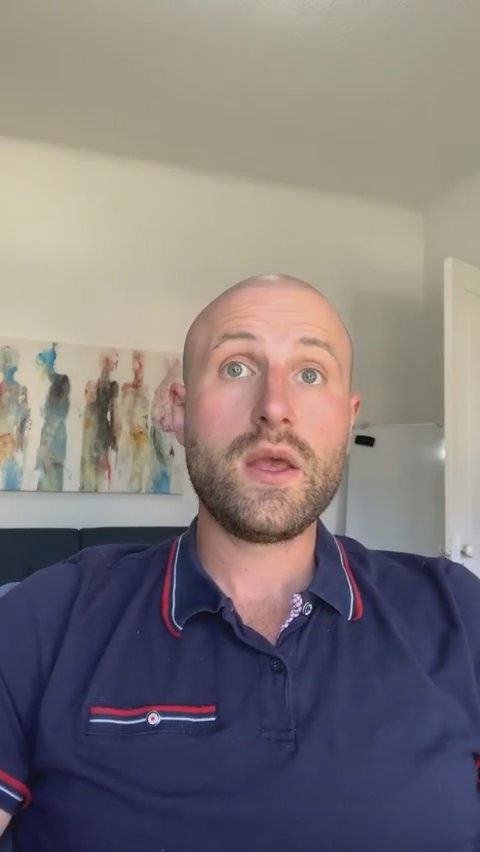
In this Livestream, I will be sharing my experience on the use of opiate medications and how they have impacted the opioid crisis in the US but also how it impacts individuals who need these medications for medical conditions yet have a use history. Are you always bound to relapse if you take opioids in recovery or in what ways can you keep yourself safe?
Evan: Where do opiates have their place? Evan: Always recommend following the guidance of the best professionals possible. It is always okay, if not advisable, to get a second opinion for anything because it's your body.
In long term recovery from drugs and alcohol, it's usually recommended that they are abstinent of all mind and mood altering substances. That begs the question of what if you need a surgery? What if you have a severe injury and opiates are one of the only things you can do.
The author had spinal fusion surgery seven years ago. After the surgery, he tried alternatives to painkillers. He says the sooner he stopped taking them, the better his recovery was.
And what I did. It took a little different strategy because if you're on them for longer, you know, you got to worry a little bit about the withdrawal process. Do it with the guidance of your doctor, but just like anything, like with my surgery.
What's up, Cadre fam? Evan here, your resident mental health and addiction therapist. And I was thinking this week about a topic that's come to mind and has come up in my practice and some of the work I've been doing, and that is the role of opiates and pain, but not so much ongoing pain, but more acute, such as, like after a surgery, opiate meds. And one of the reasons is because of, you know, it's probably impossible to not hear about what's going on in the news with a lot of these lawsuits against, you know, pharma companies who really flooded the market with opioid medications like OxyContin especially.
And then even in the news recently, I heard that the was a big lawsuit against the pharmacies who was prescribing them. So I won't get into the details of that or my opinion. But, you know, this is something that's been talked about for quite a while and is very controversial. And by controversial, I mean just everyone realizes this is horrible, but the question is, where do opiates have their place? Now, before I go into any of this, I want you to. I want to preface this by saying I'm not a doctor, right.
And it's always important to, you know, I'm gonna be careful. I say this, right? You wanna follow the guidance of your doctor. However, I'm not saying follow my guidance. It is always okay, if not advisable, to get a second opinion for anything because it's your body. Right. You shouldn't be like making these decisions on your own. Going on WebMD, you wanna consult the best possible people you can. The most knowledgeable people. Right. However, these knowledgeable people, doctors, NP's, whatever, they have different views.
So there's no necessarily one true opinion among these qualified professionals to give you this advice. I'm not qualified to give you advice on anything medication wise. With surgery, I could just share my experience and the things I have seen and also the mistakes that doctors have made, right? Because if they weren't able to make mistakes, we wouldn't be in this place with all the over prescription of opioids and being told that they're not addictive. It's pretty dangerous when we just blindly put our faith in whoever.
I always recommend following the guidance of the best professionals possible. But it is on them to be able to explain why they are recommending what they are. It's their job to make it vibe with you the best they can. Because it has to make sense for you and your body. Right? Oftentimes you know your body better than other people. However, they know medicine and how the human body in general works. All right, so that's just like the preface, but I think that's really important in what I'm going to say in some of the professional advice I'm going to give you.
From my experience, that is backed up. Right. And so the question becomes, let's say someone's in long term recovery from drugs and alcohol. And for those who have more severe addictions, it's usually recommended that they are abstinent of all mind and mood altering substances because it's easy to get cross addicted. I stopped doing alcohol, never had a problem with opiates. However, they now take the place of what alcohol did. And now I get hooked on those because they're also an addictive substance.
And so it's very common and it may lead people back. Right. It opens the floodgates where the water comes rushing in. But the problem with folks with addiction, they don't have a good bilge pump to get that water out. It just floods the system. So that's why absence, we're just not letting water in the system. So that begs the question of what if you need a surgery? What if you have a severe injury and opiates are, are one of the only things you can do. Now, a lot of people say, well, you don't always have to do them.
There's alternatives. And that's true. So one of the recommendations, let's say, if somebody has an addiction and they're going to need a surgery or something, is explore those options with your doctor. Ask them, because one of the issues, and one of the big issues that led us to this place is the liability that a doctor has if they do not properly treat your pain. That was the number one priority. Therefore, the incentive was for them to give you as many of these medications as possible. And many of them not really being aware of how addictive they were, some of them were, but got bullied into it anyway because that is their, that's the incentive.
And it's honestly, I'm not, you know, crapping on doctors here because a lot of them were, had their arms twisted into it. So again, I have all the respect in the world for doctors. And, you know, I could tell you just a little bit about my story with this, you know, and that shows, you know, my appreciation. But so actually, I have two stories in needing surgery. I'm someone who's in recovery. I needed two surgeries and my drug of choice at the time at the time of my drug of choice, before all this was opiates, right?
So I was addicted to OxyContin, right? Like when it flooded the streets back in the day, it just got hooked on it. Not necessarily because I was prescribed them for pain or anything like that, but, you know, that's what happened to a lot of people, right? This is the issue is that not just people who were addicted in the first place and then getting the surgery and trying to manage that, but a lot of people who never had an addiction before, they maybe had issues with something else. But, you know, these communities got devastated because it created an environment where addiction just flourished and just destroyed some of these towns and communities, right?
So that's one of the issues, right? And one of the reasons for that, I'm sorry, I'm jumping all over the place. There's so much here. And one of the reasons for that was because there was a lot of pain, right, in some of these communities, physical places where there was hard labor, places where there's or maybe not a lot of economic opportunities, kind of breeding grounds for addiction, could lay now the biggest problem, right, with prescribing something heavy like OxyContin, which is a close cousin of heroin.
You know, it's like morphine, you know, Vicodin. If you don't know what opiates are, kind of everything that's in that class, there's a whole bunch of them. And the problem is they're contra, you know, they're not. It's not super safe or I don't want to say, you know, because some people kind of have to do it, and there's reasons why they have to take it. For ongoing long term pain, maybe the only thing that helps. There's, like, economic reasons why, but, you know, that should not be a first line defense by any stretch of the imagination for long term chronic pain.
That's where the addiction really comes into play now, where they are great and where I am thankful for opiate medications, if you've ever had a major surgery, you know, they may be the only d*** thing that, you know, could take away that pain. And, you know, it's like you watch a movie saving private ryan, you know, I mean, this is what they did for people who are severely injured, right? They shot him up with the morphine, which is also, you know, one of the older opiates. So, you know, so, so they're kind of a necessary evil sometimes.
So when you're someone who's in recovery, and I'd also, you know, this may be something you want to do, too, if you're not in recovery and maybe you have addictive tendencies or whatever, right? Sometimes it's better to be more on the conservative side, right? You don't want to overly tolerate pain. You don't want to, like, grit through and be a tough guy or girl or whatever. But sometimes you want to be conservative with that medication because of its addictive potential. And look, there's just some people who would never get addicted to it because with opiates, I find there's either two reactions.
I always say, one, it just makes you sick as h*** and you feel horrible and you throw up all over the place and you're like, why the h*** would anyone get addicted to this? And the second it feels like taking a warm bath in heaven, right? It's like. Like the clouds open up because it could feel that. Good. Now, some people who don't have addictive tendencies, they're like, oh, this is kind of enjoyable. But then they get off of it and they forget about it, and it's not a big deal. However, for people who have a history of severe addiction, that's not always the case.
So the question then is this is a long way of getting to, like, what do you do? What are some practical tips if you find yourself in this situation more so if you have any kind of addiction and you have to take opiates? So I'll give you two different stories. First time I need a surgery, I had to get, had a pectoral that needed to get reattached from a martial arts injury. And at this point, I had seven, eight years sober, right? And I never, in those seven, eight years, never touched a substance, right?
Never even accidentally, never had a surgery, right? So I was purely sober for that whole period of time, right? And then when I found out that I had to take some of these medications, it scared the absolute s*** out of me. And that was because I valued my recovery. And I remember going in and being wheeled in, well, let's say beforehand, we talked about pain management, and I told them, right? And that's one of the things you want to do, is you want to tell your doctor, hey, I'm in recovery. Are there any other options?
And maybe there aren't. And my doctor kind of said, not really. He's like, and you could see where the incentive came into play because I said, I really don't want to have to take these. And he's like, look, you probably are going to need them, right? You could take as many as you want. Based on your level of tolerance and comfort. We all have different pain tolerances, but he's like, I'm going to give you the morphine. He's like, I'm just going to give it to you. If you don't want to fill it, that's up to you.
But his liability is like, I got to give this to you. But he's like, I'm also going to give you another medication. That's like a partial opiate. Maybe that's not the best way of. It's a little controversial of what it is, but it was a lesser opiate, let's call it that. And he said, yeah, you could try these and take these partial opiates with these two other medications that increase the availability of it, and you could try that, and if it doesn't work, well, then you got the opiates. So that was kind of the pain management plan, and I was kind of hoping that I wouldn't have to take any of the opiates or anything like that.
Anyways, I go into surgery, and the doctor, I don't know if it was, like, the nurse and the anesthetist. Anesthetist. Nurse, anesthetist. I can never say that word correctly. The anesthesiologist, whatever they said, all right, we're gonna get you into surgery, and we're gonna shoot you up with some Medicaid. I'm like, well, what's in that? They're like, oh, it's a xanax and a fentanyl. What are you. You're shooting me up with these two? They're like. I'm like, is there any other alternative? They're like, nope.
I'm like, why? They're like, we need you still as possible. That makes sense. But honestly, I almost started crying, I was so scared, and they shot me up with it. And I'm like, hey, you know, I was high. First time I got high in seven, eight years. And that was, like, with my drug of choice. I'm high as h***. Luckily, it lasted 10 seconds before I'm just out, and the next thing I know, I wake up in a wheelchair, like, ready to get rolled out. But anyways, I woke up from that surgery, and one of the other pain management things I forgot to mention is they said, well, we could do a stent where basically they put, like, a tube in there, and over the course of three days, it puts in a numbing fluid, right?
So between that and for about a day or so, I took the lesser opiate med with the other two. And you know what? I was able to tolerate it. After two or three days, I felt, okay. Yeah, it hurts, it's sore, whatever, but I'm okay, right? It's tolerable. I have them. And so that was my experience with the first surgery. And there's some lessons in that, right? Asking for alternatives, trying alternatives, going as far as you can. However, one of the most important things I did there was because I have that addictive potential.
There was still that voice. There's always that addictive voice. And there was the temptation to b's myself or justify needing those medications, even though I didn't. Right. And so if I would have gone, if I would've, it was a dangerous road to go down. Maybe I would have done it for a little bit. I don't know what would have happened. But at that point I said, you know, I gotta be honest with myself and stop. And. Cause the sooner you stop, the easier it is, right? So I did that, and it was a success.
Right. I had to open the floodgates and let the medications in. I didn't have a choice, but I took some of these approaches. I had other people holding the medications for me. That's another big recommendation of what you should always do if you're in recovery, to have a trusted, supportive person hold the meds, give them to you as prescribed, and have that level of accountability, which is also really important. Now, seven years later, I had to have a little air conditioning here. It's a little toasty.
I had to have another surgery last year. Now, this one made the other one look like child play, right? I had to get some disc fused, and spinal fusion is known to be one of the most acutely painful surgeries you can get. And so I knew that there's like, no getting around it, but I had a little more confidence. I actually had a lot more confidence because I did it before. And one of the most important things I find where people are more successful is when you have that mindset, right, you value your recovery.
Having that fear is a good thing because you're not going to get overconfident. You're not just going to take it and be like, oh, this is all going to be fine. I don't need to give it to other people. I don't need to be mindful of how much I take, per se. Right. You're removing some of those temptations, and those are the folks who tend to have more success. And the earlier you are in recovery, the more of a risk it is, I find. Right because after a while, being used to sobriety, getting all the benefits right, you sometimes, on average, value that recovery a little bit more.
So this time I was a little more confident. I was like, I know I'm going to have to do this. I know I don't have a choice. One of the other things to consider, too, is when you actually need the meds for pain, it doesn't quite have the same effect. When you're just taking it and you don't have physical pain, you get more of a typical high from it. You still will feel it. Some people say it's not exactly the same at all, but, I mean, you still are going to feel it, but it doesn't have that same effect when you actually need it for pain.
So I got the surgery, the spinal fusion. I woke up and I felt pretty good. I was like, I was ain't so bad. However, I had all these anesthetics in me, opiate had all these medications in me, and, you know, the whole area was numb. However, by that evening, and I had it in the morning, by that evening, I was like, okay, I could feel this thing. I could feel it really harsh. And, you know, so I had to start taking, you know, I had an iv, and you pressed the button, you know, that whole thing, and they said, look, we want to get you off of this as soon as possible.
So I tried. So I really tried. I'm like, I'm going to take as little as possible. And so I stopped taking it, you know, the iv after a day or two or whatever. And then they gave me the oxycontin or oxycodone, right, the more generic version, and started that pain management process with opiates. I was in the hospital four to five days. There's a lot of side effects from doing it. Nausea, constipation, like, and I mean really bad that pretty much everyone has in that area, but I mean, those four or five days in the hospital sucked.
I was in a ton of pain. So I was in a ton of pain. And I was sitting there thinking, I'm like, I am grateful for these med, even though they absolutely screwed my life up at one point, I was really appreciative for it. I'm like, this is what they're meant for, right? This is really what they're meant for, is that acute short term pain? Because I knew I wasn't going to be in this amount of pain forever. If so, that would just be done. So anyway, so I really needed them for about six weeks. And what I did.
It took a little different strategy because if you're on them for longer, you know, you got to worry a little bit about the withdrawal process. So what I did was I said, I just set a date. I said, you know what? I'm going to say six weeks. That's the maximum I'm going to give myself at that six weeks, I'm going to cut it off. Right. And I didn't come up with that number right away, but as I started to go through, I could kind of estimate here's how long I was because I started to need it less and less.
But I also. And in this case, I may have taken it a little longer than I needed. Okay, so that's not good. However, I didn't want to go through the withdrawal because the risk there is that I would go back and do more and go down that row. So I just said, all right, at some point, this is the six week mark, and I'm going to taper, taper, taper. I may not feel like I need it, but I'm going to taper to the point where I was taking, like, almost none. And then when I got off of it, I didn't feel those withdrawals.
Would I have anyway? I don't know. But I cut it off. I had a set point. I cut it off. I made a commitment. I told people I, I had people doling out the meds, everything like that. And it worked out and I was able to get through it again. And you know what? Was it difficult the next day or two because I was used to taking them for six. I still felt that addictive tendency of being sad that I couldn't take them anymore because it's still, as someone with an addiction, it still does something for me that it doesn't do for other people on a deeper emotional level and probably just feels better to me than it does your average person.
Right? But I had a plan, so I had an accountability. I had a plan and I made a commitment to getting through it. So those are the things that I would recommend considering. And again, doing this at the guidance of your doctor, because, again, now more doctors are understanding addiction for a long time. Most, I can't say that. I can say a lot of them did not. And they were just prescribing because, a, they were just kind of ignorant to it. They didn't know how addictive or how the likelihood. They just kind of figured, oh, if you need it for surgery, you'll be fine.
That didn't, you know, that didn't turn out to be true for a lot of people, right? So they never bothered to explain other options. And, you know, there's other things like acupuncture and all these other natural things you could do, like mindfulness. But again, there's certain types of pain that you can't just do mindfulness for. And everyone reacts differently, right? Everybody, I would say everybody. And everybody is different, right? So doing it with the guidance of your doctor, but just like anything, like with my surgery, you know, I'm lucky enough I know how to navigate the medical system.
So I found some really good surgeons, you know, very, you know, very privileged in that way that I had the means or whatever to do that, or good insurance, really. So I got many opinions, and after a while, they pretty much all gave me the same opinion, except there were two options. I could go, half the doctor said you could go this option, other half said you could go this, but all of them said the same thing, you can do this or this. Both would be a reasonable choice. It's just a matter of what you want to do.
And with the pain medication, I just knew from all the research that, you know, it just is what it is. I'm going to have to take these, and I'm going to have to take them for as long or as little as I, you know, as little as I possibly can. But, you know, not causing needless pain and having to grit. Having to grit it out and suffer needlessly. Right? So there's kind of two extremes. One, suffering needlessly, not taking them at all. And some people do that and they're like, well, I didn't have any addictive issues after that.
You know, it sucked. But then there's the other end of taking too many, and then there's the happy medium of having a mindfulness there, you know, because there's always going to be that fear if you have an addiction history, especially if there's an opiate history. But I like to tell people, like, you're stronger than you think you are. If you value your recovery, if you have accountability, you make a commitment and you have a plan that's going to really lower the chances of having ongoing addiction or having a relapse after a surgery, because that happens all the time.
There are so many people with addictions that that is what takes them out. They had all the great intentions. They're doing great. But the floodgates opened. They had to take the medications, and they took it too far, and addiction succumbed and they went on another relapse. Some people never come back from those relapses. So it is something you have to take very seriously. So I hope I gave you, like, a balanced approach or like, some ideas, if that's something you ever have to do or you have a loved one being able to share this with them.
But that is just my professional and personal experience. I hope you got something out of that. Again, it's always good to check in with you all. And until next time, have a good week, folks.
Reactions and comments are for members. Joining is free and takes a minute.