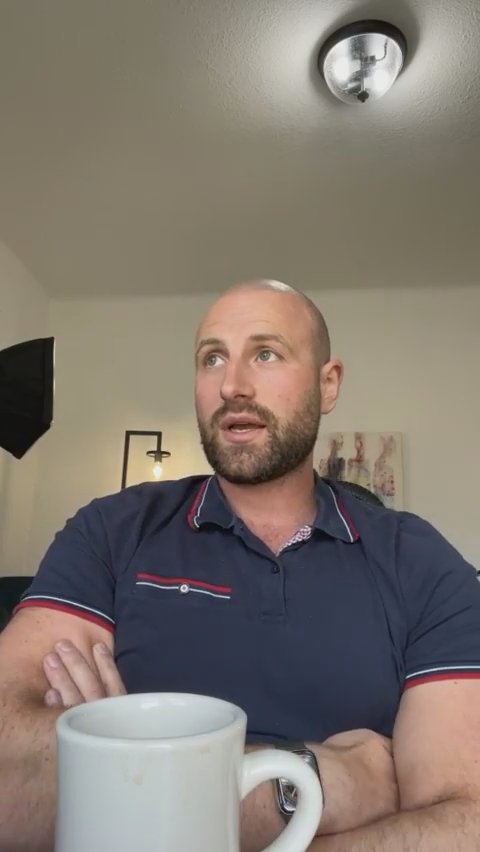
Recently the New York Times released an article about the sharp rise in mental health among Gen-Z. Hospital admissions, suicidal ideations, and medication prescriptions among teens are at record numbers, but what's going on? I'll share some of the findings and my opinions on this live.
Evan is your resident mental health and addiction therapist. Every time I start seeing clients or working, I learn something new. We're live from the office.
Statistics show that Gen Z is probably one of the most depressed generations of modern time. What is going on with Gen Z in regards to mental health? It's tough for parents, because what do you do when you have a kid that's struggling?
Gen Z is 27% more likely than millennials at 15%, 13% to report their mental health is fair or poor. Do I think younger generation are more aware of signs of depression? Social media could be part of that.
A new site gives tips for how to support someone who's going through a hard time. Tip number one is just ask, are you okay? Be relaxed, friendly. And these are all skills that we learn as a society.
Don't tell people what to do, just offer. Pop a reminder in your diary to call them a couple weeks. Follow up with them sooner. From them, genuine care and concern can make the difference.
What's up, Cadre fam? Evan here, your resident mental health and addiction therapist. We're live from the office. In the midst of doing some work, seeing clients, and as usual, certain things come to mind, right? So certain lessons. Every time I start seeing clients or working, I learn something new. But today I wanted to talk about something that comes up quite a bit, and that is, what is going on with the youth, what is going on with Gen Z in regards to mental health? There's some really interesting and, frankly, some sad statistics out there showing that Gen Z is probably one of the most depressed generations of modern time.
Since we've been measuring this, and this has been really big in the media, I've had multiple publications reach out to me, asking me what I think about it or why I think that is, or what my experience. I don't know if I'm the best person to always remark on that, but because of that, I have looked into it much more and trying to figure out, like everyone else, what is going on. Why is it that this generation is struggling so much? Now you may be saying, well, I'm not Gen Z. If you're watching this, you're likely not.
But maybe, you know, some people who are, maybe a lot of you are parents. And I think this is really tough for parents, because what do you do? You know, what do you do when you have a kid that's struggling? And, you know, I work with a lot of parents whose kids have addiction, so it's kind of a similar dynamic. And, you know, they want to know how to. How can I be supportive? Or why is this? Or, you know, what can I do? I mean, there's a real feeling of powerlessness that goes with it, just like if you had a partner struggling with it.
And sometimes it's tough, too, because you may take it personally often, probably shouldn't. But, yeah, sometimes you internalize that or think you're a bad parent or whatever the issue may be. But I thought, let's take a little look at what's going on here. And it's tough because we can only surmise. We can't say for sure, but when you pull teens, you know, there's a lot of different stressors that they have that maybe some of the other generations didn't. You know, a lot of people point to social media, and I think there's definitely some merit to this because.
Right. It's really easy to compare ourselves to other people, and that's often a recipe for misery when you're, you know, always comparing yourself and seeing how other people are presenting their best image, painting themselves in the best light and making you feel inferior right now. Also with that comes more communication. Often that comes with more bullying. So, I mean, I think that's one really big piece of what we're seeing with this generation than what we did with others. It was interesting in some of the statistics as far as generations reporting that their mental health was fair or poor, I believe it was.
Or I think the opposite was like, how many are saying that they have good above fair, good to great mental health? And I think it was only like 45% of Gen Z reported that millennials was a little bit higher. And I don't know if that polling was necessarily done in a singular moment or they polled them at the time they were kids, but they're 27% more likely than millennials at 15%, 13% to report their mental health is fair or poor, the survey found. So this is probably just looking at what's going on right now.
Oh, we got Carrie in the live. So it was interesting with Gen X was pretty interesting as well. So I think, like, with Gen Z's, like, you're looking at like 97 to 2012 millennials, you're looking at, you know, it's like 83 to 96. And then with Gen X, you're looking at, you know, maybe early seventies or something like that, up to maybe even this now in the sixties, maybe mid sixties to mid eighties. And so a lot of them, which is interesting because the Gen X are actually the parents typically of Gen Z.
So they report even higher levels as well, versus the boomers, which report like 70%. So significantly higher. So it's like, what's going on here? So we talked about how social media could be part of that. You know, one of the other things is there's some other unique stressors. And when they pull teens, I mean, it shouldn't be surprising. But to me, it was a little bit, right. It was. School shootings was what? Like, reported to be like one of the number one stressors. And I mean, I'm not even trying to get political in any way, but my thought was like, okay, I was surprised that was number one because of just the odds, right?
The odds of it happening are very low. Now. The thing is, it really shouldn't be happening at all. Like, even one is not okay, but, like, the odds of that happening, but, you know, with how much it's in the media and it should be in the media, you know, it kind of makes it feel like, you know, this is something that's more likely to happen. And that is a big fear, going to school. Right. Which is somewhere you go every day and some, something so important for your development. Do I think the younger generation are more aware of signs of depression?
That is a big one, right. And that one gets a little tricky and it gets a little complicated because a lot of people do surmise that perhaps they're a little bit too aware or, like, woke to mental health. Right. You see that as far as understanding depression, anxiety. So it's like when you know about these things, which is good, right. There's a potential that you may start to identify with that more or also what you're seeing with teens. And one of the criticisms with social media and mental health, social media, which I know all too well, right, is you're seeing an increase in a lot of these conditions, like depression, anxiety, also like dissociative identity disorder, Tourette syndrome, that are way higher than normal to the point where it's like, this cannot just be natural and it cannot just be.
Well, they're more aware of it. So they're talking about it where other people would have had it, too, but they didn't have words for it, which really can't be true based on the amount of it, right. Because we are susceptible socially. Like, you saw a big increase in the nineties and it's still there with eating disorders. So there are social elements to this. So there's that thought as well of, you know, kids exchanging their mental health diagnoses as a form of social cache. So I think there's something to that.
Thanks, Gary. So I think there's, I think there is something to that. But, like, what do you do? I don't know. Now there's a big article that came out in the New York Times where they studied this for years and years. And one of the things that they thought as well, that, that actually in some ways could be a good thing, right. Because a lot of people don't go to therapy until later in life, right. So they kind of grit through if they have mental health issues, we're saying, well, hey, if you could actually get into therapy earlier and learn some of these skills and life skills, maybe, maybe that would decrease, you know, the chances of having some of those issues later on.
I guess we don't know. But that was kind of interesting. I never thought of that. Another hypothesis is that teens are going through puberty earlier. And one of the things I've always noticed, and probably any parent has noticed, you know, is just really how impactful hormones are for your mental health. You know, a lot of times when people have depression, when men, they have, like, you know, often there's associated with lower testosterone levels, you know, or high testosterone levels with, like, anger, aggression.
And so I think that's something that's underplayed. So what the hypothesis there is that, well, these teens are going through puberty earlier, so they're having all these, like, you know, intense feelings, but they don't know what to do with them because their prefrontal cortex. Right. The more developed adult part of your brain that continues to grow into your twenties, it's kind of more. It helps regulate from top down thought to feeling that it hasn't caught up. So it's kind of like your intense feelings, your ability to regulate.
So that kind of makes for a bad mix when you're younger. So I think kids are growing up faster, too. You can make that same argument where they're having to deal with more things just based on an increased sense of awareness. Right. And if you think about the media and social media, media in general, it's always been that, like, negativity cells. So I would guess that that's part of it as well, where you see all these, you know, issues in the world and disparities in this. I mean, like, a lot of these things that are, like, very real, however, they get hyper focused on.
And when that happens, right, it really could taint your idea of, like, the world you live in and make it seem worse than it actually is. Where, you know, like, the jokes, like, if I were to walk outside my house and look around, you know, Armageddon isn't happening right now. Granted, where I live is a factor, but like most people, you know, there is something to that where the more you pay attention, the more you feel like you're in this environment that's more dangerous than it is. Like, hence the school shootings.
I think another big part of it, too, and one of the things I noticed directly, which makes a lot of sense, is that during the pandemic, kids were much more susceptible to the stressors of that. And one of the biggest parts of that was social isolation, because as we talked about, school, social peers is a really important part of kids development and where they put a lot of emphasis on their overall mental well being. We all do that. Relationships are important, even more so for kids and youth trying to figure out who they are and the importance of those connections.
So with COVID right now, you have, like, at least a year of a lot of kids being out of school, being isolated, being on social media more. And I'm not here to demonize social media. You know, I think there's a lot of good that could come from it, just like anything in moderation. But when you mix those things together, you know, that could create an issue as well. So, yeah, so there's a lot of these potential reasons, and likely it's potentially a mix of all of them, you know, just like rates of suicide.
So you have, you know, mass shootings said, number one, rise in suicide, climate change, separation and deportation of migrant families. I don't know if that one's among migrants, but I think a lot of these. Right, these are hot button issues in the news. And some of that you may experience directly, probably a lot of it they're not. But again, it's perhaps that hyper awareness. Now let's look at solution focus. Now, one of the reasons I wanted to bring some of this up is that, you know, what do you do if you have one of these folks in your life, one of these youthful Gen Z?
You know, what if you're a parent, what can you do? How could you have a positive influence? How could you be supportive? It was interesting. One of the guys that works with me, he's a Gen Z. So it's kind of interesting getting his perspective. And it's interesting because he is someone who's very into mental health. And Gen Z, they're just much more focused on it. They have more of an interest in it due to the fact that they struggle with it more. So I think there's some positivity there, maybe more openness to going to therapy, although there's a statistic that surprised me where they were maybe less likely to end up in therapy.
And there could be a lot of reasons for that. But from what I found, you know, they have less of a stigma around it. It's like, it's not a bad thing or it's not like a sign of weakness or anything. I mean, the stigma is still there, but it's much less so in society in general, especially for them who grew up with less of it. And it's changing rapidly. So my Gen Z buddy, one day he sent me this, like, hey, have you heard of this? And this is out of Australia, and it's r u o k. So literally r letter u, letter o, the letter k, right?
So are you okay? And basically it's like a movement or whatever, but on the site, it gives you some practical tips for how to support someone who's going through a hard time. Right? And then the are you okay? Is. So they're saying, like, if you ever ask someone, are you okay? Right. That could open up a bag of worms, right. You know, you're getting a little bit deeper, not just, like, how you doing? But, like, are you okay? Right? And oftentimes we aren't. We've all been there. So it says it's getting the first point it makes.
And again, this could apply well to Gen Z because they're suffering at high risk, but this could apply to anyone. So this should be relevant. Right? So first question asks, am I ready? Am I in a good headspace? Am I willing to genuinely listen? Can I give as much time or attention as needed? Right. A question to ask before you start asking those deeper questions. Because if you do offer that opportunity for someone to open up and you're not ready, or that could, like, maybe make it worse, and maybe they feel like they're further, like, they don't have support.
So, like, being prepared. Do I understand if I ask someone, the answer could be no, right? So just like what I was saying, can I accept that they're not ready to talk yet, or maybe they don't want to talk to me about it, you know, the other part is, like, picking a good moment. You know, are we in a comfortable place? Are we in a private place? Are they in a good place to chat? Or are they in the middle of work or something? Probably not a good idea. So then tips on how to ask. Tip number one is just ask, are you okay?
Be relaxed, friendly. Asking things like how I keep rereading this. I'm like, wait, that's grammatically incorrect, but I'm forgetting. It's from Australia. It says, how are you going? Right? I'm like, wait. I kept reading that. I'm like, how are you doing? I mean, but it's austere. It's like, how you going? Well, what's been happening? It's my best australian accent. So my brother lives out there. He says, good on you. So, yeah, if they don't want to talk, don't criticize. Tell them you're concerned, that you care.
You know, avoid being confrontational, obviously. And if you check out some of the work I do in my communication series and some of those videos, I give a lot of similar points and put names on these things in another one, too. Can you call me or chat if you ever want to? So kind of keeping that door open in case they aren't potentially ready. And then two is listening, and that's one of the most important things. And these are all skills that we learn as a therapist. It's important to listen. We always want to interject or we think we have a good idea or whatever.
Maybe it's great, but people really want to feel like they're being listened to, like they're being heard. Right? So taking what they say seriously, don't interrupt, don't rush, don't judge their experiences, reactions, acknowledge, things seem tough, right. So that's like an affirmation, a reflection. You know, reflection is kind of repeating back, showing that it's an active listening skill. Encourage them and explain, you know, going a little bit deeper. Right. Drawing these things out of them, getting to talk about these things that maybe they wouldn't otherwise, showing that you listening by repeating back.
Right. Those are the reflections I was talking about. There's simple reflections, complex reflections. A simple reflection is just saying back exactly what they said to you. Showing your listening at complex is kind of making an inference. Right. So I hear you're saying you're sad. So it's kind of like taking things a step further. Like, what would be an example of a complex reflection? They could be saying something like, yeah, work's been stressful, blah, blah, blah, with my boss. And so you're saying that you've been sad.
So I'm doing a horrible job. So I'd be saying something like, yeah, I hear you're saying that you've been sad, that there's a lot of pressure at work, that you're feeling like it's overwhelming or something, saying things that they didn't necessarily exactly say, but I'm taking it one step further, and they may say, no, that's fine. Then they kind of clarify. Then you reflect back again and say, oh, so I'm hearing this. Oh, yeah. So there's a lot of benefits of doing that. And then number three of the categories is encourage action.
So, asking, what have you done in the past to manage similar situations? How would you like me to support you? What's something you can do for yourself right now? Something that's enjoyable, relaxing. When I was going through a difficult time, I tried this. You may find it useful, too. So not ever telling people what to do, just offering. If you have suggestions, you want to be a little careful in that realm, but it's often better to get them to come up with the answers that they think will work for them versus what will work for you.
Because not always what worked for you is going to work for others. We always have that bias. Well, this worked for me, so therefore it's yours. Sometimes that is correct. And then the last one is checking in. Pop a reminder in your diary to call them a couple weeks. If they really struggle, follow up with them sooner. You could say, I've been thinking of you and wanted to know how you've been doing since we last chatted. So sometimes sending, like, a little text message is good and don't necessarily expect to hear back and be okay with that, but there's still value because it opens the door.
And I have, like, a recent story about this. Stay in touch. Tell them you're there. From them, genuine care and concern can make the difference. Right. So making an offer, saying the door is open instead of pushing. And I find when you do that, very often they're going to come to you. When they're ready, you're going to be the one they come to. And very often they will, even if it may not be right off the bat, push the action, just engage, and then put the ball in their court, and they're more likely to do it.
So, yeah, I had a friend the other day. We were just at the state fair here in Minnesota, which Carrie was at, from what I hear. And we were just sitting talking. It was the end of the evening, and he was kind of mentioning to me and another friend kind of casually, like, you know, that he's kind of been in a depressed mode the past couple months. And I didn't really know about that. Maybe he alluded to it a little bit. You know, we all talk about mental health a lot, but, you know, he was pretty blatant about it this time.
Like, oh, okay. So he was just talking a little bit about it, feeling down, but, you know, feeling like, yeah, you know, I get into these modes sometimes. So he wasn't, like, overly distressed, but just kind of making us aware that, you know, this is where I've been at, and this is what it looks like for me. So I took note of that. Okay, right. Kind of did some reflecting and, you know, but just took note of that. And then maybe a day or two later, I just checked. I just sent him a text like, hey, how's it going?
How's the. You know, I use, like, a little bit of humor with him. How's the depress going? You know? Cause he and I connect on that level, and I've known him forever. Right. So it could be a little cheeky with him, but he didn't say anything back. Was I worried? No, but I just kind of let it be. Sent him a little. I sent him a little YouTube video. I thought he would like and just kind of left it there and then I don't know, one day later, two days later he called me and we just chatted, right we just talked about what was going on and you know my guess is and I know when that's happened to me, you know someone really appreciates that, right?
So these are all just the little things that you could do to help support others in your life including if you have the youth because at 45% feeling like they're doing great, I mean there's a good chance that they could use a little extra help and support. So I hope you got something out of that. I encourage you to continue watching some of the stuff in my communication series where you can get some more helpful tips there and I'm going to be coming out with more videos on that as well. Anyways folks, it has been great as always and I will see you again soon.
All right folks, take care.
Reactions and comments are for members. Joining is free and takes a minute.