It's hard to overstate the number of calls and emails I get from individuals wanting help for themselves or a partner. I noticed a lot of similarities among these clients, including misconceptions, shame and trauma. I'll share with you my experience and opinions on the controversial topic.
The term sex addiction is nowhere to be found in the diagnostic manual. There's no diagnosis whatsoever to diagnose compulsive sexual behavior. Some people view it with more the addiction model. As a therapist, I cannot bill someone's insurance company without a specific diagnosis.
There is a organization or a certificate one could get called the CSAT. That often uses more of a boundary model similar to sex addiction. The other with more the sexual compulsivity side of things is a little bit more individualized. Evan: There is some merit as well to look at it from a different lens.
A lot of people think they have a sex addiction and in my opinion, they do not. Fantasies are often transgressive. What is wrong tends to be hot. Just because you fantasize about something doesn't mean you want to or will do it often.
When it comes to porn especially, and I'm bringing this one up because this is like the most common reason people are seeking it out. Maybe this live will be like 2 hours long, so I could talk about this forever.
About 98% of men have watched porn to some degree. About 70% of women watch it with any regularity. Do we should outlaw it? Just convince people not to do it?
A lot of young men are suffering from erectile dysfunction. They become dependent porn and that really impacts their real life relationships. It sets up very unrealistic standards for what real sex looks like. There needs to be more education around that and more honest conversation.
A lot of the similar situations I get with folks seeking treatment for sexual compulsivity is based on a lot of these misunderstandings. Whether you want to call it addiction compulsivity, I'm not going to fault you either way. There are resources out there.
It's okay to appreciate beautiful things, people. But the more we shame that, right? Some of the healthiest couples I see are able to do that. Guys tend to be more insecure if we're being honest and having those open conversations.
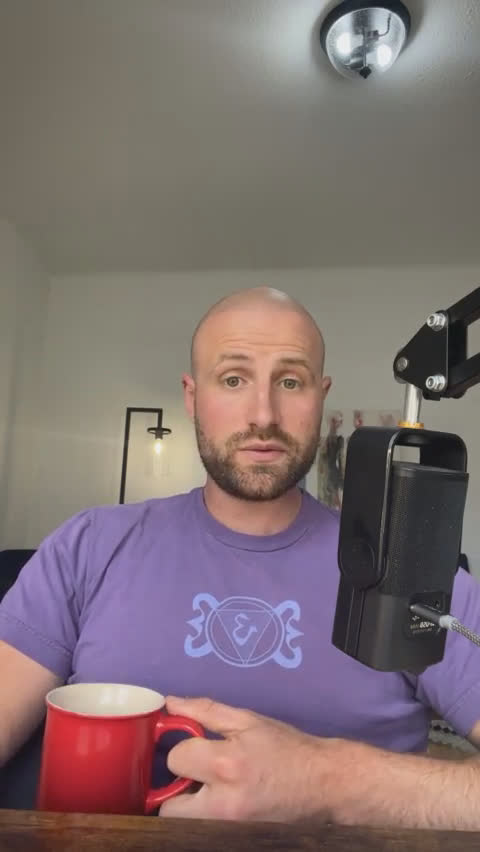
All right, folks, we're back live from my office. I'm Evan Cadres, resident, mental health and addiction therapist. Been seeing clients today and getting some other work done, and as always, some thoughts come to mind as I work with clients and continue to learn. But there has been a question that often comes up, and I get this quite a bit. So people reach out to me online and want me to see them. And one common one I get is people wanting to see me for sex addiction. So we're going to be discussing a really sultry topic today.
But why should this be something you care about right now? A few reasons. One, maybe that's something you've struggled with in the past, any type of compulsive sexual behavior or someone, you know, a loved one. Or maybe this is just something that's interesting in general, because I think it's super fascinating. But. So I thought I would break the topic down because there's a lot here and there's a lot of misconceptions around it, and there's a lot of disagreement in the mental health field. So I'm going to talk about the different sides of the disagreement.
There's always some politics involved sometimes, but believe it or not, even in mental health, we don't always agree on everything. And when it comes to sex, clearly you could see why there may be some differing opinions. Right. With all that's wrapped up in it, there's a lot of stigma in a lot of our sexual behavior, a lot of religious underpinnings for certain people. So people see things in a different light. So I'm going to break down two, at least two of the major opinions or models, that's a better word, models that people use for treating what we call compulsive sexual behaviors.
Right. So the term sex addiction is nowhere to be found in the diagnostic manual. Right. There's actually no diagnosis whatsoever to diagnose compulsive sexual behavior, sex addiction, whatever you want to call it. So does that mean it's not real? No. The DSM is just kind of the best thing. We got to break down different patterns of behavior that create stress and consequences, problems in people's lives. So pretty much everybody in the field, I would say, would want either to have sex addiction in the DSM or compulsive sexual behaviors, because those are the two different camps, CSB, compulsive sexual behaviors.
And others view it with more the addiction model. They don't really get along. Right. So no matter what side you're on, people would like to have that in there because a lot of people, like I said, need help with that. And unfortunately, as a therapist, I cannot bill someone's insurance company without having a specific diagnosis. Now, there's ways around that. There's little tricks we therapists use to get people help they need when we believe they need it, right? Because oftentimes, just like with other addictions or compulsive behaviors, there are mental health symptoms, right?
Anxiety, depression, because of how these behaviors affect your life and create stress. Right? So that's often the way that we do it, is looking at the consequences from it and using that as a diagnosis. Anyways. So we got two camps of thinking, like I said, they don't always get along. And we have, like I mentioned, the sexual, compulsive sexual behavior camp. So they don't view it as an addiction. You know, they would say that, look, sex is normal, natural. You know, you can't necessarily qualify it as an addiction, but more of a compulsive behavior, maybe, like you would say, with an eating disorder.
Right. There's a lot of similarities with addiction. Yes, but it's not helpful or maybe not as accurate to compare it to, let's say, a substance addiction. Now, the other camp did base a lot of the research. Someone like Doctor Patrick Carnes was one of the sort of founding pioneers of sex addiction treatment. And he viewed it very similarly to substance addiction because I believe he worked in that as well. And so viewing it from that model of here is a behavior that is often progressive, that creates consequences in people's lives where there is even similarities, such as building a tolerance and withdrawal.
So there are a lot of obvious similarities. So they view it more from that model. Now, what is the implications of this? Well, sometimes language matters, and sometimes when you view things in a different lens, then the course of action to treat it is going to be perhaps a little bit different. Often with the more sex addiction camp, more often they are going to recommend abstinence from those behaviors like you would in very traditional substance addiction. Whether it's poor p*** or infidelity, whatever.
It's like, just we're not going to do those behaviors. Right. Clearly, you're not able to control them. And so you're going to learn to live a life without those. And they count sobriety time like you would an addiction. Like, hey, I've gone this long without watching p***. And for everyone, it is different of what their boundaries are. But typically it's going to be something that looks like abstinence from a particular behavior to the best I know, and unless things have changed, and that may be different, because with compulsive sexual behavior, it looks like some very different things.
And one time I made a post about this, and I said, from my observation, you usually have people who are just coming in for sex addiction or compulsion, like kind of three different camps of people that attend to be most common is your married guys who get caught cheating, you know, or seeking prostitution or whatever. And so those are probably the most, I would say, right. Because a lot of times they're coming in because their marriage is on the rocks. They got caught. And that doesn't mean that they're not earnest about wanting treatment or that they are exhibiting in CSB, but that's probably the most common.
Another one you get a lot of in sexual compulsive treatment, sex addiction would be gay men, also very commonly gay men who use methods. And you're like, what? If you don't know, you're like, wait, what? What's going on there? Well, you know, sex is a big part of the gay community, right? A lot of your identity is wrapped up in sex. And, you know, there are some general differences in sexuality with men and women. Some people may want to argue on that, but, you know, but it's kind of like you have two green lights on both sides of the intersection, right?
So it. You know, so it is a very big part of the culture. There's a very big hookup culture within it. You know, you got apps like Grindr that give you pretty much instant access. And, you know, there is a big meth epidemic. Before it was meth, it was, like, mostly alcohol. Like, usually older gay men would struggle with alcohol more often, and now it's turned more into method. And there's a big component with meth, insects. It really is a sex drug for them, for people who use it, especially in that community, absolutely devastating.
And to back that up, the numbers are extremely high. The addiction prevalence rates in the LGBTQ community, both men, women, trans, non binary, it's just extremely high. But the ones you will find seeking services for sexual compulsivity tend to be gay men. More often than not, meth is involved, right? And then the third is often, like, younger guys who are addicted to p*** and older guys, too. So the kind of the third category is more like the individual addicted to p***, often doing it from a very young age and will break that down a little bit further.
But these are the three groups that you're often going to get in seeking these services, mostly using the language of sex addiction, because that's what they know. So there is a organization or a certificate one could get called the CSAT. I should probably should look at compulsive sexual CSAT. Compulsive sex. No. Certified sex addiction therapist. And it's a really intensive thing to go through. I mean, you have to go through a lot to get that certificate. But it uses more. I mean, so that is the therapeutic intervention you would use to treat it under that model.
Now, the other with more the sexual compulsivity side of things, which I've yet to fully break down. A lot of it comes from an organization called ASeC, a s s e c t breakdown. So they're taking more of the sexual. That often uses more of a boundary model similar to sex addiction. However, it's maybe a little bit more permissive in some ways. Right. So saying, okay, just because you watch p*** and master doesn't mean you can never watch p*** again, that you can't watch it at all. You can't m********* whatsoever.
It just depends. It's a little bit more individualized. This is individualized, but this is maybe even, I would argue, more so just from what I've seen. And it's a little bit more dynamic. Right. So things change. Right. You try something, and if it doesn't work, maybe you do restrict it. Maybe there are some behaviors that just, like in the addiction camp, you would cut out altogether. And, you know, so, again, it's that dynamic process. You live, you learn. You're not really counting time if you relapse.
It's not really part of it. So, you know, the question. Hey, Evan, what do you agree with? I mean, I see merit to both. I mean, I think there are just an incredible amount of similarities and brain processes for what you would see with chemical addiction. But I think there is some merit as well to look at it from a different lens and not necessarily treat it in the same way. Right. So I think I'd maybe lean a little more on this side, even though I totally understand and I totally get the merit of what they're talking about.
Hey, Katie, how's it going? Yeah, a lot of people don't speak about it. And again, because of so much shame and stigma and baggage in society we have around sex. And that brings up a good point, because I kind of joke about this a little bit, because, like, these, the people who hit me up, I talked about some of the people who are the categories of folks that are maybe most likely to seek services. Who I get a lot of is husbands in their twenties to thirties most frequently. And I find there's like a lot of misunderstandings.
Sometimes there are this sexual behaviors of like cheating. But a lot of, very often it is with p***, especially with a lot of the younger guys. Now, because there's so much misunderstanding on this topic and nobody ever talks about it. A lot of people think they have a sex addiction and in my opinion, they do not. Well, they don't. They just don't meet the criteria. Right. You could use some of the same criteria. Substance, addiction, tolerance, affecting your relationships, life, and all these other different ways you base diagnoses off symptoms, essentially consequences, negatives that it has in your life.
And usually the biggest negative is in their relationships, these guys. Right. So therefore, wasn't it addiction? Well, just because you have a partner that is upset with you does not mean it's addiction, right? Well, that is a consequence, but it's kind of an artificial consequence because a lot of misunderstanding there. Some people think p*** is cheating. Now, most sexual health experts of any kind would probably be like, no, it's not. Because what we know about, and how do we know is how can we say this?
Isn't this moral? So there's a lot of morals tied into this as well. So I try not to insert my morals into this, but kind of my opinions are based off more research and certain types of behavior patterns. And so, you know, so, you know, so these folks who come in, right, they think they have a problem essentially just because they watch it, right? And what we know that just about everybody. Okay, I'm going to tell you this little secret, all right? It's between you and me, your partner. And you both fantasize about other people.
I know, right? And literally to the point, it's like if you didn't, that would be weird, right? If like when someone comes up to me and they're like, oh, yes, I m********* thinking about my partner. Only I'm just like, holy s***. Wow, man, good for you. But I don't believe it. Or like that. That is literally the, the opposite of the norm, right? That is by far the deviation if someone does it. But a lot of people maybe hold themselves to that standards because, you know, they think that this is somehow being, breaking a boundary or trust with their partner, that this is sinful, if you will.
I know, Katie. I know. Maybe I am lying. But, you know, so there's a lot of lack of education here. And again, back to that point, right? Fantasies are often transgressive. Here's another one, right? Meaning what is wrong tends to be hot. Okay. And I mean, so that's why you have all these like categories that people search for. They fantasize, but that doesn't mean they actually will do it or even want to do it in real life, right? So just because you fantasize about something doesn't mean you necessarily want to or will do it so often.
Like a partner will catch their partner watching p*** and then they'll see someone with a different hair color, right. Or tends to be blonde women and I'm a brunette and vice versa, whatever. And then sometimes that could cause insecurity. And I'm not trying to crap all over partners because I'm not trying to invalidate them because without that education, and I'm not saying I'm not susceptible to that as well, if I saw my partner was watching videos with someone who was not a bunch of videos of people who are not like me at all, they had nice flowing fabio hair in all their videos, I'd be like, I'm feeling a little insecure here.
So I get it. But that doesn't necessarily mean that because someone does that. It's a compulsion. And we actually have numbers on this and no one, very few people know this, right? So the question. So when it comes to p*** especially, and I'm bringing this one up because this is like the most common reason people are seeking it out and probably one of the biggest issues right now. And we'll talk about why that is in a minute. Maybe this live will be like 2 hours long, so I could talk about this forever.
So hopefully you're interested in this. I'm not going to go 2 hours. Got stuff to do. Alaska. But yeah. So let's start with men. And usually it's like measured within the last three months or six months or even regularly. But like, if you were to look at the last like three months of how many men have watched p*** to some degree, it's like 98%. I mean, it's something crazy. I mean, it's like upper nineties there. There was a study that they tried to do to compare the brain of men's who watch p*** to men who don't watch p***.
But they had to scrap the study. And why is that? They couldn't find a control group. They couldn't find enough guys who just had never watched. I think it was because they had never watched it. So they had to change the methods of the study to learn a little bit more about this kind of behavior. Now, what about women now? Said about 70% watch it with any regularity. But I think that number is low because there's a lot more stigma around women watching it, right. And so we have a lot of data on this, big data because of things like Google and the p*** companies who track this stuff, right?
So if you ever want to see something interesting, look at, like, what the most searched categories are. And I could. I won't go that deep into it for this lab, we'll keep it. Keep it pg 13. But if you ever want to see something interesting, look at the categories of what people search. You'll get a kick out of it among countries, among different groups. It's fascinating if you're anything like me. So we know these numbers right? Now the question is, how much do folks on average watch it? Now, again, let's focus on the men a little more because they're the ones who tend to have more compulsive issues.
Not that some women do not probably more than we think, more than they get help for. But it's something like, if I remember correctly, like three to four days a week for like 30 to 40 minutes or something. Like just. And that's just the average. But what they find, what a lot of people do is they're not, like, sitting there watching it for hours and hours, like the average, maybe like 30 minutes or something. But what you see is, like, a lot of guys just kind of, like, watch it. And it's kind of surprising.
Just like throughout the day, maybe, like on certain days, like, they're on, like a lunch break. And it's not like they're necessarily, like, masturbating to it. They're just, like, kind of watching it, right. You know, just little escapism or whatever. And so it's not always about, you know, that full on sexual gratification, right? And so. But of the people who do watch it, how many of them, like, have a problem, right? So the best estimation would probably be around 7%, seven to 10% of men. So now you hear in society that, you know, this, you know, like, kind of moral panic over p*** and, you know, of, like, it is ruining society.
But, you know, when you really look at it, people are just using it as a tool to either enhance their sex life or, you know, find gratification in other ways. And maybe that's what keeps them. Keeps them honest in their relationships, right. Having just a different type of outlet. So, okay, what about the folks who do have a problem with it, right? So let's say 7%, 8%, 10%, 12%. Now, I like to. And I compare it to alcohol here, because we know alcohol is a problem in society. But does that mean we should outlaw it?
Probe? Just convince people not to do it necessarily? Well, I would say no, because especially with alcohol, it's very genetic compared to other drugs, but that's besides the point. But the numbers are similar. Addiction numbers of some substances are similar to that of p***. So it's not like it's affecting this huge swath of society in a bad way. Now, there is a group that in fact have some of the most problem with it, and that is young men. So the younger the guy you're getting. So it is becoming more and more of a problem.
And that is because of the ease of access and just how much there is. I mean, the Internet, I don't know, 60% p*** or something crazy. I mean, it's just so much of it is, and it's so accessible, and it's really hard to prevent minors from watching it because all kids have. Well, kids don't have access to phone or a tablet or the Internet. And your parents could be putting on locks on it. But then the kids are more tech savvy than their parents 90% of the time. They just find ways around it if they really want to.
So they're exposed to some really hardcore s*** that, like, if you go back 30, 40 years ago, like, you would never see it be like, you know, taking a peep at your grandpa's playboy, you know, there's a big difference between that and some of the stuff that's out there now. So that becomes a problem because it actually does rewire your brain, right? And it could be the same thing if it was like, in person stuff like, not to get too deep into this, but if you're used to sleeping with a different partner every single day and doing this high stimulation, being in a monogamous relationship would be very difficult because your brain is rewired for higher levels of stimulation.
If you did meth every day, the pleasure of eating a nice fresh honey crisp apple is not going to be the same. That's where tolerance comes in with the addiction. People talk about tolerance, and they talk about something called the Coolidge effect in men, which is the more partners you're used to having, the more sexually gratifying it is on average. And this is across animals. And this was first observed. It was in sheep. There's a funny story why it's called the Coolidge effect, but it was observed that male sheep would faster with new partners.
There's an evolutionary reason for this. Now, our brains don't often know the difference between real and artificial. So when we're watching p***, we didn't evolve to recognize what a tv or computer screen is. So it is, you know, wiring our brain in a similar type of way. If you have like ten tabs open and you're watching all sorts of these crazy videos, well, you know, it's going to be hard when you're in real life with one partner. And there's a lot of other issues around that, like both emotional, you know, just being self conscious because, because you're so used to doing this yourself.
Another thing for guys is grip strength compared to the normal and that dulls them. And so when they get with a partner and they're not used to, that becomes an issue as well. So a lot of young men are suffering from erectile dysfunction. Usually that would be in your fifties, sixties, but those are some of the reasons why. So then they become dependent p*** and that really impacts their real life relationships. And also it sets up very unrealistic standards for what real sex looks like. Right. If you watch p***, I mean this is not like just normal.
I mean this is like you're getting a very specific population of people who are doing some very double black diamond activities, right. And stuff that's maybe more intense. Intense, sadistic, you know, all these different things that. Okay. In and of themselves, no judgment there, but it's very different often than what your average kind of real, especially as a young man, you're not doing. You know, whatever's pretty basic is normally just fine versus if you're watching all that and you're like, okay, we got to get like toys and chains and whips and you know, I'm always hesitating with what I say here because I want to, you know, I don't know.
I don't know if I'm going to get in trouble from the higher ups here. I don't think so. They're cool, but yeah, without getting too vulgar on some of the stuff. And you probably know what's out there and it really does have an impact. So I think we're going to see more and more issues and I'm pretty sure we are for those young men, especially. Especially who are habituating. Yeah, I was wondering if Katie's here this whole time, if young men who are habituating to much more highly stimulating activity.
So what do we do about that? I don't even know, but let's say I'm working with people who do, do in fact have compulsive sexual behavior. And not just the husbands coming in who think they have it because they watch p*** and they can't stop. Right. So that's why I think it's a problem is even though my wife wants me to stop, I can't stop. I'm going in the basement. I'm doing this three days, and they're just doing it the average. But really, there needs to be more education around that and more honest conversation and more dialogue and that, you know, own education around that topic.
But for the, anyways, back to what I'm saying. The folks who do struggle with compulsive p*** use, right. If we're not working on just cutting it out completely, it's lowering the hedonic threshold, the hedonism, pleasure. Right. Just like with substances. Like if I drink three beers and I do it long enough, it's not going to have the same effect. So I got to drink more. Right. My reward tolerance. So how do we lower that threshold? So setting some boundaries around that, like not having ten tabs open, maybe monitoring the type of stuff that you're watching, maybe stuff that is more soft, sensual, maybe more resembling reality.
Not watching it as much, not watching it for as long and getting used to that. So that, because the biggest issue is not necessarily that you're sitting there all day watching it and not working and spending all your money on it. And even though there's some of that too, I could get into. But that's not the biggest issue. The biggest issue is how it impacts real life in your relationships. So if I see a couple or something that's struggling with this and the only reason it is affecting their relationships, that's like my biggest indicator.
And if the only reason it is is because of the misunderstanding, then to me that's an indicator that it's pretty probably not an issue, however. Right. So I think that's the number one question. So I say, all right, well, how's your guys sex life otherwise, without. Oh, it's good. You having sex often? Yeah. Then I ask the guy, are you enjoying the sex? Yeah. There you go. Okay. It's not affecting you in that way, right? What it's affecting you is in the relationship and often, you know, not to, again, blame the partners.
You know, maybe they're approaching it in a bad way or they're like, you know, lying or being sneaky. But again, on the other hand, you could understand why. So it looks addictive, but, you know, they're trying to do this normal behavior and they're being sneaky about it because every time, if they're going to be honest about it, they're going to get in a lot of trouble. They're going to get lashed verbally, hopefully. And only I always. And this is the best comparison I can make. Now imagine your spouse is a health nut, right?
Like they're like all vegan. Not to pick on vegans, but you know, they're, you know, they're super, like healthy. You know, they're kind of annoying. They wake up at 730 and run and this and they're all about nutrition and go to the gym every day. You know, like they're just super health nuts. Right? Now, you as the partner, you're not so much like you're into that. You're like, yeah, I go to the gym. I do this. But. But you know, I kind of have a thing for donuts, right? I really. I got a weakness for donuts.
Or I just like it, right? Like donuts or cake, whatever. And your partner's like, look, I don't like this. I don't like that you eat donuts. It's unhealthy. It has polysaturated fat in it. This puts you at risk of heart disease. I don't want you to die young. And it really bothers me. It really bothers me that you eat donuts. But you love donuts. So what do you do? All right, so you're like, okay, honey, I don't want to create an issue, so I'm not going to eat donuts. Okay, so then what do they do?
Wife goes out of town. They go right to Dunkin or one of those craft donut places. And just then the wife comes home. Or husband, let's switch it around. I'm picking on women too much, right? Husband comes home and he finds crumbs in the car. Donut crumbs glaze. Did you eat donuts when I was gone? Nope. Nope. Why are there crumbs? All right, you caught me. It's like, what is this? You clearly have a problem. I go out of town for two days, I come back and you got donut glaze all over the car. You need help.
You have an addiction to donuts right? Now, does that person actually have an addiction to donuts? All right, well, let's ask a few questions. Like, you know, unbridled. How often do you like to eat donuts? A few times a week. Sometimes after I work out or after a special occasion, I like to have a couple donuts more than your average bear, but cool. How is this affecting your health? Do you have type two diabetes. Are you overweight? No. Do you eat healthy otherwise? Yeah, I eat pretty healthy.
I just happen to like donuts. Right. So that's a lot of this, you know, a lot of the similar situations I get, you know, with folks seeking treatment for sexual compulsivity is, is based on a lot of these misunderstandings. And again, not that it's not real, and whether you want to call it addiction compulsivity, I'm not going to fault you either way, right? You can make that decision and you could define it for yourself. If a client comes to me and they're wanting to say that they are sexually addicted, they maybe go to similar meetings.
They have twelve step meetings along that line too, because that model, sex addicts anonymous, that a lot of people go to and get great benefit from. And so if they want to look at it that way, I'm not going to fault them if they want to. And I'll explain both, like, okay, however you want to do it. Now, sometimes I'll push back a little on clients who are like, okay, I don't want to m********* at all. Okay. You know, and then they like, all right, let's try that out. But then they do, and then they like kind of relapse, you know, back to that behavior.
And they like beat themselves up and shame themselves every time in three months they do it and it's like, look, like, let's try to look at it maybe from a different perspective, because one of the biggest fuels of compulsive sexual behaviors is shame. Right. A lot of the people, a lot of people who do seek treatment, who really have it, often have. Childhood trauma is a really big one. Sexual trauma, other types of childhood trauma, relationship issues, like with their parents, abuse. Also ADHD is a big one that I find personally.
Like, a lot of people who struggle with this have ADHD. They struggle with like, impulsivity, compulsivity, you know, emotional, like certain types of regulation hitting the, hitting the brakes. So, yeah, so yeah, it's a complicated topic, as you can see, but it is also fascinating. I think the bottom line is, however you want to define it, that's fine. There are resources out there, you know, the asect side. So you could look up an Asech. There was a, a s, E C c t. You know, just type it and you'll find aassect and.
Or a CSAT. CSAT. The certified sex addiction therapist. You could find someone who has that. Sometimes it's hard to get into these folks because they're in high demand. But there's someone who can maybe guide you, like, do a proper assessment, guide you in the right direction, maybe do some education with a partner. So, yeah, so you have that and, you know, trying to have a better understanding of, you know, symptoms, consequences, and how that plays more of a role than just the behavior itself, just like it does with substances.
All right, so let's see Katie's line. I just kind of scanned it, and it's already looking funny. So if my husband didn't capital D and the rest of it appreciate beautiful women, he wouldn't be normal. Yes. Amen. You know, it's okay to appreciate beautiful things, people. Not that we objectify. That's a whole other story about objectification, which I have some controversial views on. But, you know, it's okay to appreciate, you know, someone good looking, you know, whatever. Ain't no shame in that game.
That's how we're built. Right? But the more we shame that, right? Like, Katie, if you were to, like, shame them and push it underground, then he's actually more likely to do it in a compulsive way, just like the donut guy who was, like, sneaking it, hiding it, covering his tracks, hiding receipts and that kind of thing. Right? So that's good that you have those open, honest conversations. Some of the healthiest couples I see are able to do that. It's like walking down the street. Beautiful woman comes by, dressed maybe a little scantily.
The wife goes, yeah, she's good looking. Go ahead, look. Yeah, I think she's hot, too, right? I think women are a little better than that with guys being like, hey, look at that hot guy. Guys tend to be more insecure if we're being honest and having those open conversations and exploring together. And that's where I think as p*** gets demonized, which has its downsides, for sure, but we don't talk about how that can also be a tool for exploring fantasies and things that you can bring into your sex life in reality in a healthy way.
Right? So stay healthy out there. Have fun, and I hope you got something out of that. Katie, thank you for sticking around and bringing up some good stuff, making me laugh. And until next week,
Reactions and comments are for members. Joining is free and takes a minute.