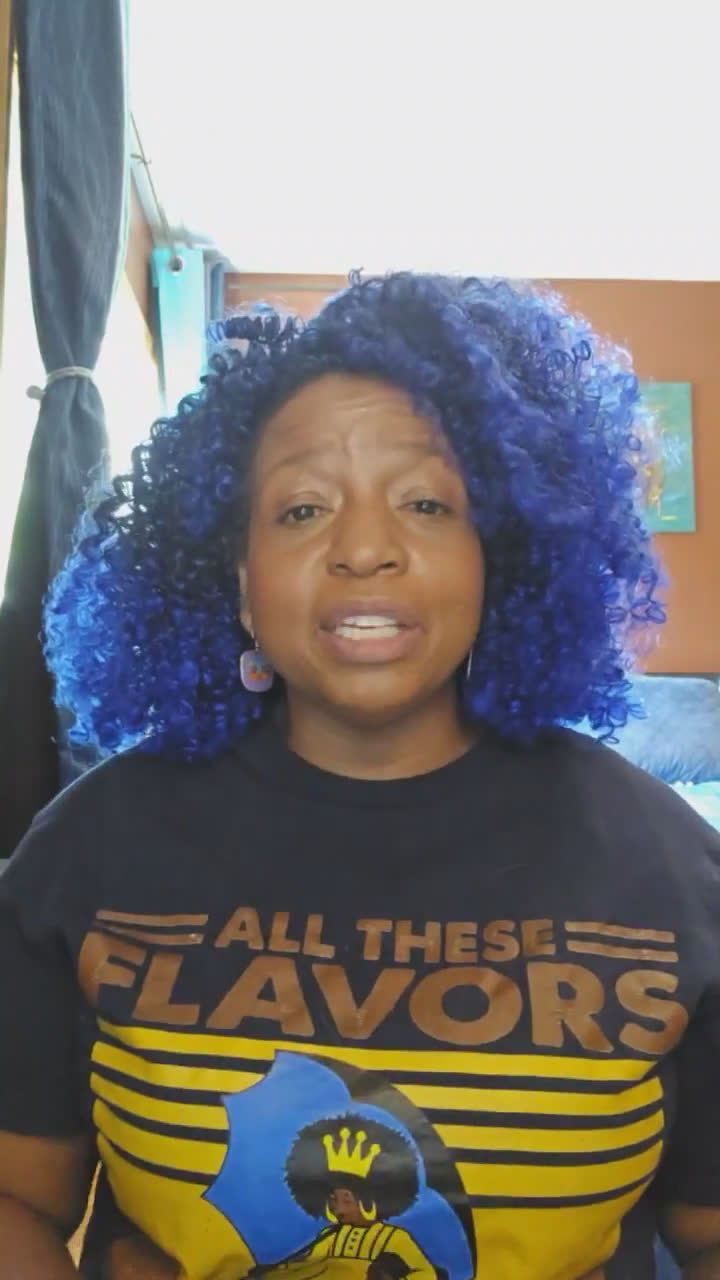
Today we’re talking about the freedom to parent differently than you were raised. From “my mom would’ve NEVER let me…” to “I googled it and we’re fine,” we’re breaking old cycles with compassion, curiosity, and a whole lot of humor. Let’s talk about giving our kids what we wish we had—and giving ourselves grace in the process.
Foreign. Happy Saturday, everybody. I hope that Saturday is treating you well so far. Give everybody a little bit to join us because I am early. A lady feels special today. Feel very special.
Ms. Shannon is a comedian, speaker, voice actor, event MC and benefit auctioneer. She has a focus on talking about imposter syndrome parenting. Also the proud parent of an adorable 17 year old who happens to be high supports on the autism spectrum. Today she talks about where does your parenting come from?
Aaron Carroll talks about the freedom of not parenting the way your parents parented you. Carroll's son is on the autism spectrum. He says he has figured out better ways to preserve his boundaries when it comes to his mother. Carroll: The concept of radical acceptance could smooth things out for you.
LZ: I do my best to honor the things that she did well, but then I choose to evolve the things she did not. There are so many resources out there and things that we could do now. If she decides to be offended because I choose not to parent the same way that she does, I can't control that.
What's the one thing that you do for your kid completely differently than the way you were raised? For me personally, I tell my kid all the time that I'm proud of him. My one thing, support their dreams.
I hope that the day treats you well. If it doesn't, shame on it. Stay here in the Cadre sphere. And thank everybody for joining us. Let us know what we can do to continue to support you.
Foreign. Happy Saturday, everybody. I hope that Saturday is treating you well so far. Give everybody a little bit to join us because I am early. Imagine that. Never early. But it said 9:59 and it seemed like it had been saying that for a really long time. So I just figured I might as well just go ahead and hit the button. Hello, C. Mercer. Happy Saturday to you. I hope that the day is treating you well. Look at that. I'm a minute early. That never happens. A lady feels special today. Feel very special.
Hey, speak wonder. I saw your name earlier today. Happy Saturday to you. Ah, Happy Saturday. Here we go, everybody. Welcome to the Saturday parenting edition of Ms. Shannon's comedy through the Chaos. Hello. Hello. Flowers and thumbs up to you as well. If you are not familiar with me, C. Mercer and anybody who might be watching this in the replay, I am Ms. Shannon. I'm a comedian, speaker, voice actor, event MC and benefit auctioneer that hubs out of the great state of Minnesota. I have a focus on talking about imposter syndrome parenting and I also happen to be the proud parent of an adorable 17 year old who happens to be high supports on the autism spectrum.
Floating on it. Yes. So I like to come and contribute on the concept of a bunch of things that are in the parenting and mental wellness sphere, like many of our contributors here in Cadre Senior. So I am today, I wanted to talk about the concept of where does your parenting come from? And so for me, look at that. I just sat down and my watch is already telling me I've been sitting for too long. Thank you. I'll be okay. So I was thinking about this from a couple of different perspectives and we've been here in the Cadre sphere kind of floating around the idea of freedom from a variety of different things and from a variety of different feelings.
And so for me, I wanted to talk today about the freedom of not parenting the way your parents parented you, which can be very difficult. So I thought I'd start with the story. So back when my kid, after I had gotten his diagnosis and we were a few years in and navigating some different roads and along the adventure of having a kid on the autism spectrum, my mom, who I love, is one of those people that's just full of opinions and is almost really one of those people that doesn't know how to communicate with you unless she's telling you how to live your life.
I have that mom and I love her dearly, but it's a lot sometimes. And it got to the point that she was telling Me a bunch of stuff about my kid. Now, mind you, I don't. I never profess to say I know everything, and I especially don't know everything about parenting someone who's on the autism spectrum. It is different for everybody. And it definitely has been a journey and an evolution for me, me included. But definitely was in that situation that my mom in my ear and over my shoulder all the time was not helpful.
It was information that I did not agree with. It was a parenting structure that was really based in some legacy practices of he's just being willful or this and that, and a lot of limited beliefs that I was raised navigating those worlds, but certainly was not something that I wanted to take forward into this next generation. And it got to the point that there was one morning that I went over there and I was talking to her about something, and I just snapped. I just got so angry and basically told her where she could put all of her suggestions and her ideas and left.
Took my son and left and didn't talk to my mom for a year. Didn't talk to my mom for a year. And then it was one of those things that I didn't mean for it to be a year. But the longer I went without talking to her and having that boundary set, the better it felt. And then finally after a year, I was like, okay, suck it up. She should be able to see her grandson. Just go over there. Because I know my mom. My mom is one of those people, especially from her particular generational viewpoint. She was not going to ever remand that bridge.
She was going to sit there and just continue to think that I was just being a pain in the a**. So. But I did go over there, and I have, over time that's been close to 10 years, I have, over that time, figured out better ways to preserve my boundaries when it comes to my mother. And so it just really made me think about. There are so many things that I really appreciate about the way that she raised my sisters and I. Like, she worked so hard. I mean, she's a single mom with three girls, and she was doing the best that she can with some information that she had at the time.
But there were also a lot of things that she did, I think, based upon the information and resources she had at the time and basically how she was raised. And then she decided to use some of those skills with us. And I choose to not do that. There are some. A few takeaways that I'm like, okay, I'll remember the work ethic, but the rest of it I choose not to use. And I want to encourage you to do that. Yeah. Thank you. Speak Wonder. Yeah, you know, it is some of those things. You just got to go. I choose to accept you for who you are.
We're not talking about the concept of radical acceptance today, but I will cover radical acceptance with us in the group eventually, if you would like to cover that. That is something that I have really become accustomed to, is the concept of radical acceptance. And that is why I was able to mend things with my mom as I put her in that bucket of radically accepting who and where we are in our relationship. And it has worked for me. So I encourage you, if you're having some difficult navigational situations with some people in your family, especially if it's a parent, possibly go look up the concept of radical acceptance and see if it might be able to smooth things out for you.
It may. It may be of value. So I wanted to just kind of talk today and. And see if there was anything that you were thinking back to some things back when you were being raised by your parents. If you think back to anything that they might have done or said repeatedly to you that you're like, yeah, I am never doing that. I am never doing that. And I have a list of those things and a couple in particular. But there's also some things that they didn't do that I intentionally choose to do. And I also give us credit for where we are right now.
We do have different toolkits and resources then I think that generation, you know, in my particular situation, my boomer mom was encouraged to use and. And they weren't provided. To me, it was just, I throw it in the bucket of. It was different back then on a lot of these things. So I do do my best to honor the things that she did well, but then I choose to evolve the things that she did not. I use in my particular frame, humor and intention to be able to evolve these things. And I just had to also acknowledge that it's okay that she does not understand why I choose not to take her advice and move on.
If she thinks I'm being ridiculous because I choose not to take her advice and move on, that is absolutely okay. She'll be fine. It's all right. I'm not going to use it as a point to continue to belabor a point or argue with her because I choose not to do what she did, you know, if she decides, you know, we are only in control of ourselves. And I just know that if in our particular situation. If she decides to be offended because I choose not to parent the same way that she does, I can't control that.
Anyway, if I think that it's an unhealthy situation for my family. And what we have going over here and, you know, if you're wondering why I'm so joyous about this whole thing, is that I know I did it for myself, but I also googled it. It's not just me. It's not just. There are a lot of people who have done their best to just kind of get rid of some of these outdated family traditions. Um, we talk about from things from the perspective of a. A little bit more dramatic phrasing of generational curses and generational traumas.
And choosing not to bring those forward is a good choice for a lot of people to say, you know what? I know that that is a tradition, but it doesn't serve me as I continue to move forward. Hey, let it go. Let it go. There are so many resources out there and things that we could do now. Like, I don't think anybody was ever talking to my mother back in the day about what type of emotional language resources are you providing to your kids? Like, things that people will say to me or like therapy sessions that I've had not only for myself before my son.
And talking to behaviorists about, hey, you know, they're not mad. They're actually just frustrated. They're not mad. They're this. Like, using different ways to explore emotions wasn't a resource that I think was encouraged for my mother. So she didn't have that as a resource to encourage for me. And so I'm actually very happy that I was, like, able to collect other resources. Go, that is not what I'm going to do when I go forward. So if there's something that is going on in your life, if you've had those moments where you have to figure out a way to reframe situations as we are talking to our elders again out of respect, you know, trying to help them build a better vocabulary, just like we would our we people, trying to help them build a better vocabulary for ourselves and for our kids and the people that we're caring for.
I appreciate being able to do that. That is what I choose to do, is to figure out a way to learn all of these things in real time so that my kid doesn't have to figure all this stuff out and wait until they're 40 like I did and to go ahead and turn some of these rocks that had become a wall Yeah, I know. She's learning from my parenting choices. Yes. Thank you. Yes. You know, I'm glad that she. I'm glad that she said that. Speak Wonder. I appreciate that. And I think that, you know, sometimes they see that we're in the midst and they want to help, and I'll put that in air quotes.
And it's just sometimes their help is not helpful, and it's us figuring out how to not make that unhelpful help turn into a weight on your shoulder. Because now they're like, well, you never listen to me. You never this. It's like, there's no such thing as never. You know, here's the choice that I am doing. I appreciate you for what I need to appreciate you for, but here's the choice that I make and why I'm going to stick to it. So, you know, I continue to say, let's honor our parents for the things that they did well.
Let's give ourselves grace to choose to evolve these things and move forward as we do. I'll give you one example, and I encourage you to think about this in your particular strategies as well. What's the one thing. What's the one thing that you do for your kid completely differently than the way you were raised? That was a question I thought would be good for us to kind of noodle on as we move into the weekend and into next week. What's the one thing that you do for your kid that is completely different than how you were raised?
For me personally, I tell my kid all the time that I'm proud of him. You know, thanks. Thanks. Encourage me and informs me on how to stay respectful toward my children. Yes. You know, I don't think anybody, I'll be honest. Nobody in my whole neighborhood, when I was growing out, was worrying about being respectful to me or any of the other kids. I do try to go, there is a still a way to be an authority and an adult and a parent and still be respectful of some of their things. And, you know, for me, I also remember this phrase that somebody told me is that sometimes you have to be the person that you wish had been in your life when you were a kid.
So it's. You have to be the person that you wish had been in your life when you were a kid. And so. And to do the things that young you needed. And so for me, that means telling myself that I'm proud of the choices that I make and the things that I've done. And so. Because that's something that I could have benefited from. I try to figure out the appropriate way to do that without smothering my kid. But I do tell him that I'm proud of him because I never want there to be any ambiguity or for him to wonder whether I am.
He knows he can go out. Yeah, Mom's proud of me. And then he can go on with his day and figure out what he has to do next. So hopefully there's something in your life that you can go. Yeah. This is a one thing that I do differently than the way that things were done when I was a kid. And that's cool. And. And I just think about this also as a comedian. There are so many comedians that, you know, for a time we're doing all these bits about how well I got treated this way and I turned out fine. Yeah.
But I, you know, there were some things that happened to me when I was a kid, and, yeah, I turned out all right, but it still could have been an easier road. So I'm not. I'm not trying to, like, say just because I had all this stuff done and I made it there, then I don't have to sit there and do it for my other one. Speak, Wanderer. Thank you very much. My one thing, support their dreams. Even if they. They may switch to other dreams. Yes. Even if I think they make streets. I agree. I agree. I remember because my sisters are younger than I am, actually having a conversation with my mom about that.
You know, when my. My sisters were in junior high, because my sister wanted to try something, I'm like, let them try. What? What does it matter? Let them try. You know, it doesn't count as a failure, and we'll figure something else out. But how are they going to know if it's for them? And I agree with you, there are lots of times where that is something that still to this day that I try to provide as a resource for my son and the young people that are in my circle that I did not get that latitude.
It was, here's what you're supposed to do. Here's the framework that we expect you to be in. And then I think it's also, and this is a slight derailment from what we were talking about today, but it does fall in the same bucket of doing something differently than happen to you and your kid. There's still a reason to this day now, with my boundary setting that I don't talk to my mom about certain things to do with my career, certain things to do with my parenting, and certain today things to do with my finances because I know that she's what I call as a whole poker.
She's a hole poker. And so instead of supporting whatever dream or plan that I have, which I've reasoned out, you know, kind of thing, I'm not really one of those people that just, here's a clip, let's jump. But she's gonna poke holes in it, and I think she does it. This is me sussing out now. Again, I, you know, just like, a lot. I am not a practitioner. What it feels like to me is from a position of providing safety for herself because you don't like having bad things happen. You don't like that reflex of, oh, it's better if I just don't want things or if I just don't wish for things, because then I can't get disappointed.
So I think my mom makes a lot of decisions from that position of lack or says things from that position of lack, where instead I try to make decisions from a position of abundance and pass on that idea of, well, what could happen if it worked instead of, well, what if it goes wrong? And that's just another thing that has worked for me. She is a whole perk. Yes, exactly. And there's some people that once you attribute that, you know, you name it, then you could tame it. Once you know they're a hole poker, then I go, all right, I appreciate you.
I love you for who you are, and I know who they are. And then it just helps you just not let their hole poking derail everything that you have. And as you talk about, you know, all of your harbor pilots and everything, those hole pokers will sink your boat. They will slowly just. Just corkscrew holes into the bottom of your boat until you start taking on water that if you had been left to your own devices and your whole boat would have stayed with its full integrity, and you would have been floating along just fine.
Floating along just fine. And so there are just some things that I just, you know, I just talked to my mom about the weather, about something else. What video game are you playing on your phone? I love you for that. Let's talk about how many apples you got on your tree this season. But I am not talking to her about my finances because she will sit there and add a limiting belief on in a moment. And that just doesn't work for me. And so just give yourself grace to set those boundaries to go. Your parents, even though in the sitcoms they were able to be all the things, remind ourselves that sitcoms were created and written and those things aren't necessarily the way that things will manifest in real life.
And so, yeah, I mean, giving your parents grace, also to be perfectly imperfect, like, we try to give ourselves grace. Do not. Thanks. My next. Yes, please do that. Yes. I'm excited to see that next week. Do not worry about it, you know, or feel guilty that you're like, you know, I understand that. I wish that my, you know, I have that wish that my parents were all of these things or were supportive. But if they're not, you still have the ability to be okay. They don't have to be everything. They don't have to be everything.
And you can still love them. So keep that in mind throughout the week. I hope that the day treats you well. If it doesn't, shame on it. Not shame on you. Stay here in the Cadre sphere. Pop around. I think my friend Brittany is going to be on in about 45 minutes. If you're watching this live or if you watch this in the replay, go check her out. She has some great information as well. I always appreciate what she does. And Speak Wonder, I am definitely going to see you on Thursday. So in the meantime, I hope all of your boats stay afloat.
Speak Wonder. And thank everybody for joining us. We appreciate you being here in the Cadre sphere. Let us know what we can do to continue to support you, and I'll see you guys very soon.
Reactions and comments are for members. Joining is free and takes a minute.