Ronald Purser released a best selling book called McMindfulness: How Mindfulness Became the New Capitalist Spirituality. In his book he discusses how, "Mindfulness is now all the rage. From celebrity endorsements to monks, neuroscientists and meditation coaches rubbing shoulders with CEOs at the World Economic Forum in Davos, it is clear that mindfulness has gone mainstream. Some have even called it a revolution." In my work in the mental health field, the word mindfulness is thrown around left and right and is the main tenant of many evidence-based therapies. This is an interesting critique so let's discuss mindfulness in mental health and how to make sense of this dichotomy.
Evan: Today we're gonna be talking about mindfulness. As a therapist, we do a lot of what we call mindful intention work guided meditations that come from eastern tradition. We need to cleanse the area of all the bad energy and bad vibes. Here we go.
In therapy and the mental health world, we've kind of caught this spell as far as taking on some of these more eastern concepts and ideas. Is there actually benefit to doing this? Or are we just kind of appropriating this and having a mass hysteria?
You don't have to climb a mountain in Tibet to get the benefits of mindfulness and meditation. It's something as simple as just being aware, even if it's for two freaking seconds. Maybe some people do take advantage of it and maybe have more nefarious intent.
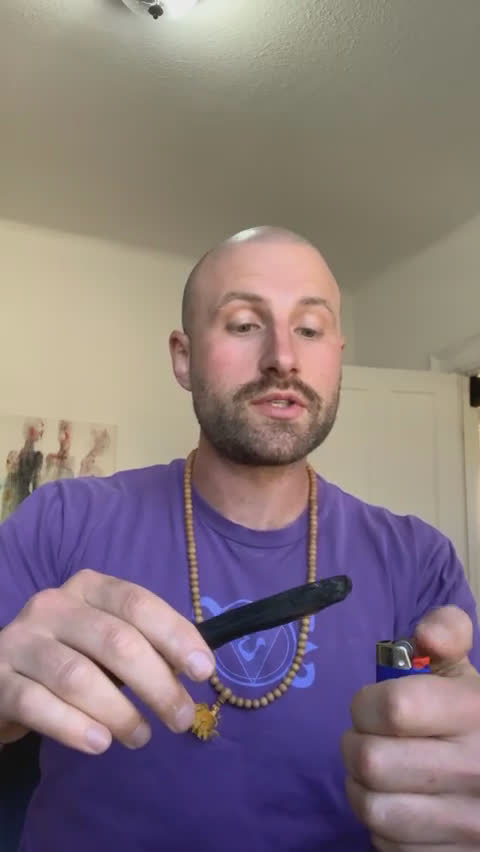
Hello, everyone. Namaste. My name is Evan. I'm cadres resident, mental health therapist and addiction counselor and your spiritual guru. Okay, I'm joking right now, but I'm gonna be making a point with this, so just follow me. So today we're gonna be talking about mindfulness. And as a therapist, we do a lot of what we call mindful intention work guided meditations that come from eastern tradition. So, because I'm a therapist, I'm qualified to lead you in these spiritual practices. So we're going to start with a little exercise, if this works, and I'm going to be burning this piece of wood that is symbolic of something that I don't actually understand, nor do I know where it comes from, but I just read it in this book I got off Amazon.
So we're gonna cleanse the room. Ooh, this smells kind of good. I don't know. It's gonna stink up my office. But no need. We need to cleanse the area of all the bad energy and bad vibes, and we're gonna do some mindfulness. Here we go. Oh, great. Third eye. Something. I don't know. All right, that's enough. I apologize for that. Okay. The reason I did this was because I wanted to talk today about mindfulness, and, like, where does that come from? Because in society nowadays, I mean, you hear all about this, like, mindfulness and this big revolution of people doing yoga and these eastern practices.
And in therapy and the mental health world, we've kind of caught this spell as well as far as taking on some of these more eastern concepts and ideas and translating it and teaching it. And you see so many of us, like, getting deep into that and recommending it. And I think there's, like, you've seen a little bit of pushback to that where, you know, it's almost viewed as, like, this cultural appropriation and basically western culture kind of stealing and bastardizing these thousands of year old traditions, right.
Which in some way, it's true. There's this book written called mickmindfulness, right. Idea of this kind of mass spread of, you know, of this, you know, these programs or practices with just the lack of depth. And I think it's easy. I think, you know, as I'm joking about this now, I think it's an easy target. Right? You know, you think of, like, an eastern actual practice versus, you know, us wearing our lululemon and going to core power yoga, you know, turning the heat up and basically grabbing weights and having an exercise class and calling that yoga, you know, all these practices associated with it.
So why. So why even bring this up? Well, you know, I thought I would just give my take on that, you know, as being a therapist and talking about, you know, are there elements of that? Even though there is this kind of superficial version of this that we're doing? Is there actually benefit to doing this and. Or are we just kind of appropriating this and having a mass hysteria that these things are, like, really beneficial, you know, or these. Is this a giant placebo effect, so to speak? So let's talk about that.
Right? So, as you can see, even though I have this shirt, I just kind of like the color, you know? And I think my cousin got me this from Tibet or something like that. And so I don't know if I'm supposed to wear this or just, like, supposed to be, like, beads in your hand or something. I don't know. You, like, hold them like this anyway, when. So there's a lot of different, like, therapeutic interventions, right? You think of things, like, some really popular ones that I'll maybe list out would be something called, like, mindfulness based cognitive behavioral therapy.
You have acceptance and commitment therapy. You have things like EMDR, that is popular. Dialectical behavior therapy, which is extremely popular as well. And when you talk to or read about from the founders of this, like, what are some of the principles and bases of these therapies? A lot of them will say it's mindfulness. Right. That it is eastern practices. Better put this back on for effect. That it is these eastern practices of mindfulness meditation. And even saw some transcendental meditation that became very popular.
That's been around quite a while. A lot of famous people doing that. It's all trendy. So where was I going with that? Yeah. So we have these therapeutic interventions that are really based in these things, and these interventions appear to be successful in many ways. Right. Many people get a lot of benefit from them. Now, a lot of them may not explicitly say, like, oh, this is a buddhist, blah, blah, blah, but it's taking some of those, like, very general principles of being present. Right. Not attaching to thoughts.
Yeah. Just like, a general awareness of what is around you, being in the moment, going inside your body, focusing on your breath, these very basic tenants of meditation. And really, I think it does come from a deep wisdom, you know? And also, people have been practicing these things for a long time, and a lot of them are very counterintuitive to the society and western culture, where, like, everything is outward, everything is, like, what's next? Productivity. You know, everything is focused on the outside and future focused or even past focus and not being in the present.
So when you think about mental health from, like, a western standpoint, right, a lot of things like depression, anxiety, you know, these things manifest themselves in a way that creates cycles of thoughts and behaviors which eventually just make us malcontent and unhappy, right? Because we're always thinking about the future. We're dwelling on the past. We're looking at things from a negative light. We're grasping onto these negative thoughts. We're always seeking the next thing. We're seeking escape avoidance through substances because we have higher rates of all of these things.
We're very individualistic in the west, for better or for worse, one can make an argument on some of those things, but there are clear benefits to a lot of these more ancient, wise eastern practices that can be incorporated. So even though we take those things and it's not like this perfectly practiced way that it was meant to be thousands of years ago, these things are very beneficial. And even though I kind of make fun of it, I'm not. You could tell by my humor I'm not very wooey or like cleansing and this, that and the other and a little more.
I say practical because that's not impractical. But I see the wisdom and benefit, and I've kind of softened up to it. And I do some of those practices, and I do preach doing things like mindfulness and meditation, doing a lot of exercises within those therapeutic interventions and noticing thoughts and feelings. Right. If you're having a craving, if you're having, you know, a sadness, you know, whatever emotional feeling, connecting to the body, putting awareness on it. And often when you do that, it just makes you feel better.
Right. It makes that go away. You're no longer avoiding it. You're addressing the thought or you're avoiding it in a healthy way, which is just, you know, not attaching to it and putting your focus in the present, in positive, into positive things, you know, learning to create a better level of acceptance. Right. Not always trying to change everything. Right. Viewing things as unacceptable and needing to change versus that things are natural, that things are the way they are and that there are some things that are in your control.
However, there are some things that are not in your control and being able to recognize what those are. Right. You know, sometimes you hear it in, like, the serenity prayer, if you ever heard that. Very popular in the recovery world of grab me the serenity to accept the things I cannot change, the courage to change the things I can, and the wisdom to know the difference. Right? So a lot of those are based on, you know, these older, wiser principles that could very well be applied especially to our modern selves, who tend to struggle at higher levels.
You know, our minds are more fractured. Our lives are more complicated, you know, than they were before. You know, you go to work, this, that. I mean, so in some ways, it's more complicated now. It's like, oh, I got to get my insurance and this and school and degree, and it's just, you know, my phone and everything's just fricking crazy and so fast paced. And, like, our minds haven't really caught up to that. You know, before it was just simple like survival. You got to spend hours doing something that could take a second now, you know, forced to be present, not having, you know, these things.
The power of what you have in your phone is ten times what it was on a NASA rocket, you know, 20 years ago. Probably not exactly accurate, but something like that. Right. Just the power that we have, the ability to escape, to be distracted. Right? So these are all, you know, kind of antidotes to some of the things that we struggle with now. So I think even though it's easy to make fun of, which I do, even though it sometimes becomes a little silly, it's not always a good look, you know, and particularly white folks, kind of appropriate some of these practices and bastardize them and don't really.
And I don't, you know, I'm not one to just crap on them because it's really easy, but I think people are good intentioned and they are interested and they have a certain level of respect. Maybe they're just misguided in it and they just look silly. Maybe some of them don't. You know, maybe some people do take advantage of it and maybe have more nefarious intent. Right? Like, people start cults, you know, like this, based on some of this stuff and take it too far. And so, you know, I think, you know, I don't think we should throw the baby out with the bath water.
I think we should learn from it, take with it as we will not try to, you know, fully appropriate or pretend like we're, you know, practicing things in the same way in which they were intended to, but take what, take what you want and leave the rest and that you don't have, you know? So one of the things I tell clients a lot is, you know, other people, like, who are in recovery, is that when you do these, like, meditation practices. Right. You know, it's not outside your grip. Grasp because it is difficult to sit there and, like, meditate and try to, you know, clear your mind of various thoughts and not attach them.
Like, it is a discipline, it is a practice. However, I say to folks that you don't have to climb a mountain in Tibet and sit on top of the mountain and be in the clouded mist and hum for days at a time, you know, to get the benefits of mindfulness and meditation, right. It's something as simple as just being aware, even if it's for two freaking seconds, right. For me right now to just say, take a breath, notice the breath, notice how that feels. Notice what's around me looking out my window, seeing the sun coming down, seeing the leaves blowing in the wind, seeing my.
The water coming off the bird bath and, you know, whatever, right? So even just doing that for 15 seconds, right. That got me out of my head. I wasn't thinking of anything except being in that moment and being able to do that for longer periods. There's so many different ways of doing this. And I'm even starting a mindfulness series, right? Kind of call it more of a practical mindfulness series, a guided meditations that you could do that you may find helpful. Things I do with my clients doing this stuff a lot with trauma therapy is a big part of it as well.
Doing resource and calming that draws on some of these traditions and wisdom and all that. So I want to keep repeating myself here, but I guess the one call to action would be keep an eye out for those. And we'll try to encourage others on here, too, to put up some guided meditation videos. And there's other sources of that, too, but. Yeah. Well, I hope you got something out of that. Hopefully I didn't offend too many people. Hopefully you thought it was kind of funny, but I guess I'll just leave you with this.
Namaste.
Reactions and comments are for members. Joining is free and takes a minute.