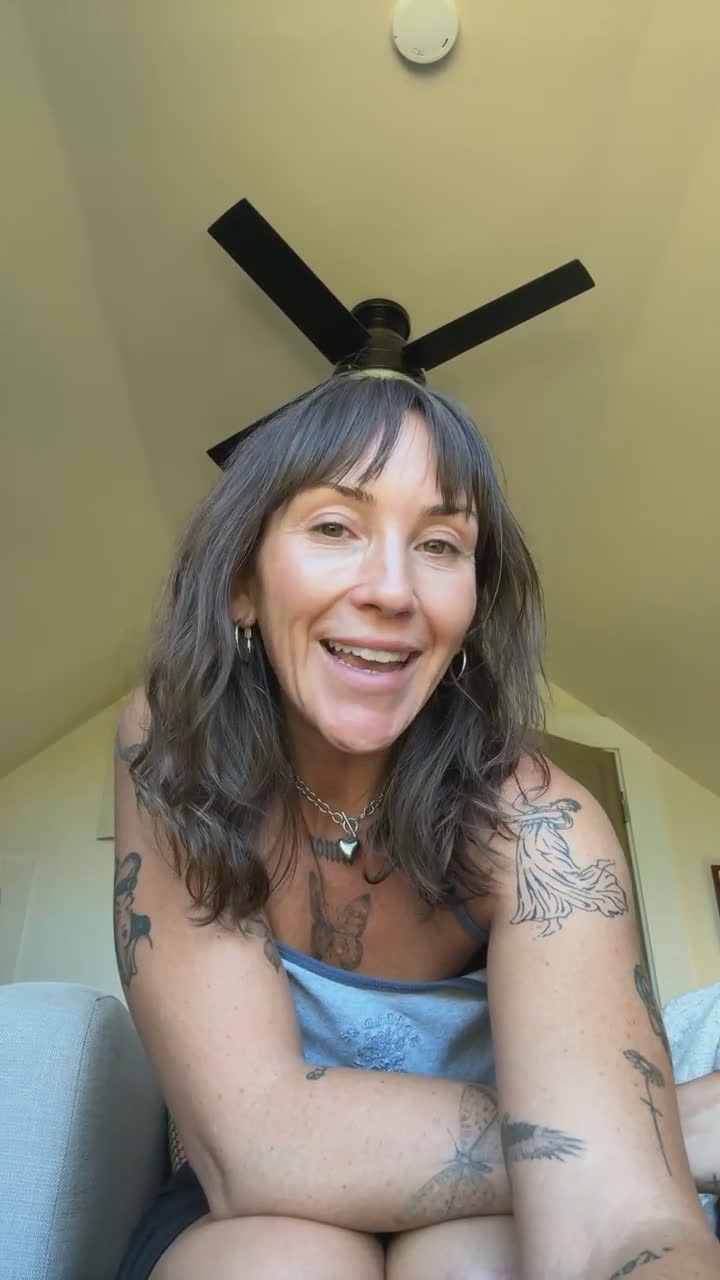
A casual live from a mother's Lopez Island home where the host reflects on life changes and walks through her search for therapy—navigating insurance, specialties and availability—and plans to try some group supports.
Lindsay: Is getting grays, which I. Is exciting. Has reached out to some individual therapists and found some groups that. I'm gonna try and attend next week. Says it's so hard to find a new therapist.
Rachel: I have felt lately like I'm in this sort of transition period in my life. So I did a simple journaling exercise that really helped me think about what I want for myself. Giving myself permission to have things in all three areas was also really nice.
When I look for a new therapist, I'm very, very specific about what I'm looking for. Different kinds of training and licensure that different kinds of therapists can have. Look for someone that has an L because that means they're licensed. Also look for complaints, especially anything brought to a board.
I like this time. I think Wednesdays do feel. like 3pm ish. Feels like a good time. Next week I'll be back home, actually be in Rachel's room again. Thank you all for being here with me and I hope you're doing well.
Happy Wednesday Cadre crew. Hello. Excuse me. There comes my dog. Hello. Come here, Come here. I'm on my. I'm on my. I'm on. At my mom's house on Lopez island right now. I came here for the week to spend some time with her and just do some reflecting around, sort of like what the next. A bit of my life is going to look like, which has been very helpful. And yeah, it's been very nice to be with her, to have some of that support. And Milo, do you want to be in the live or. No. Milo is just curled up on the floor over here.
So. Did I dye my hair? I think the lighting is just different. I'm sitting in front of a window, so it's the same, but I didn't get a haircut. I don't know if that's. I don't know, but. Hi, Lindsay. So today I kind of wanted to talk about something a little different. It's not too personal? No, it's okay. You can ask me if I got my hair dyed. I am. I am getting grays, though, which I. Is exciting. And I learned where to go. Where's my gray? I found it the other day. It was. There it is. It's sticking out.
Ah, I lost it. But my hairstylist told me, which I didn't know. If you pluck your grays, then they grow back, like, double or something. And so she's like, you never want to pluck your grays. You have to just color them. So that was news to me. But if that's. I don't know if that's information that anybody needs. So my last few lives, I've been talking a lot about high speak. Wonderful. About the sort of process I've been going through in finding a therapist, finding some more intensive support for my mental health, and kind of the process of all of that.
And the only update I really have there is that I have reached out to some individual therapists and found some groups that. That I'm gonna try, like, some free groups I'm gonna try and attend next week. But. Oh, my God. My mom and I looked through, like, we went through, like, on my insurance page and looked through, like, therapists that are covered by my insurance and kind of looked at, like, probably, like, a hundred websites to see, like, if they, in fact, were covered by my insurance. Cause sometimes, like it says they are.
Hasn't been updated in a while, which kind of reduced the number that was there. And then went to see if they, like, specialized in things that I needed support with which reduced the number that was there, then broke it down to, like, who's taking new patients? And then also, like, I prefer to have a female therapist. And then we had to remove people that, like, weren't licensed. It ended up, like, being a list of, like, three people. So just, like, it's so hard. It is so hard to find a new therapist.
It seems like there's. I mean, there are a lot of people out there, but, like, when it comes down to, like, what your. What insurance covers, what you need support with, what people are trained in, if they're accepting new patients, it can kind of feel like there's actually not a lot of options. But I did reach out to three people yesterday, so hoping to hear back from them, and then found some free support groups that I'm going to try and attend in Seattle next week. So that felt good to kind of have someone sit with me while I did that, because it's one of those things that, like, I've learned.
It's not like I can't do it on my own, but having someone sitting with me while I do it makes it a lot easier. And then I can, like, kind of talk things out with somebody, which kind of helps the process. So it was really helpful to do that. But what I wanted to share with you today was like, a. Was a journaling exercise that I did a few days ago that I found actually really helpful because I have felt lately like I'm in this sort of transition period in my life where there's gonna. There already have been, but there will also continue to be a lot of changes, both in my personal life, in my career.
And, you know, it kind of felt like I was sort of feeling like I didn't know what direction I was going. I didn't really feel like I knew what I wanted or how to get there, because I didn't really know what I wanted. And you can't really know how you're getting somewhere until you know what you want or where you're going. So I did this, like, very simple journaling exercise, and it really helped me to sort of think about what I want for myself, which felt really good to do because I feel like I haven't really given myself the chance to think about, like, what does Rachel want for herself and her future?
And so I basically just took out my journal and I broke it into. Was it three categories downstairs? So one. One of the categories was mental. Like, it was basically like, health. So, like, mental health, physical health, and relationships. And. And I kind of wrote out, you know, for the next until January 2026. Like, what are some things that I want to have happen or to do? And, and I made a list of like 5ish things. And I tried to keep each of these things like, realistic. I think, I think I have a video on smart goals.
So if that's something that you want to go check out. I kind of talk about how I set goals for myself that are like, that are things that I want, but they're also specific, they're reasonable. Like, it's things that I know are achievable and, and things that are, you know, are timely and I can measure. So I kind of made some goals for myself in that category. And then I made a category for career and finance and security and a list of things that I want to do or accomplish or at least have worked on in the next, where, what are we in August, September, October, November, December.
It's like in the next four months. And then I made one for like, dreams. So things that just are for joy or delight. So that included things like travel or hobbies I want to start or try. You know, I, I included like, training, Milo, um, and specific things. So like, I, I, I found that to be really helpful because it kind of helped me lay out in these sort of different categories things that I want for myself, but kind of allowing them to feel separate, but also giving myself permission to have things in all three areas because sometimes I can get hyper focused on one.
So like, I'm only thinking about my career or money and then my mental health or physical health or like, things that I enjoy doing kind of fall to the wayside and then I wake up and I'm like, all I've been doing is thinking about work and I didn't do that thing I really wanted to do, which was learn how to play the piano or whatever. So giving myself permission to have them all three feel like equally important things was also really nice to kind of keep that balance and also think about, like, and give myself permission to, to know that like, I'm not necessarily going to do all of these things.
This is just like a dream list of stuff. And then hopefully, you know, a few of those things will come to fruition or I can get started on them so that there's at least some momentum and foundation rather than not focusing on any of them at all. So that felt really good to, to lay out because I think I felt pretty aimless and scattered and sometimes I forget that like, writing things down or making lists can help me sort of organize my thoughts in a way that feels less cluttered and overwhelming, and then I can, like, reflect back on it.
Like, if I, you know, if in a month from now I'm like, you know what? S***, like, my, like, physical or mental health is still not feeling that great, like, I can look back on that list and be like, oh, well, I kind of. I wrote down that I wanted to find a support group and I didn't do that, or I wrote down I wanted to find a therapist and I didn't do that, or whatever it might be like, okay, I can come back to this list and look at it and say, you know, is there something on here that I can try and incorporate that might support me in this one area of my life that I'm feeling is absent or missing?
So I definitely recommend that I. I find journaling to be really helpful. I haven't journaled in a really long time. I used to be a super, super avid journal journaler. Journaler. And, like, I would. I would journal every single morning. I had prompts that I always used. And it's just not something that I've been practicing in the last year or so. And it's something that I would like to try and get back into because I find that structured journals super, super helps me both just in terms of, like, feeling grounded, but also, like, checking in with myself, but also having stuff to, like, hold me accountable.
Like, if I make. If I journal at the beginning of the day around, whether it's, like, affirmations or things I'm grateful for, like, that becomes, like, a running list of things I love about myself or my life or things that I'm grateful for. And that really does have a positive impact. So it's just a matter of, like, committing to doing it. And it really doesn't take that. That long. It's like, takes like five or 10 minutes. So giving myself permission to do that again and trying to also have grace for myself if I don't do it.
Cause making new habits is hard. Yes, Milo. Milo knows. So that's kind of. That's my little suggestion du jour, I think. Here's my mom coming home. My mom and I just went and played mahjong at the. I think it's like the golf club or something. The golf center or the community center with a bunch of ladies. It was really fun. I won twice. Yes. Okay, I'm just gonna read through some of these comments. Let's see. Okay. I've heard that a ton. Oh, you must be talking about the grays Yeah, I guess so.
I don't know. My hairstylist said it. I believe her. So good to know I'm not the only one who thoroughly vets therapist doctors. Yeah. So this is another thing. I'll say I, I think because. Well, not think I know that because I have training in mental health counseling. When I look for a new therapist, I'm very, very specific about what I'm looking for because I understand all of the different kinds of training and licensure that different kinds of therapists can have. So for example, like if you see someone's name, they'll have usually have letters next to it.
Typically you'll see lmhc, LMSW or CSW or Ms. Did I just say MSW or mf, mft. Those are like the three different kinds of licenses. So like one of those is for licensed mental health counselor, licensed social worker, or a licensed marriage and family therapist. And they're all trained differently. Like they're all going to be good providers, but they're trained in different things. So social workers are typically trained more in case management, whereas mental health counselors are trained more in like sitting with clients and talking and talk therapy.
And marriage and family therapists are typically more trained in marriage couples, relational and then family therapy. They all do take some similar courses in grad school. So there's, there's definitely overlap. But it's definitely important to look for someone that has an L because that means they're licensed. If they don't have an L, they're not licensed. It doesn't mean that they didn't have the same training, but it does mean that they didn't have pass the certification to be a licensed therapist.
Again, it doesn't mean that they're not going to be good at what they do. But a license does mean that they have been licensed, which I find to be a, a good thing. Additionally, like, licensed therapists are required to take annual Continuing Education CEUs, which is like they're, they have to stay up to date on new research and that kind of thing. So I typically prefer to find someone who's licensed. And then there's also a difference between a psychiatrist, psychologist and a counselor or a therapist.
So like a psychiatrist is usually someone who's prescribing medication, whereas a counselor is someone who is providing talk therapy. And then a psychologist is kind of someone who does like diagnostics and therapy, but again is kind of not necessarily be, at least for me, what I'm looking for. So it does help to know those things because it can help narrow down lists when they're super long. But also. So I know that it does also make me somewhat picky because I'm looking for something really specific.
So it's a pro and a con, but yeah. And then also different therapists have different approaches for different styles of therapy that they do. So that's also something to keep in mind. Happy to do a video about that. If anyone's interested in learning about the different styles of therapy and how to look on someone's profile for what might be a good fit for you based on those things. Because there are a lot of different styles and approaches to how people provide therapy. So same. I don't have actual training, but I've seen enough therapists to know what to look for.
I also look for complaints, especially anything brought to a board. Oh, interesting. I've never done that before. How do you. I don't know how to do that. Like, I didn't know there was like a place where people could review therapist. Are you talking about like Google Reviews? Or like, is there a specific website where people review therapists? Because I did not know about that. Typing. More like major. Oh, okay. Like major complaints. Yeah, that makes sense. Okay. Okay, my loves. Well, that's what I have for you today.
I like this time. I think Wednesdays do feel. I was like sort of playing around with my days and times, but I feel like 3pm ish. Feels like a good. A good time. I think I'm gonna try and stick to. I might. I think 3:00pm I'm gonna do 3:00pm next week, but I think 3:00 clock feels 3:00pm Wednesday is like a beautiful midday. So I'm gonna think. I think I'm gonna make that the normal one if that's okay with everyone. And yeah, next week I'll be back home, actually be in Rachel's room again. So thank you all for being here with me and I hope you're doing well.
And as always, please feel free to comment if there's anything you want me to do a video about. And I will see you next week. Ta da.
Reactions and comments are for members. Joining is free and takes a minute.