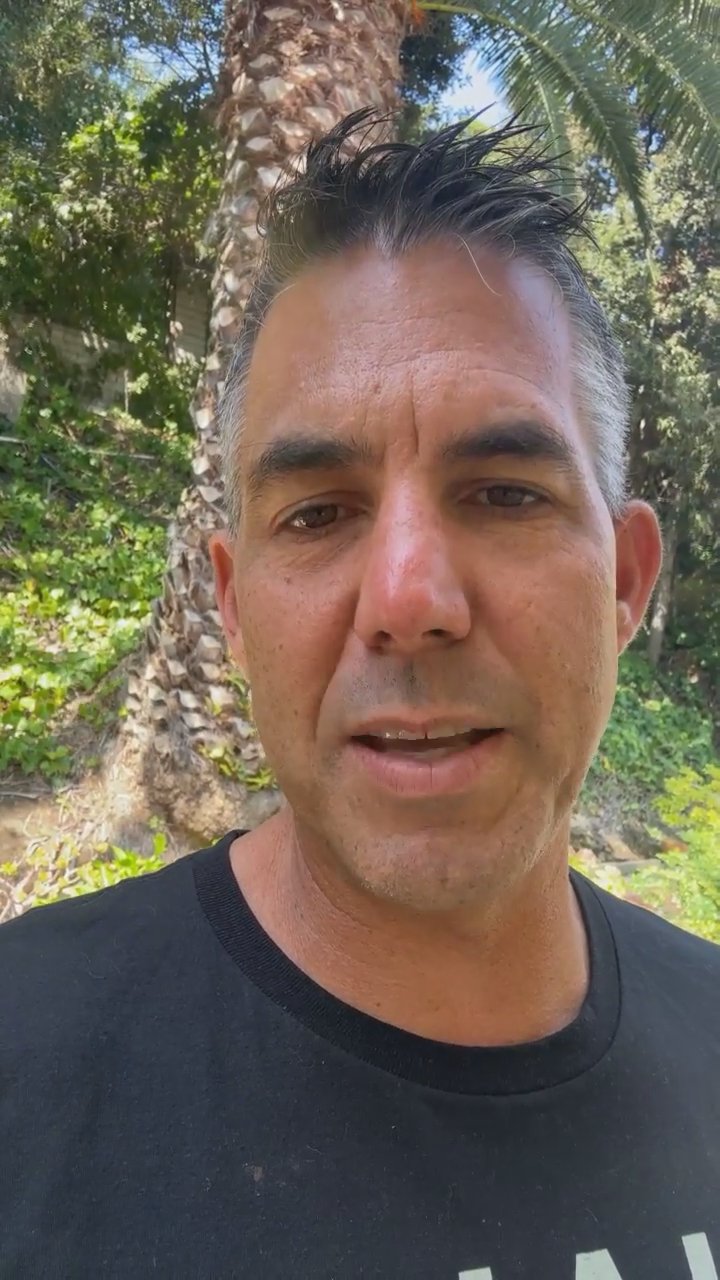
We have to be safe for our kids and keep our kids safe. Safety first. Always. Maybe easier said than done.
The host greets the audience, mentions recovery month, and explains this stream will focus on safety first, last, and always. He clarifies this talk will be somewhat separate from his other recovery-focused livestreams.
The speaker questions gendered expectations of fathers as providers or protectors and asks how men actually think about their children’s and their own emotional safety. He highlights how past trauma can leave fathers feeling unsafe despite physical presence.
Using his own experience, the speaker explains how voice, gestures, and especially body posture (sitting or kneeling at eye level) can make a child feel safer. He notes these behaviors also help fathers become more grounded and less reactive.
The host urges intentional, proactive parenting rather than reactive behavior and gives examples (like driving) of how actions affect a child’s sense of safety. He connects consistent parental responses to the development of secure or insecure attachment.
He admits to past times of being unsafe and stresses the importance of repairing harm, communicating to children that they aren't to blame, and taking responsibility. The speaker encourages seeking professional help if needed and closes with reassurance about growth and unexpected benefits.
All right. Well, hello, hello, cadre community. It is Saturday and I have had a cold. Man, that was hung on. Went away, came back. Maybe it never even went away. I don't know. But this is recovery month and the theme of the month is safety. And I love this theme of safety. So if you're interested, every Monday of September, I'm doing a different live stream focused on recovery month and recovery and my experiences over 31 years of recovery. But I'm going to kind of keep that separate probably mostly from today's live stream, which is about safety first, last and always.
first, foremost, and always, always when it comes to being a dad. And the traditional role of the father is to be the protector, right? And that's not really what I'm talking about because like whether you're the provider or the protector, the man rules kind of gender conditioning, right? Male gender conditioning says you got to be a provider, you got to be a protector. But it doesn't really get into the the nuances of what that really means. It's like, how are we like really how are we really thinking about our children's safety?
How are we thinking about our safety when it comes to being fathers? And, you know, our safety, my safety matters. I've got a 16 year old, right? So I've got 16 years of experience. My safety matters, but what is amazing to me is how easily my safety takes a backseat if it means prioritizing and ensuring my daughter's safety, right? So that's part of the conversation. But the other thing is like, If we as fathers are really dialed in, right? So this is the second week of September. It's the second week of the month, which means it's conscious fatherhood.
So every second Saturday, that's what I focus on, conscious fatherhood. So when we think about dads and we think about safety, right? There's a lot of dads who carry a lot of past trauma, right? So they don't necessarily have their own greatest sense of emotional safety. And what's amazing is that when you're carrying around a lot of that trauma, you could be a six foot, 185 pound dude and yet feel unsafe around a two year old. How is that, Dan? Well, because you don't think of yourself when that trauma gets brought up, you don't think of yourself as six foot tall.
You don't think of yourself as 185 pounds in your body, right? And even in this kind of this nervous system reaction, you're not a 40 year old man, even. And that's something that we have to learn as fathers, how to really pay attention to. So like, that's an element of safety. But then, It's our kids safety. And there were lots of lessons that I learned along the ways about my daughter's safety. One, I just mentioned, I'm six foot. I'm 180 plus pounds. I'm a big guy. I've got a deep voice. By virtue of just showing up, I was scary to my daughter.
And by virtue of being scary to my daughter, then she didn't necessarily have that sense of safety. So what did I learn to do? I learned to be mindful of how I talked. I learned to be mindful of my hand gestures. And most importantly, I learned to be mindful of my body. I would sit down when I was talking to my daughter. As long as I could remember to do it, I would sit down, I would kneel, I would like as she got older, I would kneel. But as long as I was like at her eye level or shorter, when I corrected her or when I was wanting her to do something, the coolest thing about that, if you're a new parent or if you've got young kids, the coolest thing about that, I don't think that's a male thing, frankly, either.
That's just a safety thing. But the coolest thing about that is I automatically got a little bit more grounded, a little bit decompressed as a result of just sitting down, kneeling down and just kind of chilling a little bit. So like that's a huge piece. It's like what I learned very, very early on is I had to be intentional. about my daughter's safety, like that I had to be thinking about not reactive, sort of, but proactive. Like in the things that I did with her, I'm thinking like, oh, how safe is my daughter feeling in this situation?
You know, what do I need to do? She's in the car. I'm getting irritated with somebody and they're driving and I start to accelerate. Am I driving recklessly or unsafe, and how is that affecting her? Now, one time, one time, it's really kind of funny, she was like, go faster. Go faster, daddy, go faster. And then she told on me at the dinner table, which was hilarious. I was like, what are you saying? But it was, you know, she was three, And so she knew, oh, daddy, probably in her mind, she's like, oh, daddy likes to drive fast, so I want to drive fast.
And then she also knew, oh, I'm sitting at the table and it's mommy and daddy. And mommy is not the biggest fan of driving fast. And so I'm going to call daddy out. And how I respond to that, if I laugh, is one thing. If I have like a shame response because my daughter's calling me out for doing something wrong, All of that, all of that builds what we call either secure or insecure attachment. And at the heart of secure attachment is an ongoing sense of safety, an ongoing sense that someone is safe.
And primarily it's the parents who set the tone. And my wife and I had many, many conversations because I did have a lot of work to do and I did get angry and I was not safe at times. I am not going to present this as though just because I was consciously thinking about safety, that there were not times where I had like a trauma response and I was not available for rational decisions, so to speak. And I did not have my daughter's safety in mind and I was not the father that I wanted to be. But the other thing that I did, as early as like even like pre-verbal, when my daughter was like still not able to talk, I was cleaning things up with her.
I was making amends for my behavior and making it clear As soon as she could understand, maybe even before she could understand, making it clear that it had nothing to do with her, that it was not her responsibility, it was nothing she caused, it was nothing her behavior had caused. And again, all of that is building, that's repair, right? There's no parent who doesn't make mistakes. There's no parent who doesn't cause disconnection with their children. There's no parent who doesn't experience that, but how we respond and how we repair and how we rebuild that connection is everything.
That is the fundamental idea of safety, right? Because it's all, we can do all the Facebook stuff about how much we love our kids and we can spout out all this stuff, but the truth is, It's not when we love our kids that matters the most. It's when we are struggling to show up as parents and we are struggling as fathers and as parents that that's when it matters the most. And what tools do we have to stay safe, to take care of our own emotional safety, and to protect our kids' emotional safety? That's what it has to be.
It has to be on our minds and when we make mistakes and we will make mistakes and when we screw up and we will screw up and when we even make some serious mistakes and we might make some serious mistakes, we always have the ability and the opportunity to clean it up, to use it as a lesson to change, to use it as a lesson to maybe even get help because I know that's what it led for me at least once where it was like, no, I said I would not interact with my child this way and I clearly have. And so I need some additional help, you know, and I'm not going to I'm not willing to pretend.
And my wife was not willing to pretend, you know, that it was it was okay. We'll just, you know, we'll just clean it up by making amends. No. And that is also about safety, right? If I am ever unsafe for my child, then I have to look at that honestly and see what I need to do to ensure that I am safe. And if it means additional help, professional help, do it. Just do it because our kids are worth it and our relationship with our kids are worth it. And the beautiful thing about it is we grow and get unexpected benefits as well.
So those are my thoughts on a Saturday about safety and fathers. Have a great weekend.
Reactions and comments are for members. Joining is free and takes a minute.