Than to carpet the whole world. Safety is much less the responsibility of others and much more our responsibility. Our society seems to be losing sight of that.
Dan Griffin greets the audience, checks in from the West Coast with his family, and reminds viewers this is week four of the series. This brief opening sets the casual, conversational tone and orients listeners to the topic of conscious living.
Dan names the episode "It's a lot easier to wear slippers than to carpet the whole world" and asks what that means for safety. He begins framing safety as a central theme and raises questions about how people think about and seek safety.
He distinguishes between real external threats and situations where personal history or internal reactions shape feelings of unsafety, and cautions against expecting others to guarantee one's safety. Dan emphasizes the risk of relying entirely on others to protect you while acknowledging legitimate reasons for safety concerns.
Using his own experience as an example, Dan talks about learning to be gentler and more thoughtful and stresses a balance between personal responsibility and calling out harmful environments. He outlines a trauma-informed perspective that focuses on developing an internal sense of safety—'peace in the storm'—that isn't wholly dependent on external conditions.
Dan reiterates the slippers metaphor—offering slippers rather than carpeting the world—and encourages listeners to take practical steps toward self-safety. He closes with brief well-wishes and a friendly goodbye.
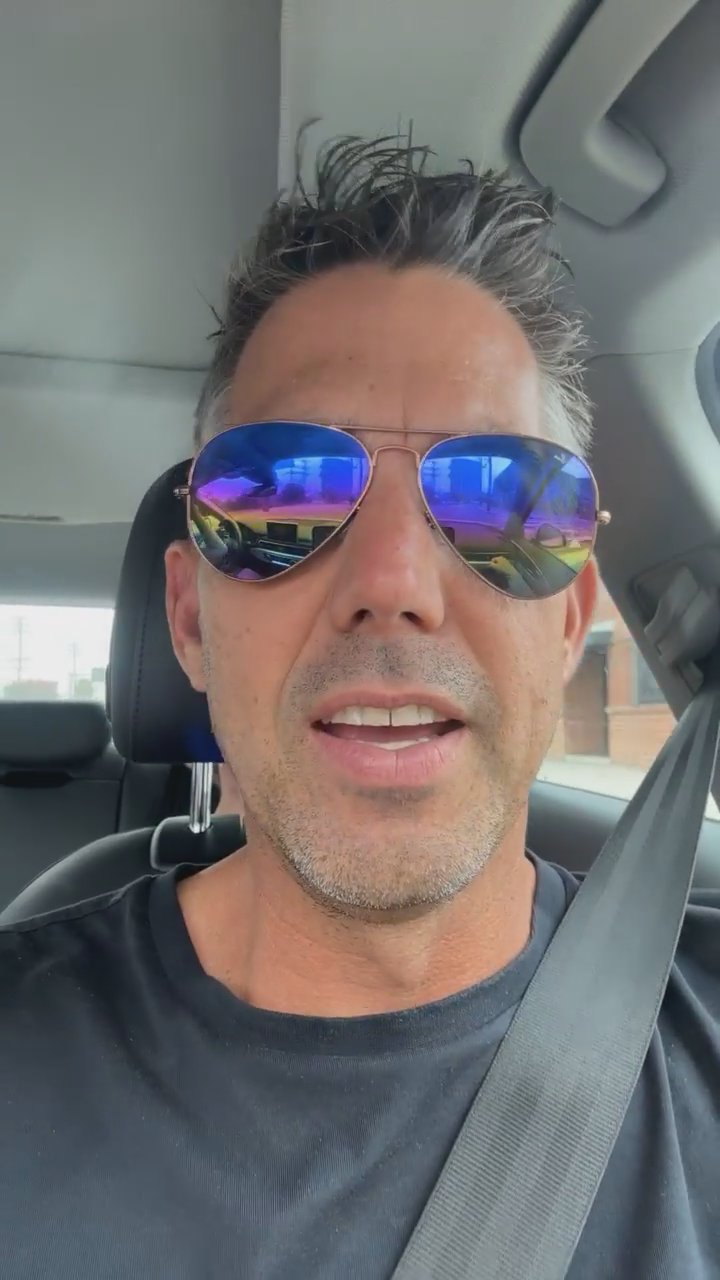
Alright, hello Quadrasphere. This is Dan Griffin. Checking in on 130 on the West Coast. I'm in the car because we didn't quite time our. Our travels, but I got the fam with me. Say hi fam. See there you go. It's true. I'm not making it up. So this is week four. So this is more conscious living. Here, let me take my sunglasses off. Hi, Andrea. So yeah, so this is week four. So then it's more focused on conscious living. And of course, the theme has been safety. So the title of today's talk is a lot easier to wear slippers than to carpet the whole world.
So what does that mean when it comes to safety? So I've been talking about it like with men, with fathers, with couples. The challenges that we have, especially when there's trauma and histories of trauma and that sort of thing. Well, our society now has really been focused on trauma. and lots and lots of conversations around safety. And I've had friends going to college and working at colleges and working at organizations or corporations and that sort of stuff. And the younger generations are like, I don't feel safe.
And what about my safety and safety? And so I think in many ways, this concept of safety is getting a little bit confused, is getting a little bit taken out of hand in the sense that, of course, a person's safety is very, very important, but there's also this abdication of personal responsibility for one's safety. Is it possible that you're in a class, you're in a situation and you don't feel safe and that is because of what's happening externally? Yes, it's very, very possible and that could be what's going on.
But it's also very possible that you and me and another person are going to this class, are going in this situation, you don't feel safe, the other two people do feel safe. Some of it could be because you're a woman, the other two are men and they don't necessarily have the same sense of safety or maybe it's another issue as far as who the person is and that sort of thing. But it could be that it's your own stuff, it's your own personal history coming up and you get to take responsibility, right?
So you get to choose. around that. And that's what this theme means, as around it's a lot easier to wear slippers than to carpet the whole world. People who want the whole world carpeted are the ones who think that everybody's job is to make them safe. Everybody else's responsibility is to protect them, take care of them, and in some ways keep them from ever having to suffer or experience pain, or that if they do suffer or experience pain, one, it's gotta be somebody responsibility or somebody else's fault, and two, that maybe that there's a positive to it, that there's something happening, that it's happening for us and not just necessarily to us.
So anyways, that's kind of what I've been thinking. I love the theme of safety for the month and it's been great. But it is challenging. I really do think that those of us adults, We need to help our kids, we need to help the younger generations like really understand what it means to feel safe and take responsibility for your own safety. And to not abdicate that because quite frankly, you're gonna be suffering a lot if you're depending on other people to keep you safe. If your safety is contingent upon other people's behavior or what they do or how they live or what they, you know, how they change or don't change.
And again, just to be very clear, because I know this could be very easily misunderstood, I am not saying that there's not reasons for people to be concerned about their safety or to expect people to do things different, to do things more thoughtfully around how to be safe. I've had to learn how to do that. I've had to learn as a loud, aggressive potentially aggressive, sometimes aggressive man, like how to be safer, how to be a little more quiet, how to be a little more gentle, how to be a little more compassionate.
So that's me, right? Thinking and learning about how to help other people in that perspective and around safety. But then I've also had to learn how to be and feel safe because even as a man, with the history that I had, I walked around many, many times not feeling safe and not knowing how to talk about it and how to take care of myself. And that should also not be. And so it's a balance, right? It's a balance of taking responsibility for your own safety while also understanding that there is sometimes a need to speak up, a need to say something and to realize that your safety is not just about your behavior, but it's also about what's happening in the environment, whether it's the family environment, the social environment, the cultural environment, political environment, anything like that.
And I think the reactivity that's happening in this country these days It's so powerful, but it's also it's like so it's reactive, right? It's not responsive. There's no thoughtfulness, there's no pause, there's no mindfulness. And as a result, you know, people's safety is compromised. And so I love the topic of safety. I love thinking about this topic. I talk about it a lot because of all the trauma-informed care conversations that I have and the work that I do around that and around men. And I just, I think it's a very, very rich topic.
But I think I will always, and I think this is true trauma-informed philosophy, a truly trauma-informed philosophy was never about abdicating the idea of safety to the external environment. It was always about doing the work so that you can feel safe in the world no matter what's going on. Because you can have that internal sense of safety irrespective, right? It's peace in the storm. And I don't know, I certainly find that helpful. So get your slippers. And you know, if you got somebody who's asking you to carpet the whole world, maybe just get them some slippers too.
But there's not enough carpet to do that. So that's all I got. Great to see everybody. And there you go. Peace. Have a great weekend.
Reactions and comments are for members. Joining is free and takes a minute.