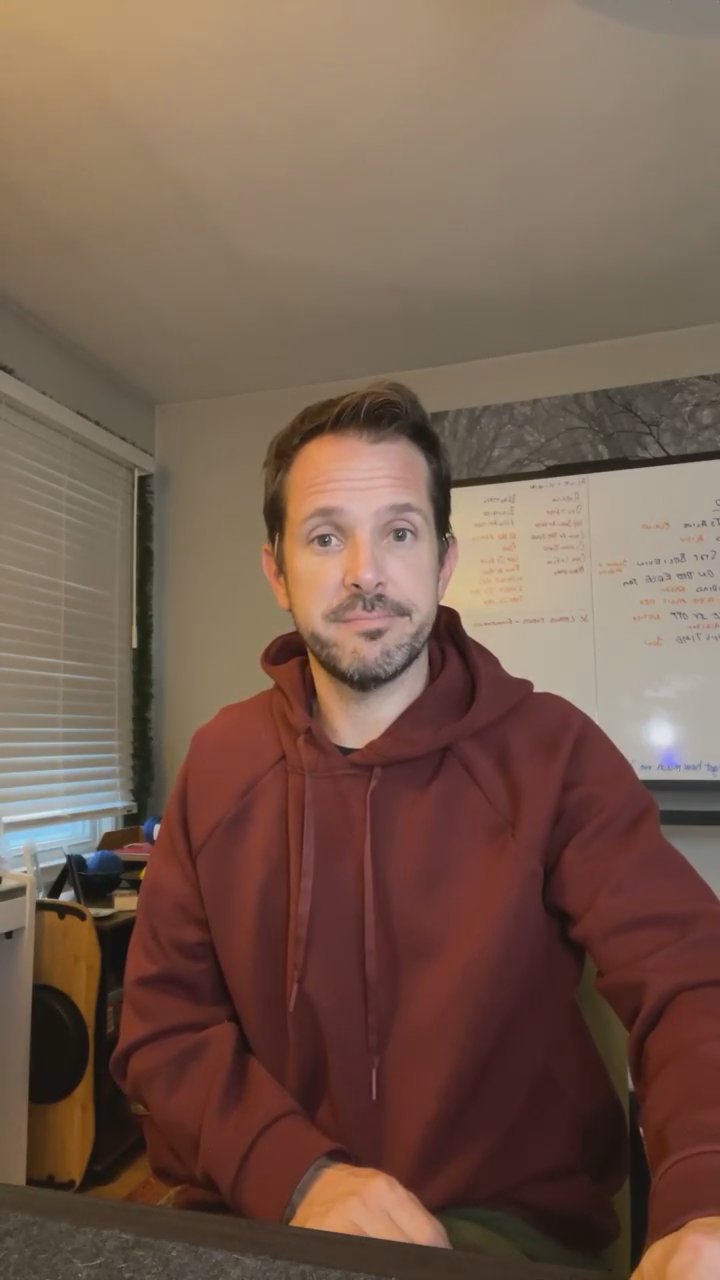
JC explores how words function as vessels in communication, asking whether senders or receivers hold responsibility and inviting listeners to examine how they define and interpret the words they use.
Smile? An everlasting smile? A smile can bring you near to me? Don't ever let me find you back? This world has lost its glory. Let's start a brand new.
JC: It's great to spend a few minutes with you right here in the Cadre sphere to kick off this Wednesday, October 22nd. Words by the Bee Gees, that lyric, speak in everlasting words is what we're gonna chat about today for a little bit.
Communication transfers information. Words hold stuff from the deliverer to the delivered. Who is responsible for communication being successful? Is it the person sending the words or the person receiving the words?
Maffy: It's really important that everybody sees that words are mere vessels. The word happy doesn't mean anything until we decide what it means. Once we pour meaning into it, then it has meaning. Many of our world struggles with that type of experience.
Today I invite you to think about you being person A and person B. The way that you interpret words for yourself. Take time to define the words you use. Put them to good use.
Smile? An everlasting smile? A smile can bring you near to me? Don't ever let me find you back? Cause that would bring a tear. Larry T. How are you doing this morning, my friend? This world has lost its glory. Let's start a brand new. Matthew, nice to see you, my friend. Carrie, good morning. Good morning, Chris Fortman. It is Wednesday. A little slow track to get us in. Here's the line. The Bee Gees. Words. I love that lyric. Talk in everlasting words, say the Brothers Gibbs. But here's the deal.
Words don't have the longest of shelf lives because it's what we place in the words that give it meaning. Em, nice to see you. Christy, nice to see you. Ooh, happy face. Sad eye face. Happy face. All the emojis this morning, Christy. I see you. Right, right. All the feelings. C. everybody. It's great to spend a few minutes with you right here in the Cadre sphere to kick off this Wednesday, October 22nd. My name's JC if we've never shared time and space together before, thank you for the opportunity to spend some time with you right now.
As a reminder, I'm really glad that I'm here. I'm really glad that you're here. I know what I know, and I care about you. Every time you bop into the Cadre sphere, that's what you're gonna find. You're gonna find people who are glad to be here, people who risk to know the things that they know and to share them and to attach that knowing to caring about you. So whether you're having a great day or less than a great day, you're in the right place. That song, Words by the Bee Gees, that lyric, speak in everlasting words is what we're gonna chat about today for a little bit.
So I'll ask a question, and normally when I ask questions, there's never a clear answer. So if you're like, ah, you're in the right place, you're feeling the right thing, you're thinking the right. The right pathway. So let's think about communication. Let's think about the way that people use words, verbal communication, in order to transfer information. Communication transfers information. Words hold stuff from the deliverer to the delivered. So who is responsible for communication being successful?
Is it the person who is sending the words or the person who is receiving the words? Is it more important to be thinking about, gosh, how do these words leave my mouth? Or is it more important to be going, huh? Am I hearing or am I really listening. And of course, the answer to that question is, well, yes and yes. Right. But to the point, today I want to go ahead and spend a little bit of time talking about this idea of words being vessels, because we can go ahead and have our internal self talk.
Maffy, to your point of both parties, you know, sometimes if we're talking to ourselves or if we're talking to those people who are very much within our inner circle. So if we say a specific phrase and we're saying it to someone who we communicate with all of the time, and it's a language that's used consistently, then it may alter a little bit. It may lead more towards one side or the other. But with communication between people who may not have that shared understanding, it's really, really, really important that everybody sees that words are mere vessels.
Here's what I mean. I have this bottle here because there is water in it. We may call this a water bottle. We get in the routine of calling it a water bottle, right? Maybe you have a Nalgene water bottle or a Coleman water bottle or a hydro flask water bottle. And I'll always ask them, like, someone goes, hey, do you. You know where there's a fountain? I need to fill up my water bottle. And because I'm this type of person, I go, well, like, is it empty? And they go, yeah, it's empty. That's why I need to fill it up.
And I go, so then why do you call it a water bottle if there's nothing in it? And they go, well, because this is the bottle I put water in. I go, yeah, but right now there's no water in it. So is it really a water bottle? Words are the same way, meaning a word. Like, let's say the word happy. The word happy doesn't mean anything until we decide what it means. The word happy is like that bottle. Once we pour meaning into it, then it has meaning. So someone may accuse someone else to be like, gosh, why are you never happy?
And the other person goes, what do you mean? I'm always happy? And then there's a disagreement, there's a separation, there's a moving away from. And I think a lot of our world struggles with that type of experience. Someone saying, I am using a word in a certain way. The receiver going, I don't understand what you mean. Or I think that word means something different. And all of a sudden these people go, well, we don't agree, or we aren't on the same page, or we can't speak to one Another, you know, on Wednesdays, so often we talk about this big bucket of mental health.
And I think one of the worst things that happens for our mental health is we very quickly move into an assumptive state that words have built in meanings. You can go to a dictionary and look up what happy means, but that's less important than what happy means to the communicator and to the receiver of that communication. In a couple of hours, I'm going to be jumping into, you know, my full time work where I facilitate conversations and organizations. And a lot of the times I talk about shared language, shared pathways, shared practices, these things that people go when we say X, that everybody in the room goes.
We know exactly what X means because we've taken the time to go. This is what lives inside the vessel of this word. Here's my invitation for you. Today I've been talking about person A and person B, but today I invite you to think about you being person A and person B. The way that you interpret words for yourself. I see it all the time. A lot of humans don't take time to say, this is what this word means for me. Someone may call themselves lazy when they are resting, when they're healing. Someone may call themselves dumb or stupid or beginner in a derogatory way, when in reality they are an adventurer, they're a trailblazer, they're being curious, they're walking into the unknown with bravery and courage.
But the words they attach to themselves or to situations are innately derogatory because we're taking other people's words and other people's meanings and attaching them to themselves, innately slowing themselves down. So no matter where you are, no matter what's going on today, I hope you take time to go. Huh? This is only a water bottle because there's water in it. The word happy only means what we think it means if we decide that's actually what it means. So words, extraordinary words and the things that they hold, that's all up to you, my friend.
Take time to define the words you use and the way that you use them and what they mean to you and put them to good use. We'll go ahead and go with a little more upbeat Bee Gees to get us out today. Have a good one. We'll see you tomorrow. Oh my gosh. I literally got a little.
Reactions and comments are for members. Joining is free and takes a minute.