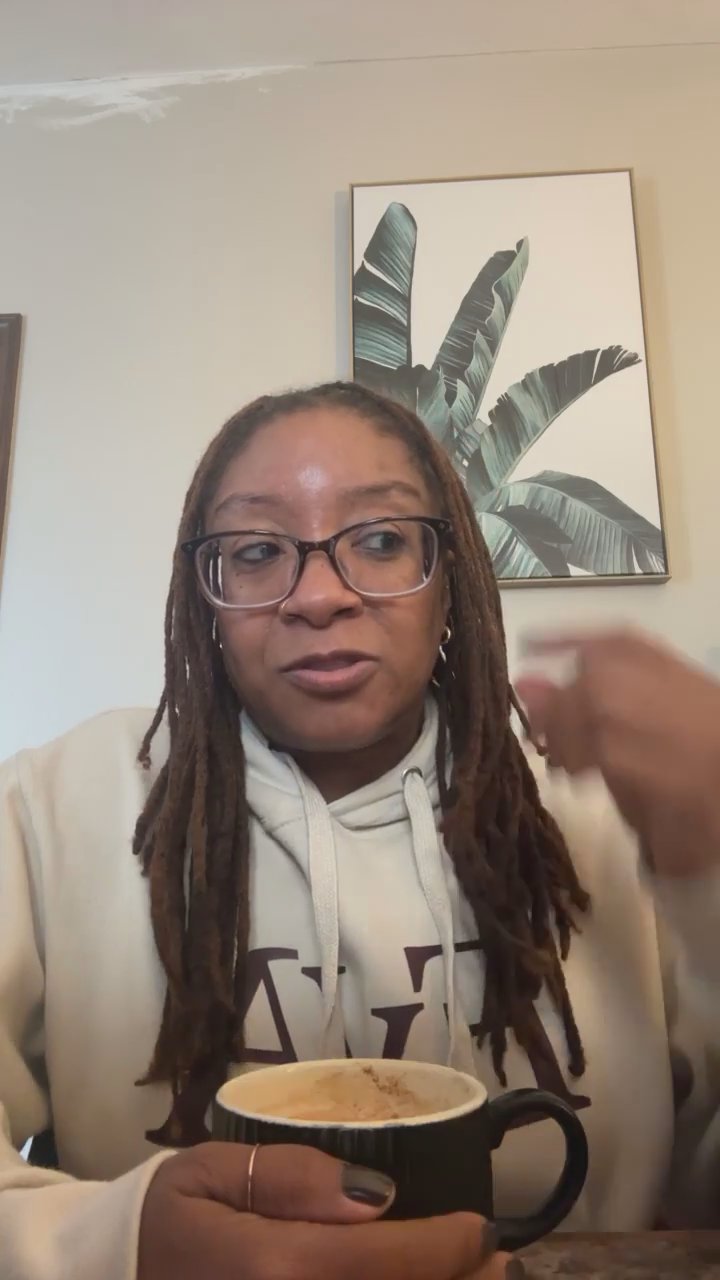
Dr. D discusses professional boundaries and ethics in therapy, explaining why a therapist is not a friend and exploring boundary crossings, social-media disclosure, and differences with life coaches.
Dr. D. says coffee is life to him. Happy Veterans Day. Tell us where you're from.
Your therapist is not your friend. We're talking about ethical issues when you're crossing boundaries or your therapist cross a boundary with you. This is a public service announcement. Something for you to be aware of that this could happen unintentionally.
As therapists, I like to see myself in two ways as a therapist. One, I see myself as a mirror. I'm just here to reflect back what you share with me. But in a professional setting, it's a one way street, okay? It should not be going both ways.
Tay Wonder: Are most therapists under the care of therapists also? Wonder: I do not have a personal therapist, but Jiu Jitsu is my therapy. He asks if your therapist or counselor is in therapy, what their thoughts are on therapists seeing therapists.
This is something that I think needs to be talked about more because there are so many new social media influencers who are also therapists. It's tricky to balance that when they're sharing personal things on their social media platform versus sharing it directly in a session. Your therapist is not your friend, your therapist is a professional.
A mental health life coach is not the same as a therapist or a counselor. There are ethical codes for coaches, I believe. If you're working with a life coach, I would encourage you to read or even inquire about the ethical codes about mutual relationships.
Not all therapists are good people. I hope this helps you or someone that you know and bring more attention to it to the public. Next week, I have no idea what I'm going to talk about. I'm creating mental space for the rest of the year.
Hello Cadre, it's me, Dr. D. And I got a fresh cup of coffee today. Oh my gosh, I can't wait to take a sip. So for those of you who don't know, coffee is life to me. I appreciate it every day, mostly twice a day. So this is my second cup and I am a big fan of Nespresso. So if anyone has any connections to Nespresso, tell them to call me because we need to connect. But I, I've got a, it's a white mocha syrup and I had a little bit of creamer and a little sprinkle of cinnamon on top. Welcome there.
Thanks for coming in. Tell me where you're joining from. So what city, what state are you in? Hi, Speak wonder. So for those who are first timers here, welcome to my coffee chat. I am in Illinois, but I'm near St. Louis, so I'm in the southern region of Illinois. And first of all, I do want to say happy Veterans Day. So I live near a military base, so the military is always around me. It's been a big part of my life. My father served, my uncle served in different branches. I have so many friends that are, that are serving and have served throughout their life.
So I am appreciative of anyone who makes that sacrifice for our country. So if that's you, happy Veterans Day. Thank you for your service. If you have family members. Hey there. From, how do you say that? Mintonka, Minnesota. I don't think I've ever seen that city name. So that's pretty cool. I learned something new today. So yeah, I am getting into a topic that I don't think people talk about, but I think it's important to talk about. So if you saw the title, we are going to be talking about how your therapist is not your friend.
Okay, I said it. Your therapist is not your friend. And I will tell you why this came up. So this past weekend I attended a, it was a three day conference, but I was only there for two days, the Illinois Counseling Association Annual conference. So all of the therapists and counselors, psychologists, even social workers I think were in the room too. Throughout the state of Illinois came together to get trainings and I was a presenter and I talked about menopause and mental health. So I will be putting out some videos about that because it was, it was a room full of women and two men and it was a hot, hot topic and even the men joined in on the conversation.
So I appreciated it. But while I was sitting in, I think it was maybe the keynote, we were talking about ethics. Actually, it was a session, there was a session that I attended about ethics and we were discussing some ethical violations that can easily be misguided or misinterpreted on our side as therapists, but also for the public where they may not be aware. So this is a public service announcement. We're talking about ethical issues when you're crossing boundaries or your therapist cross a boundary with you.
So this is something, if you are not in the helping field, something for you to be aware of that this could happen unintentionally. So I know when you're in a helping profession, you have a really, most people, I'll say, have a really big heart and you just want to help. And you sometimes feel really connected to the person that you're serving. And sometimes you go above and beyond what your role is as the helper professionally to continue helping the person that you're serving. Because it's natural to develop a bond with the person that you talk to.
And most of the times on a weekly basis, right? So every week you get to see this person. And so as a, as a consumer, as a client, you also develop a close connection to your therapist or counselor because you're the one pouring out everything. You have to try to get better understanding and try to feel better about yourself. And so you're, you're sharing your deepest, darkest secrets, right? And as therapists, I like to see myself in two ways as a therapist. One, I see myself as a mirror. So I tell new clients that I work with that I'm your mirror.
I'm just here to reflect back what you share with me so you can see yourself better. So if you don't tell me everything I need to hear, I can't reflect back your truth. Okay? But the second thing is, you know, we do service mirrors for each other too, but in a professional setting, it's a one way street, okay? It should not be going both ways. You should not be as a client, you should not be serving your therapist or counselor in a way where you're trying to support them and help them feel better about their own selves.
Because we are trained for good reason not to share too much about ourselves. Now, there are some therapists, so I'll tell people all the time. I'm never sugarcoated. And yes, I can share many things about myself. So for example, if there's something I watched the other day that I thought was funny or that was impactful to me, I might share that with a client. But I'm not telling them where I live. I'm not telling my clients what I'm struggling with personally. I'm not telling my clients my fears and things like that.
Because what that does is create a connection. And it's a connection that should not happen ethically for me as the counselor, the person that's helping and getting paid to help, I should not be connecting with my client in that way. Okay, speak Wonder, you said are most therapists under the care of therapists also? Good question. I will answer that. When I was trained in my master's program. So this was, oh gosh, almost 20 years ago. Good lord, I'm getting old. But we were told, and I'm sure this is continuing to be the conversation, that all therapists should have a therapist.
And I know some training does require the students to actually get therapy so we can experience what it's like to go and tell a stranger our problems. Right. Just to know what it is like for a client to come in and be maybe a little timid and how that works. So I will say I do not have a personal therapist, but Jiu Jitsu is my therapy. And I say that because with Jiu Jitsu, and if you don't know my love for Jiu Jitsu, I've been training for almost nine years. But Jiu Jitsu is a martial art that's grappling.
You're on the ground and it's, you can learn self, self defense, self protection. And, and it is also a space, it feels like a chess game. So you make a move, they make a move. It's back and forth all the time. But you're also in a space where you have to learn to protect your body as well. And so you're using a lot of mental game and physical at the same time. And so for me personally, when I feel stress and I go train Jiu Jitsu, I feel so much better afterwards. So I leave it all. I say I leave it on the mats, if that makes sense.
But I will say I am not opposed to going to therapy personally. I just feel like I've had over the years. I guess this probably comes from me being an only child growing up, that I have the aware a lot of self awareness and I do a lot of self reflection on my own. And I have really great friends, I have a great circle that supports me, that they are also holding me accountable. So they check in with me, they check me when I need to be checked. And so I have that support naturally where I personally don't feel like I need to see a therapist, so I hope that makes sense.
But I'm not knocking anyone who does see a therapist. There are some therapists, you know, and people don't talk about this. So we're having a real conversation today, y'. All. This is some truth here. There are some therapists that also have really extreme diagnoses. Like, I know therapists that have bipolar disorder, or I know therapists that have struggled. They may have past addictions that they're still coping with. So you should not be dealing with it currently. But having a history of substance abuse is something that they deal with.
So that is a great question, and I think that is a question that I don't know if I would ask my therapist that if that makes sense, because that might be crossing the boundary there. Like, what do you share? But that is a good question, maybe to ask in a different way, if you're curious if your therapist or counselor is in therapy or has had a therapist, what their thoughts are on therapists seeing therapists. That's the way you can get that without them being direct about their own experience. But I will also share as a therapist.
I have been the therapist for other therapists, and it's really interesting because I have to. As a therapist, I have to go through layers of what they already know to do. But we all know as. Even as experts, when you are in a place where you need support and you need help, the information and training that you already know doesn't always click when it's your own problem. So that's why therapists need therapists, too. And we also need a space to just debrief. So that is something else you need to keep in mind when I'm talking about your therapist is not your friend.
Well, we hold a lot of space all day, and so this is your. Your experience of what your therapist might be going through throughout the day. And we. We take on a lot of emotions. We are processing your emotions. We hold our own emotions in response to your emotions, which is why ChatGPT cannot be your therapist. Okay. We have to move from one client to the next client story in the same day. And sometimes we don't get a break in between. So we're just going back to back to back to back. And we have to.
We're trained to hold that space in the moment, see the next person, try to remember what was said, try to reflect on what was going on, processing and analyzing all in the same moment, and then go to the next person, do the same thing. All right. Grateful Tay what are you saying? Let's see. Can I speak to sharing personal experience with the client as a means to relate or means to speak on what has worked for me? Is this ethically problem? Let me read that again. Sharing personal experience with the client as a means to relate.
Okay, good question. So I have done this. Just being honest. There are times when that is appropriate. When. And this is where your training comes in. This is where, as a new therapist or new counselor, you probably shouldn't do it because you don't know. You're not trained well enough to recognize when this could also be triggering to someone. So. So there are times when I might share a personal experience. For example, if I have a client that's dealing with domestic violence issues and I see that they're stuck in a cycle and I see that they are nervous to break out of that cycle, and I can see why, because maybe I've experienced the same thing.
I may share something similar, but not necessarily, say, directly, hey, I've been through that too. I know exactly what that's like, the reason why you don't want to get too personal about that you can still share. Like, hey, I can understand why you're going through this. I can understand. And you can say it a different way, but speaking to it directly, like, girl, I know all about that because my ex did. Blah, blah, blah. That is crossing lines because your client doesn't need to know about your personal life in that way.
Right. But there are some. I mean, this is. I'm so glad you brought this up. This is something that I think needs to be talked about more because there are so many new social media influencers who are also therapists and they get into this on their own platforms. And so it's tricky to balance that when they're sharing personal things on their social media platform versus sharing it directly in a session. But what that does is if, If I were to just come out and say, this is my story and let me tell you about me, what that does in the session is takes away the attention from the client.
So I'm no longer worried about what my client experience is. I'm worried about myself and I'm worried about, do you understand me? And that's not what therapy is for. My role as a therapist is to hold space for you, for my client. My role as a therapist is to try to get you to go deeper for yourself, not talk about me in the process. But if there are times where, if I feel like sharing some insight that I've gained from personal experience, would be helpful. I have to go through a process in my mind of if I share this, would this create damage?
And so our biggest ethical code that we have to adhere to is doing no harm. So I have to consider if I share this, would I eventually, at some point, maybe not today, harm the client that I'm sharing this information with? I hope that helps you understand that. And that's, that's tricky when a therapist doesn't have support. So if a therapist does not have accountability, like they're part of some type of group or if they work at an agency, they would have a supervisor that can kind of check and balance that.
But for therapists that are in private practice, like myself, I'm also part of a, like a network of other therapists where we meet once a month and so we can do consultation with each other. So that, that would be a good question to ask your therapist too, if you're in private practice, like do you consult with other therapists? And that should be in their paperwork if they're doing that. Because that means they may be talking about you professionally, not to, you know, share your business, but maybe they need to consult with another therapist for your benefit.
And so that should be something part of, that's part of your release forms. So I would ask that. All right. I'm probably telling on Yalls therapists if they're not doing it. So I'm sorry, I just like to be honest in this space because I, I'm, I'm learning because I often get clients who come to me after having a negative experience with therapy where they didn't know what was right or wrong. And so they didn't enjoy therapy because their therapist was not being ethical. And ethics is very important.
It's not the law, but it does guide us in how we should start to think about how we serve, if that makes sense. So, yeah, your therapist is not your friend. Your therapist is a professional. Your therapist is someone that, yes, you can feel connected to, which is totally explainable. I completely understand why you might feel a bond with your therapist, but that bond does not go the other way. And that's why your therapist is not your friend. Friends are here to have a mutual connection. Mutual benefit therapy is a one way street.
You share, we listen, we get paid to listen to you, and then you keep coming back. But it does not get share the other way. Okay. However, you believe a life coach can be your friend, so speak wonder. I'm glad you mentioned life coaching. Now that is a profession that is not regulated by the Law. But there are ethical codes for coaches, I believe, and so I don't know exactly what they are, and it might depend on what program they're trained in. But there are some life coaches that. That don't have any formal training.
And that's. That's one reason why mental health coaches are not the same as a licensed therapist. We have different ethical codes, we have different trainings, and we work in different ways. A mental health life coach is not the same as a therapist or a counselor. And so if you're in that space and you're working with a life coach, or maybe you are life coaching, I would encourage you to read or even inquire about the ethical codes about mutual relationships. I don't know if that exists, so I will do some research on that, because I'm curious now.
But, yeah, I hope this is helpful. I hope this is something that gets you thinking. If you are in therapy or you're looking for a therapist, these are some questions that you can maybe ask to check in and see if maybe the therapist has ever crossed that boundary with someone or if they regularly do, because that is where there are therapy. And there's a podcast, y'. All. Let me see if I can remember what it's called. I remember the. I'm a visual person, so I can remember what it looks like. The.
The podcast. It's like a white background and a black chair. It's like the leg is broken. And so that podcast shares stories of how therapists have been unethical, and they have real client stories being shared of how their therapist crossed the line. And I think it was. I think it's beneficial to hear those stories because it does happen, and it happens more regularly than people might imagine. And I'm in a space where I want you guys to be aware so you can protect yourselves and maybe protect someone else that's going to therapy.
Speak Wonder. You said you once saw a therapist who talked about his other clients during session. Oh, yes. You should have dropped him like a hot potato. That is not okay. That would be a red flag if you see that your therapist is talking about other clients. Again, we have ethical codes to do no harm, because I'm curious how that might have felt for you, if that hurts you at all, to know that that could possibly happen to you. Now, I do know that there are some clients that they will sign a release.
That's the key if maybe their story is shared, but it should always be shared without, you know, personal information being attached to that. So, for example, if we're doing a training. We might share client stories, but we have releases to do. So we'll change the name or some type of demographic so they can't be identified. And that's the key to that. All right, y', all, I can't think of anything else to share about this. This is a longer topic than I expected. But I am here. If you guys have any more questions, drop them in there.
Or maybe in the Cadre sphere, if you want to just make a statement about it, I would love to hear your feedback. I hope this helps you or someone that you know and bring more attention to it to the public because there's so many people who are getting harmed because not all therapists are good therapists. Just being honest, I've heard some really wacky stories and not all therapists are good people. Okay? And so one thing I am grateful for, and I will say this forever, as long as it stays true, but I'm really grateful for Luke and his team to vet the people that they put on this platform because people can say a lot of crazy things and it can be untrue statements and it can be things that are damaging.
But if you don't know that it's wrong, you won't know that it's wrong. So that's why I want to bring light to this. So, Luke, if you are listening to this later, thank you for all that you do and all your team. You guys are amazing at what you do and creating this space for us. So next week, I have no idea what I'm going to talk about, y'. All. I'm just kind of going with the flow. I'm in this state of kind of purging, and so I'm creating mental space, if that makes sense, for the rest of the year.
I'm trying not to schedule anything else major for the rest of the year. And so I just kind of want to flow a little bit. I want to get back to that state where I just share from my heart. I don't want to have it planned, if that makes sense. But if there is something that you would like me to talk about in our coffee chat, drop it in the chat here or send me a message some way. com so thank you all for joining and Jordan, you said thank you so much for a great set of thoughts. Awesome. Glad you were here.
All right, you guys have a wonderful day. Get your coffee or whatever you like to drink that's non alcoholic. All right. Have a wonderful week. Bye.
Reactions and comments are for members. Joining is free and takes a minute.