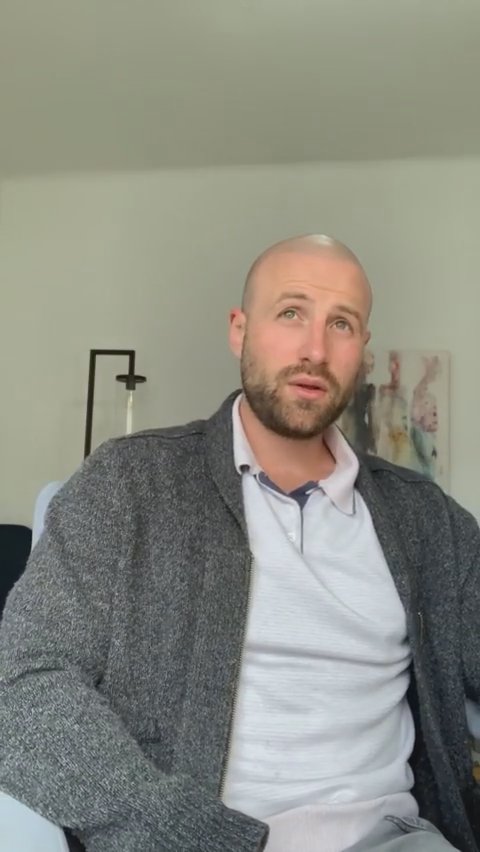
In this Live I will talk about how we make decisions. Whether these choices are based on emotion or logic, what is the best way to go? Or is there one?
Evan: How do we make our decisions? And usually, it's not something we think about. A lot of those decisions become automatic, a process in our brain. But a lot of choices we make have to be more conscious.
We make decisions based in emotion, decisions based on feeling, maybe even gut. And then we have decisions that are based more in logic. When it starts to become a big decision, it becomes important to understand how and why we make decisions.
Sometimes it's generational of, you should grow up and do what makes you happiest. Do what you love, do what you're passionate about. But at the same time, there has to be this, like, element of practicality involved.
There's a popular therapy known as dialectical behavior therapy. It is all about emotional regulation and coping skills. Can there be a balance in the way we make our decisions? Taking into account emotion, taking into account the logical, and trying to decide what is best.
But that goes for any type of situation where you're in a bad relationship with a job. How to recognize when you are making that decision purely on emotion, discounting logic. Take a step back, look at a problem in a different way, or be more mindful in the decisions that you make.
Okay. Well, anyways, it's been good checking in, folks. I'm going to hop on Wednesday, Thursday. Twice next week. Until then, I want you all to have a good day.
What up, Cadre fam? Evan here, your resident mental health and addiction therapist. And today I wanted to bring up a topic, and this comes up a lot. It's not something we talk a lot about, but it's how do we make our decisions? And usually, it's not something we think about. I mean, we think about, probably spend a lot of time thinking about the decisions that we make. Sometimes we assign reasons for those decisions. Sometimes we like to skew and say that this is a logical choice that I made, but we don't always think about what is underpinning those choices.
Now, I don't know what the number would be, but, I mean, throughout the day, it could be like a million. We literally make multiple choices, decisions a day. Now, a lot of those decisions, we kind of outsource. And what I mean by that is they become automatic, a process in our brain. We just, you know, we don't act. We react. Right. Something comes in my way, a car is coming at me as I cross the street. I jump out of the way. Didn't have to put much thought into it. Right. It's automatic. Right.
And that's what our habits are. Our habits are designed so that we can use our mental resources for higher functioning thinking in ways that we can better our life and better survive evolutionarily. Right. But a lot of choices we make have to be more conscious, and a lot of those automatic choices that we make really should be more thought out. What do I mean by that? Right. So when I'm working with clients, let's say, who have trauma, and that's just. This is more of, like, an extreme example. Like, let's say I had a client who chose to avoid certain activities that reminded him of things that he experienced as a child, though he's an adult now.
Right. So having been bullied, being bullied by men, being bullied by, you know, kind of more. More macho straight guys. What up, Nick? Being bullied by macho straight guys, he would avoid things like going to sporting events. He would avoid things like going to certain bars with his friends. He would make these decisions based out of fear. And a lot of times, he didn't really realize he was doing this. He would just tell him, well, I just don't like these things. I don't like going to my husband's softball games.
I don't like going to. Even though there's part of him that wanted to do that. Right. He wanted to be able to go support his husband at the softball game. He wanted to be able to go meet his friends at these places. But it was like his mind was telling him, you're gonna get, you know, this is not safe. Even though, realistically, statistically, it was. How you doing today, Nick? You having a good morning so far? It's kind of a gloomy day here. Right? And then we got flagship discernment. Who is that?
Good to meet you. So back to the spiel. A lot of times, the things I work with my clients on is like, why do we make the decisions that we do? And are these decisions in your best interest? Are they bringing you towards that goal or bringing you towards being the person or living the life that you want to lead? And we don't really think about it that way. Right. These just seem like seemingly insignificant decisions. So then the question is, all right, so what kind of decision is that? Right. Is that a decision based on logic?
Is that a decision based on emotion? I'm glad you're digging the topic. I wasn't sure. This is, like, a little bit of an esoteric one. Is this gonna be good? So we'll just see where this goes. So. Right. So if we're gonna oversimplify, right, we could break it down to say we have. We make these decisions based in emotion, decisions based on feeling, maybe even gut. And then we have decisions that are based more in logic. Right. I'm making this decision for a thought out reason, because this is the best decision for me.
So then the question is, well, isn't that always the way to go? Right. Isn't it always best to make the most wise? Wise. We'll get to that in a sec. To make the most logical decision. Right. Now, we could think of the emotional decisions like an animal, like a tiger who makes a decision in its environment, who reacts to the environment, who goes on instinctively. And then the logical mind's like the computer that spits out computations and based on its programming, will make a certain decision. It'll come to a certain conclusion.
And one of the best ways I exemplify this problem of, okay, well, how do we want to make these big decisions, especially in our life? Sometimes it doesn't matter. It's like, do I want to put cream in my coffee or not? Okay, is that the biggest decision in the world? No. Now, maybe if you're lactose intolerant, that could get a little ugly. So maybe that is more important decision. But usually, is that going to matter? No. Should I go to McDonald's or Burger King? Doesn't matter, right? But, however, when it starts to become a big decision, like, do I go back to school?
What career do I choose? Which partner do I choose, right. That then it becomes important to understand how and why we make decisions, not just as human beings, but as individuals, as understanding how and why you make the decisions you do. And starting to discover, is there some. Like, is there some emotional underpinning in that? That comes from our past, that comes from our childhood. Okay, this is like a party day. Making decisions on base, deep internal emotions. Yeah. So I think we've all done that, right?
We've all made decisions based on. And I think that's the default, right. Is that we make these emotional decisions. That's, you know, that's our more base evolution, right. Our pets, our animals do that, right? And those are important. Right. For survival, you know? But there are some people. Right, there are some clients I have that, like, really skew towards logic. And, you know, sometimes they like to get a little high on themselves. Like, well, they make these logical decisions all the time, right?
But a lot of times, even those seemingly logical decisions have an emotional underpinning to them. Right. You're making this choice that you think is going to make you the most content at the end of the day. Now, the problem with those logical choices that you think that you're making is that you're often wrong. Right? So an example is like, I think I know what's in my best interest, and that could be from an emotional place. That could be from a logical place, but you could very well be wrong about that.
We don't always know what's in our best interest. Sometimes we think we're making the best choice. So instead of me just blathering about it, I'm going to give you a couple examples of how this may work. In the meantime, I feel most decision making comes from a deep sense of knowingness, that gut feeling. Yeah. Yeah. I think at the end of the day, you're right. It does that. We just. And again, like I said before, we kind of have to do that. Like, most decisions we make have to be, boom, gut on the fly because we make so many in a given day.
So here's. Here's an example of this conundrum, right? So it's like, I always use this example of picking a career. So how do you choose which career? And that's a big decision that pretty much everyone's going to have to make. Unless you have, like, a pretty, you know, juicy trust fund waiting for you and you could just kind of do whatever you want. Most people don't. So we have to make this decision at some point. What do I want to do? What do you want to do with your life? What do you want to be when you grow up?
And so we get a lot of mixed messages around that, and I find there's actually, and I'm just kind of getting really in the weeds here. But, you know, there's sometimes there's a cultural piece to it, right. Depending on, say, like, your socioeconomic upbringing, right? So I think a lot of times, you know, people get those messages, and sometimes it's generational of, you should grow up and do what makes you happiest. Do what you love, do what you're passionate about. Right? That's what I think I was told.
I don't know if my parents ever said, you know, just, you get these messages, do what you love. And a lot of times from the generational piece, like my, you know, like, you could think of, like, baby boomers, right, who were told make, you know, by their GI parents, like, you know, do what's right. Do what's practical. So they were actually kind of told to make the most logical choice. Don't do it. Like, why would you do what you're most passionate about? Like, have you ever heard about this? Like, great depression?
No. Like, what is going to be your best career job? Play it safe. Go work for a big corporation where you have good benefits and you'll have a pension at the end of the day, and, you know, everything. You'll get that white picket fence, you'll get the toys, right? And do what's going to make you the most money, essentially, right? So they're like, okay, that makes sense. We'll make that logical decision. They did that, and a lot of people found that that wasn't very fulfilling for them at all. And so then what do they go?
They say, hey, you know, hey, I lost my pension. I lost my job. I was, you know, I was about 10, 15, 20 years from retirement, and my company decided I was, my corporation said, I'm getting paid too much. And they decided, well, they could have someone do my job for cheaper. They can. Me. I lost this. You know, the pensions were gone, you know. So then they told the younger generation, do what makes you happiest. Don't worry about money. You know, that's. That'll come and go, but do what makes you happiest.
Okay, what's gonna make me happiest? And so I would be, like, on, for example, like this psych unit that I used to work on, and we had, it was with adolescents and so we'd ask them, like, what do you want to be? And so a lot of times, like, I want to be a rapper. It's like you're like a white kid from the suburbs. Like, I don't know if that's super realistic, but the, like. No, but do you think you should have a backup plan? No, I want to be a rapper. All right. Now, maybe I'm wrong, right? Maybe that kid will grow up and be a rapper, and then they'll give their acceptance speech and be like, this one guy, Evan told me that I couldn't do it, and here I am now.
And then he proved me wrong. But at the same time, there has to be this, like, element of a practical. Of practicality involved, right? So the. Now. So that would be like the emotional decision, right? The kid who's like, I want to be the next big. I want to be the next Eminem. Okay, well, great. Do that. Chase your dream. Don't let me stop you. Right? But if you're like, well, I'm not going to finish high school. I'm not going to have, like, even so much as a backup plan. That emotional decision that defies logic can get you in serious trouble, and that could have serious consequences.
So now the other end, you have the logical right, so kind of like what the boomer was told to do, which is make the safest choice possible. Okay, so what's the safest choice? So the. So the logical person, what they would do is they get out an excel spreadsheet, because physiological people, they love spreadsheets. That's something we know for a fact. So they pull out their spreadsheet and they say, all right, let's analyze what would be the best career choice for me. And they list all these different variables and say, you know what?
Well, I think that I want to pick the job that is going to be the safest, that's going to have the best career trajectory. It's going to be the, you know, and continue to be in high demand. I'm going to have good job security. Carrie loves spreadsheets. You're an XL queen. And so they. So they look to make these very logical decisions, and they're thinking about their career. They put it all in a spreadsheet, and they do some very deep analysis into the. Into the situation. They look at the projective jobs reports and where the trends going and career and salary and how much you have to spend on your education versus your projected income.
They put it all in, and it spits out accountant. Aha. Now that is a logical choice. I'm going to be an accountant because this is objectively the best, safest job right now. The problem is, if you don't include that emotional variable in there, that's how you're gonna end up. Miserable. Kind of like a lot of the boomers did, you know, because they chose a job that, you know. And again, there are people who like being an accountant. Don't get me wrong. I like to think my accountant likes being an accountant.
Seems pretty happy. But maybe. I don't know. Maybe it was a logical choice, but, you know, certain people that just wouldn't vibe well, that just would not be what makes them happy. So they could be safe as they want, they could have as the money and security. But what does that all mean if you're not happy doing it? Right. So the question then is, is there a balance? Can there be a balance in the way we make our decisions, from the very emotional kind of going on a whim, disregarding two, three steps forward of how can this decision affect me later on?
And then the more logical side that completely discounts that emotion. And there's a very popular type of therapy known as dialectical behavior therapy. It is all about, like, emotional regulation, coping skills, using mindfulness for folks who struggle with extreme emotional dysregulation and self harm, suicidal ideation chronically. Right. It's, like, a very intensive therapy, and it has this underpinning and, like, mindfulness and some pretty ancient wisdom in there. And I love the concept. They talk a lot about the emotional mind, the logical mind.
Right. But then there's this thing in the middle, the wise mind. Right. So someone was saying that before making wise decisions. Right. So a decision that is taking into account emotion, taking into account the logical, and trying to decide, in this instance, what is best. And that's not always easy. It's, like, easier said than done, because we have so much bias. We have. Sometimes we're getting the answer that we know, but we just don't want to believe it. For example, another big decision is, like, who do I want to be in a relationship with?
Well, we've all been there where it's like, do we go with the more exciting person we're maybe more physically attracted to? That's kind of an a******, though, and don't treat us very well, but, you know, they're kind of hot. Or do we go with, you know, the person who's really sweet and nice to us and the one that we like to put in the friend zone. Right. And so there's advantages and disadvantages to both. I mean, I think if you're talking about a long term partnership, you probably want to go with the nice person, but you know that you get along with better because sex usually fades apparently at some point, but you're stuck with that person.
So how do you bring that into account in this decision? Too, right? To say, okay, maybe attraction. I got to find someone that I'm attracted to. But, however, it's not the most important thing. I think sometimes that comes with maturity, wisdom of getting burned in relationships enough to know that, hey, here. Oh, hey. I've learned how to identify some red flags. My emotions saying, go with this guy or go with this girl. Look how exciting and fun. And they pull up to my dad's house in a Camaro, blasting white snake and smoking a cigarette.
Aren't they hot? And they p*** my dad off. But I always use that example with clients. All the time I was working with a client, I'm breaking bad relationship patterns. I always use that analogy of the guy. It's outdated, but, like, purposely so. And she's like, oh, my God, that was my ex husband. He pulled up and he was driving a Camaro, and he was smoking cigarettes and had a mullet. P*** my dad off. Exactly. So, you know, after a while, though, getting burned by those guys, being burned by those women, whatever, you know, we develop a more of a bit, hopefully a balanced view.
But there always is that temptation to take that emotional bait. But then on the logical side, there's always a temptation to do what's safe, right? And a lot of times that logic will tell you to not take risks. It'll tell you to just, you know, again, maybe that's emotional, too. That's saying it's really hard to separate, right. You know, there's a logical underpinning and an emotional underpinning of all these decisions. But how do we reconcile those two voices that we have? One, that, and again, two, this is a little bit of an oversimplification of, like, all choices are emotional or logical.
No, not necessarily. But both of those are equated into any decision we make. And if we completely discount one or the other, tends not to always be what's in our best interest. Right. Another good little strategy, too, for making these decisions is outsourcing them. What does that mean? Well, asking other people who know you well because they don't have that same stake, they don't have that same bias as you in your internal decisions for your life. So I wouldn't probably just go ask one of my friends, like, hey, what should I do?
Depending on my level of trust, sure. But I would ask maybe multiple people, you know me. What do you think? This one's a great one for partners, too, right? It's always a big red flag. If all your friends hate your partner. That's almost always a good indication that that's probably not someone you should be with. Now, granted, maybe that person's in a bad place and they need therapy, and they do it and they change their life around, but that. That's more the exception than the rule. Right? But we, in that situation, when we're in that toxic relation, we all know people.
We've probably been there. We all know people who have been in that relationship, and they just don't see it. And it just seems so obvious, but they're so emotionally wrapped up, and they can't see it. So sometimes being able to lean and trust your family, your friends, the people you care about, who really do have your best interest at heart, and they don't have that same stake of wanting to do the pleasurable, exciting thing, the short term benefit, or just being enmeshed so close in a situation that you can't see it.
And we all know that when you get out of that situation, it usually doesn't take that long before you can look back and be like, holy s***, what was I thinking? You weren't. You had kind of the love goggles on. But that goes for any type of situation where you're, you know, like you're in a bad relationship with a job. I guess I use those examples a lot because those are probably some of the biggest decisions you're gonna make, right, is who's my life partner? What is my career? You know, what am I spending, like, a third of my life doing?
Do I have kids or not? I mean, all these are, like, very big, consequential decisions that we make, not always in the most effective way. Right? Anyway, so I hope you got something out of that long rant. But I guess the lesson hopefully, to glean out of this is how to find that wise balance in between. How to recognize when you are making that decision purely on emotion, discounting logic, and vice versa, how to take a step back, look at a problem in a different way, or really be more mindful in the decisions that you make and not just reacting to everything.
That's where we get in trouble, just reacting too much again. We need to do that to save time and energy. We can't just think through every decision of, like, what pen am I going to use today and spend 15 minutes on that? Because is what is going to be the best, most optimal use of my day with the pen. How about I just use the one right here? That works fine. So we need to make those reactive decisions. But for some of the bigger ones, how do we take a step back and use a little bit of a different approach?
Okay. Well, anyways, it's been good checking in, folks. I'll see you next week. Twice next week. I'm going to hop on Wednesday, Thursday. So until then, I want you all to have a good day. Sun's popping out.
Reactions and comments are for members. Joining is free and takes a minute.