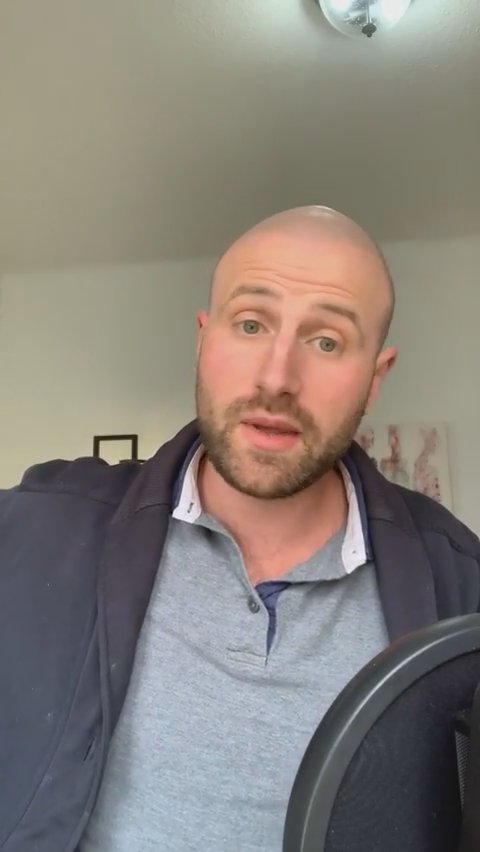
In this Livestream I will be breaking down the four elements of quitting any bad habit or harmful behavior. Whether it's nailbiting or a full-on addiction, the same principles apply.
Evan: I'm going to talk about a topic that is quite relevant for my profession as an addiction therapist. The fundamental thing around that is just, like, making changes and habits. We all have our poisons, right? Katie, why don't you share with us what are your poisons?
One of the hardest ones is nicotine. It's one of the most pervasive. I'm going to talk about what I call the tripod method. There's three fundamental principles to quitting. But something has to go on top of the tripod.
A model of changing behavior is broken up into different stages. The first stage is pre contemplation. Then you have preparation, and then you have the action stage. This model works for everything, you know, whether just changing a habit.
You need to muster a significant amount of motivation to take those first steps, which are the most difficult. There's motivational enhancement and that's one of the things I do with clients. The last stage of change that I forgot to mention is relapse.
The second leg of the tripod is a plan, and this is probably the most important part about it. I always recommend planning a quit date. For example, if you're going on a trip, that's a great time to mentally prepare.
Maybe your goal is like, look, I'm not just gonna stop. I'm gonna, like, do a replacement, right? That almost be like the harm reduction model. Have that ready on hand.
The other really important part of behavior change is replacement behaviors. Whatever replacement behavior you find that reduces your cravings any amount is going to be super helpful. So these are things that are all part of your plan and which is associated with preparation.
The third leg and final leg is accountability. When people make a public declaration, they're more likely to follow through. The more layers of accountability, the better. Positive reinforcement is better than punishment, but punishment doesn't count for nothing.
We're gonna help you quit smoking one way or another. But the final thing is if you use this time, he's gonna shoot you dead. Who's more likely to stay sober?
Addictions are often fueled by shame cycles. Find the weakest point of your enemy and hit it with everything you got. Commit to yourself that you're going to give it your all. Those beginning stages are the hardest. But slowly it gets better.
There are two types of relapse. The relapse of passion is a relapse of emotion. Only when you are going through a significant stressful period. If you can go to that maintenance phase, all you have to do is avoid the traps.
Katie Irene: Those relapses that often happen later when you're in maintenance, I call those negligent. What you do in the insanity is you find a trivial reason to justify and rationalize. For this next series of videos I'm going to go a little bit more in depth.
"It's been like 1214 days. I don't have any nicotine. My cravings are way less, almost non existent to what they were before " If you want me to be your accountability person, I'd love to help you quit smoking and you could join the challenge with me.
What's up, Cadre fam? Evan here, your resident mental health and addiction therapist. And I'm going to talk about a topic today that is quite relevant for my profession as an addiction therapist. And as you can see in the description, if you saw the description, we're talking about, like, literally the most basic, fundamental principles of making changes and changing habits. Now, when we talk about addictions, drug addiction, whether it's, like, compulsive behaviors, sex, alcohol, right? Any of these, like, hedonistic pleasures that we have that sometimes people have trouble managing, regulating, right?
Maybe it's eating. You know, a lot of people tell me, oh, man, I can't stop eating junk food, and blah, blah, blah, right? So kind of the fundamental thing around that is just, like, making changes and habits. And even if someone is coming to me for therapy and they don't have an addiction, right, there's still gonna always be elements of change. There's always. It's like we all have our poisons, right? They say, pick your poison. We all have our soft spots, right? And, you know, it's like some people may have more of, like, a general, like, quote, addictive personality, right?
They may struggle more with impulse control, with compulsive behaviors, and they may have many of those, right? Me being one of them. And I'll talk about that in a little bit. But, you know, it's like everybody has something, right? Whether, you know, one person struggles with food, the other struggles with gambling, right? And then the gambler never understands, like, why do you have such an issue with food? Just eat a cupcake and be done. And then the person looks at the gambling addict and says, like, why?
It's not even fun. You're just losing all your money. That's crazy, right? You know? So it's like we're all built differently, and there's many reasons why we may be susceptible to one addictive behavior versus another, right? So in the freudian model, we have the id, the ego, and the superego. Maybe you heard about that in your psych 101 course. And id and the superego represent two different dichotomies, where the superego is like the voice of society. It's like our higher mindedness, a lot of shame often involved with that.
On the id side, it's like our base desires. It's like what we are when we're born. It's like food, sex, you know, feel good. It's, like, inherently selfish. And that's why that almost describes more of that. Like, when somebody is wrapped up in that Addictive Mindset right. And that switches. We all have all of these things, but the power balance is often different. The ego is basically just us caught in the middle deciding, do I do this? Do I do that? Right. And so it's like finding a balance. Katie says we, it's true.
We all have something. Yeah, we all do. Katie, why don't you share with us what are your poisons? If you, if you care to share. So anyone who's in here, I believe it's just Katie, but at the moment, but yeah, if you want to share, you know, what you struggle with, because again, yeah, we all have it. We're all human. Um, so anyways, that's the background of this. So the question then is if we do find ourselves, you know, stuck in some of these patterns that we really feel are detrimental to us. Yeah.
Them siggy cigs. Yeah, I know what you mean. That's tough. That's one of, that's honestly one of the hardest ones is nicotine. It's one of the most pervasive. Now, I think there are some ways, and Katie, maybe, and look, maybe that 1 may be a little less damaging. Although you're like, well, I'm saving this money, but then you're buying way more than you were. Otherwise. I don't know, I don't know too much about it. But, yeah, things like nicotine are really difficult. A lot of the reason for that is people tend to fall back into it and just so addictive.
But Katie, if that is something you're interested in, I'd love to be able to help you if you want. And that's the thing. I'm going to talk about what I call the tripod method. And look, this, I have a tripod here, so this will be perfect. So I call it the tripod method because I think there's three fundamental principles to quitting. Actually, there's four. But something has to go on top of the tripod. You quit for nine years. Yeah. So, so many people quit. Right. And we'll also talk about the stages of change.
That's a good place to start. Now, as Katie brings up, let's talk about the stages of change. And it's a model of changing behavior and it's broken up into different stages. The first stage is pre contemplation. And that means I don't want to, literally no part of me is ready or wants to quit. I'm not even contemplating quitting pre contemplation. And when someone's in pre contemplation, I can't really as a therapist or counselor, I can't really convince them otherwise. It's like, come back to me.
If you do, I'm going to leave the door open. I'm not going to try to. For something that you don't want to do. Now, the second stage is the one most people find themselves in when they're continuing to use the substance or the behavior, which is contemplation, right? And most people are there because it's like, I want to, but I don't. Right. For cigarettes, like, you know, there's something you get out of it, right? You know, after a meal, that was always a big one for me when I smoked or did nicotine at all.
Right? You know, it could relax you. It could help with stress, you know, in the moment, you know, just feels good, you know, like it's addictive for a reason, but it. There's a reason why, right? But then there's all these negatives to it, right, where it's like, okay, I always have to have one. I always have to go buy them. It costs money, you know, I have cravings that I have to satisfy. Morning coffee. I don't think there's anything wrong with that. As long as you don't go overboard, right. For a lot of these things, too.
It's about moderation more than, like, abstinence, you know? But something like cigarettes, it's really hard, you know, it's like if you were able to smoke, like, three cigarettes a week or something like that, like his dad, at least he's now, like, smell like my dad's catcher's mitt after he smoked, you know? And maybe that's motivation, right? And that's one of the first legs of the tripod we'll talk about is motivation. But, yeah, so you have contemplation. I want to, but I don't. Here are the reasons why.
And then you have the preparation phase of change. So all in all these phases of change, I'm going to reference when I talk about the four principles, or the four. Yeah, the four principles of the. Of the tripod. So then you have preparation, which is you're, like, getting ready to make the change, and then you have the action stage. And the action is like, actually doing it, right. Whether it's like. And it's not always. There's, like, negative and positive, right? So it's like, I'm going to not smoke.
That is a negative change. Not in a bad way. Right? I am taking away something, but then there's also the habit changing, and I talk about quitting here. But, you know, you say, well, I'm going to quit not working out, but that's more of a positive, right? You want to work out. So this model works for everything, you know, whether just changing a habit. So then you have the action, which is like, let's say it's working out. Like, I'm starting to go work out. Like the preparation, be like, well, getting the gym membership, getting the equipment, whatever, and then the action.
Now the action is tough, you know, because, you know, anytime you do a new behavior, it's like, that's why we don't do it, because we avoid the beginning when it's like the change, the metamorphosis, it's hard. But then we get into the maintenance phase, and that's when it becomes a new habit and it's much easier. It's like, it's much easier to get the ball in the air and just kind of keep it, you know, lift it and, you know, so you're just kind of keeping it up in the air. So those are the stages of change.
Now, what are the legs of the tripod that I created of making a change? The first one is what we talked about is motivation, right? So if you're in that contemplation stage of change, you need to muster a significant amount of motivation to take those first steps, which are the most difficult, right? So maybe, you know, I was thinking about this the other day. Cause I actually made a video on this, and people had commented saying, like, well, what about, you know, the, you know, what about not beating yourself up if you don't, if you fail quote or whatever?
And I believe that, yeah, you don't want to do that. At the same time, I find that, like, if you want to quit, you want to just give it a big push, right? Don't even do it. Don't even try it until, like, you're ready and you have all these things in place because it's just going to become self defeating, right. If you make these kind of half hearted attempts, or maybe they're wholehearted attempts, but you don't have everything in place, right. Then it becomes less and less desirable to quit because you don't have as much confidence, right?
So even if you give it your all and you find some success, right, like, even you having the nine years, that is a success. That is very much a success. Even though you went back and you kind of beat yourself up. So dumb of me. Okay. Was it the best choice? No, but it leaves us. But again, we're always vulnerable because the last stage of change that I forgot to mention is relapse. So that's actually a part of the stages of change is relapse. And then you kind of go through it again in that first leg of motivation.
We want to get that first. And it seems obvious, well, obviously you have to be motivated, but in the contemplation you're going to be motivated for a, you're going to be motivated for b, changing, not changing. And that's going to shift. Right now all you need is that 51%. Right. You need that 51% in favor of change. Now the question is, how do you get there? Is there anything you could do or is this motivation just natural? In some ways? Yeah. Just at any moment you could check in with yourself.
How motivated am I? Well, checking in with myself and I'm at 27%, but there are ways you could change it. There's motivational enhancement and that's one of the things I do with clients is motivational enhancement. Something called motivational interviewing is one of the most popular in addiction counseling, one of the most popular interventions, and it's just a slick way to help clients with motivation. For example, an intervention would be like if I said, katie, on a scale of one to ten, how much do you want to quit smoking?
And not just have the desire, but how much are you ready to quit smoking? You could be like, well, I really want to, but I've been really stressed lately and I'm worried I'm going to be irritable, on edge. Exactly. I want to, but this. So she says, you know what, I'm at about a six. And then I'll say, okay, now check this. This is a slick part. I say, katie, why is it not a three? Right? And then you say, well, here are the reasons why. Right? So I just said something. I just prompted Katie with a question to talk more about.
Okay, so like an eight. So then I'd say, okay, why aren't you a six? Why aren't you a two? And then she's going to tell me all the reasons, right? You're super motivated, right? Maybe you want to quit, but again, how motivated are you to take this step? Right. So there's different ways you could look at it. Either way, it doesn't matter. You're at an eight, not a ten. How do I get you to a ten? Because everyone's different. Maybe they get to a six and they're ready to take action. They're ready to get out of contemplation, prepare, take action.
Maybe they're ready, but maybe they're not. Maybe we have to get someone to attend in order to do that, right? So there are things that I can do as, like a clinician, as a thing therapist, as a friend to help people build on motivation. But then there's also things you could do for yourself. So what I tell people is, you really want to internalize this. And so first, what you want to do is you want to think about all the negatives, right? What are all the negative? What are the reasons why I want to stop that are negative?
What consequences do I want to get rid of? I want to stop because I don't want, you know, I don't want my husband to, you know, be dissatisfied or in any way or the way I smell, you know, like, whatever. I don't want to, like we talked about beginning. I don't want to spend money. You know, I could do so much more with that. I don't want to, you know, risk my health and have that anxiety about my health or whatever those reasons are. So really internalize them. And one way to do that is to write them down.
So sit down and write down all the reasons, reasons why you don't like smoking. And then the other reason or the other next thing you would do is all the positives, right? Writing down, like, oh, man, I would have this much more money. What could I do with that money? So really, like, think about it. Visualize, you know, what could I do with that money? What would that be like, to not have to have a cigarette after a meal? What would that be like, to not have to have one before I go to bed? What would that be like to be able to, you know, breathe a little better?
What would I, you know, what if I, you know, so whatever reason you could think of that, you know, motivates you, right? So now, let's say I had Katie, and this is my guess. Let's say I had Katie. We assessed her motivation, you know, at an eight, maybe before it was a seven, before I started talking, right. By thinking about all this, right? So usually what happens is I give people, people this assignment. Like, I have questions on there and they write it down at the beginning. What's your level of motivation now?
By the time they're done with that assignment, it goes up, but again, it changes. But the more you think about it, the more that level is going to go up, right. And again, that motivation comes as that jumping off point. Can we get you to the point where you're ready to try it when you're ready to do that. Now, after the motivation change, we have the plan, and this is where we get into the preparation stage of change. The second leg of the tripod is a plan, and this is probably the most important part about it because a lot of people just go in willy nilly.
Okay, I'm just going to stop. How are you going to do that? I'm just not going to buy anymore. I'm just not going. Okay, great. That's certainly part of it, but it's not that simple. For example, with the cigarettes, having a plan would consist of a few different things. One, like, you want to remove all the temptation that you could have around you, right? So you don't want to have a pack of cigarettes laying around, right. So you maybe want to move, remove all those from the house, you know, that you want to maybe plan a quit date.
I always recommend planning a quit date. Not, you know, or sometimes people just do it impulsively. I've done that before with, like, nicotine, where I just, I just throw it out the window one day and that's it. And we'll talk about the merits behind you and something like that. But you want to have a quit date. For example, I always recommend if you're going to go on a trip, that's a great time to do it. It gives you some time to mentally prepare. You could still smoke and whatever. Maybe that's a little torturous in your mind, but you kind of procrastinate and be like, I'll worry about it on that day.
But, you know, so let's say I'm like, all right, I'm going on a trip in a week. I'm going to. I would recommend, like, weaning down a bit if you can. It'll make it a little easier than just fully stopping. But, like, okay, over the next course of the week, I'm going to smoke 1510 five, you know, and, like, kind of drop it down so it becomes a little easier if, because if you go from just doing your regular amount to nothing, that could just be more of a shock to the system. I mean, it could still work.
But that's another thing. I think if you, like, wean down too long, it could be a little more difficult because that temptation is there to just have one more and to play those mind games, and we'll talk about those in a little bit, too, which is the mind games that bring you back to using after a while, whatever that habit is, that relapse stage and how that could be avoided. So, yeah, so now we have the plan. What else could be part of the plan? I have the quit date. You know, look, and maybe you're someone who, you know, maybe before, you know, maybe your goal is like, look, I'm not just gonna stop.
I'm gonna, like, do a replacement, right? That almost be like the harm reduction model, right, of like, I'm gonna use patches, gum, whatever. So if that's, like, what you want to start with, you know, and, like, do steps, like, maybe I'm gonna go to gum and then stop. Like, that's, you know, an option people could do. So you say, okay, so I'm gonna buy the gum. I'm gonna have the gum ready. It's gonna be the best gum I like. Those cinnamon ones are good, those nicorette cinnamons. But, you know, you gotta, you know, have that ready on hand because if you, like, just stop and you're like, I gotta get the gum now.
I gotta go to Walgreens or whatever and get it. And, you know, have it ready. Have it ready to go. The other really important part, and probably the most crucial part of behavior change is replacement behaviors. So what are you going to do instead? And this is what I tell people every time. If you do not replace the behavior with something else, you will go back just about every time water falls to its lowest point. And if you just remove something, you have a new lowest point, it will fill back up and you will be right back to where you were at before.
Okay, so what could some replacement behaviors be? It could be, you know, let's say you're not doing Nicaragua. Just be like chewing regular gum. There's these toothpicks I like, and these have helped me in the past. These cinnamon tea tree toothpicks are delicious. You know, they're, like, really intense. They kind of give you a bite. You say, I want to work out again. The craziest, slow down a lot. Yeah. So working out is a great replacement behavior. And you could say, okay, I crave, and then I go work out.
You could do that. Or. But I always find, too, that I call that a preventative behavior, where if you stop smoking, you start working out. Often, it's going to reduce your cravings so that you don't have to deal with them as much. Now, something like the gum, and this is something to help out with your cravings. So whatever replacement behavior you find that reduces your cravings any amount is going to be super helpful. So you have replacement behaviors. So these are things that are all part of your plan and which is associated with preparation, then it's time to take action.
And before you do, I always say the third leg and final leg is accountability. And this is just a great tool to add onto your plan. So accountability would be like telling as many people as possible. And there's a lot of research behind this showing that, you know, when people, like, make a public declaration, they're more likely to do it and follow through. Like put it on Facebook or something. Like, I'm going to be trying to quit cigarettes on this date. I'm going to be checking in with you all for accountability.
Tell, as many people tell friends, have them check in on you because we don't want that negative evaluation. And I know it may sound like we don't want people to punish us, we don't want to punish ourselves, but it is a very good tool. It's a good tool to lower your chances of relapse once you start having that accountability. Family, friends, declaring it on social media, whatever you want to do. And I don't know why, like, I didn't mention, but, like, I'm in the process, too, of quitting nicotine.
That's why I'm bringing this up. And I wasn't like, you know, I wasn't smoking. I used to, but I kind of got hooked on those, like, pouches, the nicotine pouches. And I was just, I was just ready to be done. I was kind of on a four year run, but at the end, I'll talk about that and how I use this technique to quit again, because I'm always having to quit s***. Because I'm just susceptible to impulsive compulsive behaviors. As a former addict, that's just my. And that's kind of probably why I directed towards addiction.
It's because, like, I wanted to learn how to, like, you know, tame the id, learn how to, you know, make these types of changes. And this is what I've learned from my experience. So accountability, that's a third leg. And I always say layers of accountability. So the more you have, the better. And I've heard some, like, extreme stories. And I was talking with a buddy about this, too, where, you know, whether it was like, one was like a sex addiction place. And I'll give this example, like a guy taught.
And I don't know if I, like, necessarily agree with this, but they talked about how, like, for their clients, right? Like, most of these guys, they were men who had wives and they were cheating on their wives or whatever, p*** and blah, blah, blah. And they would literally give them, like, lie detector tests, right? So they knew that if they did the behavior, they would get in a shitload of trouble, right? So that's accountability. Again, you have to have positives in there, too. If you just do it on consequences, it's not going to last long term.
Positive reinforcement is better than punishment, but punishment doesn't count for nothing. And so they would do that. And then, like, for example, he said he had one, like, person in the government, right? Like a politician and his wife had in an envelope a donation to the opposite political party. And if he were to act out in that behavior, that letter would go out and it would be public and it would ruin his career. So literally, he had all these layers, like extreme layers. And I always joke with clients, say, all right, I got two people who are in treatment for alcoholism addiction, and they're the same circumstances.
I'll say they're like twins or it's like a twin study, right? But it's exactly the same person. But we put them in two different scenarios. One scenario is they get out of treatment after 30 days and say, all right, just go home. Good luck. Here's a discharge plan for you. Just go ahead and follow this and good luck, buddy. Right? And then the second person, now check this out. So the second person, we say, all right, we're going to have you go to a sober house where you're going to live with other people with addictions, or there's going to be some, like, boundaries, accountability.
You know, there's that. There's going to, you know, we're going to have you an outpatient treatment. So you're going to get more services, more accountability there, and you're going to do that for a certain period of time. And then we're going to, you know, play, you know, you're going to have a sponsor, you're going to go to meetings, you're going to have friends who are sober, right? So you can see these layers of accountability adding up. Now, the question you have to ask yourself, as I'm saying, this is, who's more likely to remain sober?
Who's more likely to sustain the change? It's an obvious answer. It's always going to be this person. Now, here's where I like to have fun with it. I said, let's take it a little further. We have all those things in place. Now, I want you to imagine that on top of that, if you use, just like the sex addiction, if you use, you have to pay me $10,000. You're going to give me $10,000. And if you use. I'm keeping keeping it. Right. What if it was. Yeah. Sending it to the opposite political party or some cause that you don't like.
Right. Imagine if you relapse. That's going to happen automatically. You lose $10,000. Money is going to the cause that you don't want it to go to. Now what if we take it a step further and we say here's the deal. Like not only that we're going after all those things. We're going to add another thing which is I'm going to have a guy, a security guard and he's going to be with you 24/7 he is going to be literally you are in his sight. Twenty four seven. And this guy has a cattle prod. You know when those electric.
Boom. And if you use or do anything like that you're immediately going to get shocked and you take a drink. Boom. You're getting shocked and you're going to be on the floor at that cattle prod. Okay. There's another reason not to. And then the most extreme scenarios. Let's say that guy want to borrow ten k. Well how about this? I'll give you the ten k. But you have to quit smoking. And if you don't succeed you'll have to pay me back 20k. How about that? And you can just pay me back over the course of a year.
I'll do it. But that's the deal. We're gonna. We're gonna help you quit smoking one way or another. All right. So the last situation we have that guy and he is with you at all times. He's a cattle proud. But we're gonna up the ante a little bit. So not only that, all those things are gonna happen, but the final thing is if you use this time, he's gonna shoot you dead. I know it's going to shoot you now. Okay. Whoa. That's a little extreme. Right. But what could be worse than that? I mean we could think of maybe some other things.
Right? But. So who's more likely to stay sober? Right. Probably the guy who's going to have all those bad things happen and literally get shot no matter what. Right. If that alcohol drug hit you're done. Right. That person's probably not going to use. Right. But that's too much. Right. That's too extreme. But you could see how layers of accountability will increase your chances of being more successful. But we're not going to go all the way to the guy with the gun. That'd probably be expensive. And at least a little bit illegal, right?
Even if you consent to it. You know what? Now that I think I saw this, like, a very long time ago. Oh, my God. I can't believe I forgot about this. But there's a. There is a short. I think it's a short story by Stephen King, and it's called Cat Eyes. And I think it's like a series of short stories, if I remember correctly. And I remember, like, I remember seeing. I didn't read it, but I saw it on, like, tv. They made a tv version, and it was literally this. It was literally a guy to quit smoking hires this service, right?
It's like this underground service where they guarantee you'll quit smoking, but, you know, you sign this waiver and if you get caught quitting, like, this guy doesn't realize that whenever he. They would do something horrible, like, eventually they cut off his wife's finger and sent it to him. So they guaranteed you would quit. But they would do these extreme measures. I don't remember exactly what else they did, but it was a psychological thriller of this guy signed up and signed his life away that if he didn't quit smoking.
Talk about layers of accountability. Anyway, that is the third leg, a fun one. Now, the final leg. And this is not just the leg. This is what sits on top, right? This is the camera, if you will. I kind of think of it like the cherry on top. And it's just one single thing that you do at the beginning, and maybe you could do whenever you want, which is a commitment, right? So, like I was saying before, it's better to do big pushes, right? So you find the weakest point of your enemy and you just give it all you got, right?
Don't just kind of spread yourself too thin down it. You find the weakest point and you hit it with everything you got. So don't just pepper it. Don't just, you know, make these vain attempts here and there. Don't even try to quit until you have everything. You. Your forces are armed, you got everything ready to go. You've done your preparation, you have your. You have all these things just ready to go. Then you do it. You hit it with x, everything you got. And look, if you don't succeed, my guess is you will, to a degree.
Maybe you go a week, two weeks, three weeks, and this is what happens with clients. Nine years, ten years. But then, you know, we continue to work together and you have a relapse, right? Is that the end of the world? No. I mean, do we want to avoid it at all costs. Okay. Yeah, why not? But if it happens, do we beat ourselves up? No. Why? Because of shame. Shame. The shame cycle. Addictions are often fueled by shame cycles. Usually these behaviors are self soothing. And therefore, if we shame ourselves, we're more likely to feel the need to self soothe.
It is a cycle. So we do not shame. What, do, do we celebrate it? Not necessarily. We don't throw a party and say, yay, I relapse. But what we do, the best thing we can do is we learn from it. We use it as a learning opportunity. Because if you're able to do that, if you were able to go three weeks, a month, and then something happened, that's just more information. Now you got to start over again, and those beginning stages are the hardest, and you got to build back that motivation again. We're going to do the same thing.
We're going to get everything ready, but this time we're going to tweak, tweak the plan so that that doesn't happen again. Right. That's why it takes a lot of people multiple times to quit, because they fall into these traps, these relapse traps that happen over time. God, I could just speak on this s*** forever. Anyway. So a commitment, right? So we make that commitment to give it your all, not to not relapse. I mean, because that's an outcome. But you want to say, I'm going to give it my. I'm going to do everything I possibly can to not.
I'm going to commit to myself that I'm going to give this my all, that I'm going to follow the plan that I'm going to be held accountable, that blah, blah, blah. And write it down. Right. You know, write it down. Once you have everything set, I'm going to do this. You could share it with other people, but commit to yourself more than anything else. You can commit to other people with accountability, but commit to yourself that you're going to give this your all. And if you have all those pieces in place, that's just going to increase your chances.
It's going to increase your success, it's going to increase your ability to go longer than you would have otherwise and maybe forever. So when you get that nine years, Katie, like you had, you became in that maintenance phase. You got through the action, which is the metamorphosis. That's the hardest part. Maybe it's only a week, two weeks, three weeks. Sometimes it doesn't take that long. It's just really s*****. So it's like for a few days, but usually at the beginning, it's the worst. You're kind of up and down here, but then slowly it gets better, and then you're just playing the long game and you just have to avoid those pitfalls.
You're going to have the most pitfalls at the beginning, but in the long term, you just have to avoid those pitfalls. So there's two types of relapse. Let's finish talking about relapse and how that happens. I always say there are two types of relapse, what I call the relapse of passion and the relapse of negligence. They talk about this in treatment settings and all that. They don't call it this. I'm proud of myself for coming up with this. I'm trademarking these terms, the relapse of negligence and the relapse of passion.
They talk about these things in AA literature and that kind of thing. This is bothering me. I'm going to talk to Alec about a little suggestion of these lives, but there we go. So the relapse of passion is the one that people think about most, right? When you think about a relapse, you think about, you know, that guy who's, like, cursing God and he's angry at the world, and you get that bottle of booze and you say, curse it all, and you drink, and it's like this whole dramatic big thing. And I call that.
It's like an emotional relapse. Relapse of passion is a relapse of emotion. And a part of emotion is a craving, a severe craving, because cravings occur in a similar place of your brain, as do your emotions, like anger. So it's associated with a strong emotion. You see those more in early recovery, in those early stages where you're like, I can't. All these cravings, I'm so stressed out. And da da da da. And those can happen later, right? Those usually happen later on. Only when you are going through a significant stressful period.
I usually see that, right? You lose your job, you lose, you know, your kid is having issues, you know, whatever. You're going through a period of significant stress, and you just say, f*** it, I don't care. I don't give a s*** what the consequences are. I want this relief immediately. And that is the relapse of passion. That usually happens later. Now, that usually happens at the beginning. And you could see why. Because when you're in the beginning of a change, change is inherently stressful. But again, if you can go to that maintenance phase, all you have to do is avoid the traps that come once in a while.
That seems easy, but you got to do that forever. It may only happen once, twice a year. I call these critical moments where you're faced with this. Your brain is like, I want to do this. And you really are tempted to do it, and you're thinking about doing it. That's a critical moment. Now, the thing I tell people is, when you get into a critical moment, if you're able to just get through it, when you're in a state of craving, I say you're often in a state of insanity, because with addiction, if you ever had someone go through addiction and relapse, you're like, what are you crazy doing, right?
Like, you have every reason not to, every reason to stay sober, every reason not to use. But you did it anyway, right? You just p***** it all away, right? Why did you do that? But when you're in that moment, it just seemed logical. Just seemed like the right choice, or you just said, screw it. I don't even want to hear the logical choice. Right. So often that. And the more those happen, the more deterred people get and the more likely they are to want to relapse. Like, well, I keep getting these critical moments all the time, but usually you could avoid those by continuing to do those replacement behaviors, by living a healthier lifestyle, living a more fulfilled life, doing everything you can to be more contented, you're going to have less of those critical moments.
So it is in your control to a degree. A lot of times, these things just don't happen out of nowhere. When people in addiction and early recovery, your people who relapse, you could usually go back. Like I talked about, the learning, you could almost always go back and see where they went wrong. Right. It's a series of decisions that you made that led to that critical moment. And in that critical moment, hey, maybe it's a coin toss. 50 50 could go either way. And maybe you're lucky it lands on heads and you could keep on going until the next one.
But again, there are also things you can do to make it so when those moments come, they are less intense, they last less of amount of time, and for, you know. Yeah. So frequency, duration, intensity. So how often the critical moments happen, when they happen, how long do they last, and how intense are they? So these are all things that are in your control, but you don't want to wait until you get to the moment. You want to do all these preventative measures to get there. So that is the cycle. Right.
Oh, and I didn't really legends. Right. Is the other side of it. Right. Is when you find a reason. Right. So those relapses that often happen later when you're in maintenance, I call those negligent. Right. Because you're in that state of insanity. Right. And I'm kind of being hyperbolic, but kind of not like in that given moment, right. What you do in the insanity is you find a trivial reason to justify and rationalize. Even though every logical thing says, do not pick up that cigarette again. Just get through this ten minutes.
Just let's revamp the plan so you don't go back. Because the second with cigarettes, especially when you smoke, that you're going to go back for five years and you're going to be like, g******, why did I do that? Here, here I am again. How did that happen? Right. So the relapse of negligence is often you find a way to justify it in that moment even though it's not logical, even though it's never justified, but you find a way to do it because it's. I heard a counselor, actually a treatment director, he said one time he was like, you know, I got two.
He was an addict too and recovered. I got two buttons in my head. I got f*** it and why not? And if those two get pushed at the same time, there's nothing stopping me. I'm going back. So how do I avoid pushing those two buttons at the same time? So that the justification and rationalization don't come up. So avoiding those. So those are the four legs or the three legs of the tripod method. Let's go over that again. My motivation plan, accountability and then that last one, the commitment. And those follow the stages of change, which is pre contemplation, contemplation, preparation, action, maintenance and then relapse.
So I think I'm going to do a series on this and basically just say everything I just did. But, but I'm going to go into more depth. But I think for this next series of videos I'm going to do, I'm going to make it on this topic and go a little bit more in depth. Alright, so let's see, see, let's check in with Katie. I slipped when I was on a gno and my brain said no big deal, right? And that's the thing was like in that moment you probably weren't craving it as much as, let's say like you just had a meal right now, right?
And you like didn't smoke after when you normally do, you would have this intense craving. But in that moment, it's not quite the same type of craving. It's more of, like, an urge. It's a desire. Wouldn't this be nice, right? Or, like, maybe I'm stressed, so maybe there was that big craving, right? But you find a way to justify. The body finds a way to justify. It is very powerful. You know, the. The mind will play tricks on you because the body wants that cigarette. It wants the nicotine. It wants.
You know, for. If you're an addiction, you're addicted to alcohol severely. Basically, your body is saying, we need this to live. Even though you don't. It plays a trick on your mind. We need this for survival. It plays on that same thing. So your mind's gonna find all these ways to justify, to get. You get your ego to say yes, and that's you and the addiction. Yeah. With nicotine, you're done, right? If you touch it, you're done. There's no managing it. And that's what's happened to me. I've quit.
I smoked, got into recovery. A year into recovery. I quit for about four to five years. Then I smoked a cigar. Someone convinced me to do it. Then I started smoking all these cigars. The thing is, I never went back to cigarettes. I kind of made this commitment. I was like, I'm not going back. But I was vaping. I actually didn't even really. I didn't want to put s*** in my lungs. So I was doing cigars and even vape for a little. Then I found these pouches. It's always something new comes out. I'm like, ooh, I want to try that.
But every time, I'm not craving, it's just like. I'm like, oh, you know, it's just. Why not? I'll try this. I'll try this new thing or this new vape flavor. Even though I've been going years, right? And so I just never freaking learn or in the moment, I forget what I had learned, right? So here I am doing this again. I am about, let's just say, ten to twelve days. Good night, Irene. So I'm ten to twelve days nicotine free. And again, Katie, you know, it's like I wasn't doing a ton. I wasn't, like, smoking every day, but I was doing these pouches multiple times a day, probably taking in about an average of, like, ten to 20 milligrams of nicotine a day.
I don't know how that converts to cigarettes or whatever, but there is something about smoking that is more addictive than the other the other types of nicotine and dip, too. A dip is very addictive for people as well. So it's kind of closer to dip, but it wasn't quite as intense. So, yeah, so basically what that followed for me was, you know, my, let's go through my motivation, right? I just built, built it up over time. I just. Again. And sometimes the motivation just comes, you get sick of it, you know, it wasn't doing much for me.
It kind of made me feel anxious sometimes, you know, I was doing it, like, at night I would, like, fall asleep with these things in my mouth, wake up feeling sick and finding them in my bed, you know, just like all, just after a while, after a few years of it, it's just like, this isn't doing anything. I'm just, like, satisfying a craving. And, yeah, it feels good in the moment, but not that good. And so, you know, I built up that motivation, and there's other health reasons why I don't want to do it.
Then I went to the boundary waters right here in northern Minnesota on a camping trip. And my plan was to do it then, and this was like a month ago, and I brought only, like a few pouches with, but then I kind of screwed up. And I was going to say, all right, right before I go in, I'm going to finished. But I had, like, one or two more. That was it. But the problem is we had to cut our trip short. And it was, like, crazy. We got back and it was just like, I just had, and I had some in my car and I just went back to it.
Right, right. So I learned something there. Right? So I relapsed. I learned something there. And I said, okay, you know what? I'm going to Mexico in a month and a half. I'm going to try again. There. I didn't beat myself up, but I just said, hey, I'm going to set a more firm, quick date. I'm going to get rid of everything. I know I'm leaving for longer. The trip's not going to get cut short. And that's what I did. And this time it has been successful in that. It's been like 1214 days. I don't have any nicotine.
My cravings are way less, almost non existent to what they were before. So I just have to stay the course so that I've gotten through the hardest part. The second hardest part is just going the rest of my life without justifying doing it again. That's the other hardest part. But it's not a daily struggle. It's not a daily battle. It's just being on guard. It's just always remembering that there's a line out there, you know, that if I'm not careful and I allow it, and if I allow it to get too close, I allow myself to get too close, it could be, as Katie said, good night, Irene.
And I got to go through the same thing again, so I hope that you found some benefit to that. And, Katie, if you want, ever want to chat about this or talk about this a little bit further, if you want me to be your accountability person, I'd love to help you quit smoking and you could join the challenge with me. I don't know if any other Cadre peeps are indulging in the nicotine or maybe there's some other behavior that could be fun. We could. We could do with our members here, we could do quit smoking or quit something, challenge and use this method and lean on each other as part of that accountability is support as well.
So we could lean on each other for support. So, Katie, if you ever want to, we could put a plan together and we could be each other's accountability buddy. But that's the thing, though, is maybe you're not ready, and that's okay. And there ain't no shame in that. So maybe it's now, maybe it's in a week, maybe it's in two months, maybe it's in a year. But no, Katie, we could do this together. I'm here for you, and we could give it a shot. Get you off them siggy cigs, get you smelling all nice. And for your hubby, so you're not reminding him of his father.
I don't know if that's what you're going for these days, but, yeah. So, anyways, that was a good chat. I was on for about four times as long as I thought I would. Rambling. So, anyways, folks, that was awesome. Katie, you and I will chat soon, and with that, I will see you twice next week.
Reactions and comments are for members. Joining is free and takes a minute.