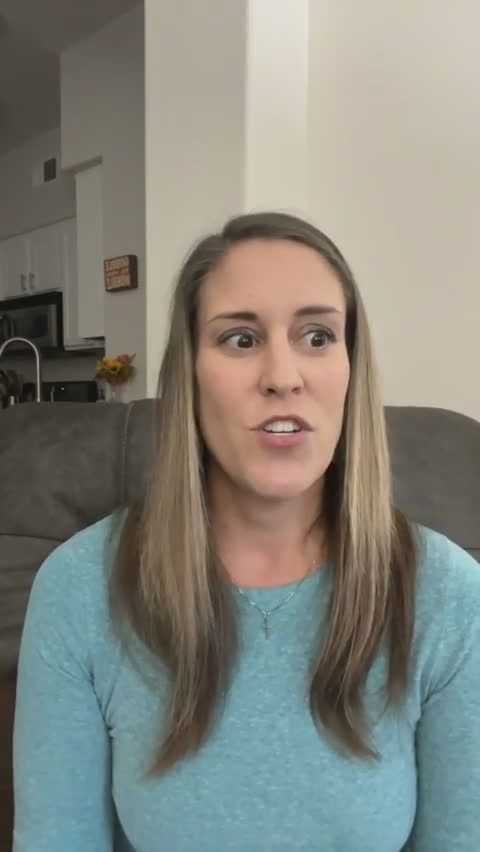
As we prepare for spending time with family during the holidays, we sometimes experience disappointment and hurt in unmet expectations of how others should behave. In this video, Dr. Carrie will share how to manage your expectations of others and how to process emotions when those expectations aren’t met.
We often have expectations of other people that they aren't even aware of and they disappoint us all the time because they don't meet those expectations. Our expectations usually have some sort of underlying value that we ourselves have that maybe somebody else doesn't have.
Make a list of all the people that you interact with. Write down some of the expectations you have of their behavior. The times that you were probably most disappointed in your life by other people was because an expectation wasn't met.
And then I want to talk a little bit about boundary setting. Let them know if it's like a hard, hard line for you, and then you have to know what you're going to do when that boundary is crossed. You might have a very different holiday experience.
But I just want to wish you guys a happy thanksgiving from everybody here at Cadre. We are so unbelievably grateful for this Cadre family. And we just thank you for being a part of this.
Hey, Cadre family doctor Kerry here. Thank you for tuning in with my live today. We are going to talk about unmet expectations. And I picked this topic especially for today before thanksgiving because I wanted to talk about some of the unwritten expectations that we have going into the holidays with our family. I know this is something that I have personally had to work through and so let's just unpack that. So I actually learned about this from a therapist years ago, and she said, I want you to make a list of all of the expectations you have of your family.
And I started writing down all these things and then she goes, and how many of those have they screwed up on? And I'm like, well, all of them. And then she said, okay. Did they know they were supposed to do those things? Nope. And she's like, okay. And I was like, okay, I get the point. You don't have to make me do this exercise any longer. But that's really essentially what we're talking about today is we often have expectations of other people that they aren't even aware of and they disappoint us all the time because they don't meet those expectations.
And so why is that the case is the first question. Well, oftentimes our expectations of other people, usually it's about how they behave, how they show up, whatever it may be. They usually have some sort of underlying value that we ourselves have that maybe somebody else doesn't have. I'll give you an example. I have the expectation that everybody I come into contact with, if they say they are going to do something, whether that means they are attending my holiday party that I'm hosting, whether that means they are going to meet a deadline at work, whatever it may be, they're going to send that email off.
They're going to text me back. When they say, I'm going to text you within the hour, whatever they say they're going to do, I have the expectation that they are going to do that. It doesn't matter to me if they are completely disfigured from a car accident that happens in that hour, that they're supposed to respond to me. It doesn't matter what happens to them, but they are going to do what they said they're going to do, whether that means they're coming to my holiday party or not, like they're going to follow through on what they said they're going to do.
Because to me, when somebody gives their word that they're going to do something, it means just gold. It's written in stone. Now why do I have that expectation of everybody else? Well, because that's one of my values. Because when I say I'm going to do something come h*** or high water, I will do it. And this actually goes back to, ironically, one of my strengths on the strength finders assessment is responsibility. And that's what it says. Like, Carrie will do what she says she's going to do when she says she's going to do it regardless.
Like, doesn't matter. And that is just one of my strengths, and it's one of my core values. But I had to learn that not everybody has that as one of their top strengths and core values. Some people are like, you know what? I value my comfort way more than my word that I gave someone. And if I'm feeling really sick, and I think it is probably against the best interest of my health to go to your holiday party tonight, I'm gonna say no, whereas I would make myself go because I had given my word. So you have to understand that a lot of times, the expectations that we put on other people have to do with our own set of values, and then we just expect everybody else is going to act the same way.
So for this exercise, what you can do after the live stream is to make a list of all the people that you interact with. It's going to be a very long list, but maybe you want to categorize them into, like, family, maybe coworkers, people I interact with on a daily basis. It could even be the person at Starbucks. It could just be a stranger that you interact with on a regular basis. But I want you to start to write down some of the expectations you have of their behavior, and you will start to see a theme.
Like, for example, I had an expectation that a couple of days ago, when I was speaking at a conference in Austin, that the tech guy that was supposed to help me with my presentation and getting the projector and everything working would be respectful to me. As a presenter at this conference, he did not have that same expectation of his own behavior. He was extremely rude to me, like, full on disrespectful, like, just nasty to the point where somebody overheard it and they're just like, that's really odd that he's acting like that.
So I had this expectation that I would be treated a certain way as a presenter at a conference, and he did not meet that expectation. It put me in such a bad mood for, like, the next hour because I was so distraught by how this guy treated me. And he probably had an expectation that the presenters would come with their own crap and have all of the tech equipment that they needed, which I did not because I was told I didn't have to by the conference. So, like, we both came into this situation probably with some expectations of how the other person was supposed to behave and act.
Neither of us met those expectations. This was a complete stranger that I've never interacted with before, probably will never meet again. But we both ended up disappointed in this situation because he had to bend over backwards, helping me, and I expected him to because that's what I was told. So anyway, you'll start to see a common theme as you write down some of these expectations that you have of other people's behavior. But in the end, you'll notice also the times that you were probably most disappointed in your life by other people.
It was because an expectation wasn't met. It's because you had some maybe unwritten rule for their behavior and they didn't live up to that. And that's okay because they might have had their own expectations of you in that situation that you didn't meet. So the best thing we can learn from this exercise is what we go into situations with as these unwritten rules, especially when we go into Thanksgiving, when we go into the holidays and we're interacting with family. I have the expectation that my family is not going to question me upside and down about my finances, about my choice to live in California, which I know they're not super excited about to be living this far away from them, that I'm not going to be drilled as to when are you getting married?
When are you having kids? Like those kinds of questions. I have that expectation, and they might not meet that expectation when I have thanksgiving dinner with them. And so you have to kind of temper your expectations at times and say, how many of these am I going into the holidays with? Like, how many is, is my uncle Tom going to totally fail at this year, whatever your uncle's name is, but, like, you might have that one family member that just always ruins the holidays, and you go into it with an expectation that he's going to behave differently this time and he doesn't, and you're like, well, s***, now I'm disappointed again.
Well, maybe you go into it with a different expectation this year. Maybe you go into it without that expectation, not expecting that he's going to ruin Thanksgiving, but that you're going to have a different reaction if something does come up this year. So instead of expecting other people to behave a certain way, we can manage that expectation by saying, how am I going to respond? Like, what other expectations can I put on myself this year to respond differently when I'm triggered at the holidays?
And then I want to talk a little bit about boundary setting. If you haven't seen Alex Boundary video from last week, it was incredible. Go check that out. But some of the other things we can do when we have some really important things we want to accomplish as far as expectations go at the holidays, is letting people know what those expectations are. I'm actually working with a coaching client right now, and she's got a really, you know, troublesome situation going on with one of her kids, and she's really nervous about how her mom is going to react and that her mom might take the kid aside and, you know, have, it's just gonna blow up Thanksgiving and her kid's not gonna enjoy it.
And I just said, well, rather than going into Thanksgiving dinner with that thought of, gosh, I hope my mom doesn't do this, and she's gonna say this, you can let her know that that's a boundary for you. And not saying, I expect you to behave this way, mom, but it's saying, mom, I would really appreciate it if you didn't bring up that topic with my son at Thanksgiving. We wanna have a nice Thanksgiving dinner. It's something we're working on as our own family. And I would appreciate it if you could just leave that topic off the top table this year and letting her know that's my boundary I'm setting.
I'm saying I would like you to respect this. I'm giving you the opportunity to meet my expectation before we even get there because I have this expectation for your behavior. So let them know if it's like a hard, hard line for you, and then you have to know what you're going to do when that boundary is crossed. So what is the consequence for that? Is it okay if mom doesn't respect that boundary, then I'm going to say, mom, I asked you to please not do that. And if she continues, are you prepared to leave Thanksgiving?
Like, you have to know what your consequence is for when that boundary is passed. But if you think about some of the unmet expectations that you've had in the past, maybe it would be healthy this year to try setting a boundary with your family and say, you know what? I'd really appreciate if we kept that topic off the table, table this year. I'd appreciate if you didn't mention that. And you can say it very matter of factly and you're not saying I've told you not to talk about that. You're not demanding somebody.
You're not trying to control somebody's behavior. But you're saying, this is a line you know I have, and I'm asking you to respect that boundary that I've set. You might have a very different holiday experience. You might actually have very different met expectations in the holiday than your usuals, where you have all these expectations of how they behave and none of them get met. So try that. Tune in more. We'll talk more about boundaries. I know I have other videos on there, and Alex video was phenomenal on that topic, too, so check that out.
But I just want to wish you guys a happy thanksgiving from everybody here at Cadre. We are so unbelievably grateful for this Cadre family. I know. I am unbelievably grateful for it. And we just thank you for being a part of this. Thank you for tuning in with the live today and happy thanksgiving from everybody at Cadre.
Reactions and comments are for members. Joining is free and takes a minute.