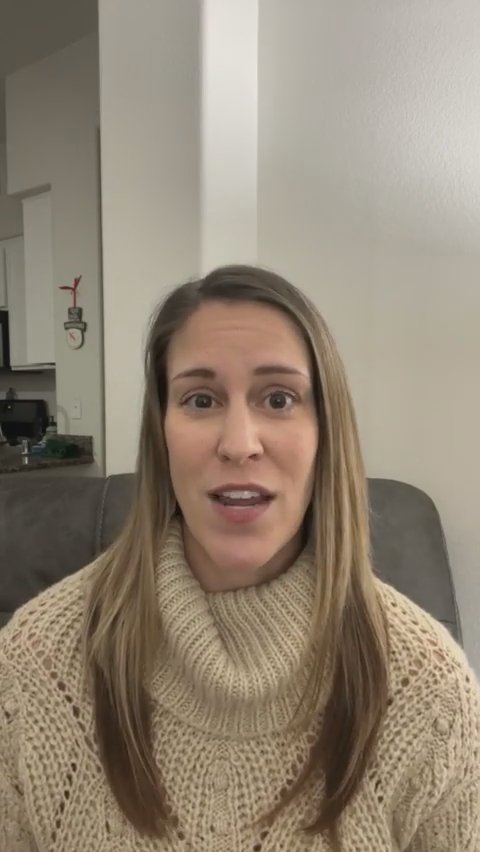
Dr. Carrie will discuss the differences between obstacles and hurdles, how to manage them in your personal and professional life, and how to jump high to overcome hurdles.
Today, we're talking about hurdles versus obstacles. A hurdle is something that you can figure out a way to overcome. An obstacle is just a big boulder in your path that is difficult to manage. Both are something you can work with. It's just how you approach them and how you work with them.
I would just encourage you today. Think back to some of the things that you have experienced in your life. It will show you that you are a resilient person. And it will give you the encouragement you need to face the things in the future.
Hey, Cadre family. Welcome to my livestream. Today, I'm going to be talking about hurdles versus obstacles. So let me first start by explaining what those are, because they might be the same thing in your mind, but in my mind, they're different. A hurdle is something that you can figure out a way to get over. You can figure out a way to overcome, and an obstacle is just a big boulder in your path that is really difficult to manage because you can't necessarily move it, you can't necessarily go around it.
Maybe it's so big that it's gonna take you a really long time to go around it. But essentially, they both are something you can work with. It's just how you approach them and how you work with them. So I grew up, my parents, God bless them, gave me this incredible value that I didn't ever take no for an answer. And it has served me quite well as an adult that I literally, just. When I hear no, or when I hear that's not gonna work, I say, okay, well, there's probably a better solution then. I'm going to figure out a way to get over this hurdle or around this obstacle.
But there are times in our lives when a no is a no, and you have to figure out a way to then pivot, and that's where the definition of the hurdle versus the obstacle comes in. So I'm just going to share a couple of examples of some things that I've experienced in my life as far as hurdles versus obstacles. So, for example, I applied to nursing school seven times. It took me, like, two years to get into nursing school, and I did not understand why it took me so long, because I had a previous degree.
I was switching careers. But when you get a no from a university that says no, we're not giving you a spot that is a firm no. It's not like you can write to the dean and just try to convince them, well, you should let me in. And the same thing goes to like, getting a job. It's not like you can say like, but give me another chance. Let me interview again. Maybe sometimes. But what do you do with those nos? Because those are pretty big obstacles in your path that somebody is saying, this is a firm no, this is an obstacle.
You're not going to be able to go past this. It's not just like a little barrier that you have to figure out how to overcome. So those are some examples of no's that I've experienced in my life. But what did I do with those obstacles? Like really big boulders in my path, I figured out, okay, is this still a goal of mine? What am I going to do about it then? So, I applied then to nursing schools out of state, and the one that I ended up getting into was St. Louis University in St. Louis, Missouri.
And I got in, like, immediately. And so when you have an obstacle like that in your life, I would encourage you to think, to just do a quick values assessment, like, is this still where I should be headed? Because sometimes I think obstacles do come up in our path that are meant to stop us from maybe something that we shouldn't be doing, or maybe it's meant to be kind of a big red flag to say, hey, pivot, change directions. And, you know, maybe it is just, you know, adversity coming your way. But I think the obstacle for me that I truly believe God put in my path of why I could not get into any nursing schools in Minnesota, where I was living at the time is because I needed to move out of state.
I had this dream of living out of state and becoming an actress in California, and I never got to experience that dream because of the sexual assault experience I went through. So me moving out of state to go to nursing school was a huge growth opportunity for me and a huge feat that I could say, I now have done enough healing in my trauma, my PTSD, that I can live out of state and live on my own. And I really, truly believe that the frustration I was feeling in that moment of, like, oh, my gosh, I got declined from another school.
That's a firm no. I can't talk my way out of this one. I can't convince them to let me in, was just the opportunity to then pivot and say, you know what? Maybe I need to expand my search and look outside of the state for schools. So, sometimes when you have a major obstacle in your path, the best thing you can do is say, okay, so maybe there's a reason I'm experiencing this obstacle. Like Luke was saying, hearing no gets you closer to a yes. That's so true, because it's saying, I can use the. The frustration and struggles I'm going through right now to then say, I need to pivot and I need to look somewhere else, and maybe I need to think outside the box for a different solution.
If I truly believe that that is the goal I'm going to go after, then I need to come up with a different solution. But it might mean I need to take a really different approach, because if you think of an obstacle as a very large boulder, you're going to need to go around it somehow. And it might take you longer to get there, but you might, in the path, find a completely different solution to get there. So that's my explanation of an obstacle, a barrier. A barrier is like a hurdle, right? Like things you can jump over.
And I was reading an article that said, like, we'll just lower the height of the hurdle. Like that just makes them easier to jump over. I'm not an Olympic athlete. I never ran track, so I don't know what it's like to haul myself over some bar. But I would venture to guess that in this sport, you don't just get to decide to lower the hurdle. So I kind of laughed when I read this article because I'm like, that's not helpful information. You can't just always lower the hurdle. I mean, maybe you can, maybe you have a little bit of control over it.
But a hurdle is something that's a little bit easier to work with, and maybe it's just meaning you need to get a little bit more creative. And the best example I can come up with is when I figure out how to pay my bills every month. I live on a pretty strict budget since quitting my job a year ago, and there are times I have to get a little creative. So it's not saying that, like, oh, my gosh, I can't pay my rent, but I just have to look at things maybe a little bit differently and say, okay, so for this month, this is where this money is going to go.
This is where this is going to go. So that's just a minor hurdle that I encounter, and I figure out a way to get over it every month. Right? Like, as an entrepreneur, you know, as somebody's part of a startup company, you do those things, you come up with creative solutions. And so I think that's an example of a hurdle. And I'm sure there's so many more you can think of, of basically just like somebody saying, hmm, no, I don't think that's really the best answer. That's not the best solution, but it's basically somebody giving you some sort of roadblock that you need to figure out how to just get over.
And sometimes those are the best opportunities for growth, like, truly when you experience hardship or adversity in life. And so I have a friend who anytime she experiences any hurdle in her life, anything, it's, oh, woe is me, my life sucks. The devil's out to get me. And it's just this whole long mantra of, like, any adversity that comes her way is never seen as a growth opportunity. It's seen as, like, the world is out to get me, and it's such a victim mindset that I choose not to do because I can slip into that.
I know I can, but I'm choosing to say, okay, all right, so I gotta know. I gotta maybe. How can I pivot? How can I figure out a way to get over this? And, like. Like carjaz is saying, one door closes, another opens. There's always other opportunities when you face adversity, hardships, no's. I also just answer Luke's question here. What was your greatest growth moment in St. Louis? Alone at nursing school, it was learning that I could do this, that I have the strength to do this, that I can live on my own.
There was somebody robbed at gunpoint outside my apartment building. Like, St. Louis isn't the safest city. And coming from an. An experience where I was scared to, like, walk outside in the middle of the day for a good year after my assault, after my attack, it was the knowing that I had the grit, that I had the strength to do whatever life threw at me. That's what I learned when I lived in St. Louis. And it was just such a pivotal moment in my life, because I came back from that experience saying, you know what?
There's a reason I ended up in St. Louis. And it's so much easier to say that when you're on the other side of the hurdle or the obstacle, the barriers in front of you, because you're like, oh, yeah, that was a really good growth opportunity. And in the middle of it, you're like, this sucks. Oh, my gosh. Why can't I get anything done? And so I would just encourage you today. Think back to some of the things that you have experienced in your life, whether they were small hurdles, tall hurdles, maybe they were massive boulders and obstacles in your path and what you experienced during that and how you got through it.
And like Lucas saying, the resiliency, that's where you're going to start to see the resiliency that you have overcome, that you've grown through those moments of adversity and hardships, and it will give you the encouragement you need to face the things in the future. Because sometimes I think, oh, my gosh, this isn't working. I don't know how I'm gonna get through this. And then I do those self reflection activities going back in the past. Like, what? What have I overcome already? All right, I got this.
I know I can overcome anything. Else that life throws at me. Bring it on. Let's go. And so just do that reflection exercise. And maybe you're like, ah, gosh, I haven't had a lot of hard things happen to me in life. That's okay. I'm guessing somebody's told you no once. I'm guessing they were out of your favorite soda at the soda machine at the gas station one day. Like, I'm guessing you experienced some no. Or adversity in life that you can say, how did I overcome that? What were my coping mechanisms?
Maybe they weren't that great. Maybe I need to reevaluate those. But it will show you that you are a resilient person, because we are the most resilient creatures on this earth as human beings, and I am just proud to share this space with everybody on Cadre and just to build resiliency in each other. Because when you're part of something, you learn hardships and you learn growth. And so I just want to encourage you that you are more resilient than you probably gave yourself credit for, and to just own that and know that you are a strong, confident, resilient human being and you can do anything you put your mind to.
So thanks for listening my words of motivation encouragement today. Hopefully that was helpful. Thank you for the comments. It's always fun to interact with you guys on here, too, so have a great day. Talk to you later. Bye.
Reactions and comments are for members. Joining is free and takes a minute.