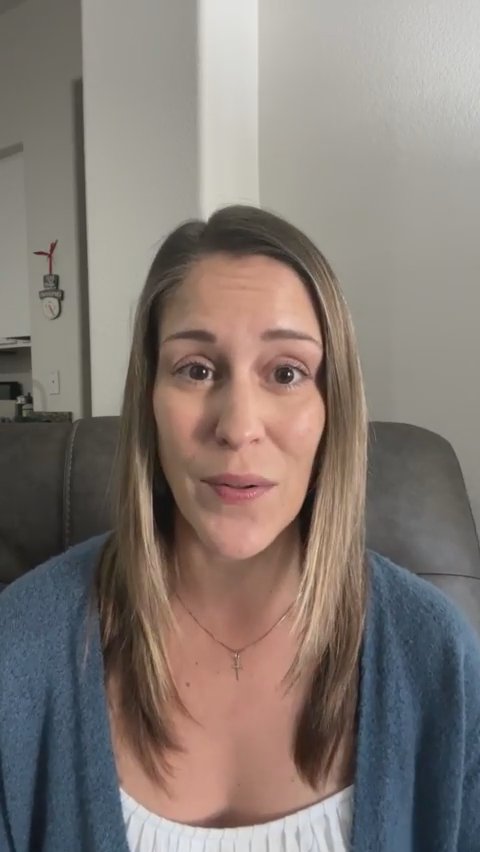
Our willpower has a limit and when we reach that limit, we often revert to old ways of thinking and acting. Dr. Carrie will discuss a study on willpower, how to recognize when you’ve pushed the limits, and what surrendering your willpower looks like.
Cadre family doctor Kerry: Today we're talking about willpower. Kerry: Even though we are unique that we have willpower, we sometimes that there's a limit to that. What they talk about is surrendering that will and being able to do that.
A study shows that our willpower has a limit. We don't have enough willpower to resist our temptations. That's when the concept of surrender comes in. And that's a huge part of the twelve steps.
Grief coach Jen Todd and Katie Donovan coming to talk about grief. Chris Eddrington is going to be speaking tomorrow on some stuff about recovery. So thank you guys for tuning in. Have a great day.
Hey, Cadre family doctor Kerry here. Just gonna give it a second for people to pop onto the live stream and then we'll get started on today's topic. All right, awesome. Let's jump in. So today we're talking about willpower. We use that term a lot, right? To say, you know, you just need to exercise willpower to overcome that thing you're struggling with. You know, you just don't have enough willpower to get through that. You just need to dig down deep and find the willpower to do that. You know, we're all given willpower, right?
It's an innate human thing to have willpower. Very unique from other species on the planet. But I found it really fascinating when I was reading this study on willpower. And I wanted to share that because I think we don't realize sometimes our limitations in that area as human beings. And even though we are unique that we have willpower and we can exercise control over things, we sometimes that there's a limit to that, right? So I want to dig into that. So first I was thinking about, like, when have I exercised willpower?
And the there are easy things. I can exercise willpower over different temptations. But really, when it comes down to sweets, that's one of my probably, quote, addictions, if that's a right way to say it. But I have been through periods of my life where I use sweets as my stress reliever. And especially when I used to work in the ER, going to the break room during the holiday time especially, there's always tons and tons of junk food out. And I don't have a lot of willpower when it comes to those things.
And I would eat just junk like you wouldn't believe. If I buy a pack of Oreos, they are one of my weaknesses. I will eat a row of Oreos in a sitting if I go to a place that serves free donuts. Something about the free and the donut together. No willpower. I will eat them until I'm sick, guys. Like, I'll have like three massive donuts until I'm sick. Hence why I just never go to a donut shop. So whatever your vice is that you struggle with Katie, are you a donut person too? She goes, same. But like exercising willpower is, we have a limit to that.
And they talk about this actually in this study and referencing the twelve steps in recovery. Now, I am not an expert in that. There are other people on Cadre that are, but I will reference it just from my knowledge of the twelve steps. Nowhere in it does it say, I'm going to never drink again. Nowhere does it say that in the twelve steps, I'm going to never use that substance again, because they recognize that you cannot do that. You don't have enough willpower to resist the temptation of the substance that has a hold on you.
So what they talk about is surrendering that will and being able to do that. So I want to talk about this study, and then we're going to talk a little bit more about how to actually then surrender that will. So this study, and I'm going to reference it here, was a bunch of experiments by psychologist Roy Baumeister, if I'm saying that name correctly, and he was literally studying the limits of your willpower. So he took two groups and he said, I'm going to have you guys complete these complex math problems that were actually impossible to solve.
Now, being a mathematician myself, that would have driven me crazy knowing that there's a problem that literally can't be solved. He didn't say that, but he's like, you're going to have to solve these complex math problems. But before you do that, control group number one, you guys sit down, just do the problems. The other group, he made them resist eating gooey chocolate chip cookies like they sat there. The aroma like fan, probably, I'm assuming there's a fan blowing the chocolate chip cookie like flavor and smell into their noses.
And they had to sit there and eat radishes while they stared at these chocolate chip cookies for a certain amount of time. Then they were told, okay, now go solve these complex math problems. And the interesting result of this study, as you might imagine, the people that had to exercise willpower over the chocolatu cookies gave up a lot sooner on the math problems than the group who didn't have to do that. And they were able to spend a lot longer trying to solve the impossible math problems because they hadn't fatigued their willpower.
So our willpower has a limit. That's what he basically concluded. Our willpower has a limit. There's a cap. And especially if we are resisting a temptation of something that is really, really hard for us. Like I said, for me, maybe it's the Oreos or it's a vice that you have. It actually will fatigue and become impossible for you to actually use just willpower to overcome something. Hence, why in the twelve steps, they never mention, you just have to have willpower and you'll get over it. So what does that leave us with then?
Knowing that as human beings, we don't have enough willpower to resist our temptations. That's when the concept of surrender comes in. And that's a huge part of the twelve steps in saying, I surrender that I am powerless over this substance. I surrender that I am powerless over this. I surrender that. You know what? I have been speaking negatively my entire life. Life. I used to actually really struggle with this. I was a super negative person. And I would say, I'm a realist. You know, I'm not negative, I'm a realist.
But I struggled with like an addiction to negativity. Now, again, I'm using that term addiction loosely. Don't take offense to that. But like, I struggled with that. That was something I was really battling with because it was innate in my behavior. It was innate maybe in how I grew up. So, like, there's things that each of us struggle with, whether it's a substance or maybe it's a behavior challenge that we're struggling with. You don't have enough willpower to overcome it on your own. Let's just put it that way.
And so first, recognizing, you know what? I'm powerless over this. I need to surrender it. And whatever that looks like for you, whether you have a spiritual walk or not, maybe you need to surrender that to your higher being. I personally, that's what I do. I say, God, I'm powerless over this. You got to help me. Because I don't have enough willpower inside to be able to do to this. So after you're saying, okay, now I surrender, now I admit that I'm powerless. Then what? Because then it's not like that's how you get through the recovery.
Twelve steps. That's not it. Right. But then it's the process of the healing and the behavior change that you want to do. So that's where the form of habits comes in. It's saying, okay, so I'm going to change this one tiny habit that's going to lead me down to my goal. So maybe, and I used to tell my patients this when they were saying, I have tried to quit smoking so many times, it's just not gonna happen. And I would say, okay, tell me what your habits look like with smoking. Well, I have one when I wake up in the morning, I have one with my cup of coffee.
I have one after every meal. I have one this. And I said, okay, so you have a habitual form of using cigarettes. What if you cut out one of those a day and they're like, well, that's not gonna help me quit smoking. Maybe it won't today. But it's saying, I'm gonna form a new habit that's going to then lead me down the path of where I want to be. Sometimes we set this goal that seems so unattainable when it's a substance or a thing that we've done our whole lives, a behavior we've done our whole lives, and it's so far off and you're like, I've tried, but I don't have enough willpower to get there.
Well, that's when you need to change a habit. And sometimes it's changing one habit for the next 21 days, then another habit for the next 21 days. Like the people who write couch to five ks, they've got this down. Like they're not saying on day two, go run the five k. They're saying walk around the block for the first week and then walk around the block twice, then maybe jog one of those times. Like this is where the form a habit forming is so critical to change a behavior that you do. So I just want to look at the comments here.
I've always felt that having something off the table has been best for me. I'm wondering what you mean by that, Luke. Like, do you have the willpower to actually say that thing is completely off the table for me, or did you struggle with the willpower to, to accomplish that? Did you put habits in place to get there? I'd love to bring that, break that down more. And yeah, Nick, like, making the small shift, that's where we make habit changes, right? With a small shift, you don't just quit something cold turkey and have it be effective.
At least for a lot of people, they struggle with that. So I didn't quit eating Oreos just one day and never go back to them. It's. Yes, exactly. Small baby steps. So thank you guys for tuning in with me today on the live. I hope this was helpful. I hope it was insightful. Make sure you tune in tomorrow. We've got a couple of really incredible lives coming with grief coach Jen Todd and Katie Donovan. They're going to really unpack. Just a really great topic, especially this time of year. And then one of our true experts on recovering twelve steps who might say everything Doctor Carey said in her video was wrong.
Not sure, but he is the true expert in this space. Chris Eddrington is going to be speaking tomorrow on some stuff about recovery. So thank you guys for tuning in. Have a great day.
Reactions and comments are for members. Joining is free and takes a minute.