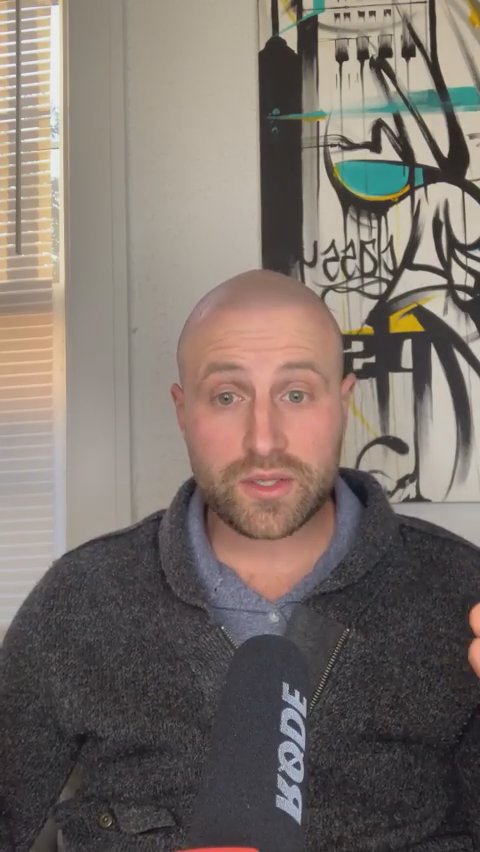
The prevailing narrative in the addiction world is that addiction is a disease. People in the substance use treatment and general recovery world fought hard to remove the stigma of addiction by labeling it as a disease. However, addiction is complicated and perhaps not all people who come to me wanting help with their chemical health have a pattern of use that meets the definition of disease. This may be a bit of a controversial take but I don't think it should be. Tune in to hear my experience and share your opinions as well.
Evan: Today we're gonna talk about addiction and whether it is a disease. He says there's been a lot of change and awareness about addiction. Now we're starting to see some people pushing back on that, but perhaps in better faith.
One of the biggest arguments against addiction being a disease is that choice. Someone can choose, theoretically, to not drink or use drugs, and then, therefore would not struggle with that addiction. However, that is a little bit over simplistic, and it brushes over a few different variables.
Is addiction really a disease? There's a lot of different reasons people use. It's not just genetic, it's notjust biological. There are other ways that people could fall into it.
Most of the people I work with with addiction were referred through the courts. A lot of these folks were having stress at home. We're all susceptible to some type of mental health disorder. To say addiction is a disease is extremely controversial nowadays.
In many ways addiction is a disease. If you compare addiction to other diseases, the relapse rates are extremely similar to things like diabetes and heart disease. But just like anything else, you can change it.
Carrie: Go ahead, let yourself go a little bit. Eat a lot, don't get sick, but you know, do it up. Have fun with your families. Have a good holiday.
What's up, Cadre fam? Evan here, your resident mental health and addiction therapist. And boy, do I have a topic for you today. It's a bit of a controversial one. Well, I had a controversial topic last week, so I don't know. I'm going on a streak this month of controversial topics just to get in a little bit of trouble here. Anyway, so we're gonna talk about. About addiction and whether it is a disease. And so let's just put it this way. This was a controversial topic because a lot of people did not believe it was, and still a lot of people probably don't believe it is.
But not all disbelief in this is created equal. Right? So some people would not believe addiction is a disease because of the element of choice. People would say, well, these are people just choosing to misbehave. Maybe it is a moral failing. It is a failing of self control. So I'd say those are some arguments that are maybe not in good faith, that are more on the side of disrespectful. But there's been a lot of change and awareness about addiction. More and more people have it in their family, and the medical community out large moved towards looking at addiction as a brain disease, right?
Something that is chronically relapsing, something that is progressive, something that is inherent, something that is heredible, hereditable, so genetic, you know? And I think overall, that was a really positive shift, and probably most people would agree with that. Now, sometimes you get some push the other way, right? So now we're starting to see some people pushing back on that, but perhaps in better faith, right? For example, you have a thought leader in the space. Author, researcher Gabor mate talks a lot about trauma, right, and the role of trauma in things like addiction, ADHD.
And he's one of the most well respected voices in addiction right now. And he straight up says he does not think it is a disease. He thinks it's a response to trauma, right? And so he's not minimizing addiction. He's not putting the blame on the addicted person. He just has a bit of a different theory. And there's other people who look at it maybe more like a learning disorder. So there's a book, I never actually read it, but, I mean, I've heard some of the arguments of, you know, it's kind of the pushback to the more, like, conservative views of it.
And it's called, like, the unbroken brain. And I believe she looked at it more like a learning disability, right. So I can't, like, dispute her arguments at all, because I never ended up reading that. But I'm just kind of showing you an overview of some of the different types of views on addiction and disease, because it's interesting that this is not like that new of a concept. Apparently, one of the early modern physicians, kind of like one of the founding fathers, in a way, of Doctor Benjamin Rush, kind of the father of american medicine, and he viewed alcoholism as a disease.
So this is not like, a super new topic. To break this down a little further, let's talk about why or why not addiction may or may not be a disease. And let's look at the earliest arguments, which is what happens, right? So one of the biggest arguments against addiction being a disease is that choice, right? Someone cannot choose to be diabetic or not. Someone cannot choose to have cancer or not, but somebody can choose, theoretically, to not drink or use drugs, and then, therefore would not struggle with that addiction.
Right? It's pretty simple. I mean, the logic adds up. However, that is a little bit over simplistic, and it takes away and it brushes over a few different variables. All right, so there was a pretty well known documentary, at least in my world, addiction space, called pleasure unwoven, where it's basically this physician who ended up struggling with addiction. And he kind of made it his mission after getting out of treatment to figure out, is addiction really a disease? Looking at it from more of a medical standpoint, that brought him on this whole journey.
And he makes this documentary, and basically he says, well, the greatest argument against it being a disease to, as they say, steel man the other side. Is that what I just said? Right, that choice argument. And to spare you the hour and a half of watching it, even though it's a great documentary, there's a lot of interesting stuff in it. But basically, spoiler alert. At the end, he states that he believes it is a disease, and the reason he believes it's a disease is that people may have the choice whether to drink or not, but they don't have the choice to have the level of cravings that they do.
Like, once it's in their system. And the way their body reacts is just not the same. Right? So a lot of people have more, especially alcoholism, more severe forms, or people who use drugs. And certain, you know, a lot of it, right, is genetic, the way your body reacts to it. Therefore, the people who tend to get hooked and struggle with the most severe addictions tend to have greater cravings than other people. Right? So the brain structure itself is different. So it's not that they can't choose not to do it.
It's just really hard. It's just harder for them to choose not to do it because of the level of compulsion there. So that's his argument. Okay, makes sense. I agree wholeheartedly. Right? But I mean, I think that could be an oversimplification in a way as well, because there's a lot of different reasons people use. It's not just genetic, it's not just biological. I mean, kind of like Gabor Monte said, like if you have a lot of trauma, a lot of people use to self soothe or PTSD, substance use is one of the side effects of that.
So there are other ways that people could fall into it besides just the fact that, you know, it is a predetermined biological, brain, structural kind of thing, right? So some of the reasons I've seen, right, that people may fall into an addiction and the endpoint kind of looks similar, right? So let's just say, let's call the end point like severe addiction, right? So some people, I find like one group of people who have ADHD, right, who struggle with executive functioning, they tend to have higher rates, right.
People with trauma, PTSD, people who have more of the genetic in their family, especially alcoholism, but just substances as well. So there's a lot of paths that lead people, right? How about this one? Environmental, just having a lot of stress in your environment, not just trauma, but a lot of times people just in a stressful situation, another reason that leads to addiction, right? And it looks the same in the end, the end result, right. They have the symptoms, what we call a substance use disorder, because we don't really say, we don't diagnose, oh, this person has addiction, this person has alcoholism.
I mean, those are more colloquial terms. We would say a substance use disorder, which is based of eleven symptoms and just an example list all eleven. But basically they're consequences from drinking, having strong cravings and urges. Is one of them building a tolerance, needing more and more to get the same effect, having it affect your work, your responsibilities, your relationships, your health, putting yourself in risky situations, having withdrawal, physical withdrawal symptoms. So you kind of stack those up and then you diagnose a level of severe severity, right?
So it doesn't matter how you get there, although that may actually matter in the end, but in some ways it doesn't matter because it looks the same when you have a substance use disorder. Meaning that the outside symptoms have similar patterns, right. Everyone's looks different, right? But it's hard to tell now. So some of the pushback. Right. Like I said, is, you know, it's not necessary. Maybe it's more of a disease of learning or it's a condition of learning. It's a response to trauma. And I think, like, a lot of those things can be true.
So let me share my opinion. Oh, hey, car jazz, how you doing today? Yes, it is an interesting topic. So one of the things that surprised me in starting to work with folks with addiction is that most of the people that came to me that were referred to me, a lot of it was through the courts, to be honest. I kind of thought that I'd be referring a lot of people to treatment, right. For that classic addiction. But very few of the people who came to me had that same pattern. They didn't really have that, like, chronic relapsing brain condition.
Their use was not as severe. And this is just in general. Of course, I would have a lot of those do a lot of treatment referrals. All that good stuff was there, but it really surprised me. So a lot of people were getting, like, Duis. A lot of these folks were having stress at home, and a really big example of this was kind of that period between 2020 and even now, more so back then was just a huge spike in people seeking therapy from me for substance use. And it was almost always. So here would be, like, a typical client, right?
I would get, like, so many like this in a short period where it's like, you know, my. Ever since the pandemic, my drinking has gotten out of hand. You know, I've always liked drinking and, you know, perhaps abused it more so in the past, but my drinking increased, and it really impacted their life, their relation. A lot of them. A lot of the time, their relationships were kind of circling the drain. I mean, they were a lot of stress in their relationships, but they didn't really have that same pattern.
Right? They weren't these, like, I've been to treatment five, six times. Again, I get those people. I had a client the other day, a new client, who's like, yeah, I've been in treatment six times. I relapsed yesterday. Right. I mean, they had much more of a severe addiction, but that's not most of the people I was getting in an outpatient therapy environment. Of course, it would be different if I was working in a residential, but probably the role I'm in is, like an outpatient therapist, someone in the community.
I'm probably getting a better, more wide sample of people getting a better idea of who's out there in general, because before I did work in treatment. So I always thought, okay, well, these are the addiction cases all look like this. They all look severe. And based on my personal experience as well. So we have these folks, right, who are coming in. And basically what it boiled down to was stress. So they were having a ton of stress due to all the reasons one would in a pandemic with restrictions and left and right not being able to be out doing things.
We were all there. So, you all know, I haven't met one person that didn't have some negative impact from the pandemic. Therapists were full. You know, most every therapist was full because glad people were actually seeking help. But the stress really, you know, it's like stress blows out the weakest point that we have, right? So what's a better way of putting that? Right? So it's like, if I put stress on an object at its weakest point, it will break, right? And that weak point in this metaphor is what we're susceptible to, because we're all susceptible to some type of mental health disorder.
We just have to get put in the right condition, right. You may never be in that environment, therefore, you may never have to deal with a mental health disorder. But I bet I could find some environment to put you in, and that would make you more prone towards depression symptoms, anxiety, OCD, schizophrenia, no matter what that is. Right. If I put you in a stressful enough environment, so now more people are experiencing stress, therefore they're experiencing more depression, anxiety, and some people then will be more prone to using substances.
And if that pandemic didn't happen, maybe that would never have been an issue. Right? So these folks, right? Kind of. We talked about that environment. Stress feeder, right? So then they have a substance use disorder, and it looks like they have just like any other addiction. So I guess what I'm getting at is, my view, is addiction a disease? Sometimes. This is just my opinion. Do not, you know, take it for what it's worth, if what I'm saying makes sense, you know, run with it, do your own research.
Because to say that is extremely controversial nowadays. To say is addiction a disease? And a lot of it's just how you define disease, because essentially, it's like, the true definition is like a defect in an organ that causes symptoms. It's not a high bar. So pretty much anyone who has some form of substance use disorder, you could say it's a disease. However, that more traditional view of this being a chronic, progressive relapsing disease. Oh, hey, James. Thanks. Chronic relapsing disease does not, to me, does not make sense for everybody who seeks help or someone who meets the criteria for a substance use disorder.
Right now, it's hard to tell because looks the same. They're having the same symptoms. They're having problems in their relationships, or maybe even take it to the point where they're having withdrawal. That, to me, is pretty rare. Usually if someone starts having withdrawal symptoms, it's much more of a brain disorder, right. And the thing is, even if you're one of those people who just are going through a stressful situation, if you don't do anything about it, if you don't change that pattern, if you do it enough, right, it starts to change.
Your brain. Our brain is constantly changing. Your brain is changing right now as you're taking in this information, whether it's making you smarter or maybe dumber listening to me, but, you know, your brain is constantly changing. So if you get into this pattern where you're affecting your brain using alcohol and used to that pattern of using it to calm your nervous system when you are stressed, right. It starts to sink its teeth in deeper and deeper. And usually when you get to that point when you're in withdrawals, that's not a good sign, right.
Then that looks much more like someone who has that chronic relapsing brain disease. But I don't necessarily. And again, this is just language. Language is important, and we may just be splitting hairs in some way. But those folks who are coming in for the environmental stressors alone maybe, too, looking at adolescence, right? You know, a lot of adolescents, a time where people are experimenting, you know, college students, probably a good chunk of 20% of college students maybe looks like they're alcoholics or have a substance use disorder, but they'll probably grow out of it.
But sometimes those folks, too, may start using it heavily. There's a lot of people, if I were to go poll people and be like, look, at any point in your life, was drinking, did it get out of hand? At what point were you using drugs or drinking the most? And was it a problem? And a lot of people will have that period be like, yeah, I went a little too far in college or at this point, but then they just kind of turn it around, right? So in that moment when they were at their worst, right. I could go in and say, well, you're having all these consequences.
I could technically diagnose you with a substance use disorder. And addiction is a disease. You have a disease, right. To me, that just doesn't make sense. So I'm kind of a centrist in this area. And I think, too, when you really start pushing people. And if I were to, like, you know, make this argument to other people in the field who are addiction professionals, people who believe addiction is a disease, they probably agree with me. So we used to categorize. So, like I mentioned, we categorize addiction into three levels.
Right. I always joke and say mild, medium, hot, like the Taco Bell sauces, but it's really mild, moderate, severe. It's basically as simple as, like, two to three symptoms is mild and three to, you know, four to six is moderate, above six is severe. Or if you have that, it's pretty rudimentary. I mean, it lines up fairly good. I have my own opinions and of ways to maybe make that more accurate, in my humble opinion. But that's how we do it. And that changed from how we used to do it prior to 2013.
I don't know how far back before that, but before 2013, we had pretty much the same list of symptoms, but instead of three levels, they just kind of broke it down into two things, which was abuse and dependence. And I actually like this. I like both ways, but for different reasons. I wish we could kind of combine them, but I like that because it was kind of separate. It said alcohol abuse or substance abuse. Cannabis stimulants. Right. So it's kind of broken down by the drugs, but, you know, say a stimulant use disorder.
Mild, moderate, severe. And in this old way, it was abuse versus dependence. And I like that because the dependence, that may be more reflective of a disease and the abuse may be more reflected of a maladaptive coping mechanism that maybe hasn't gone that far yet. And maybe, let's say you look at the other scale and say, hey, anything severe and above, maybe that's how I'd probably look at it. That's severe and above. We're looking at a pretty serious brain disease going on. But again, just like anything else, you can change it.
Last thing I'll mention is we talked about that choice. Someone can't choose to have diabetes or cancer. Now let's look at that, too, because there is a behavioral component, let's say, for type two diabetes. A lot of times that's based on the foods you choose to eat. Now, someone else could eat the exact same diet you did and not get it, but you're more susceptible. However, the choices in the food that you ate triggered that disease. Right. So would we say diabetes isn't a disease because there was an element of choice in it.
So that's one of the good arguments that in many ways addiction is a disease. And it's even more interesting when you look at, if you compare addiction to other diseases, the relapse rates are extremely similar to things like diabetes and heart disease. The relapse rates are very similar because of the behavioral component because like when you ask a person to make any change, it kind of follows some predictable patterns because change is difficult. Right? Imagine if I just said, start flossing every day.
It's like, you know, you should probably do that. But it's like, I don't know, it's kind of hard, you know, to form a new habit. No matter how hard, you know, whether it's flossing or like exercising five times a week. If you tell a whole bunch of people to do that, there's like a small amount, 20% or something that would actually like follow through and do it who say they will. And that goes for taking medications like adherence to prescription medications, whether it's psychiatric or physical or like not good at all.
That's one of the problems is like not the meds themselves, just like the adherence. And a lot of times you may be well intentioned to doing it, just like with addiction. I'm well intentioned. I want to get sober, I want to go to meetings, I want to do these healthy new things. But just the follow through is difficult because it requires a behavioral change. And so keep your eyes out because sometime early next year I will have a series on this about making behavioral changes, whether it be a full blown addiction to biting your nails, whatever that may be.
I talk about change and I have a series where you can use that to change any habit and I encourage you to try that out. So I won't go into that whole thing, but keep your eyes out because that will be down the pike. Anyways. Hey Carrie, how's it going? Appreciate you saying that. We got a big holiday tomorrow, thanksgiving I hear, and I hope you all have a great holiday. Go ahead, let yourself go a little bit. I'm an addiction professional and I'm giving you my blessing to, you know, let go get a little hedonistic, right?
We all need those breaks, right? We can't be too controlled. We all need a little break and then we could kind of get back to our normal routine. So have fun with your families. Eat a lot, don't get sick, but you know, do it up. Eat a, eat a slice or two of pumpkin pie or whatever it is that is your favorite. Alright folks, appreciate you joining in. Have a good holiday.
Reactions and comments are for members. Joining is free and takes a minute.