A lesson on reframing that shows how to identify recurring negative thoughts about chronic pain and view them from a more realistic, believable perspective rather than forced positivity. Covers common cognitive distortions and using labels to analyze automatic thoughts.
A brief welcome back to the 15% Better series and a quick statement that today's skill is reframing for coping with negative emotions related to chronic pain and illness.
Explains reframing as seeing recurring negative thoughts from a more realistic perspective, distinguishes it from mindfulness/diffusion, and discusses evolutionary reasons our minds skew negative.
Discusses the limitations of 'look on the bright side' advice—especially for people with chronic pain—and emphasizes that reframes must be realistic and believable to be helpful.
Describes the reframing exercise as actively analyzing automatic thoughts, applying reasoning rather than accepting them, and using labeling to recognize exaggerated or distorted thinking.
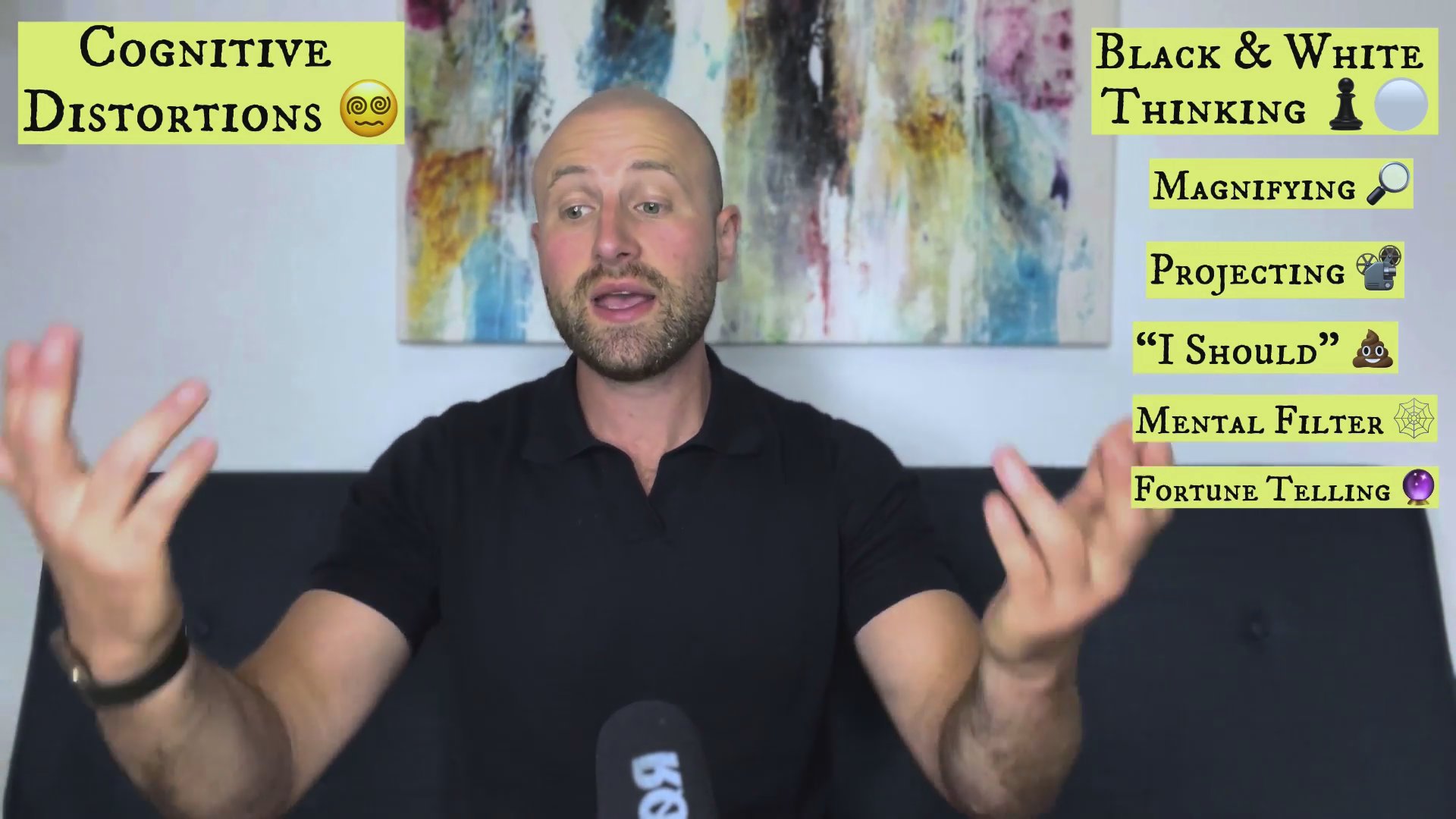
Goes through specific cognitive distortions—black-and-white thinking, magnifying, projecting, 'should' statements, mental filter, and fortune-telling—providing examples and showing how they can lead to pessimism and self‑fulfilling prophecies.
Wraps up by suggesting viewers use these labels in diffusion or reframing work and teases a follow-up video that will teach a step-by-step exercise to apply these concepts to chronic pain and illness.
Welcome back to 15% Better, my series on coping with chronic pain and chronic illness. And today I'm presenting my other favorite skill for coping with negative emotions and negative feelings that come from chronic pain, both physical and emotional. And today we're going to be talking about reframing. In the last video on diffusion, I talked a little bit about reframing and it's taking a slightly different approach, not just being mindful and having a healthy detachment from the emotions, but identifying the ones that continually come up and trying to see them from a more realistic light.
Now when I say realistic, essentially that's implying that these negative thoughts or feelings aren't true. And that's not necessarily the case, right? Some of these negative or distressing thoughts and feelings we have a basis in truth. They're based on our experiences, whether they're from our childhood or our experiences having chronic pain. but they tend to be exaggerated and they skew negative. So why do our minds tend to see things from a negative light automatically? Well I believe there's an evolutionary reason for this like we're harder on ourselves and other people or we're constantly scanning to see danger and one of the reasons for that is it's based in survival.
If I'm not seeing these negative things, if I'm not seeing these threats, well I'm more likely to have something bad happen and not survive. When it comes to doing reframing exercises with clients I like to call it realistic reframing because if we skew negative if we see things more realistically it is automatically more positive. There's a term that's been gaining a lot of popularity and that is known as toxic positivity and I think this is really interesting because essentially it's saying this attitude we've taken as a society of well hey look at things half full or try to see the best in everything that doesn't always work well.
For example, especially for people with chronic pain to be told, hey, just look at the bright side of things or don't worry, it's going to be okay. It's going to get better. Well, you don't know that. And folks with chronic pain know that there is no magic bullet. There is no magic cure. And for a lot of us, we're going to suffer with this. So how can we be okay with that? And when we hear folks who say these things to us who have never experienced it before, even mental health professionals who try to be overly positive, It really is annoying and tends to piss us off.
If we're going to reframe a negative thought and make it more positive, it's something that we have to believe. It's something that needs to be more realistic. Now, a lot of times it's hard to believe things that are even real. So when we do an exercise called reframing, we're analyzing these thoughts and feelings. We're looking at them from a different perspective. We're applying more thinking and logic to it and not just accepting those automatic feelings and thoughts as truth. As I mentioned in the last video, there's this idea of labeling.
And when we have negative distressing thoughts, they tend to be exaggerated. And this comes in a lot of different forms. We call these cognitive distortions. And it's really critical that we acknowledge these negative thoughts and what cognitive distortions are behind them. So here are a list of some ones that you could think about. The first one is black and white thinking. Basically seeing things as 100% one way or 100% the other way. There is no gray area. There's no nuance. For example, my pain is never going to get better.
People never listen to me. There's no hope whatsoever. The next is called magnifying and that's taking something that has some truth to it and blowing it out of proportion or making a mountain out of a molehill. For example, if my career is over. So the next one is known as projecting and this one is interesting because essentially it's taking these things you feel about yourself, taking these core beliefs and projecting them onto others. So thinking something like, everyone thinks I'm lazy or dumb.
Well, that's just how you feel about yourself and you're just assuming others feel that way and that's rarely true. The next one is watching out for the therapist's least favorite word and that is should. Whenever you use that word, you should stop and pause and analyze it because it's almost always not true or at the very least it's blown up or magnified. For example, I should be doing much more about my chronic pain. I should be much less lazy. I should be thinking more about what I'm doing with my future, right?
And maybe there is some truth to that, but it's putting this undue pressure on yourself and again, it's almost never reality. The next one is known as the mental filter and that's essentially only taking in information or noticing things that are negative and completely disregarding things that are positive and that can make you optimistic. The next one is known as fortune telling and that's essentially taking this negative perspective on what's going to happen in the future. It's things that may or may not happen, most of the time, again, we're skewing negative, so assuming the worst is going to happen.
And when we do that, it creates this self-fulfilling prophecy. Basically, if this negative thing is going to happen, then why try? If I don't try, well, then it's probably going to come true and be realized. I'm not going to get what I want. I'm not going to reach my goals because I don't think they're possible anyways. So those are just a few of the cognitive distortions that are out there. You could come up with your own and use those to label your thoughts, whether you're doing them for diffusion or you're doing them for reframing.
So in the next video, in part 2 on reframing, I'm gonna show you how to take these concepts and apply them in your day-to-day life, how to do a very specific exercise that I do with clients so that you could apply that to your chronic pain or chronic illness. So don't miss it.
Reactions and comments are for members. Joining is free and takes a minute.