When you get the call from the addict or alcoholic in your life asking for help what’s actually helpful.
Chris Edrington: Be super crazy behavior. The behavior around meth typically can just go wackadoo. The only alternative is jail or the psych ward, which you enter through the emergency room. The welfare check is a useful tool to set up.
Don't have your expectations too high. I think it happens a lot during the holidays. If you're struggling with one of those situations, call somebody like me and get a lot of advice. Happy New Year.
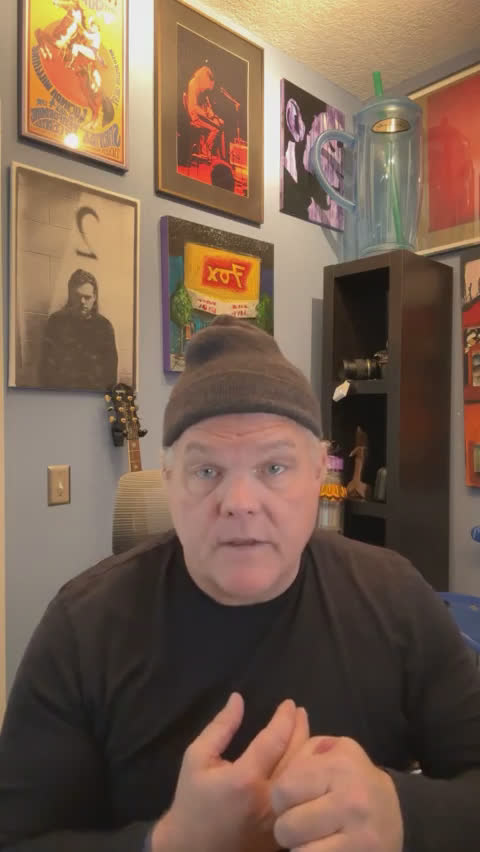
Well, happy new year, Cadre people. This is Chris Edrington here. Just got back from the east coast, spent some quality time with friends and old musicians and old junkies that still, that are still alive, which I'm grateful for. But during that break, I did get a call from a family who was in super crisis. And so I wanted to throw out some ideas about this particular situation, and I'll give you the 500 foot view, which was somebody was using meth. Be super crazy behavior. The behavior around meth typically can just go wackadoo.
And there was a hatchet and screaming and punching and all kinds of crazy stuff, and police. And so this particular family member didn't really know anything. And so I thought I would go over the super crisis kind of criteria of what your resources are and what you can do. If it's just all hair on fire kind of a situation, doesn't necessarily matter what the substance is or even if it is a substance, could just be mental health breakdown. So when somebody is intoxicated on booze or drugs in their own home, the police rarely will remove you if you live there.
They can't come into your house and say, you can't be drunk at your house and take you to detox. It doesn't work like that. You typically have to be either out in public, not in your house, or cause harm to something or someone else physically, and then they will take you out. So let's just say, for example, you have some loved one or friend, and they're acting super crazy, and everybody's scared and it's nuts. And this is what happened in this Colorado case. And somebody went to the door and somebody showed up with a hatchet, and somebody punched somebody in the nose, and a whole bunch of crazy stuff happened.
And it was a rental property who was. But it wasn't owned by so and so. The cops were super not helpful in terms of dissolve or diffusing the situation. They would not remove this person, who probably should have been removed. So the goal in this case is probably the emergency room, because even if it, whether it's mental health or drugs or whatever, if the behavior is over the top, really the only alternative is jail or the psych ward, which you enter through the emergency room. You have to go through the emergency room to get to the psych ward.
And I want to make a note about the psych ward. It's not the loony bin. It's not really a bunch of people walking around in circles like the old movies. The great thing about it is you and typically, I don't know if this is everywhere, but you have to see a psychiatrist or psychologist before you get out. So if nothing else, you do get some sort of assessment or get the meds refigured or something. So I often use the psych ward as time you get somebody on a 72 hours hold, it gives me three days or two and a half days to figure out where I'm going to put you in treatment.
And it also gives me a person who's three days off of the substance who I can talk to and have a conversation with. So super helpful understand that the emergency room into the psych ward is really the end game here. I mean, you could throw somebody out on the street if you wanted to. People don't want to do that with their loved ones usually. So the other big part of this, I would say is if you're going to go approach or you're someone in this situation, bring somebody with you who knows what to do.
And when will the police actually be helpful? Like if you're concerned about someone who won't come out of their house, you can maybe get the cops to do a wellness check and say, I'm really worried about them. And they'll go knock on the door and if they get any sense of something's wacky, they'll go in and maybe they find, you know, a situation with drugs and people and you end up getting the addiction out and into detox. May be arrested, but what, you know, what's worse, right? The overdose or they spend 8 hours in jail on a minor possession charge.
So there's a lot of context here where I have in my usual sort of work through, you know, helping people at that acute stage been willing to have somebody arrested or taken against their will to the psych ward. Because it gets us down, it gets us where we want to go. And we're not getting there doing nothing but trying to talk somebody into it. So the top three things I would recommend that you do is take somebody with you who knows what they're doing. Remember that police don't remove someone from your house just because you're mad at them or just because they said something nasty or because they're drunk.
That's a difficult thing to set up. The welfare check is a super useful tool to do to start the conversation, to try to figure out what's what. Because those people are trained and they'll see something, and it may they see something that's off, then they will make a decision like, I'm going to call the paramedics. Or I'm going to, you know, or maybe they walk in and there's an overdose and they have Narcan, and everything gets fixed. And I think it's really important that families and friends are not afraid to pull the smoke alarm, so to speak, or the fire alarm and p*** everyone off and cause a lot of drama in order to save a life.
It's worth it. So don't be afraid to really sound the alarm if you need to. And the police can be that, the paramedics can be that, and welfare checks are kind of the first step. You also have to limit your expectations about what's going to happen. Right? Like, you can't just storm in there and grab somebody around the neck and drag them out of the house and expect them to be like, geez, thanks so much for dragging me out of my house. I want to get sober now. It's usually it's about putting out a fire, right?
Everyone's hair's on fire, somebody's screaming and yelling, and you're just trying to get that event to stop, not necessarily trying to get someone to go change their life in that moment. So the set of expectations of what you can do in that timeframe is limited. And I've done a whole bunch of these, and I just did one the other day. It was in Colorado, and the cops weren't being very, very helpful. And it turns out that the sister and the sister's boyfriend teamed up. And I got them to do two or three things at the same time, and they were able to get her in the car and go and make an attempt to get into the hospital.
And I. And that. That didn't necessarily work out. But she was out of the house. She was out of the house. And the other people that were in the house that were really upset were good, because she was out of the house and she wasn't going back. So sometimes the end game is you've just removed the problem from the house and you haven't really gotten any progress otherwise. But that's. That's a win for the moment. So super crazy, dramatic, drug induced. You know, hysteria can very quickly be extinguished if you know what you're doing.
And if you don't know what you're doing, you're going to typically pour gas on the fire and make it worse. So stay tuned for some more stuff around that subject. I think what I might do is work out a series that goes from that stage to the next stage to the next stage. And I think there's so much. There's so much conversation here that I hope people ask questions. So thanks, Sean and Dan, for tuning in. And Katie, of course, vicar was Katie. Katie's always there. God bless her. So if you're struggling with one of those situations, call somebody like me and get a lot of advice.
But don't expect. Don't have your expectations too high. A lot of times. It's just, like I said, just putting out the fire at the moment and then maybe the conversation starts about, okay, let's look for some long term solutions here. I think it happens a lot during the holidays. You know, people are. Their emotions are high and they feel shame and all these other emotions because they're around the family and everybody knows somebody's in trouble and it just blows up. Like the 6th grade volcano experiment that we all did.
And there's. It's hard to get. It's hard to find your way out. So I hope this is helpful. Happy New Year. Behave yourselves out there. Till next time.
Reactions and comments are for members. Joining is free and takes a minute.