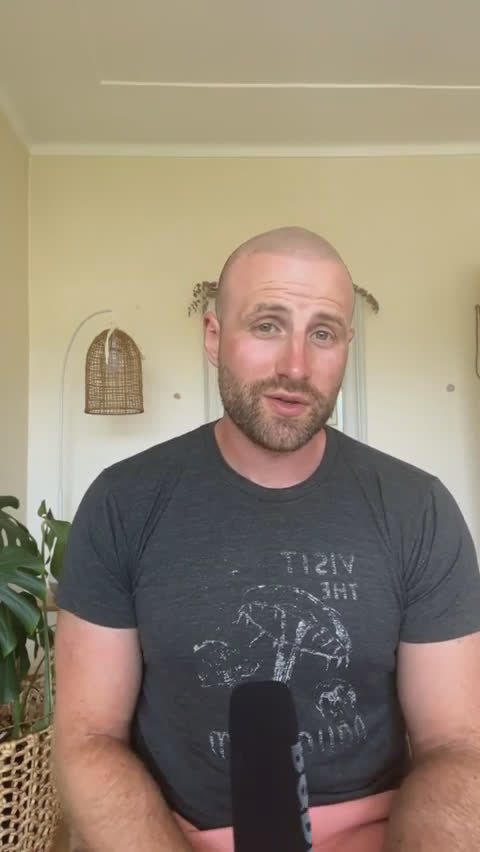
In this Livestream, I will talk about the New Years' phenomenon and how we all like to set new goals with the greatest intentions. However, it's well known that few of us actually follow through once normal life settles back in. So I will share my experience as a therapist, the goals I will be setting this year, and how I plan to follow through.
Mental health and addiction therapist. Evan Lieberman is live a New Year's goals review. For those watching that rewind, feel free to put your questions in the comments. If you have any other questions or ideas for live streams, go for it.
How many people actually succeed in following through with their New Year's resolutions? The first thing that people tend to have that are successful is motivation. There are four distinct variables for those who are successful at making changes.
Make a plan. Writing stuff down really helps you follow through because change is hard. Accountability is just letting other people in on your change process. The more accountability you have, the more likely you are to make that behavior change.
I hope you enjoyed this. Maybe it's a little too late for you all tonight, but I will be back on the second and a little bit earlier time. Have a good day, well, night, have a good new year.
Mental health and addiction therapist. So for those of you in the United States, I wish you a good evening. It is midday here in sunny Australia. Hope you're surviving the cold out there. So, yeah, let's see, let's give it a minute or so. Let's get some folks who are likely to pop in. So it looks like the notification went out. I just got one on my phone. Evan Lieberman is live a New Year's goals review. So let's see if we get some people rolling in after the notification. But for those of you, let's say, watching the rewind today, we are going to be talking about New Year's goals.
Now, that is a topic as old as time. So, yeah. So I'm gonna go ahead in this live stream and focus on, on how to make those as successful as possible, or should we even do them? Right. So we're kind of going to do, we're going to do a review of New Year's reviews and see if it is worth it, in my humble opinion, given that I am someone who works in what I like to call the change business. Right. So anyway, why don't we just dive into it? We'll see who walks on in, answer any questions. So for those watching that rewind, feel free to put your questions in the comments or if you have any other questions or ideas for live streams that you want to see from myself or any of the other Cadre fam, go for it.
All right. So let's jump into the topic. So New Year's resolutions right now, on its face, I mean, this seems like a great idea, right? It's a new year, new you. It's a time to reset. It's a time to reflect, and it's a time to perhaps make some new commitments or at least have some intentions to do things differently. So on its face, that is a good thing. Now, I guess the question is, you know, how many people actually succeed in, you know, following through with their New Year's resolutions? I know a lot of people may be signed up to go to the gym and maybe they make some short lived progress, but that it doesn't seem to last.
Right. So one of the reasons I want to talk about this as well is that I have a series coming up. It's going to be on Cadre. It's an eight part series of videos that's all about making changes. It's all about taking some of these bad habits, unhealthy habits, undesired habits, whatever you want to call them, and discontinuing them or significantly reducing them and forming new, healthy ones. So I thought maybe I would go over a little bit about effective ways of making changes to give you a little bit of a sneak peek and a couple ideas off the bat for your New Year's resolutions.
Right. So I think one of the reasons why New Year's resolutions are really difficult is for this reason, because change is difficult. So I don't think it is all just about New Year's resolutions that are, like, inherently more difficult than any other resolution. Right. If anything, maybe it's going to be a little easier because you're prompted to do this thing where you're. You have this, like, time, you have this deadline, you have this kind of symbolic transition period. And one of the things I recommend when anyone is making a very significant change in their life, let's say, like, for smoking, to set a quit date can time, right?
So, like, when I've done it in the past, it's been like a vacation, a trip, a birthday, you know, just other examples, a new year, a new month, anything that has, like, some kind of meaning that could be, I think, really helpful for your mindset when it comes to that. So that's just one part of a bigger concept and making of changes, which I boiled down into four. Four distinct variables for those who I see successful at making changes. I call it the habit tripod. I've talked about in here before, three legs of the habit tripod.
And then there's one last thing that sits on top of the tripod. So those are some of the things that we'll talk about in my series. But just to give you a brief overview, whether you're making changes on the new year, you're making changes at any point. The first thing that people tend to have that are successful is motivation. Now, you're probably sitting here thinking, well, yeah, duh. You can't do anything without motivation. So, you know, what am I supposed to do about that? I'm either motivated or I'm not.
Not necessarily the case, because our motivation is constantly shifting and changing. It could be minute by minute. Right? Like, my desire, let's say I'm smoking and, like, my desire to quit maybe is, like, really high in a given moment. But then all of a sudden, like, I have a bad craving and that, like, you know, a really strong craving. And I'm like, well, my desire just went down for quitting because I really want one. All right. But that's just one example of how it's constantly changing. And really, one of the ways I enhance motivation, and in a general sense is the more you think about it, the more thought you put in, the more that increases your motivation.
So it's not just this stagnant thing that is. That just is. It is something that you do have some control over to a degree. Now, if it's like, you know, hey, how motivated am I to jump in a bucket of ice water? I mean, you got those people who do the, you know, cryo this, that, and the other ice baths, and they're motivated, but, you know, it's difficult to do it. However, their motivation is more so to do that than to not. So that's enough motivation for them to go jump in. But if you have no reason or desire to do that, maybe I could convince you.
I could say, hey, here are the benefits. You feel really good after. Here's some of the research on ice baths. It's going to lower your inflammation. I don't know. I'm just saying these things that I've heard. I don't know if it's true. Probably. Maybe after I talk to you about those benefits, then your motivation goes up. Whereas before you never thought thought about it, you had no desire to jump in an ice bath, something that's really difficult in that moment. But in a sense, what I work with clients on is putting more thought into it and really thinking about what are the benefits of change and what are the downsides of staying the same.
And part of that is actually looking at and acknowledging some of the benefits of staying the same, of continuing the behavior, because there's a reason why we do it. So we don't want to ignore it. Right. I think sometimes, like, it's like when we're talking to teens about, like, don't do drugs, all we do is tell them the negative. But I find that, like, then what is the teen going to do? They're going to start arguing for the other side. That's what we naturally do. That's how we make decisions.
We have two, you know, we have varying interests and voices in our head. One that wants to smoke and the other one that doesn't. Right. And so then they kind of go back and forth, and eventually we got to make that decision. Do we do this or not? What am I more motivated to do in that moment? Right? So if I argue one side, the other voice comes together. It's like a debate. It's not just, we just don't have one influence. Otherwise we'd have an impulse and then we just do it. And that would probably get us in trouble.
We need to think things through. So part of that in motivation is acknowledging what the upsides are, but then kind of shifting into what are the upsides of change. I have people like, think of, all right, well, what would your life look like in a year, do you think, if you made that change? How do you expect to feel? You know, to have more, breathe in more clean air, your lungs have healed, you're able to exercise more. You don't have to sneak out and have a cigarette. Your clothes don't have to smell, your hands don't have to smell.
You don't have to deal with other people's judgment. There's all these benefits to quitting smoking. You have to have that same kind of health anxiety. You can feel a little bit better about yourself. So it's things like that, when you really stop to think about it, that in the moment increases your motivation. So you got to keep that motivation level up high enough to then make that really difficult change. So that brings us to the second leg, which is probably one of the more important ones, is making a plan.
And I think this is where a lot of people go wrong on New Year's because they're like, well, all right, I'm just going to do this. I'm going to go to the gym more. Oh, I got a gym membership now. That's good, right? That's a good step in the plan. You actually got that gym membership. But, you know, other things would be like, did you set time aside? Did you write it out? Do you have a workout plan? Do you have a trainer? Like, what are some of those things that it's going to make it as easy as possible, right?
Because if you're like, I'll just kind of go whenever I can. You don't have time set out or aside. You write a calendar, right? All these things. Writing stuff down really helps you follow through because change is hard. And so all we can do, there's no magic bullet, unfortunately, even though people may try to tell you, but I'm just going to say this is as close to one as I could find. It's just making it, making, doing the right thing as easy and accessible as possible and really having it ingrained.
Right. And so all this is part of the plan. Everything that we're talking about, whether it's increasing your motivation or what we're going to talk about next, which is accountability, setting up layers of accountability. Those are all important for important parts of your plan, right. It's like you're about to go into something difficult right. So you're, like, about to go into a battle. Well, you probably want to think about what you're going to do before, because then once you go in, there's like the fog of war and all these things that you didn't account for.
Right. And so it's like, okay, well, what happens if this part of my plan goes wrong? Right. How do I adjust it? So I say the plan, you want to stick to the plan, but as you go into the change, you may realize, oh, here are some things I didn't account for. And so you could always change the plan. You don't want to, like, change it, though, just to, like, suit yourself and like, you know, allow yourself to go back. Right. So that's just like one overview of that, then. Accountability is just letting other people in on your change process so that you're accountable to them.
Right. And even if they're not going to, like, yell at you for not doing it, just the mere fact that other people know you're going to do it kind of puts a certain pressure, and it's not necessarily a bad pressure. You don't want to go too far on things like that, but it puts a healthy pressure where you're like, okay, I want to show people, I want to show my friends that I was able to do this. Yeah, I don't want to look bad, but I want to look good. It helps with your self esteem that, and then also support.
You have people to support you. So if all your friends know that you're not trying not to smoke, well, then they're not going to offer you cigarette. If they don't know, then they're going to offer you one. And then that may put you in what I call a critical moment where it's. You're faced with it. You got to decide one way or the other when you're having a craving or an urge. So it's really important to have that accountability research. It's pretty clear that have, the more accountability you have, the more likely you are to make that behavior change.
That's why certain programs like alcoholics anonymous is really good. There's a piece of. Of support and accountability, right, of letting other people in. And that's one of the reasons why a lot of researchers believe that it is extremely helpful because that is kind of baked into the program, baked in those layers of accountability. I think of it like a layer kick. So the more layers you have, the more people you're accountable to, the more support you have, the more likely you are, right. Those are the three legs.
And then the final thing before making that change is the act of making a commitment. So really committing to yourself, it could be also commitment, committing to others to give you that final push to kind of jump into that ice bath, you know, like, I'm going to do this instead of like, kind of going back and forth and faltering. Right. You have the plan, you have everything set up. You're going to commit to giving it your all. Now think about having all these things in place versus not, versus just thinking about it.
Maybe doing one or two actions before you make that change. But think about, I mean, it's pretty easy to tell why option, you know, a or b, which everyone might mention first. Right. Why it is having accountability plan, motivation and a commitment, how that is going to be more likely to be successful than not. So in my video series, I break down all this into great detail. There's about an hour, probably more than an hour of content in there, but it's, it goes by pretty quick. It's broken up into eight videos.
We talk about that, we talk about relapse. I'm going to put a summary in there to go back and make it easier. But if you've ever thought about, hey, I want to quit smoking, I want to go to the gym more, I want to quit this, I want to do that. This is a really good opportunity to commit, to say, okay, I'm going to watch this video series and I'm going to really give it a shot. Because sometimes it's like years, like, I've wanted to quit this or that for years. And part of the process is I actually went through it with you.
Right. So I chose a behavior to quit, and I kind of put my money where my mouth is and I did it. So I'll talk a little bit more. So if you're curious about what that is, that's in the series as well. So hopefully within the next month or less, all those have been submitted to Cadre. So hopefully we will have those up and going soon and that you check them out because I really think you could benefit from it. I mean, this is something I do with all my therapy clients to one degree or another, and this is something that I do whenever I decide to make a change.
I talked about in the description here that I was going to also discuss, like, some changes that I was going to make. Well, one thing is I'm just going to kind of pick one, right. I'm always trying to self improve, but I picked just one thing that I really want to try to commit to. And that's just like having more of an organized schedule when it comes to making content, right? When it comes to doing videos, social media, this to, instead of just kind of willy nilly doing it to like. I mean, there is some method to the madness now, but with so much going on, I'm just not making as much or I'm not doing it in this organized the way that I know I need to do to be successful.
So, you know, you know, today's New Year's Day here in Australia, but I kind of set this date where I'm like, okay, starting this part of the year, I'm going to, you know, do these types of posts every day. I'm going to do this, that and the other. So, yeah, so that's just a little overview. But anyway, folks, I got to get going here. I hope you enjoyed this. No one was able to pop in. Maybe it's a little too late for you all tonight, but I will be back on the second and a little bit earlier time.
Can't remember off the top of my head, probably late afternoon. Anyways, folks, you have a good day, well, night, have a good new year. If I don't see you before then, which I probably won't. And take care of yourselves. Bye.
Reactions and comments are for members. Joining is free and takes a minute.