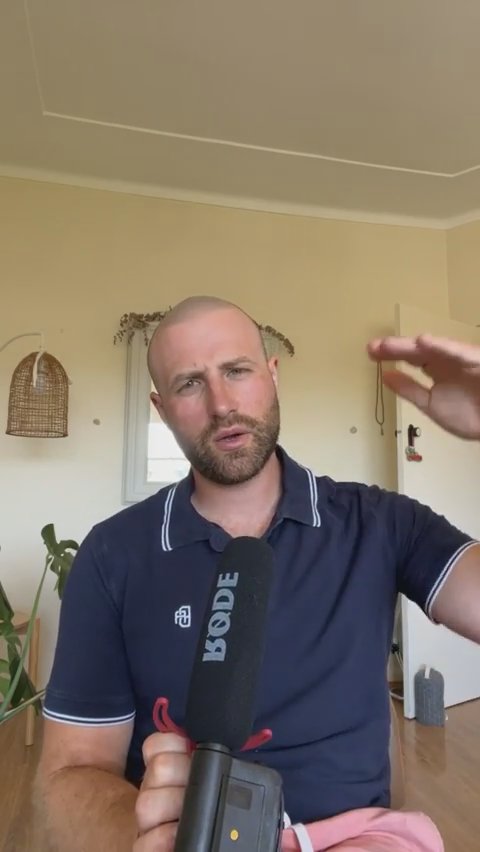
On today's live stream, I wanted to try something a little bit different. I have been investigating some of the public figures who struggle with various mental health disorders. So I wanted to share some of the folks we have all come to love who also happened to be what some refer to as “neurodivergent.t” This term often refers to folks who have disorders like ADHD, Dyslexia, or Autism. The more I looked into it, the more I realized there are quite a few people who have used some of the skills that come with being neurodivergent to succeed and their particular career field.
Evan: I have a topic I'm really excited to talk about. I think it'll be a little bit of fun, but also educational and hopefully enlightening. Let's see if anyone comes in and joins us for the live stream.
Autism, dyslexia and ADHD are all disorders with distinctive symptoms. There's been a movement to normalize this more and see it more than just a disorder. We thought it could be a fun way to learn and demystify these disorders by talking about some of the famous people who are open about having it.
We'll start with folks who have dyslexia. Like a lot of disorders, there are upsides and downsides. Often, when we have certain deficits, it's like other areas strengthened to make up for it.
A lot of these folks we're going to list are obviously going to be people with more higher functioning autism. Just saying they're high functioning does not take away from the difficulties that they could have. Take these lists with a grain of salt.
There's a lot of similarities with ADHD and dyslexia. People who are diagnosed are often diagnosed with more than one. Some of the actors or famous people who have ADHD and some of these I've heard talk about it.
Howie Mandel struggles with hypochondria and OCD. It's important to destigmatize these things. A lot of folks who have these things really struggle with self esteem because they feel different to others. Maybe having a separate school for kids who can play to their strengths.
It's Evan, your resident mental health and addiction therapist. Isn't this thing on? It would appear to be. Anyways, I have a topic I'm really excited to talk about. I think it'll be a little bit of fun, but also educational and hopefully enlightening. So let's see if anyone comes in and joins us for the live stream. It looks like the beacon just went out as I'm getting the notification that I am live, so that's good to know. Anyways, we're going to go ahead and talk about neurodivergence, right?
And that's just like a fancy way of saying folks who have essentially a different brain structure. So usually the three disorders that usually people refer to as neurodivergent, at least most commonly would be autism. Being on the autism spectrum, being with, having dyslexia and ADHD. So these are all disorders. So they all come with pretty distinctive symptoms, or one might say downsides or serious struggles that people have. So I think in many ways, there's been a movement to normalize this more and see it more than just a disorder and try to see it more as a difference.
Now, I think the pendulum could swing one way or another too far, because you see some people that maybe have the disorder, and they really try to maybe destigmatize it to the point where they don't even want to acknowledge it's a disorder, which that sometimes can be harmful because of spectrum. I think autism especially is a difficult one because of the different levels of severity that are very commonly specified, because that spectrum does span probably wider than some of the other disorders, like, for example, dyslexia.
You could have it, like, pretty severely or less so, but that divide is not quite the same as you would see for something like autism, where you could have someone who's, like, unable to support themselves, they're nonverbal, they require full care all the time, versus someone who has what would formerly be known as Asperger's disorder, more of level one autism, as we would call it now, more high functioning autism. A lot of those folks who don't get diagnosed till later in life because they may just seem a little odd or know, a little eccentric, you know, or something like that, but they're not requiring 24/7 care or support.
So I thought it could be a fun way to learn and demystify a bit these disorders by talking about some of the famous people who are open about having it. Now, kind of on some of these lists, you have people where it's like, experts suspect that so and so may have it, but, I mean, that's kind of problematic. I'm not even. You know, I don't even want to go there because, you know, we probably shouldn't. You know, it's kind of an ethical thing that we don't want to diagnose from afar. It's actually kind of part of our ethical code, as far as I'll go, is sharing the celebrities or whatever who are open and talk about it publicly.
And the ones and fictional characters, that's kind of one of my favorite ones to do, is diagnosing fictional characters. Some people don't love that. I just think it's fun, in a way, to learn, and some people just a little bit uptight. I get their argument, but I think the benefits outweigh the risks on that one. And people just want to complain sometimes. But anyway, so let's go ahead. Let's start with. I'm gonna grab the old laptop or ski here, because I don't want to miss any. So let's go ahead.
Why don't we start with folks who have dyslexia? So this one's, like, super interesting. And this is, like, with dyslexia. Dys. Cool. Yeah, I don't know what that is. Other learning disabilities. So Tom Holland, the actor. Jennifer Aniston, Keanu Reeves, Salma Hayek, Chris Rock, Tom Cruise, Daniel Radcliffe. Let's see more items. Great. Now I gotta scroll all the way down here. Oh, here we go. We left off. Who is that? Oh, Cher. Tim Tebow, the quarterback in the NFL. Octavia Spencer, Amanda Gorman.
Not sure who that one is. Poet. Let's see, I got another list here. I pulled up. Okay. And so, again, we got to take some of these with a grain of salt. Again, some of these folks are going to be open about it. Most of them are. But some of the historical figures, it's like, again, we'll take those with a grain of salt. But I think we mentioned Tom Cruise, Whoopi Goldberg here, and Knightley, Orlando Bloom. So it's like we got the Pirates of the Caribbean going on here. We got Matthew Broderick, Mister Ferris Bueller himself.
I feel like Ferris Bueller as a character would be someone who'd, like, be a little bit neurodivergent, you know, maybe someone who has, like, ADHD. I could see that for sure. So we'll diagnose Ferris Bueller, Nicole Kidman, Balthazar Getty. I don't know who that is, but that's quite the name. What up, car jazz we got Jay Leno, super, super successful. Steven Spielberg, that's another heavy hitter. Jennifer Aniston, Albert Einstein. Again, taking that with a grain of salt. I don't know if I'd have to look more into that.
And same with Winston Churchill. Again, we gotta take that as far as dyslexia goes, right? And it's going to be similar to a lot of disorders where even though there are these deficits that are significant, and again, it varies, there are some upsides, right. There are often traits that folks have certain strengths, and that's the case with quite a few disorders where it's like, people tend to have more strength. For example, people with dyslexia are often, like, very creative, excellent problem solving skills.
They're successful in fields that require visual or spatial thinking, like art, architecture and engineering. So often, like, when we have certain deficits, it's like other areas strengthened to make up for it. And I don't know if that's, like, the exact process, but that, you know, you see that in a lot of different phenomenon, right? And, you know, it's like people who are blind often hear better. So there's certain benefits. Excelling in sports and physical activities, physical coordination, verbal skills, really good at communicating.
Many people with dyslexia of strong memory, able to remember and recall information, strong sense of empathy, are good at understanding and relating to others. You know, also, again, highly intelligent and successful in their chosen fields. And that's the thing is, you know, often, you know, with these deficits, you're maybe not as, like, well rounded and like, every area where it's like, you have these deficits. But again, what up, Chris? It's made up for in other areas. So I think, too, you'll see that a lot of folks with addiction, they struggle.
And, you know, some of the struggles with dyslexia is obviously, you know, having an impaired ability to read. I mean, obviously leads to people, like, having poor school performance, dropping out of school, and then that puts you at risk of all sorts of things, like substance abuse, likelihood of incarceration. But then again, if you're able to make up for those things and if there's other socio economical factors and that you can, you know, be more likely to be an entrepreneur. So that's another one that is often cited.
Oh, another one. One of my faves is Dax shepherd is very open about it, and he's a real interesting guy, right? And he's especially, over the last handful of years, become really successful having one of the top podcasts. And it's interesting, because his history, like, he has a history in recovery. He has a pretty in depth history of addiction and maybe, like, behavioral issues growing up and that kind of thing. But he's talked about how that's been a deficit for him, but then he also makes up for it.
Like, in his podcast, he has a really broad knowledge and is, like, a really good conversationalist and able to relate with people. So I think that's why his podcast is so successful is his ability, his other abilities that come from that. All right, so that is dyslexia. And if you have any questions, be sure to put them in the comments as we go. Otherwise, we'll kind of keep marching on through. Okay, so we can knock some of these out here. Yeah. So let's jump into autism. So we talked a little bit about the autism spectrum, and so a lot of these folks we're going to list are obviously going to be people with more higher functioning autism, you know, again, that's why they were able to then succeed.
Now, that doesn't. Just saying they're high functioning does not take away from the difficulties that they could have, you know, because a lot of times in their life at points, you know, they were, you know, maybe really struggled with, like, friendships socially and even academically in some. In some areas. So I don't really love this list. So let's go to this one. I pulled up dyslexia. Do, do, do. And then we have. See, I just had the ADHD. Okay. Autism spectrum. So there's a couple interesting ones.
So, Dan ackroyd that I never knew, but he was diagnosed, like, fairly young, so that one was, like, a little bit surprising to me. And I believe he also struggles with Tourette's. That would maybe. I don't know if people would consider that, like, a neurodivergence as well, but which is really interesting to me because I don't know what his. I'd be interesting to know, like, what his tics are and how that affects him, because that's one that could be really debilitating as well. So it'd be interesting to see how he overcame that famous actress.
Daryl Hanna, Susan Boyle, um, Jim Carrey. Okay, again, you got to take these lists with a grain of salt, because I've looked into some of these. I don't know if Jim Carrey, you know, because sometimes these actors will be like, yeah, I have traits of being on the spectrum, then they'll make these lists. So I don't think Jim Carrey necessarily. So I got to be careful. Something's Tim Burton, I think was diagnosed later in life. I think it was his wife that came out and kind of said, hey, you should probably get checked out for this, you know, Russell Brand.
I don't know. I've never heard that one confirmed, you know, put Sylvester Stallone. No, but I know Sylvester Stallone's son does. Mark Zuckerberg. I mean, a lot of people think he has a lot of traits. I don't know if he ever was open about that one. Then Darrell Hanna, we said twice in this list. So, I mean, so there's some other people. Right. So here's like, again with these historical figures like Leonardo da Vinci, Vincent. So again, taking these with a grain of salt. So I'm just going to go through these ones that are dead that, you know, people who are experts think may have, you know, based on their, like, personality characteristics and other things.
So Charles Darwin, Alexander Graham Bell, Benjamin Franklin, Henry Ford, Ludwig van Beethoven, Wolfgang Amadeus Mozart Abdill. He's alive. So we won't comment on that. But yeah, so there's quite a few people that are out about it, you know, also Elon Musk, so controversial figure right now. So love him or hate him, but, you know, I know he was open about it and I think he kind of came out publicly on SNL talking about it and how he really struggled and was bullied as a kid for it, for some of the struggles he had socially.
Yeah. So I think that's a pretty good list there. If there's others that come to mind, I will let you know. And so let's move on to ADHD. So we've talked a lot about that lately. So again, I think there's a lot of similarities with ADHD and dyslexia. And it's actually interesting because you see a lot of people who come out with these things and people, people who are diagnosed are often diagnosed with more than one. What up, Dan? If you're still here? So, yeah, so we could go ahead and talk about some of the actors or famous people who have ADHD and some of these I've heard talk about it.
And again, we could take some of these with a grain of salt. We have to, like, confirm because you get it. But a lot of these I have seen and heard before anyways, Justin Timberlake, Will Smith, Adam Levine, Channing Tatum, Justin Bieber, Carina Smirnoff. I'm not sure that is Paris Hilton, Ty Pennington, Ryan Gosling, Emma Watson. Oh, crazy stupid love right there. And what was that other one where they won the award. Hollywood something something won best picture. I don't know. I never saw it. This is an interesting one.
Michael Phelps. So he's been very open about this. And, you know, he's had a lot of struggles throughout his life, a lot of kind of, like, behavioral type stuff. I know that he had a lot of, like, issues, like with his coach, you know, kind of like a lot of, like, defiance and that kind of thing. But I know he's really had a lot of struggles with, like, ADHD and. Yeah, other things. Some. Some addiction stuff as well because, you know, again, with some of these, I don't know if, I don't know if autism really is, but I know for sure dyslexia and ADHD for sure because of some of the symptoms of impulsivity.
Right. So just kind of going over broad base again, you know, the difficulties with attention and difficulties with hyperactivity. But I think it's just better explained by impulse control. Right. So about kind of putting the, like, being able to put the brakes on certain impulses, and sometimes that's the impulse to, you know, shift your attention. So really it's kind of all under the same thing. But we break it down into those two main categories. And you say, oh, predominantly, you could code it as predominantly inattentive type, predominantly hyperactive type, combined type.
But I don't know. I think I've heard some criticisms of that that I kind of agree with that you just kind of put it together because it really is all stemming from the same place. And so even if someone doesn't appear to be hyperactive, that doesn't mean that they're not, like, in their mind, right? That they're not like, they're not. Their thoughts aren't racing. And that that struggle with impulse control, it just looks a little different outwardly for them. Let's see here. Terry Bradshaw, Pete Rose, Howie Mandela, James Carville, the raging Cajun.
Now with Howie Mandel. I would recommend looking more into him as far as maybe not just as, like, ADHD goes, but he has a very interesting story. So everyone, not everyone, but many people know that he struggles with, like, hypochondria and OCD, which is, like, very debilitating for him. But I heard him on a podcast once, and the reason that he explained for the OCD and hypochondria, I don't remember the exact story, but he went through some, like, very significant medical trauma as a kid where he was, like, totally traumatized by, like, doctors who were, like, very unethical.
I totally forgot what exactly, but you should look into it. I remember just, like, hearing it was, like, very fascinating but also very sad because it seemed pretty clear that his OCD and hypochondria were directly connected to this really traumatic experience he had in a hospital. And I remember I was like, whoa. Right. So, anyways, I think the overarching theme here is that it's important to destigmatize these things and know that even if you are someone who suffers with this or many of you on here, I know, have, like, kids who do, you know, as far as being supportive but also having some hope that you can be successful with these things and even if it doesn't maybe appear early on with, like, having difficulty with grades and it's, you know, easy to worry.
But a lot of times, these folks are just not put in environments where they're set up to succeed. So they really appear like, oh, maybe they're not that intelligent or they're kind of behaviorally off, but they're really just kind of just like a mismatch. It'll be really interesting. And I think one day you may see something like this, but maybe having a separate school or different type of programming and curriculum for kids who can really play to their strengths. And I think that gives them more confidence because a lot of folks who have these things really struggle with self esteem because they feel different to others and they're always kind of, we all do this, but we compare ourselves.
I'm good at this, but I'm not so good at this. Right. And that's where we get our self esteem from a lot of times is, you know, comparison to others for better or worse. Right. You know, it's hard to just, you know, just be like, well, no, I'm great and I'm awesome, even though I'm, you know, like, I'm a genius, yet I'm failing all my classes. Right. It's like, it's really hard to develop that self esteem when you're constantly comparing to others who seem to be, you know, in better position than you are.
Right. So, anyways, I just thought that would be a good exercise, and I got to get going. I'll probably see you again later this week to talk about some other, what I think to be interesting topics. So thanks for those who participated and for those who are going back and watching this live later. Take care.
Reactions and comments are for members. Joining is free and takes a minute.