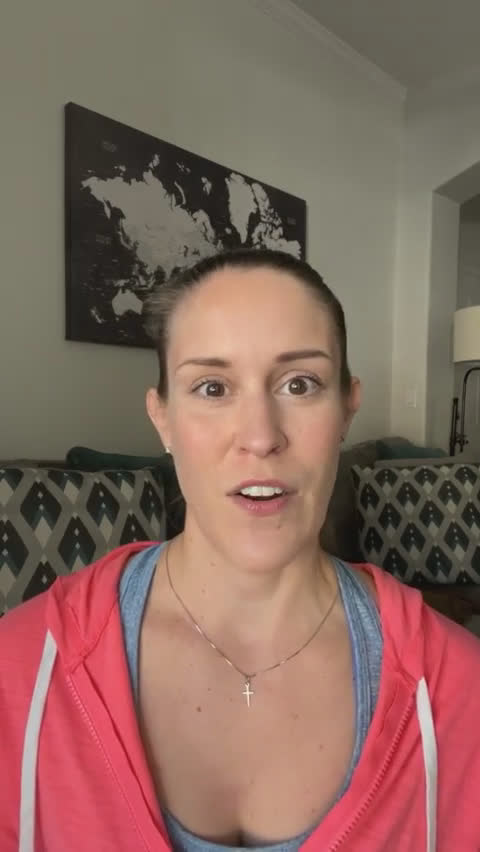
There are numerous health benefits to fasting. In this video, Dr. Carrie will share her experience with fasting, describe some of the incredible outcomes from this experience, and recommendations on how to start a fast.
Andre: There are so many different kinds of fasting. The purpose of a fast is to take something away from yourself that might be like a comfort or a habit. The motivation is you have to have a goal in mind when fasting.
So anyway, I just wanted to give you guys some motivation around this. Go into the community feed this week and tag me if you guys are doing a fast from something. Your mindset is the most important thing. Have a great week.
Andre, family doctor Kerry here. Thanks for joining my live today on Wednesday. Just gonna give it a second for people to hop on. It is a beautiful day here in San Diego. I know winter is going on long this year, though it's still a little bit chilly here in the mornings, but it's beautiful here. So I wanted to talk today about fasting. Now, I know this is kind of a buzzword for some people, and they're all about the intermittent fasting or whatever it may be, but I just wanted to talk about the different kinds of fast today and then why we fast.
I know a lot of people who do fast in January, whether you say, like, I'm taking the month off from alcohol or I'm going to fast from social media for a week. Some people, you know, start a new health plan when January hits. But now that we're into February, some of us kind of drop off some of those things. Or maybe we made it through our fast in January and then we don't really revisit that the rest of the year. And so I wanted to specifically talk about this in February because a lot of us do engage in fasting in January, but also talking about maybe some other things related to fasting that you haven't considered before.
So there's more than just fasting from food. There are so many different kinds of fasting. And when we think about that word, we think about fasting from food. And then there's people who say, well, I'm going to fast from a specific kind of food. Maybe for you it's sugar. That would be a really hard one for me. Maybe it's chocolate. Maybe it's just junk food in general. Thanks for joining me, junk food junkie. And so I just want you to think about all the different kinds of fasting, though, that you can actually do.
Because the definition of a fast is not just to stop eating food. The definition of a fast is to basically take something away from yourself that might be like a comfort or a habit. And it's really the purpose of it is to then switch around a habit and to introduce a new way of your brain to process something so you can fast from anything. But the purpose of the fast has to be that it's something that it's challenging for you to fast from. So if for you that's Facebook or Instagram, maybe that has to be the fast that you try.
Maybe it's a fasting from gossiping. Maybe it's a fasting from talking about other people. Whatever it may be, you have to pick something that is actually challenging for you, because the reason we do the fast is because we are trying to actually create new neural pathways in our brain when we want to go to that thing. So, like, let's say you're fasting from chocolate, and you're somebody who eats chocolate, like me, every single day, but eats it as, like, an unhealthy coping mechanism. Like, oh, whenever I'm stressed, I go straight for my bag of almond bark or whatever it is that you have in your house.
The purpose of the fast, then, is to remove that substance and come up with a new, maybe healthier way of coping with things. And so a lot of times, these can be things that aren't, like, quote, addictions, but they are maybe like an unhealthy coping mechanism that you use. And now food obviously, is a necessity for survival. So when people fast from food, it's kind of a different level of fasting, because you're literally putting your body into, like, ketogenesis. And there's, like, health benefits that come from that, too.
Like, you get increased levels of dopamine as your body goes into that state, which is why some people really love fasting from food. And so I just wanted to give you an example. I actually thought, I am somebody who eats, like, every two to 3 hours. There is no way I could fast from food for, like, more than a meal. Right? I've done intermittent fasting. You know, like, you just kind of skip breakfast. But like I actually said, I want to really try this. And for me, the motivation, and this is key, number one when it comes to fasting, is you have to have a motivation in mind.
If you just fast for some from something, just for the heck of it, you're really not actually rewiring the pathway in your brain, but you have to have a motivation of why you want to actually fast from that thing. And so, for me, it was a spiritual thing. I was believing for some breakthrough, for some new revelations to come from God. And so I said, I'm going to do the hardest thing. Fasting for me is food, because I eat all the time, and I don't like being hungry because I get hangry. And I actually did this last October, I'm sorry, two octobers ago.
And I went four days without any food. All I drank were electrolytes, like, mixed in with water. That was all I had. I didn't even have smoothies or anything. And I went four days without food. And it's just crazy because the amount of clarity that sets in when you reach that threshold of, this is really freaking hard, and, like, what am I going to do now that I don't have that go to substance that makes me feel better, whether that's food for you, whether that's social media, whatever that is. We get a dopamine release, usually from that thing.
And what you're telling your brain is I need to create a new pathway to give me that dopamine release so that I don't go to that thing anymore. And so it was the hardest thing I have ever done physically to my body was not eating for four days, and I ended up with just this increased clarity and, like, vision about my future and the decisions and the next steps that I wanted to take. And it really actually kind of stepped me forward into, like, going more in with Cadre through that period of time.
And then my prayer language was just, you know, intense. Like, my time with God was also just way more intense. Everything intensified because I didn't have anything in my body to fuel me, so I had to rely on, like, my faith to get me through that. So the two key things I want to tell you about fasting today, if you're going to try a fast, is, number one, you gotta pick something that's hard to fast from. I personally would not fast from food right now because I have this kind of routine of working out, and I work out pretty extreme.
And so fasting from food would actually be unwise for me. But there are other fasts that I'm considering doing, and one of them is sugar, which is gonna be probably the hardest thing I'll ever do. But there's other things I choose to fastrum, you know, social media, and I think just even the, the fact of, like, I noticed lately I've been judging people more often. Maybe that's something I want to fast from for a week and just see how I can do with it. So, number one, choose something hard that you actually are going to struggle with fasting from, because otherwise it's not really, you're not going to get any of the health mental benefits from the fast.
And number two, figure out what your goal is for that fast. Like, what do you actually want to accomplish or achieve? Because what you're doing when you fast is you are basically telling your body, I am capable of doing really hard things, and I am going to honor what my struggle is, what my desire is through that time period, and I am going to find an alternate coping mechanism. So maybe you haven't figured out what that alternate coping mechanism is, and you're going to figure that out through the fast.
Another example I can share with you is I used to run 2 hours every single day when I was in grad school and I was going through a lot of stress in my life and that was like my outlet. And then I tore my PCL and I couldn't really walk for a few months, much less run. And I've never been able to be like a full long distance runner again where I would run 10 miles a day and that's okay. But I realized that was the only coping mechanism I had during that time for stress. So when I removed that, when my body removed that with my injury, I had to come up with a new coping mechanism and it took kind of that like immediate like time period of like I just cut it off right when I got injured to come up with a new coping mechanism.
So that's your second part of the fast. Maybe you don't have that alternate coping mechanism, but you're going to discover it during the fast and that's like your end goal for how long? You're going to fast. Maybe you fast until you reach that goal so you don't have to have like an end date. And you could say I'm going to fast from this thing or this substance until that goal is accomplished. Accomplished that. I have found my alternate coping strategy, whatever that may be. I'm just going to look at the comments here.
Kind of like giving something up you enjoy for Lent, but yes, exactly. Jungfu junkie. That's exactly what it is. You have to be giving up something you enjoy, right? Like something that's maybe, maybe it's not something you just necessarily enjoy, but it's something that like you feel good about and it's pulling that away from yourself to then see what the human body and the human mind is capable of. Like, truly you will be amazed at what your brain can do when you pull that thing away. So anyway, I just wanted to give you guys some motivation around this and I would love to hear what kinds of things you are going to fast or maybe like what are some of your vices, maybe some of your coping mechanisms that you're like, I really could try fasting from that.
I never even thought of that before. So I would love to hear how that goes for you guys. I know, Barbara, my annoying fat stomach is my motivation. It is a motivation, right? When you look down and see that, but then what is the motivation beyond that of like, okay, so I'm gonna remove this and then what? Like, then what am I gonna do. How am I gonna cope with this thing? So, anyway, go into the community feed this week and tag me if you guys are doing a fast from something or if you're thinking about a fast from something.
And yeah, just remember, like, those two key things is choosing the why and the goal of the fast. And then just, you know, has to be something that is going to be actually somewhat challenging for you. So, yes, your mindset is the most important thing. It so is, it's amazing what your mind is capable of. It is truly amazing. I mean, talk to, talk to Luke, who's going to run a 107 miles race here in a couple months, and ask him how much mindset is a factor in that. Right. That is exactly what you're doing with a fast.
So thanks, guys, for tuning in. Have a great week. God bless.
Reactions and comments are for members. Joining is free and takes a minute.