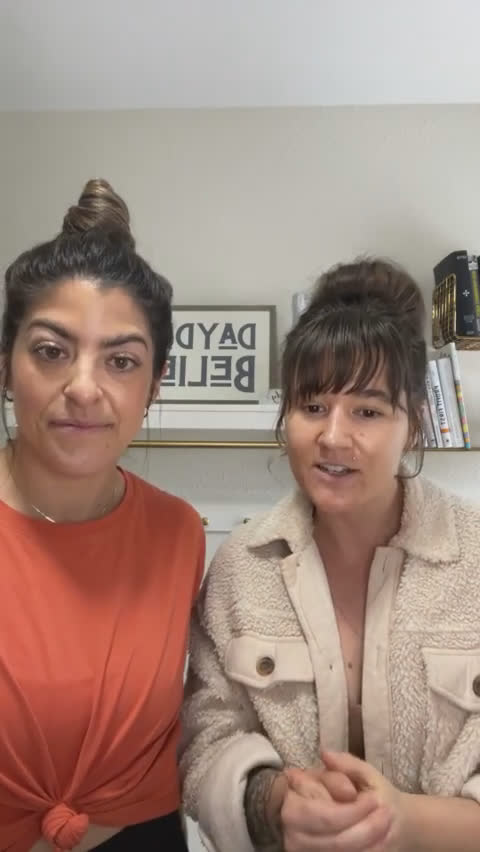
What tools do you have in your toolbox? Are they the right tools? Do you know when it's appropriate to use one tool versus another? We want to make sure your toolbox is equipped with everything you need to handle whatever may come your way throughout the day.
There. Still getting used to this going live thing. We know it takes a few seconds for people to get the notification to pop on. We'll wait for that.
Dan: Who tap dances to Dolly Parton? Dan: I did a tap dance when I was young to that song. Working that nine to five, baby. Happy Tuesday.
We're talking about social emotional learning, aka yes delay Horton, aka S E l. What it is is emotional intelligence. Gen Z generation lacks skills that we got when we were younger. That's why these toolbox talks are so integral.
40% of parents are extremely concerned with the anxiety, depression, struggling, mental illness of their children. When we can equip people to show up as their best, brightest, and most confident selves, we aid in helping people tackle this mental health issue.
Healthy emotion regulation and responsible decision making, has to be an everyday thing and part of our DNA. There needs to be a common language among stakeholders. It must be integrated into leadership instruction, meetings, family engagement, hiring procedures and policies.
The youth mental health crisis is at an all time high. Kids are being bullied in schools, online. Right now in 2023, our actions matter more than anything else. We're here to build people up, not tear people down. And it starts with this work.
There. Hi. Hey, everyone. You know, still getting used to this going live thing. We had to press the button. We know it takes a few seconds for people to get the notification to pop on, so we'll wait for that. Happy Tuesday. Happy Tuesday. We're in Mary's office, you know, just daydream, believe in. We're building this daydream on the day shift. Working that nine to five, baby. Working that nine to five. Who sang it? Dolly Parton. Good job. Good job. You hesitated. I did, because I was like, wait.
I did a tap dance when I was young to that song. To that song. And it felt very old. Like, I was like, man, I'm young and I'm tapping. I was listening to tap dance. Who tap dances to Dolly Parton? Hi, Dan. Welcome. Happy Tuesday. We're just talking about Dolly Parton working out nine to five. That's not what we're gonna talk about today, though. We're talking about social emotional learning, aka yes delay Horton, aka S E l, a term that you may be familiar with if you have children, you may not be familiar with it at all.
It's something over the last, I'd say, decade that's really come to the forefront in terms of what our school systems are focusing on. Sel, social emotional learning. But realistically, you and me and Jill, everyone else has been practicing Sel for their entire lives, because what it is is emotional intelligence. It's your eQ. It's how you're showing up in a room. It's your body language. It's how you're interacting with others. It's how you're holding yourself, developing your confidence. And why do we want to talk about it today?
Well, we've been hearing, I mean, from parents to school administrators to coaches, that this wave of generation, this Gen Z generation, just lacks. Lacks skills that we got when we were younger or that we had to learn kind of the hard way to know that these skills are important, because this. This has been at the forefront of our kids faces ever since. Literally, they came out of the birth canal. And really, as much as things change, they do stay the same. So kids have struggled with communication for years and years and years.
But what has made it harder is the integration of technology and the fact that we really don't know as adults how to handle it. It came on just as fast for us as it did for our kids. So we didn't know rules, regulations, boundaries, guidelines to put on it in order to help our kids thrive, not try to help our kids just survive. And that's really what we want to talk about today. That's why these toolbox talks are so integral, because we're trying to help people build their toolbox to be something that really aids them in thriving as opposed to just surviving.
So, Luke, you actually posted something in our slack group yesterday that was a beautiful diagram of. It says, mental health tops the list of parental concerns. 40% of parents that were surveyed in this are extremely concerned with the anxiety, depression, struggling, mental illness of their children. And sel matters in that. We're not saying Sel. Social emotional learning is the solve. There's obviously therapy that kids can go to that we support highly. Apps like this that help have conversations around showing up as your best self.
But what we know, working with over 2000 girls and their families over the last two and a half years, is that when we can equip people to show up as their best, brightest, and most confident selves, we aid in helping people tackle this mental health issue. So, the conversation of SEl, we want to paint a picture like, okay, maybe some of you aren't parents, and Sel doesn't mean that you can't practice these type of skills. Like Mary said, it is part of your EQ, it's your street smarts. And really, we are walking, talking billboards.
We're role models for our kids. So if we are, if we can be aware of how we're showing up, it's going to greatly impact those who are watching us. So, parents, leaders, kids, I'm not a parent. This conversation pertains to you. And we want to draw an analogy around social emotional learning. So we want you to think about social emotional learning as the plate, the plate of life, and then everything else of life sits on that plate. So you're holding your social emotional learning plate is literally what everything else sits on top of.
So I want you to think about your relationships. If you are not. If you're not competent in these five competencies of social emotional learning, then you're going to be suffering in what matters to you, your relationships or how you make decisions. Maybe you are a people pleaser, like I was. I'm a. I'm a recovering people pleaser. But social emotional learning allows you. It kind of pings you when you are, you know, off a little bit or if something doesn't feel right, so you can check back in with how you're showing up and course correct.
So somebody we follow within the social emotional learning space. His name is Mark Brackett. He is the director at Yale. He's the director of the Yale center of Emotional Intelligence. So he knows a thing or two about emotional intelligence. He quotes, we're going to quote him in saying sel, which includes the principles, tools and strategies that build self and social awareness. Healthy emotion regulation and responsible decision making, has to be an everyday thing and part of our DNA. There needs to be a common language among stakeholders.
It has to be integrated into leadership instruction, meetings, family engagement, hiring procedures and policies. Realistically, it's the red thread. It's the common language that we all can speak so we can have better communication, better policies, better understanding of where we can improve and as leaders, how to help others improve. Another really incredible analogy that we read, that we have to read to you is about firefighting versus fire prevention. So if I'm a forest ranger and there's constantly forest fires, I'm going to put those fires out.
It's my job to put those fires out. But realistically, it makes a lot more sense for me to teach everyone at a campsite fire prevention. If I can teach people how to manage their emotions and resolve conflicts and bounce back from setbacks, I'm going to have to put out less fires. What we need to do, everyone watching us as leaders and facilitators, is teach the proactively skills that help kids do fire prevention. And we say kids, because if we start them young, they'll have the tools, they'll have the skills, they'll have the ability to communicate how they're feeling and set boundaries in order to prevent these fires.
Right? So we want to teach kids, but obviously adults as well, adults like us who didn't learn these skills until we were, I don't know, like today, years old, and we're constantly practicing, right? Just because we speak on this does not mean that we're perfect at it. So please also understand that we're in the work with you, alongside you, so that we can show up as our best selves and that our sole goal, why we feel like we were put on this planet, is because of what we went through when we were younger.
There was a lot of circumstances that were very heavy in our childhood, super uneasy, a lot of weight, if you will, that we didn't know how to handle. And when you don't know how to handle something, or you sweep it under the rug, guess what? It doesn't go away. It rears its ugly head again, over and over and over until you actually deal with it, right. You gotta go through the storm. There's no way around it. It's going to continue to pop up for you if you continue to avoid it or don't know how to handle it.
So, for us, we didn't learn these skills until we felt was too late. And I know that saying isn't true. Obviously, we're thriving now. However, our sole purpose on this planet is to reach our hand back to the girls and boys who are just like us at our age and help them with the struggle. We want to be able to provide these tools to them so they know a way out, so they can speak what they're feeling, so they can resolve conflict without it being something that's self destructing. So the next time that you hear the term social emotional learning, do not turn a blind eye.
That is, we all, as a community, need to lean in a little bit more because we're a part of it. We are a part of the change that we wish to see in the world. So it's not just happening at schools for our youth. It needs to be happening in homes. It needs to be happening in communities. And where it starts is with us. It's developing our self awareness. It's knowing how we show up in social situations, managing our own emotions, and doing the right thing, even when it's hard. So thank you for allowing us to speak a little bit more on the importance and why we're so passionate about why we're so passionate about social emotional learning.
Because truly, the statistics that we were talking about before, where parents are at their wits end, because the youth mental health crisis is at an all time high, kids are being bullied in schools, online. And we want to be. They want to handle it. They don't. And we want to be a part of the solution, and we want to help parents, leaders, everybody else involved to be a part of the solution. Because if you're here, if you're on this app, you're fed up with seeing people throw stones in glass houses, right?
Everyone has something to say about the situation, but we don't care what people say. We care about what people do. Actions matter. Right now in 2023, our actions matter more than anything else. And for us to lead that charge, we have to educate people on the importance of how they show up and why it matters to the little boy they're standing next to at the grocery line. Right? Why would that matter? Well, if he sees you treating somebody else like they're not a real person, he's going to think that that's okay and emulate that behavior somewhere else in his life.
And that's the last thing that we want. We're here to build people up, not tear people down. And it stays. Starts with this work. Yep. So hands in, everybody. Dropping an emoji. Drop the fire emoji, because we are the fire rangers, right? We are this. The prevention specialist. We are. We are the prevention specialist. Fire prevention specialist. We are preventing. We want to prevent so that we're not having to burn this whole place down. Oh, man. I know we can all be committed to that, and we're super excited that you guys are gonna be a part of this.
This journey with us. Look at all these. Yes. I was waiting for them to drop. All right, Shel. And I think that's one. What I want to say is one more thing. We know what burning our lives feels like. Burning our down feels like. Yeah, I crawled straight out of a dumpster fire, truly. And it's been really, really difficult to crawl and claw my way out of it, and I'm never going to go back to that, because once you know better, once you hear the information, you do better. You cannot unhear this information.
You can't be just totally lacking in your self awareness after being given this information. So all you fire starters out there, go light other people's candle. And that's. That's why you're here. We know that's why you're here. We know you want to be part of this cause. So go out and light other people up, too. Yes. Thanks for being a part of this fire conversation, and we'll see you at the next toolbox Tuesday. Oh, the countdown. The countdown. Oh, that's right. We'll see you in the next Tuesday in three, two, one.
Reactions and comments are for members. Joining is free and takes a minute.