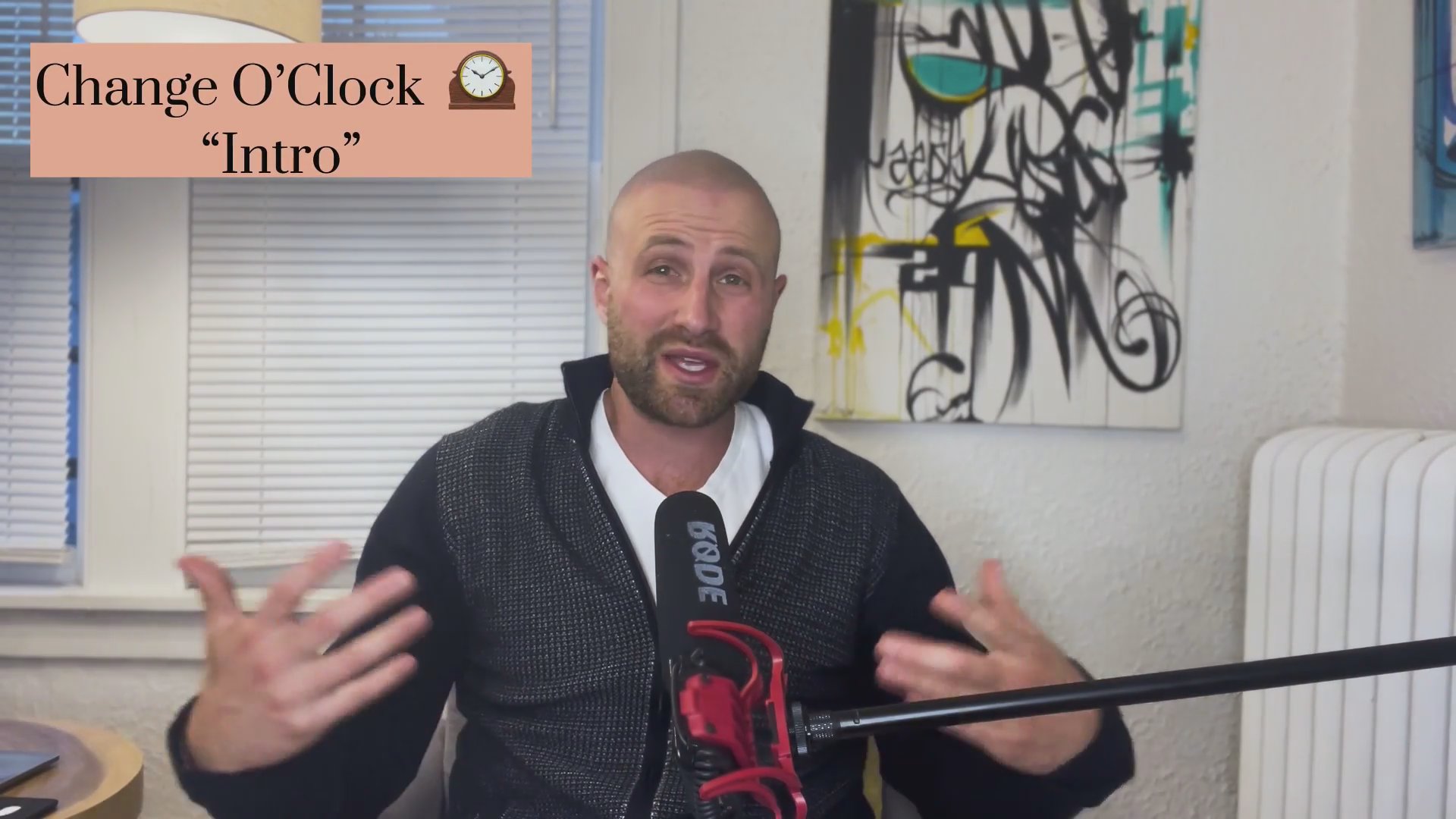
Welcome to Change O'Clock, my series on changing unhealthy habits while starting new healthy ones. In this intro video, I give a preview of what you can expect from this eight-video series that teaches you how to make changes in the easiest and most effective ways I know. Change is hard, but when you take a strategic and scientific approach, your odds of changing a behavior go way up, and you can do so as painlessly as possible. So check out this intro and learn how you could benefit from changing any habits you wish you could give up and any new ones you've always wanted to start.
The host asks why habits are so difficult to change, gives everyday examples like nail-biting and dieting, and highlights how much people spend trying to improve their lives.
Evan describes his work as a therapist and addiction counselor and shares his own recovery and addictive tendencies, establishing credibility for teaching change strategies.
He names the series, promises practical tools, and previews topics including the science of habit formation, the stages of change model, and his 'habit tripod' model.
Whether viewers are ready or just contemplating, he asks them to select one habit to quit or one healthy routine to start and invites them to join the process.
To model the process, Evan says he will work on quitting nicotine, calls for action, and introduces the next video which will cover the stages of change.
Have you ever wondered why it's so hard to change a habit, whether it's smoking or trying to lose weight with a diet? Maybe something as simple as biting your nails. We've all been there. We've all had behaviors that we felt were unhealthy for us and that we wanted to change, but I'm pretty sure we've all found it to not be all that easy. But why is that? I mean, many of us are motivated to change. We spend a lot of money on different products that tell us they'll help improve our life. For example, $70 billion alone on the dieting industry.
I'm Evan Lieberman and I'm a therapist and addiction counselor and in many ways I see myself as being in the change business because all clients that come to me for addiction and mental health services are wanting to make some changes in their life that they're finding it's difficult to do on their own. Also, I've had a lot of issues myself. I'm someone who's in recovery from substance abuse. I've had to quit a whole bunch of different things because I have a really addictive personality. So between the experience I have professionally and personally, I've really sought to try to find the best ways to make changes and to change habits in the most effective way possible.
So there's a lot of good science and research and some conventional wisdom that I want to share with you in the series that I'm going to call change a clock. So within the series, I want to give you as many tools as possible. So we're going to talk about the science around habit forming and change and the most effective ways to do that. We're going to talk about the stages of change model and I'm going to teach you something called the habit tripod. And this is a model that I created that breaks down the change process to help clients take those first steps and when they make that change, how to maintain it.
So the question I have is, are you ready to take this challenge with me? Now, whether you're ready to actually change the behavior or you're just contemplating it, that's okay. But I want you to pick one behavior, one thing that you would like to give up or a new healthy routine that you want to start. And let's work on this together as I show you how to take those first steps. So whatever it is you want to change, we're going to go ahead and call that your behavior of choice. And to put my money where my mouth is, I'm going to this to change a habit that I want to change as well, and that is nicotine.
All right, so less talk, more action. Let's dive into the series. And the first video I'm going to share with you is highlighting the stages of change so you can learn what the change process looks like and how to get a good start.
Reactions and comments are for members. Joining is free and takes a minute.