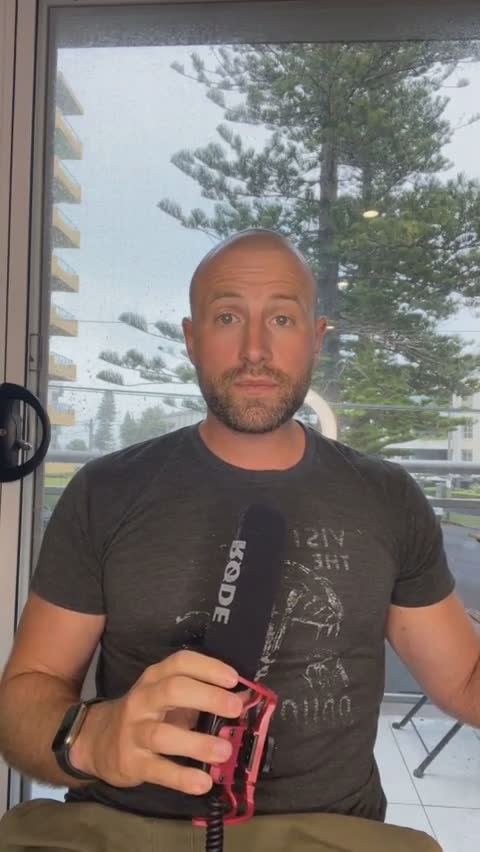
In this Livestream, I am excited to share some of the logical fallacies I have noticed in all of my time on social media trying to disseminate what types of health information are true. I will give you a list of some of the fallacies I made up and why I believe they are associated with incorrect or misleading information. Don't worry, I will keep this as A-Politcal as possible...
Evan: This is going to be a topic that I've never discussed before. Usually the stuff that I speak about, I've talked about before have it well formulated. This is a topic I've thought about for quite a bit, but haven't fully done, so we'll see how it goes.
Today I really want to talk about social media literacy. There's a lot of people on social media who give their opinions. Some of that information is going to be correct, and for others it's not. How do we decipher the difference?
The topic is logical fallacies. I'm just gonna go over some of the things to look out for. These are just my opinions, and everyone has a right to their own. We don't have a political debate.
Evans takes on two common fallacies he sees on social media. The first, he calls the shack fallacy. This applies to when you have two options for the most part. Most things are not black and white.
What's up, Cadre folks? Evan here, your resident mental health and addiction therapist. We're doing another live. And so let's go ahead. Let's wait a little bit. Let's see if we can get some people hopping in for this conversation. I think it's going to be an interesting one. So this is going to be a topic that I've never discussed before, so we'll see how it goes. So, I've never spoken. Usually the stuff that I speak about, I've talked about before have it well formulated. Now, this is a topic that I've thought about for quite a bit, but haven't fully done, so we'll see how it goes.
But today I really want to talk about social media literacy. There's a lot of criticisms out there. There's a lot of positives as far as some of, let's say, influencers or other educators who are on social media. There's a lot of people on social media who give their opinions, and it's usually one way or the other. Now, some of that information is going to be correct, and for others it's not. There's going to be a lot of bias out there. So the question is, how can we wade through or weave? Weave through, let's just say the bias and try to understand what information to take in, who we should listen to, and how to take that information.
What's up, Dylan? Is it hard to hear me? Okay, that's good. That's what I want to like. Is this any better? Test. Test. So I have this microphone to try to, but I had it a little bit far away. Dylan, how is this? Alright, well, anyways, if anyone could weigh in to let me know if this is a better connection or maybe an Internet connection, although I did just test it. So anyways, until I get some more information, let's just keep going. So again, how do we decipher the difference and how can we be better at having social media literacy?
And this actually applies to more than just social media, just media in general, or any of the information that we get. Right. As a healthcare provider, I always say it's on us. It is our duty and responsibility to explain to a client or a patient, if we're making a recommendation, why that is, but also giving them alternatives and explaining arguments on the other side. For example, I had to do a surgery, and I think my doctor or doctors who was consulting on it did a pretty good job of telling me the risks and benefits.
And sometimes people are hesitant to give an opinion. Sometimes they don't want their feet held to the fire, but they did a good job explaining the risks, the benefits, and why they felt one way or the other. I mean, they also kind of gave a little room to, you know, wiggle out a bit. But. So those are some of the things that I think are important, you know, especially now in this day of age. So, anyway, if there are others who are here coming in, please let me know if you can hear me. Okay, before I just dive right in to the topic.
But in the meantime, the topic is logical fallacies. And, I mean, there's a whole list of different logical fallacies you could look up, and I did write down probably, like, 20 or something of the ones that are, like, pretty common that are out there. So let's see. Yeah, so there are a ton of different logical fallacies to help you disseminate information, but I'm going to talk about some of the ones that I noticed, and I kind of gave them their own name because I couldn't really find them. So these are just ones.
Cause I'm, like, consuming social media. I'm just, like, interested in the topic. So I'm just gonna go over some of the things to look out for and some of the logical fallacies that I see, especially in scientific, but I can only speak as much to my field, let's say mental health, but also, like, health in general. So not just areas of professional interest, but personal, where I see these things apply. And you see a lot of this in politics as well when you see debates and that kind of thing. So I want to give the disclaimer to that.
Like, I don't like discussing anything political, like, in a forum like this. You know, I try to, like, bring people in together. I don't want to exclude anybody, but I may use some examples that are potentially political just because they're the best. I could use to highlight this, but I'm gonna do my best to, like, let's say, not take a side, but maybe some things I might, and I may explain, and maybe I'll do that. Like, if I do give a political opinion or something, I'll explain why I believe that, but also just know that for most of these.
Right. I am not. I'm just gonna explain my side or not my side, my belief, and I respect whatever it is you believe. Right. So, you know, we probably want to move away from that in the comments. We don't have a political debate. But again, these are just my opinions, and everyone has a right to their own. So I don't know if anyone else we got here. So I'm just going to go into it and hope this mic is doing its job and the connection is good. So here we go. Let's jump into Evans logical fallacies that he sees on social media.
The first, I call the shack fallacy. I label this the Shaq, not Shaquille O'Neal, the basketball player and commentator. This is the shack. Now, this logical fallacy applies to when you have two options for the most part. Now, most things are not black and white. Most things are a shade of gray. But sometimes when you're making a choice, you have two general options. And maybe I could use that surgery. I could probably use that surgery one for a lot of these to maybe stay out of politics a little bit.
But like, let's say for me, I had two choices, right, to get surgery or not have surgery. I mean, those were the two major. Now, within each of those were some sub decisions I can make. I'm frozen. I may just stop this live stream and try again.
Reactions and comments are for members. Joining is free and takes a minute.