In this video, Evan Lieberman, MSW LICSW LADC, answers a question from a member of the Cadre family about whether caffeine addiction is real. Most of us are likely users of Caffeine, as it's in just about everything. However, many of us consume Caffeine daily to start the day and get us through to various degrees. So, who among us thinks it would be easy to stop drinking coffee, energy drinks, or caffeinated soda? Very few people find it easy or even imagine it would be if they've never tried. However, that does not necessarily mean that it's an addiction. Therefore, in this video, Evan breaks down the differences between addiction and being dependent on a substance. You don't want to miss this one!
Evan: How addictive is caffeine? Is it really a problem for some people? He says addiction can be more of an addiction pattern than dependence. A key factor in assessing addiction is the level of consequences one experiences.
Celesta is the most used psychoactive substance in the world. It blocks the chemicals in our brain that tell us to get drowsy. So we get that stimulating effect from it. And that's often very helpful. And it feels good.
Coffee, the number one way we get caffeine, has a ton of benefits, of documented benefits. It could delay some of those neurological disorders. There's a whole bunch of diseases that it actually helps prevent. But don't make any decisions on your diet whatsoever. Always consult a professional here.
Some of the risks in consuming caffeine include insomnia and anxiety. The building of tolerance in the withdrawal symptoms. How do I maximize the benefits of caffeine while reducing the risk?
How much caffeine do you consume in a day? Do you think you're dependent on it? Have you tried to quit before? Be sure to put your experience in the comments and let's see what you got.
Let's go ahead and talk about caffeine addiction. Or is there even a such thing? I'm Evan. I'm a mental health and addiction therapist, and this is my series where I answer questions from the Cadre family. And this question came from one of our users named Carla. And she asked, how addictive is caffeine? Is it really a problem for some people? So this is actually a pretty complicated question, but let me see if I could give you as simple an answer as possible and really dig in. So, one of the things to understand with addiction in general is we can categorize folks into having more of an addiction pattern, right?
Like a substance use disorder versus dependence. Now, I call it, like, the square and rectangle principle. You know how all rectangles are squares? Wait, no. All squares are rectangles. But not all rectangles are squares. Well, it's the same thing where most people who have addiction or use disorder are dependent. But not everyone who has a dependence on a substance is necessarily addicted to it. So when we refer to dependence, it's usually referring to a physical dependence. And this happens all the time, whether we realize it or not.
Often when we ingest any type of chemical into our body that serves a certain purpose, our body becomes accustomed to getting that chemical and stops naturally doing what that chemical was doing. Like, for example, if you were on testosterone replacement therapy. Nothing wrong with that, but over a period of time, your body's going to stop producing natural testosterone to the same level. So when you stop that substance, well, you're going to start to feel the effects. Now, on the other hand, addiction becomes more of what they call a psychological dependence, right?
Or I would even say an emotional dependence on a certain substance, right? So, in a very similar way, that substance is doing something for you mentally, emotionally, but also physically very often. And when you stop doing that substance, you get other types of withdrawal as well. And a key factor in when we're assessing addiction is the level of consequences one experiences. So if somebody is using a particular substance, no matter what that may be, if it has a rewarding effect, typically for a person, if they're continuing to use that substance despite all of the consequences, there's going to be a rewarding effect in the brain.
So when we look at addiction and consequences, some examples would include how it impacts your day to day life. For example, is it having a negative impact on your work, your relationships, your ability to follow through with obligations at home? Have you had multiple attempts to quit or cut back unsuccessfully? Have you built a tolerance? Do you need more and more to get the same desired effect. And then you have also some of the physical consequences. The dependence. Right. Intolerance was one of those examples.
But the big one is withdrawal. How do you feel when you stop? So those dependence categories, those symptoms are included in the overall, broader model of addiction. But again, you could be dependent, but not necessarily psychologically addicted to the substance. All right, so then, where does caffeine fit into this picture? Well, first, it's important to understand that caffeine is the most used psychoactive substance in the world. For example, coffee, which is the number one source of caffeine.
But there's even caffeine in chocolate. So they often call it a cradle to grave drug. Because we're exposed to it very early. Right. You also get it in sodas, energy drinks. It's all over the place. And so many people use caffeine on a day to day basis. It's, again, the most commonly used substance. It has a rewarding effect. It blocks the chemicals in our brain that tell us to get drowsy. So we get that stimulating effect from it. And that's often very helpful. And it feels good. So there is a rewarding effect.
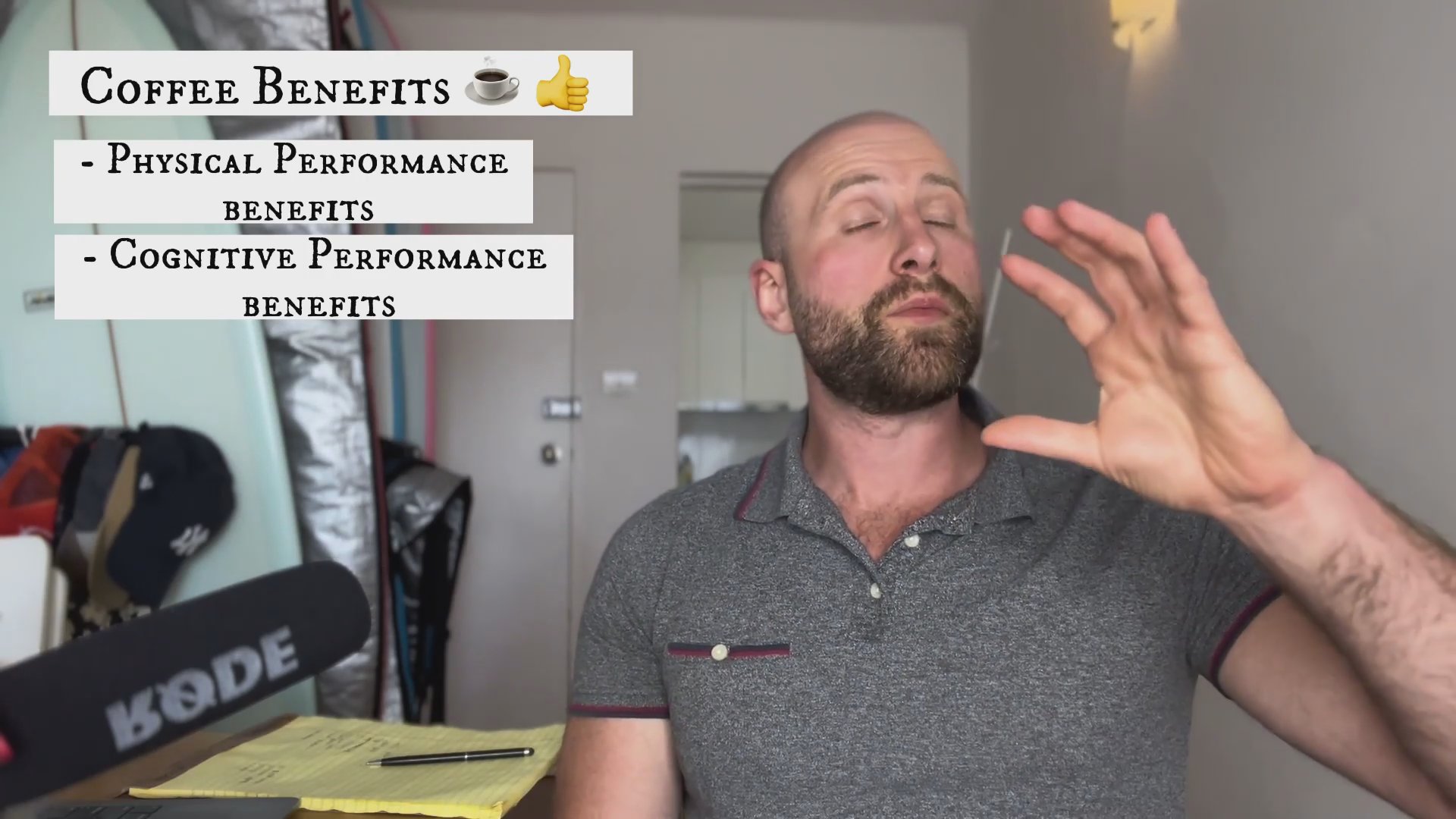
Before we dive in too deep, let's talk about some of the benefits and risks of caffeine, starting with the benefits which. One of the main benefits of caffeine is the way it increases your physical performance, like athletic abilities, in many ways. And your psychological or cognitive performance as well. And those are the main benefits and some of the reasons why we use these substances. However, what matters is the delivery system. So, for example, coffee, the number one way we get caffeine, has a ton of benefits, of documented benefits.
Now, I want to put in the caveat, watching this video, I don't want you to make any decisions on your diet whatsoever. Without contacting a health professional or doing some of this research on your own. Always consult a professional here. I'm just showing you what the mainstream research has shown. I'm not a dietitian by any means, but it's shown that coffee could have a lot of benefits, including on some of those neurological disorders. It could delay some of them. Things like even heart disease, cancer.
So there's a whole bunch of diseases that it actually helps prevent. Now, that's not the caffeine. There's all these other compounds in coffee that could be a benefit. But then you also do get that caffeine effect as well. Now, let's talk about some of the risks. So some of the risks in consuming caffeine include, well, insomnia. Like, a lot of my clients have a lot of difficulty sleeping, and often they don't realize because it's how much caffeine they're drinking and how late they're drinking it also problems with their stomach, gastrointestinal problems.
People also struggle with anxiety, and it's often correlated with people's increase in anxiety when they're on a stimulant. So I see this all the time with some of my clients who are coming in with anxiety disorders. And that's one of the things I investigate with them to see how much caffeine they're drinking and seeing if we can lower it. But then some of the other risks, which we've also been alluding to, is that building of tolerance in the withdrawal symptoms. So let's get into those. Let me tell you a funny personal story about caffeine withdrawal.
So I was actually in chemical dependency treatment myself. I was an inpatient, and we had to wake up earlier than I was used to. So every morning, and especially in these settings, like in an AA meeting tree, like, people just drink coffee like it's no tomorrow, right? And so every morning, I would drink a couple cups of coffee, and maybe a little bit throughout the day after lunch. I mean, not a ton, not nearly as much as my peers, but I would drink it every day. But then on the weekends, we got to sleep in.
And so usually on the weekends, I wouldn't really drink coffee. I wasn't, like, consciously doing this. I just didn't really feel the need. But then I started noticing on Sundays, I would get these migraines, and I didn't know what the heck it was coming from. And it wasn't until, like, three or four Sundays passed that I'm like, okay, why am I getting migraines on Sundays? And then I think someone pointed out to me that, you know, often they get them from caffeine withdrawals. And I didn't realize that could even happen.
And I thought about, I'm like, wow, okay, that makes sense, because I stopped drinking on Friday, and it usually gets out of my system in that 24 to 48 hours, and then I'm having caffeine withdrawal. So that was the first time I realized how hardcore and intense they were. And I'm someone who'd gone through plenty of withdrawal. So, like I said before, caffeine withdrawals can be very intense. And a lot of people don't realize that sometimes even more than other drugs that are much more rewarding, reinforcing, and addictive.
So let's go ahead and go over some of the withdrawal symptoms. I'm just going to go ahead and read this so I don't miss any. So for caffeine withdrawal, we have headaches, like I talked about, fatigue, drowsiness, irritability, difficulty concentrating, mood changes, nausea, muscle pain, or stiffness. A lot of those make sense because, remember, when we're ingesting a substance for a certain purpose, the withdrawal effect is the rebound. So if I am having a stimulating effect over my baseline and I am taking my nervous system to a higher level of stimulation, when I stop, I don't go back to normal.
I go below normal. And this is the withdrawal. It'd be the same thing if I'm in a depressive state from a substance that we call, like, a downer depressant. So let's say I'm doing like an opiate and I'm calming my system. Well, when I stop, opiate withdrawals look like you have a stimulated effect. Your body is overactivated. So, like, when you look at some of these, like, drowsiness, right? It's the equal opposite reaction, right? For every action, there's an equal opposite reaction, and that's withdrawal.
Now, when it comes to caffeine draw, it tends to peak around 24 to 48 hours. We really start to feel that symptoms, and typically they start to go down gradually until about a week. However, every body is different. I always say everybody and every body is different. And I know a lot of people who are really dependent on caffeine because some people just drink more than others. So the more. I mean, it's common sense, but the more you drink a substance and for longer, the more ingrained it becomes and the more dependent you become on that substance.
Therefore, your withdrawal symptoms are way worse. And I've known people who have had what we call post acute withdrawals. So withdrawals that last beyond that initial stage, and it could really have a negative impact on them. So the question now becomes, all right, how do I maximize the benefits of caffeine while reducing the risk? So, given that one of the negative impacts of caffeine can be on your heart and blood pressure, which I didn't mention before, the American Heart association is one source here, and it recommends not drinking more than 400 milligrams of caffeine, which is about equal to four eight ounce cups of coffee.
It differs for everybody and everybody. So, again, you always want to talk to a professional on this when you're making any dietary decision of this nature, but that's a decent guideline to go by, at least according to them. It makes sense to me. So if you're able to stick within that range or less, you may better be able to maximize the benefits while lowering the risks associated with caffeine. So remember, caffeine is a substance that, that creates physical dependence, but most often and scientifically not considered to be an addiction.
So if you know the difference, that could apply to many different situations. So, folks, go ahead, enjoy your coffee. Just be responsible with it. All right. Especially for this video, I want to hear how much caffeine do you consume in a day? Do you think you're dependent on it? Have you tried to quit before? Be sure to put your experience in the comments and let's see what you got.
Reactions and comments are for members. Joining is free and takes a minute.