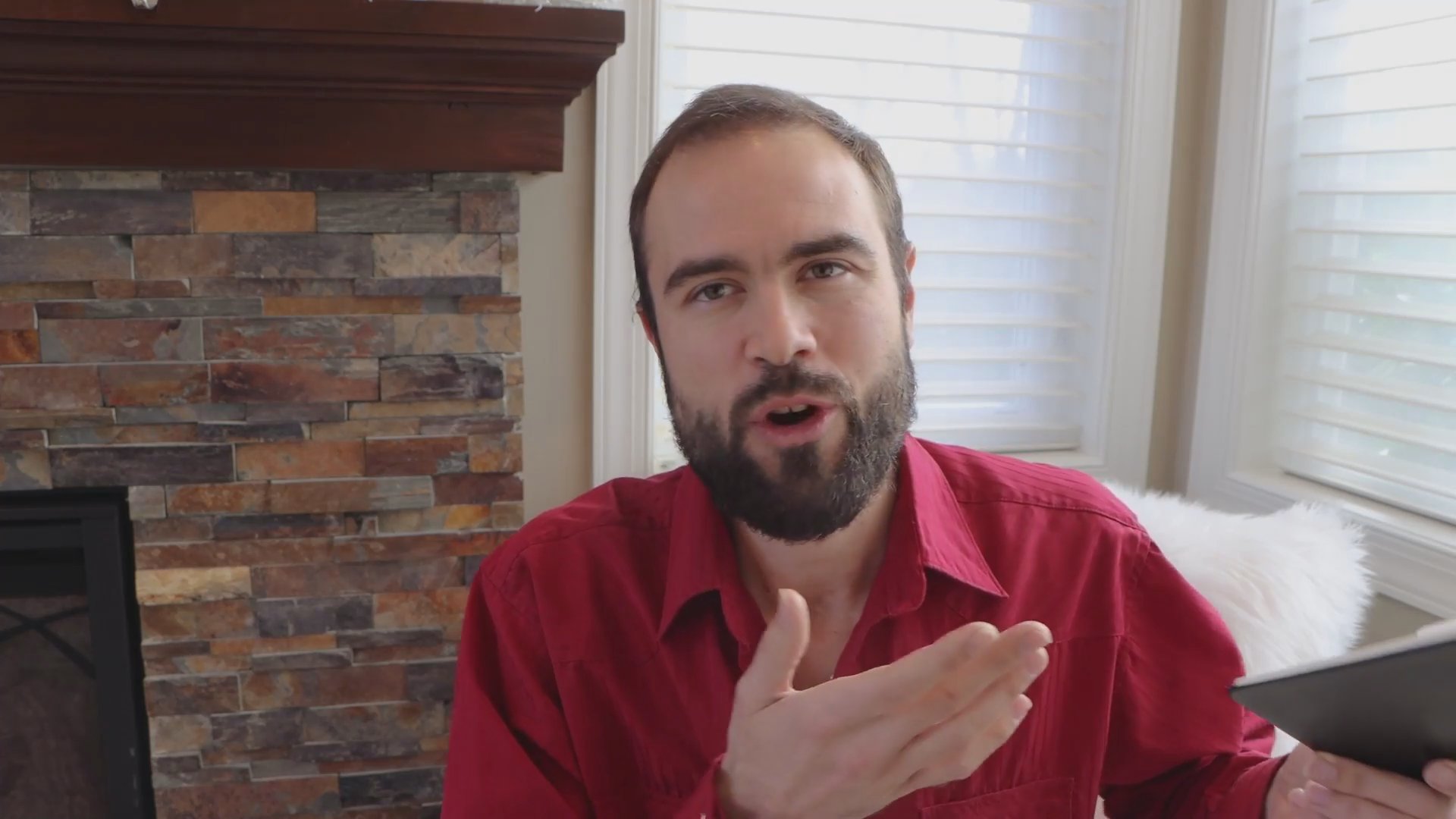
Nick talks through his bipolar diagnosis and how his perception of the diagnosis has changed through the years. This is a good video for anybody who has had a recent mental health diagnosis or for anybody like Nick, who has been living with a diagnosis for a long time!
Nick Hanson was diagnosed with bipolar disorder when he was about 20 or 21. He says the diagnosis really changed things for him. Hanson says he now wears his diagnosis as a badge of courage. There are many resources and people that want to help.
Hey, Nick Hanson from the Cadre crew here. So I wanted to talk a little bit about my bipolar diagnosis. Got a dog kind of prancing around in the background here, so if you hear that, that's what that is. Hey, buddy. So I'm 34 years old now. I was diagnosed with bipolar, I think, when I was about 20 or 21. I started experiencing some manic episodes in college, and then I had a really big manic episode after college and ended up in the psych hospital and received the diagnosis of bipolar one with psychotic features, which basically means I was having delusions of grandeur and hallucinating a little bit.
I was also smoking so much marijuana that that probably had, you know, a lot to do with it. Um, and I thought I was basically starting a million dollar empire. I was at a studio and was calling kind of everyone I know and say, you know, get on board here. We're going straight to the top, essentially. And so I then ended up in the hospital and got very depressed afterwards. And the diagnosis really changed things for me. At first, I was, you know, I think I felt like the air had been taken out of my sails.
I felt that an existential dread of death that I'd never felt before. You know, like I said, I felt depressed. And then I eventually started really wearing this bipolar as a badge of courage. I'm like, this, you know, this is who you are. And so I started, like, yeah, I'm bipolar. And I started talking about it, and I started cheering, but I started, you know, doing little talks online and at events, and really, it became, like, almost the biggest part of me, this. This diagnosis. And I've talked in other videos about the canoe, and, you know, so I tipped kind of way into the favor of talking a ton about bipolar.
Come here, bud. Come here, bud. And so I was, like, just obsessed with it, you know? And I think it was helpful. I learned everything I could about it. I got really good at, you know, going and seeing my psychologist, see my psychiatrist. I got in a good rhythm with sobriety. I was taking the medication, you know, lithium at the time. But that's kind of skipping ahead a little bit, because there was, like, a two or three year period where I was just kind of. I was wild. I was up and down. I was all over the place.
And that's just the process, you know, that I had to go through. And then I think a lot of people do. And today, you know, for me, bipolar, I eventually went off all medication over a very slow period of time under the direction of a psychiatrist. Which is not for everybody. And so that's something. I really dove into a twelve step program and found a lot of healing there. I'm gonna let this guy out. And so, you know, it's like now I don't even quite know where I'm at with it, really. I mean, there's so many different labels that we have and that society puts on us and that, that I really accept.
I like a label. I'm a Taurus. I like learning about what a Taurus is. I'm a ENfp and the Myers Briggs test. I'm a recovering alcoholic, I'm a recovering addict, I'm an artist. I'm a filmmaker, I'm a poet, I'm a marketer, I'm a tennis player, I'm a man, I'm this, I'm that. You know, it's like so many different labels, and which is good. It helps us to understand and relate to others. But I think at the end of the day, I really do like that. I am a human being having a spirit. I'm a spiritual being having a human experience.
And I think that's kind of the closest definition. And like the great poet Rainer Marie Rilke says, live the question and you will grow into the answer. So I've been living this question of who am I? And I think, who is my higher power? Who are you? Who are we all relation? I've been living this question for a long time, and it's led to some very interesting places. And the more that I learned, kind of the less that I know, but the more, okay, you know, I am with that. So if you have recently been, you know, diagnosed with a mental illness or struggling with addiction, is what I would say is just do not, do not, do not go it alone.
Right. There is so many resources and people that want to help you that are there for you. And it is the isolation. It is the cutting off from the rest of, you know, it's the cutting we like to cut ourselves off. That is the problem. You got to reach out for help. For me, it was a twelve step program. Psychiatry, therapy, creativity, exercise, all of these things. For you, it could be these or others, but just don't go it alone. Don't go it alone. You know, people are there for you. We want to be there for you on this Cadre platform.
Reach out. Ask for help. It can be so difficult, especially when you're in that down period. But just, just reach out. Reach out. Reach out. You know, keep expressing lack of expression can lead to depression. You know, keep telling your story. You don't have to do it alone. Okay. Talk to you later. Buh bye.
Reactions and comments are for members. Joining is free and takes a minute.