Think about the big picture in terms of why you’re getting sober, but spend your time doing small meaningful things in the early months of recovery
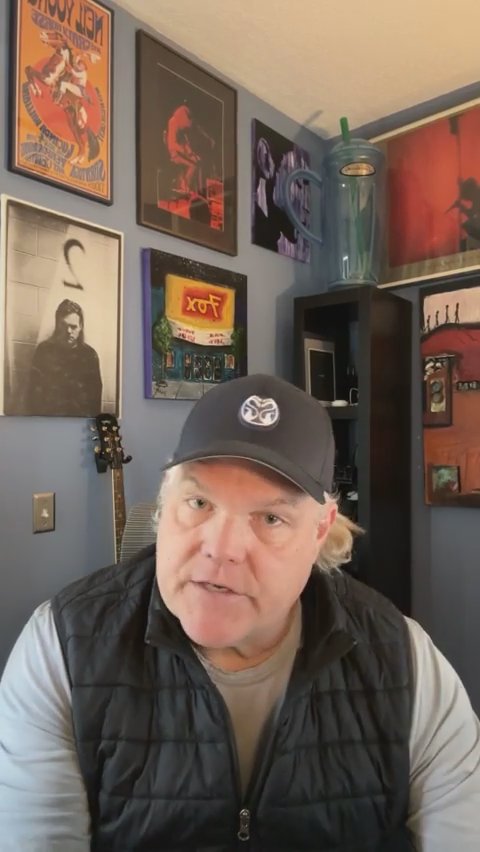
Chris Edrington: The title of today's video is think big, act small. The big picture is all about having a life. Everybody coming into early recovery is different. You can still go have a much more meaningful life sober.
You cannot really report back about what's working in your early sobriety until you do it right. Go out and do small things. Half of recovery is just showing up in the right place. These are rocket fuel nuggets that you can build in early recovery.
Hey, Cadre Peeps. Chris Edrington here. Today. I had this brilliant idea to start maybe kind of a series, because there's a long list of these ideas that I have in this vein where I'm always trying to find something I can say to someone new in recovery that will get their attention, like something they can relate to, that will be, like, trigger in a good way so that it might propel them or motivate them. You know, I always say you can't manufacture willingness. And I'm always trying to get people to sort of perk up and pay attention, and, oh, I never thought of it that way.
That makes sense to me. And the goal being to literally just get them through the moment or through the day or through the morning or whatever it is. So the title of today's video is think big, act small. I was talking to somebody who's brand new in recovery over the weekend, and this woman doesn't know a lot about recovery, hasn't really been to treatment before and really tried before, and it's just sort of diving in. So she hasn't heard all the cliches. She hasn't heard a ton of professional counseling in treatment.
And I was looking for something that would makes sense to her. She's in her thirties, has had somewhat of a life, has been on the planet for a while, probably understands, you know, a way to look at things that might be from an adult perspective. And everybody coming into early recovery is different. You know, it doesn't really even matter what age you are. Your story brings you to where it brings you. And when you walk in the door, so to speak, of early recovery, and someone says to you, you know, just let God and let go and trust, you know, in the higher power.
And all that stuff is wonderful for some people, and for others, it's like, what the h*** does that mean? Tell me what I need to do. Tell me what I need to do today to feel better, right? I need to get through this moment. Now, I'm not talking about, like, acute withdrawal status where you're just miserable physically. That that's got to happen through the medical detox part. I'm talking about your through treatment, you're through detox, at least. And you're in a place where it's really kind of up to you now to make the right moves with guidance.
Right. And how do I, how do I do that? There's a lot of things you can do, but the first step is how do you look at it? How do you perceive it? What do you see? As the goal, what do you see as the obstacles? So when I say, think big, act small, I'm not really into sort of cliche one liners, but this came to me while I was driving this morning, and I thought, you've got to look at this purpose of what you're doing in the big picture. Like, what am I? What's the 500 foot view of why am I getting sober?
And the answer to that for most people is the, there's some very specific issues for everybody that are special. Some people have kids, some people have jobs. Some people are older, some people are younger. What I'm getting at is it's all the big picture is all about having a life. It's all about, I want a different life. I want to repurpose. I want to redesign my life. I want to have different things, different people, different stuff. And mostly, I just want to feel different. I want to feel better.
I want to feel happy. Right? So the big. The big stuff is think about recovery as having a life. And what do I want to have out of this life? It doesn't matter if you're 20 or if you're 50. You can still go have a much more meaningful life sober. So if we think about the bigger picture, it's about relationships and how I feel and how much, you know, influence I have on my own life. Because when you're addicted to a substance, you're not in charge. The substance is the tail's wagging the dog, as my dad used to say.
So the think big part is really important, but it's got to be combined with action. And the action part, the things you do every day. And as I like to say, it matters incredibly more where your a** is than where your head is in early recovery. Like, what do you do with your time? Who are you around? What are you hearing? What are you surrounding yourself with in terms of context and momentum and atmosphere? Where are you getting? What input are you getting? Because in the using world, it's gross and terrible and toxic, and nobody really gives a flying s*** what you think or how you feel.
So, I mean, I'm sure the person who sells you the bottle of booze every day is. Likes to, you know, say your name, but that's about it, right? I used to go to these dealers in Boulder to buy my heroin, and they were the most loathsome people you'd ever want to meet in your life. I used to fantasize about beating them up all the time, which occasionally I did. Anyway, the point here is, combine these two things with, look at this as a, there's a big purpose. The way you look at it and the way that you think about it and then the way that you act on it and the way that you.
What you do with your routine and what you do with your feet every day and where you put your a** every day. Small things. Chop wood and carry water for a little while, as a friend of mine's sponsor used to say. But what, what I want to break that down into is, what are the, what's a sensible schedule? Like, what is your seven day or five day week look like? Whenever I get a new sponsee, I always ask them, take one of those whiteboard calendars, put it on your wall, fill it out with your entire last seven days, and I want to know what you did with every hour.
Okay? Obviously not for when you're asleep. And a lot of that comes back with a lot of couch time, usually. And sitting on the couch thinking the s*** out of yourself does not get you anywhere. So it's all about where and physically and physically and sort of with what attitude are you going out there in the world and where are you putting yourself? So, having the right input. In other words, if you're putting yourself around people who are positive in recovery at AA meetings, after AA meetings, before AA meetings.
I think one of the biggest secrets about AA is most of what happens in terms of the therapeutic benefit of AA happens before and after the meetings. It really does. And the relationships you build there. So where you spend your time. So this thing I do with sponsors, with the schedule is I want to know where they are and what they're doing. And I put a value on those targets. Like, okay, you're going to these three meetings. You're going to the gym, you're going to your aunt's house for dinner. You're going to fellowship, which was hanging out with people after the meeting.
And I asked them to rate each one of those in 110, anything that's below a six or seven. Why are you doing that? Let's pick something better. Let's pick a different gym room, a different meeting, or something that really actually serves you. And maybe you're going there because your friends go there and you don't really like it. So we try to get the highest value we can for each piece of your week, and then we really take an evaluation every so often with your sponsor about how it's going. Because here's something that's really crucial.
You cannot really report back about what's working in your early sobriety until you do it right. You can report to your sponsor or your counselor what you've been thinking when you're sitting on the couch with a pine of Haagenaz. And I think this about myself, and that's not much. If you go out in the world and you do things and you get feedback from people and you observe others doing things, and you hear other people talking about their struggles and their triumphs, now you've got something to talk about, right?
So go out and do small things. Go to the meetings, go to the outpatient, go to the therapy, go to the doctor and talk about the meds. When someone asks you at a meeting or in the house, maybe a sober house, to go out and have coffee, go. And then proactively, once you've been doing this for a little while, now it's time for you to create those things, right? Like you're the one that's going to ask somebody to go to coffee, call three people you know and set up coffees for the whole next seven days and show up.
And you're not going to sit there and talk about the steps. You're going to sit there and bullshit with your friend about what do they do? Where are they from? What are they doing? What's up with their life? This is something like what happens in early recovery that not a lot of people really understand the value of. Because that inner person inside of you knows that you're making an effort, right? Your child, for lack of a better word, inner child, knows that you're actually making an effort to go and show up and be here and be there and make coffee at a meeting, or someone asks you to show up for coffee and you show up, or someone asks you to help them move and you show up.
These are important things. These are self esteem, rocket fuel nuggets that you can build in early recovery. And anybody in early recovery needs to build their self esteem. Let's face it. I think this is the secret, right? This is the secret medicine of recovery, where, you know, you learn from others, you observe others, and it's really, really simple. Just have the right schedule and be in the right place. In other words, like take your chair every morning and then go put it in the best place you could put it every day, every hour, and start to realize, wow, this is really serving me when I do these types of things.
And I don't really have to think about anything. I just have to show up. Half of recovery is just showing up in the right place, right? And then you can start to turn around and contribute. I mean, if you go to the same meeting, you know, for three months, let's say somebody's going to walk in that door and they're going to see you. They're going to come in that meeting maybe three times before they talk to anybody, but they've seen you every time, so you just became safe. They're going to come tap you on the shoulder because they've seen you a number of times and you have some safety to you because you're consistent.
Right? And you get your turn to turn around and go, hey, man, here's what I did, right? So the last thing I would say is, take care of yourself. From food to exercise to sleep, all of that stuff is important. It's a struggle in early sobriety. You can do the best you can with that. I would leave you with this. You will amaze yourself about how much better you feel if you stop trying to think yourself through early recovery and act yourself into it. Lots of great creators on Cadre that know a whole bunch of cool stuff like this from all kinds of different areas.
Lived experience is what we're talking about here. This is stuff that I did, all of the stuff I'm sharing with you, I did this stuff. And in the last 24 years of recovery, I've done just about every. Every piece of it. And I was just like you guys or anybody who's listening, that's early in recovery. I was just like you when I got here, I couldn't tie my shoes, and I was 32 years old. So I'm a grateful sober guy. I'm here to help. Check out. Check out Cadre. We'll see you next time.
Reactions and comments are for members. Joining is free and takes a minute.