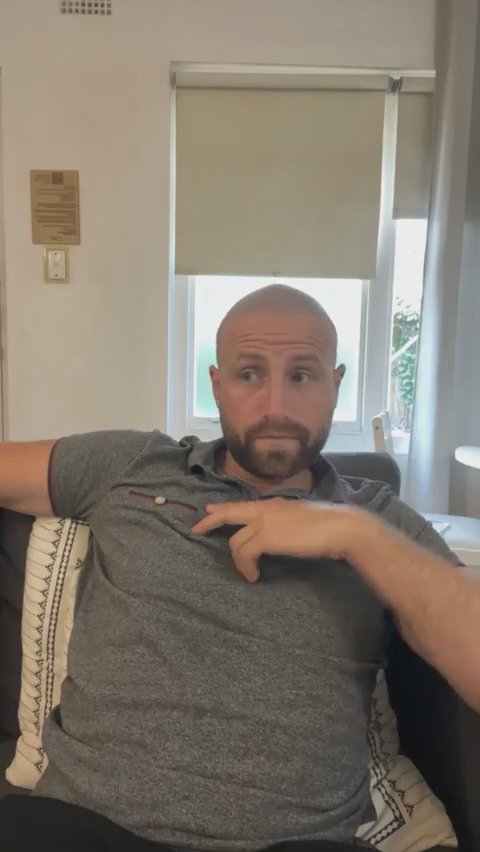
In this live stream, Evan breaks down the over-arching concept of chemical health, meaning we all have a relationship to mind and mood-altering substances like alcohol or cannabis, even if that means choosing not to have a relationship at all. This concept is crucial to understanding addiction and recovery so if that's of any interest come join and bring any questions you have.
This week on Mental Health Matters, we talk about everything related to mental health and addiction. A little play on words that I have to share with you at the beginning of every episode here to stay straight. We're gonna dive into today's topic.
Today I want to talk about a broader topic than just problematic substance use or addiction. And that is the concept known as chemical health. Feel free to put questions, comments, experience, I'd love to hear it.
The concept of chemical health fits under both umbrellas of physical and mental health. It has to do with substances with mind and mood altering substances and the relationship that we have to them. In this live, we could break down some of the different stages.
Chris: Katie says I need to break up with my nightly glass of wine. Why? Why do you feel that need, Katie? Chris: Soon on the app, we'll have my series on habits.
Almost everything we do is a habit, a routine. When things become second nature, it allows our minds to focus on other things. The brain doesn't know the difference between a, quote, good habit and a bad habit. Certain routines and behaviors create differing levels of consequences.
Exercise is a positive, mostly a positive habit and routine that you can become. Something like gambling, sex, certain types of eating can become behavioral disorders that look a lot like addiction. If you want to learn how to change any new habit or routine when that series comes out, you should check it out.
What's the difference between abuse and dependence, which would be the next stage? And dependence really just means there are more consequences, more continued use. And remember that we can move up and down those stages.
What's up, folks? Welcome to mental health matters, where we talk about everything related to mental health and addiction, and because mental health matters. So a little play on words that I have to share with you at the beginning of every episode here to stay straight. There we go. Well, it looks like the beacon has gone out. Hopefully you're getting that notification that we're going live. We'll give people a little bit of a chance to walk in or pop in. And we're gonna dive into today's topic.
So today we are going to do a topic in the realm of addiction. Oh, no, that light has gone out. God, what else could go wrong? What up, Katie? What up, Chris? Some of our heavy hitters jumping in, but yeah. So today we're going to talk about a topic in the realm of addiction. However, I think it's important when we talk about addiction to know that not all substance use, I think you all have an intuitive knowledge of this is not addiction, that everything is on a spectrum. So today I want to talk about a broader topic than just problematic substance use or addiction.
And that is the concept known as chemical health. Heavy is right, Chris. Come on, man. I'm sure I don't know. We're coming out of the winter, so you'll, if that's what you're referring to, a couple months into summer, you'll be back into fight and shape. Yeah. So anyways, why don't we just dive in? Whether you're watching this live or you're watching the playback, I'm going to just break down this topic and encourage you to ask any questions, whether it's in the community feed or, or if you're hopping in, feel free to put questions, comments, experience, I'd love to hear it.
So Katie's feeling a little bloated. I'll just talk about that. I'll just talk nonsense and talk about our bodily issues. Like, my shoulder's a little sore. Yeah, beat up here, living in australian beings, so active, more so than I've ever been, and my whole body's just beaten down. But yeah, anyway, focus. We're going to talk about the concept of chemical health. So when we think about health in general, what do you think about? We got our physical health, we go to the doctor, we have our mental health.
Kind of my realm, mental, emotional well being. But then also we have this concept known as chemical health. And it's like, well, why would we have this now? It kind of, I believe, fits under both umbrellas of physical and mental health and has to do with substances with mind and mood altering substances and the relationship that we have to them. Now, you may be watching this and saying, you know, I never had, you know, I just don't drink. I choose not to. I'm not an addict or alcoholic or, I don't have issues with it, but I just choose not to drink.
So why does this matter? Well, this also fits in the realm of chemical health, because it's all about what you decide your relationship is. And that may be not having a relationship whatsoever. You don't have a relationship with chemicals because of a choice, whether it's religious or you had it in your family, just not for you, whatever that is. So I think in this live, we could break down some of the different stages, even though it's not really official. We don't really have like an official, like, here are the different stages, there's different models for it.
But I could just share my experience and some in what follows the clinical. Right. So that chemical health term is like a newer clinical term, but I really like it. I think it really encapsulates a lot of what I do where I have people coming to me for therapy. And it's really important, something that we maybe neglected on the mental health side of things, looking at the chemical health and how important that is, because that is such a big impact. You know, just like if you went to the doctor, you know, they're going to want to know what your chemical health is.
You know, they want to know what your chemical health is because that could contribute to, if you have a liver issue. And I mean, something like alcohol could contribute to heart disease and many of these other things. So it's a key piece of the puzzle. Now, Katie says I need to break up with my nightly glass of wine. Now, the question I would say is why? Why do you feel that need, Katie? We'll get back to you when I get your answer. It's called slow therapy, where I say something and you get back to me in like 15 seconds to 1 minute.
But I think that'll be, you know, this will be a good example here. So I appreciate you sharing that, Katie, and we can maybe use this an example, not like use you as an example of what not to do, but just of how chemical health is and some of the decisions we make. Because from my understanding of knowing Katie, she's not a severe alcoholic, at least I don't know that, but I don't think so. Be a little ironic given what she does. But yeah, we all have that relationship and that relationship changes over time.
Now, sometimes people who have severe addictions, they don't necessarily start that way. They don't jump right in, especially something with alcohol. I say it's like a slow burn. Usually people with pure alcohol, not including a ton of other drugs per se. Usually you don't see too many people in treatment for alcohol. I mean, you will see some in their twenties, thirties, and stuff. But once you start getting to mid, late thirties, forties, you know, that's when it could really take hold. And those consequences build up over time.
I say it's like. It's like an anaconda, you know, that is slowly wraps around you, and you may feel like you have that, but eventually you find yourself, whoa, I can't move, and I can't get out of this. And then the alcohol becomes as severe, if not more severe, of a physical addiction than something like heroin. So let's see. Chris says your nightly glass of wine. Is she cheating on you? Well, I ask myself sometimes, why do I have it? Is it like a habit, like making dinner? Yeah. So soon on the app, we'll have my series on habits, where I break down the process of habits and the brain science and how we form new ones.
And it's also that's going to be part of. I did some similar videos on habit for a series I'm working on now, an addiction masterclass series, where I basically have 20 videos on different topics of addiction. And this is going to be one of them. So I wanted to kind of do a little preview and hype that up and get you all excited, if possible. And so I think. So Katie brings up a great question. I ask myself, why do I have it? Is it like a habit, like making dinner and it. Is it? Absolutely. And the funny thing is, like, almost everything we do is a habit, a routine.
Our bodies, our minds are so reliant on habits and routines for evolutionary reasons. For example, if I had to think about every single thing I did at all times, that takes a lot of mental energy. For example, walking. If I had to be like, all right, left foot, right foot. I got to focus on that if I'm driving. Okay, ten and two. Right. I have to make this eventually, right. When things become more second nature, it allows our minds to focus on other things. So the more our minds are able to focus on, the more likely we are to survive.
Because I'm thinking about where I'm going to get my next meal, the hunt, whatever that may be. So the more brain power I have to put into things, the better, you know, the better for finding resources. So that applies to a lot of different things. So, like our minds and our body. So some examples I give in different areas. One would be the time you wake up so very often. Like you ever have that where you forget to set your alarm, but you wake up at the same time where you're allowed to sleep in for a day.
You don't have work, but then you just wake up at the same time every day. You know, that would be an example of unconscious habit. Another would be like when you're driving, how it becomes second nature. Your mind picks up on cues. So habits are all about cues, routines and rewards. And in this case, pretty simply when you're driving, you unconsciously. Let's say you're going the same way to work every single day. You see a certain street sign and you just know, or you see a trees or just like something in your purview, and you just make these turns.
Now, sometimes if you've ever been in the situation, maybe you're in Minnesota or Michigan and there's like a snowstorm, and then all of a sudden you find you make a wrong turn. You get kind of lost going to the same place because all those cues are covered by snow, right? So this is how our brain works in an unconscious way and why habits are so important. Just like bodily functions, like eating, going to the bed. Like, a lot of times these things happen like clockwork. And so that includes the behaviors that you choose to do, the things you choose to incorporate, whether it is that one glass of wine you're going to then crave that glass of wine, even if it's not addictive.
Now, we know that alcohol has more of an addiction potential due to the amount of dopamine it releases. But let's say that alcohol was tea. And this is something that, like, I've done over time, is I like to drink, like a hot beverage after meal to, like, settle my stomach. Maybe I get a little buzz from the tea or the coffee or whatever that may be. But even if it was herbal tea, like, a lot of times, like, I really like this one, herbal tea has no caffeine in it, and I would always drink it after dinner at night.
Now, that's not addictive. However, I find that I crave it after a meal, maybe just as much as someone would whine. And that's not necessarily because it's addictive, because it's a habit and it serves a certain function. So when something, when a behavior serves a function, that's when it becomes more habit forming. Now, the thing is, the brain doesn't really know the difference between a, quote, good habit and a bad habit. It just is right now, just certain routines and behaviors create differing levels of consequences, and that's what makes it bad.
I mean, like, if you're drinking that wine every day and it had no consequences on your life, maybe it's not an issue, you know, and it's up for debate right now of how much alcohol is physically healthy because I think one glass of wine, you're probably not getting hammered, you know, and like screwing your life up. And it also may not have a huge impact on your body. Now, again, the controversy is the research. We used to say that it was, you know, one to two drinks for a female a day was within a healthy amount.
But there's some conflicting research now showing that maybe no alcohol is healthy at all. But again, that's, you know, you got to do your own research and make your own decision on that. So, you know, it's not up to me to decide whether this is a bad habit or not. But this is a great example of the decisions we have to make on our chemical health. How much do we want that in our life? How much is healthy for us physically, emotionally, mentally, whatever? So, you know, as we go up the stages, right?
So there could be no alcohol use. It could be occasional alcohol use. So not within a pattern, you know, so just something I do once in a while for fun. And then let's say it becomes a pattern, like kind of maybe where Katie's at, where it's like, okay, there is a pattern established and then when it gets to the abuse phase, that's when there are consequences, but you continue to use anyway. So prior to 2000, we had a little bit of a different way that we categorize what's called substance use disorders.
We don't, as clinicians, diagnose addiction. It's just like a general term, but we have the clinical diagnosis of substance use disorders. And that's all based on consequences. Not necessarily how much you use, though that is correlated with consequences. And I mean, often causal, but it doesn't necessarily mean that if you drink more, you will have more consequences. It's just, you're just more likely to. Right. So Katie says, go back to Katie quick. I don't get a buzz. I just enjoy this glass of wine and rarely pour a second.
So again, I mean, in that case, right, you have to weigh that. It's like, well, what are the consequences of you doing it, right? Maybe you just don't want yeah, I got what you were saying. Maybe you just don't want to be stuck in a habit where you feel like you have to do it every time. And sometimes that could be healthy in and of itself to say, no, I'm just going to take a little break. So I don't feel like it has this big power. On Tuesdays and Thursdays, instead of wine, I'm going to drink, I don't know, maybe non alcoholic, some actually good non alcoholic wine now.
It's, like, kind of crazy how good it is now or some other type of beverage you like. I find that it's really beneficial to if it's a behavior that has the potential for more harm just to not do it every single day. But there are people, if you look at some of the research out of the people who live the longest, the blue zones, like, you know, Sardinia island off of Italy, you know, parts of, you know, like, certain greek islands, and it's always, like, warm climates, too. So it's like, I got to take the cue on that.
But Okinawa, Japan, I think you say. I think we just live on a tropical island, but also the 7th day Adventists. But I mean, so a lot of those populations that do have people live longer often do drink a decent amount of wine, right? That doesn't mean that that actually makes you healthier. But, I mean, it's just something to look at that if it's balanced with other health practices, it may not be such a bad thing. So I know, like, for me, you know, like, I really do try, and I have a hard time with this because I am a huge creature of habit.
People who have histories of addiction, I think, are just more creatures of habit and have a harder time breaking habits and forming new routines. But once they do, they become very ingrained, good or bad. That's why you see a lot of, like, folks with addictions, like, get super into a new, like, sport or something like that, or activity, or they start working out, and then they just, like, take it to an extreme. Habits like, exercise is a good example of a positive, healthy one, but again, it's the dose that makes the poison, so it's possible to overwork.
Like, I think a perfect example. Now, I've told some of you guys that, like, I'm on this extended trip in Australia, finally be done soon. But, you know, I live near a beach, and there's a big beach volleyball community. I decided to get more involved, and, you know, now I play, like, way too much, you know, and so it's poisoning me a little bit with aches and pains and pulled lower ab muscles and sore shoulders and stuff like that. But I crave doing that, you know, like, I'm in this habit of playing the sport or for a very long time exercising, which has these positive benefits.
So, like, when I miss a workout, I feel extremely uncomfortable. You know, I do take a lot. I do take days off and stuff. Although since I've been here, I don't really take many days off of volleyball. But, you know, it's. It's something I crave when I don't do it, so. Getting buffett. Thanks, Katie. Yeah, I'm in some of, like, the better shape I've been in because I don't drive here, so I walk, like, when it was really warm out, I would walk at least 18,000 steps a day if it was a nice day, sometimes up to 15, 14,000, even if it's a little cooler.
But. So I'm like, I'm walking a ton. I play 2 hours of beach volleyball a day, which it's like, it's a lot. It's a. It is a lot of energy, and it's like a good workout, but it's like, it kind of keep you in longer. Like, I could play for like three, 4 hours even though, like, maybe I shouldn't because, like, it's. Stop, go, stop, go. Um, so anyway, I'm on. I'm off on a tangent here, but again, something like exercise is a positive, mostly a positive habit and routine that you can become, right? I don't like using the word addicted to, but it becomes a habit, addiction in and of.
It may look like an addiction because I feel like I have to do it. But if it doesn't cause any consequences, it's technically not an addiction or use disorder or behavioral addiction. Something like gambling, sex, certain types of eating, binge eating can become behavioral disorders that look a lot like addiction. You don't even have to put an exogenous outside substance into your body. So all these things really do equate to chemical health. So if you want to learn how to change any new habit or routine when that series comes out, you should check it out.
I have a lot of videos on this and teaching you certain ways that you could take any habit or routine and change it. I don't know, maybe I could convince some of my Cadre family here to challenge themselves and watch the series and put it into action and see if we could all maybe change of behavior ourselves. And even I could do that, right? I mean, a lot of this is from my own experience. So, like, when I did that habit series, you know, I was, I decided to do that myself. Yeah. So, okay, we talked about this before when I was, like, doing that habit series we took.
And when we talked about this in a live stream, you know, it's, you know, there's stages of change. There's you, you know, know, the necessity for motivation and doing motivational enhancement, getting prepared, making a plan, diving into those first action phases, getting through that really difficult early stage of forming that new habit and routine, and putting your energy into new neural networks while still maybe craving the old ones. Right? That becomes the replacement behavior. It's like, it's like Indiana Jones, you know, when he's in the temple of Doom, I believe, and he wants to take that artifact or whatever, but he has to replace it with one of the same weight.
Otherwise that ball is going to get released and chase him out of the temple and almost get run over. So it's the same thing where we need those replacement behaviors. And the people who are successful in addiction recovery are often ones that have more replacement behaviors to take the place of the, like kind of the swiss army knife of addiction that, you know, you could use for as an immediate tool. It's like using a hammer for everything. So you have to find new multiple replacement behaviors for everything your addiction did.
Otherwise, you're going to have more cravings and be more tempted to go back, and you're going to be more reliant on willpower, which is usually a losing game if this is like a long term kind of thing. So we're kinda hitting a couple different topics, but this is all, it doesn't matter what it is. What habit, routine. These are some things to keep in mind. Now, kind of going down the spectrum where we talked about abuse being one of the categories of substance use disorders, kind of that first stage where it's a problem.
All right, so maybe we go beyond where Katie's at. You know, maybe Katie's in this, like, range two. So range three is that abuse phase. Now, what's the difference between abuse and dependence, which would be the next stage? And dependence really just means there are more consequences, more continued use, you know, the impact of tolerance, something as severe as withdrawal. Because, like, when we change any behavior routine, there is a rebound effect. Now, when it gets to the point of what you would consider withdrawal, it's kind of a fine line.
But, you know, when you quit using cannabis, weed, right. If you do it daily, it could be very uncomfortable. I have a client now who, after months and months of trying to do all these strategies, just kept going back. So we had, you know, we had to increase. And finally, he's actually going to enter outpatient treatment for weed, which a lot of people don't think is that big of an issue. Right? So I've seen it. I've had a couple clients who are, like, more addicted to weed and have a harder time than some of the other more hardcore substances.
It boggles the mind, but it just. It has such strong physical effects. So dependence, you start to see more of those things, and there's. I mean, it's. It's not, like, super controversial anymore, you know, where it's like, okay, addiction is a disease of the mind and body, and it's true that it often meets the criteria or the definition of a disease is something that's like a progressive illness. So you see that a lot. But for me, I kind of reserve that for more severe addicts and alcoholics because of the broader concept of chemical health.
I think just because you meet the criteria for, like, an abuse, you know, substance use disorder, doesn't necessarily mean you have a progressive illness per se. Right. Regardless, it is a tool to solve a certain problem, and people kind of find their way to that. Abuse, dependence, addiction, just in different ways. Right? Whether it's just genetics, their environment, as far as being in a heavy use environment, trauma, PTSD, coping with other mental health, these are all just different paths to get to that same point, which is the mind and body being dependent on substances and the consequences that creates.
And so that's kind of almost like that final stage now, even you could continue to break it up even more. You know, like, my client's dependence on cannabis may be a little different than someone who's, like, doing fentanyl, and maybe that just may be in the potential for harm or meth or something like that. And there may be people who use meth that are less severe than my client and may have an easier time giving that up than he does with cannabis. So, you know, those are some of the stages, and that's the questions that we have to ask.
And remember that we can move up and down those stages. It's not a fixed point. It's not just like a one way street or a down way street. It's kind of like, it just depends where we're at and where we want to be and what our goals are. And we don't necessarily need to define that based on what we think society wants for us. So, like, Katie, for example, maybe that's not a big issue to drink wine, one glass every single day. I mean, it follows the CDC guidelines or whatever, whatever you want to think about that.
And, you know, maybe it's not an issue and you don't need anyone to tell you it is. Or maybe you listen to people who think it is and you listen to people, right? There's people who will say, alcohol use in any form is not healthy. And here there are arguments, but here the arguments for why maybe that's okay, then you make that decision for yourself and your own health. Usually these things are not exactly black and white, and every body reacts differently. I always says everybody and everybody is different, you know, but again, just from my perspective, you know, just kind of like to hedge your bets a little bit.
I do think there is that benefit of taking little breaks in that daily habit, whether it's taking a break for a week or just, you know, doing the five day a week instead of seven, so you don't feel, just to give you a more of that sense of control. So you maybe, because I think that maybe is the issue, when you do something every day, you often feel like you have to do it. You're kind of slave to your inner nature. I'm sorry, your lower nature, your more survival mechanism in your body, your midbrain, the part that is about evolutionary, that is evolutionarily adapted and old, that we share with reptiles, essentially, our bodily functions and our survival.
But everything is about survival in the brain and our higher mind, our prefrontal, which makes us human, really, at the end of the day, just serves our body, even though we like to think of it as different things, really just kind of serving that body, wanting to be healthy, happy, and alive, and to procreate and push the species forward. Right. So, anyway, I hope you found that maybe interesting. And I guess just the takeaway is, think about that with where's your chemical health at? And do you have certain goals?
Are you happy with where you're at? And, you know, and I just wanted to promote something that's not complete yet. I'll be done with it probably at the end of the month. But another series coming out where it's basically just 20 something videos about addiction. And spoiler alert, if Chris is still here, I'm going to ask him to be part of it. Oh, maybe, Katie, why don't we do that with you, too? We're gonna make Katie part of it because I need you both on my podcast, too, which we'll do conversations with Cadre.
So if you keep a lookout here. I've been doing interviews with all the creators, so actually, I think Katie and Chris would be good for the series. So, Katie, let's talk. And we need to catch up too. Part of the Cadre fam. Cadre community. So, anyway, this has been a lot of fun. I love checking in with you all, and I hope you got something out of this. With that, I'll let you go about your evening. Take care, folks. Cheers.
Reactions and comments are for members. Joining is free and takes a minute.